Twin separable pouches for dual products, dual-pack sampling packs, portion packs, two-part adhesives, seasoning pairs, skincare sample sets, supplement pairs, and mix-on-demand products. Confirm center seal, tear line, perforation, left chamber, right chamber, seal design, seal integrity, film structure, filling process, artwork alignment, MOQ planning, and food-contact documentation scope before production.
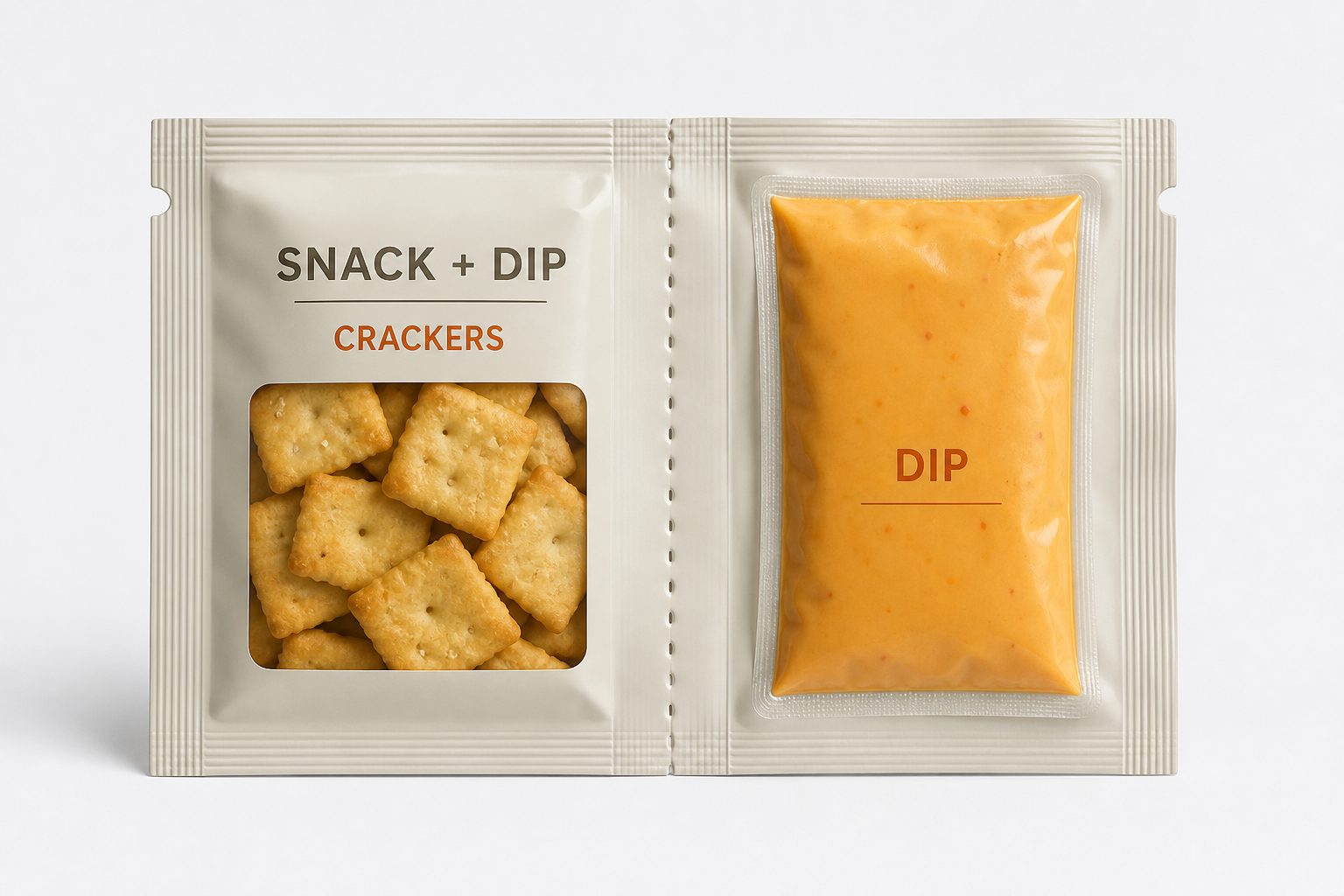
Twin separable pouches use a center seal or perforation to keep left chamber and right chamber portions connected until use, then separate along a controlled tear line.
Project review focuses on chamber balance, peelable center seal target, seal design, seal integrity, film structure, filling process, artwork alignment, notch position, carton packing, MOQ planning, and documentation scope.
GMP-Style Production Controls
Partner facilities
ISO 9001-Style QC
Quality system
Shipping term coordination
DDP / FOB / CIF
Project-Scoped Materials
Material review
Use twin separable pouches when two components, flavors, doses, samples, or paired SKUs need to stay connected through packing and separate cleanly at use.
Left chamber and right chamber can keep dual products, sampling packs, portion packs, and mix-on-demand components connected until use.
Center seal, tear line, perforation, notch position, and peelable center seal target are reviewed for clean separation and seal integrity.
Film structure, filling process, chamber balance, registration, artwork alignment, and carton packing are checked before production.
Material declarations, artwork proof, sample approval notes, seal checks, and food-contact documentation can be reviewed by project scope.
Key factors to evaluate when selecting twin pouches for your project.
Both chambers can be equal or unequal in size. Equal chambers suit paired products like shampoo and conditioner samples. Unequal chambers work when one component is used in smaller quantity, such as a sauce and seasoning pair.
Perforated tear lines let end users separate the two pouches by hand. Consider perforation strength carefully: too weak and pouches separate during shipping; too strong and consumers struggle to tear them apart.
The two chambers may hold different product types, such as a liquid and a powder, or two different flavors. Confirm that both products are compatible with the same sealing temperature, film structure, and shelf-life requirements.
Twin pouches are popular for product trials, letting brands pair a hero product with a new variant. Consider whether your marketing use case needs branded printing on both chambers or a shared back panel design.
Choose the film structure around left chamber and right chamber contents, barrier target, center seal, tear line, filling process, and seal integrity requirements.
| Structure | Application | Barrier Level |
|---|---|---|
PET / PE
|
twin separable pouches for dry samples and light portion packs where print, seal design, and tear line are primary | Standard |
PET / VMPET / PE
|
Dual products needing moisture or aroma barrier review by left chamber and right chamber contents | Medium |
PET / AL / PE
|
Light-sensitive or high-barrier dual-pack projects where foil acceptance and separation line need review | High |
PET / NY / PE
|
Dense fills or sharper products needing puncture resistance, seal integrity, and filling process review | High |
Kraft / PET / PE
|
Paper-look sampling packs where barrier lining, artwork alignment, and tear line need review | High |
PE-Based Review
|
Lower-impact structure review when local recovery stream, barrier target, and separable pouch process allow it | Standard |
A transparent look at how film structure, sealant layer, center seal, and tear line choices affect every Twin Separable Pouch. Visit our material guide for more details.
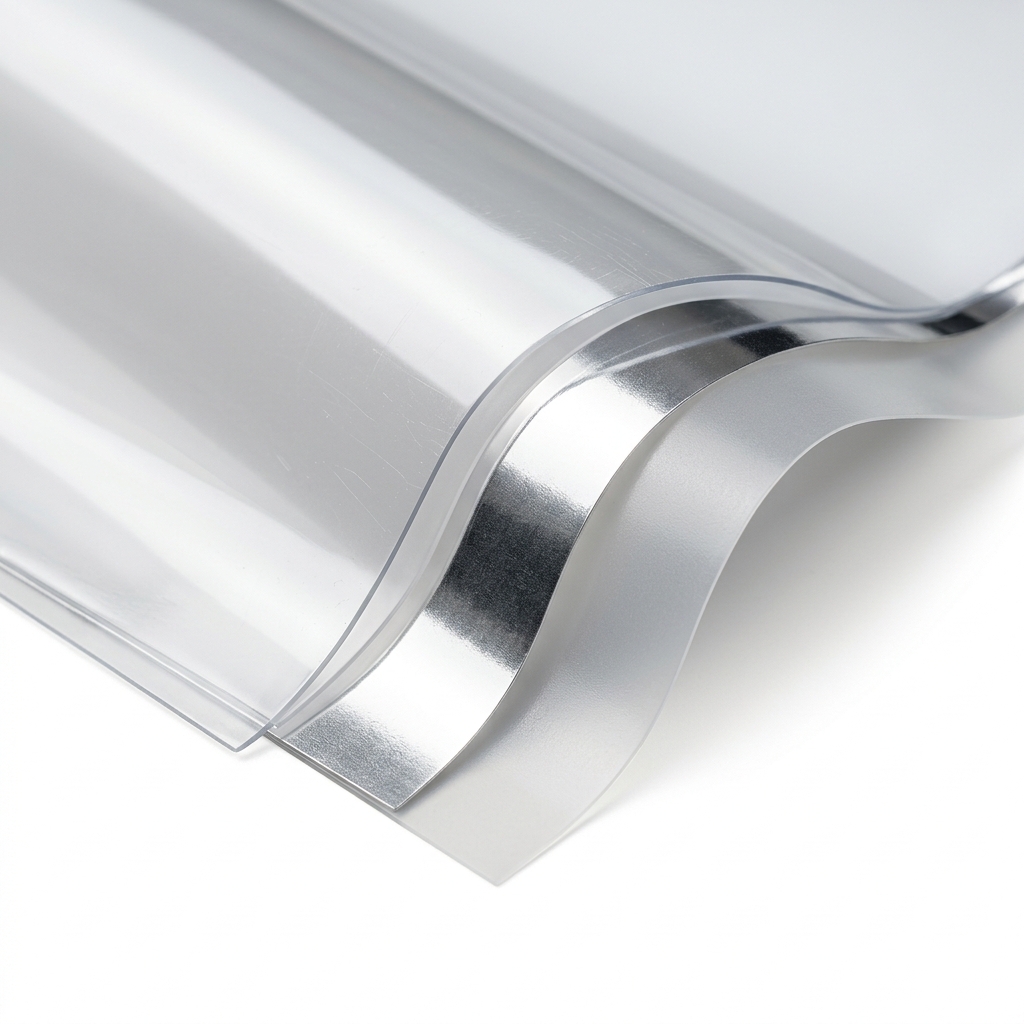
Printable PET supports artwork, registration marks, varnish or matte finish, and the outer handling surface.
Barrier film is selected around moisture, aroma, grease, light, and shelf-life targets for the packed product.
Adhesive bonds the print web, barrier option, and sealant into one stable laminate after curing and testing.
PE sealant is reviewed for heat-seal window, jaw temperature, dwell time, COF, filling conditions, and pack format.
Twin separable pouch projects should confirm left chamber, right chamber, fill volume, center seal, tear line, perforation, and peelable center seal target before tooling and artwork are finalized.
Seal design, seal integrity, film structure, filling process, artwork alignment, notch position, and carton packing should be reviewed together because small layout changes affect separation and packing performance.
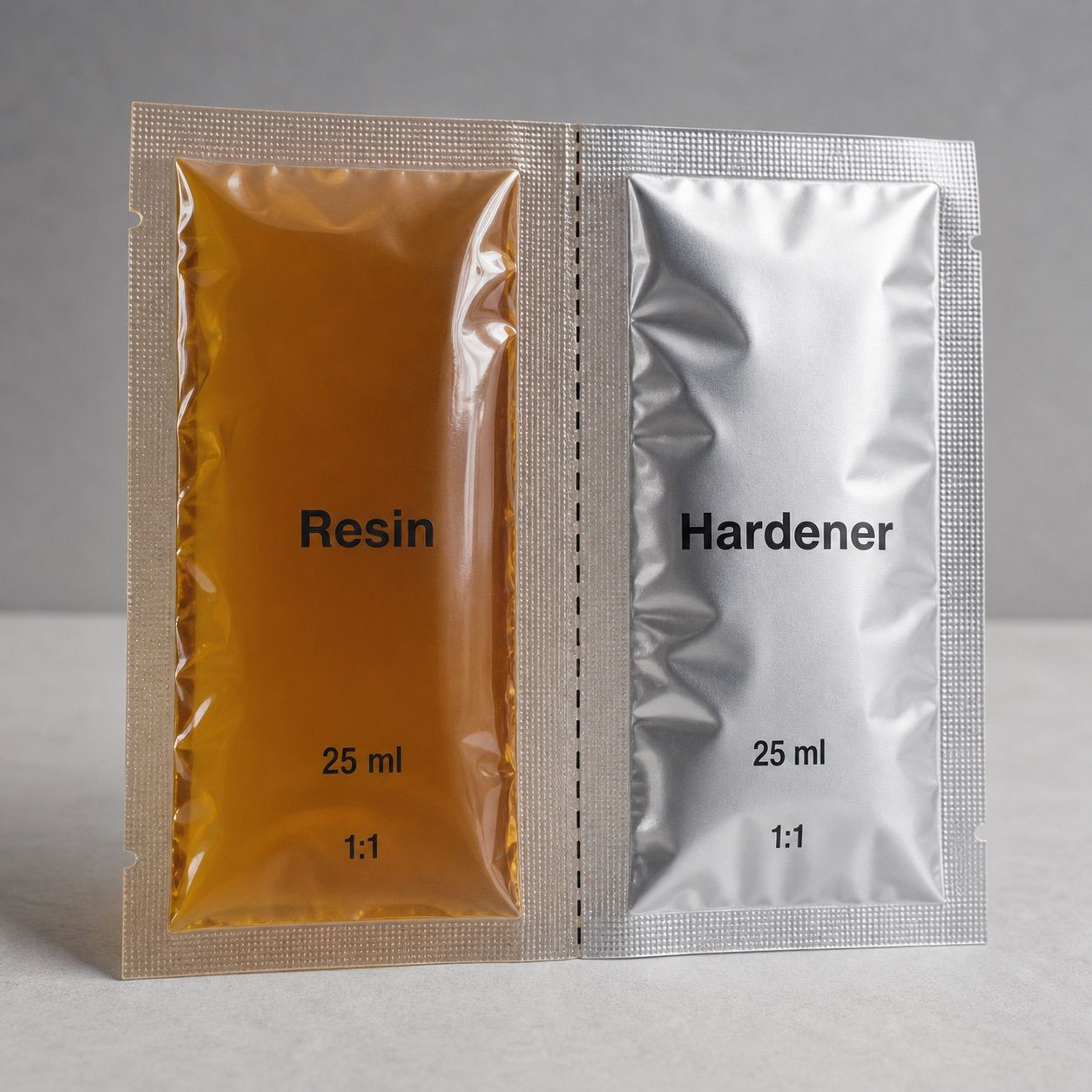
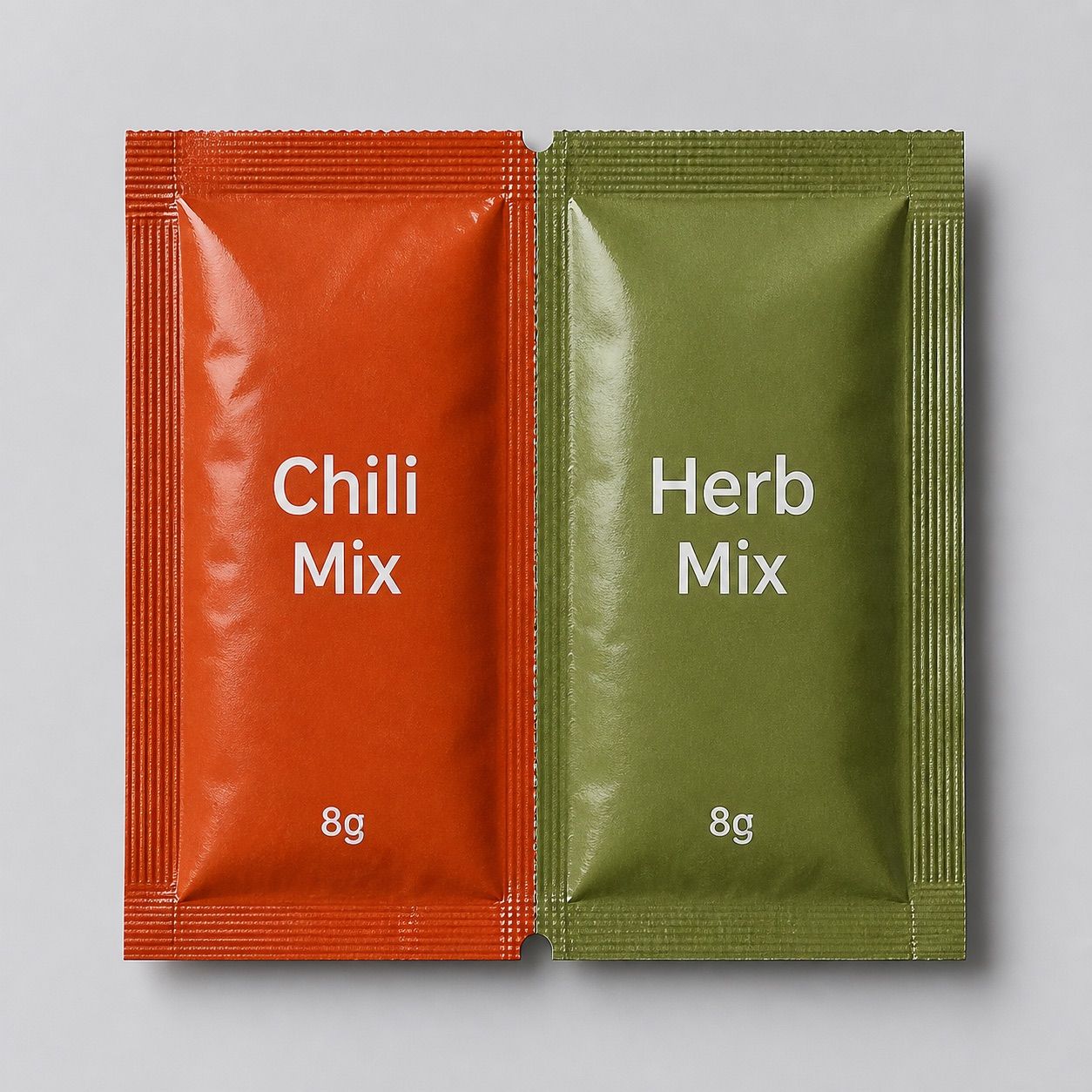
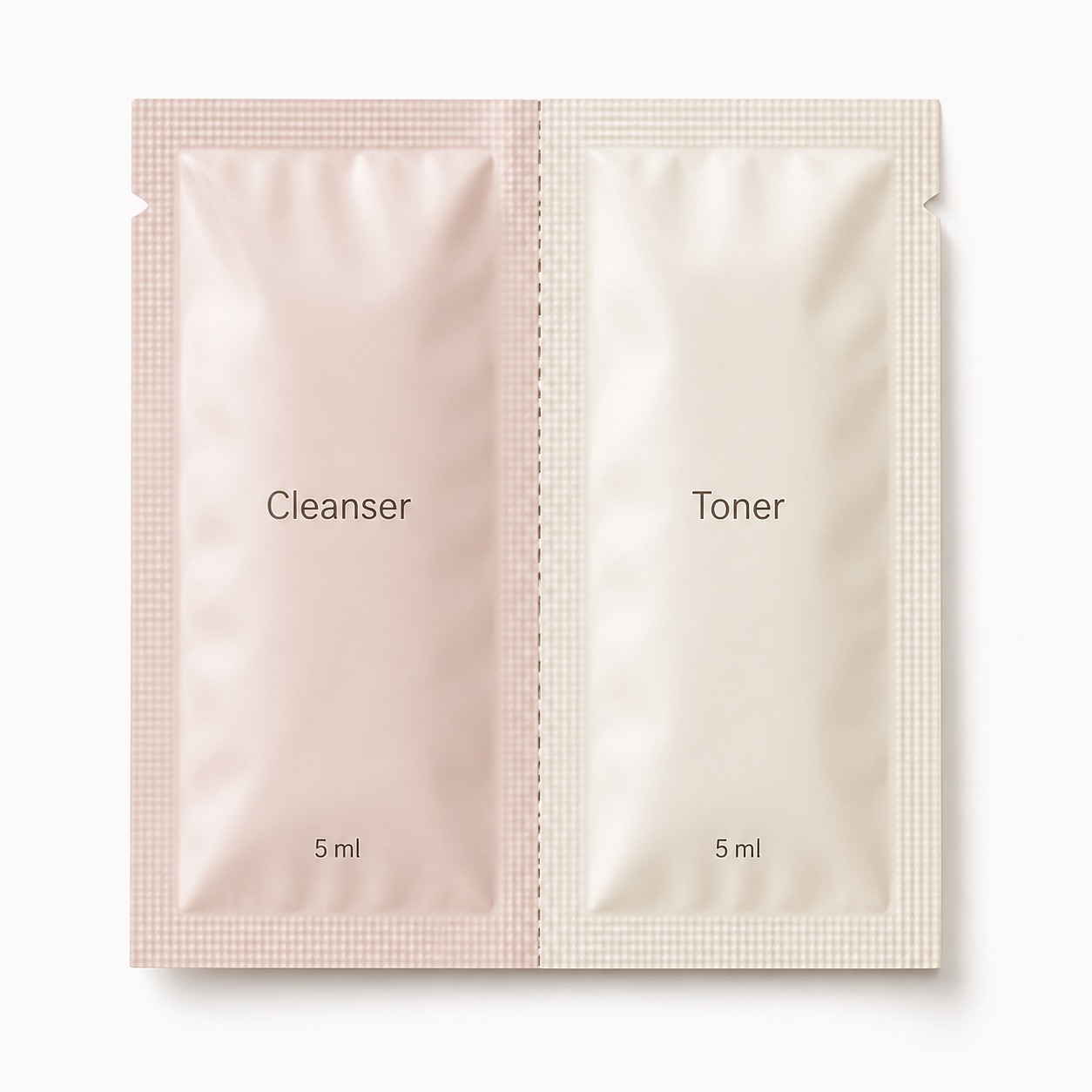
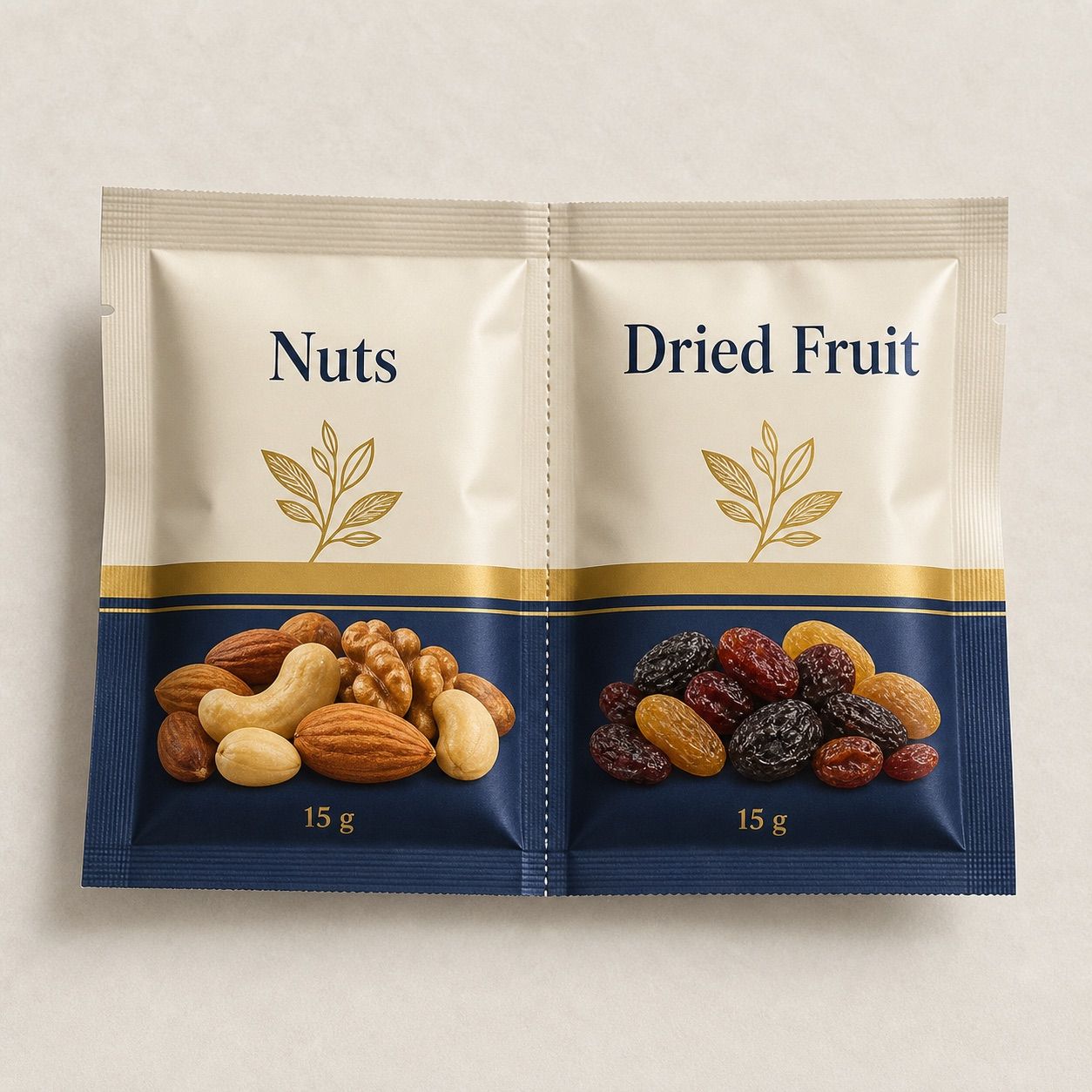
Review left chamber, right chamber, fill weights, portion ratio, pouch dimensions, and carton packing.
Confirm center seal, tear line, perforation, notch position, and peelable center seal target.
Review film structure, filling process, registration, artwork alignment, front/back copy, and barcode clearance.
Sample review, artwork proof, seal checks, material declarations, MOQ planning, and food-contact documentation can be reviewed by project scope.
Representative parameters. Actual points depend on chamber layout, material structure, filling process, and customer acceptance range.
Chamber Layout
Reviewed by left chamber, right chamber, fill weight, center seal, and pouch dimensions
Separation Feature
Tear line, perforation, notch position, and peelable center seal target reviewed by use case
Seal Design
Checked around seal integrity, film structure, filling process, and customer acceptance range
Artwork Alignment
Reviewed with registration, dual-panel copy, barcode clearance, and separation line
MOQ Planning
Reviewed with print method, material structure, pouch size, and annual forecast
Documentation
Material declarations, artwork proof, sample approval notes, and food-contact documentation by project scope
Center seal, film structure, and seal integrity reviewed for paired components
Tear line, perforation, and artwork alignment reviewed for dual flavor packs
Left chamber, right chamber, and seal design reviewed for paired sample formats
Portion packs, MOQ planning, and carton packing reviewed for connected samples
Use these photos as format references. Final size, structure, print layout, and testing scope are reviewed against your product, filling method, and target market.
Lower-impact structure options can be reviewed when the product, filling process, target market, and recovery route support them.
Twin Separable Pouches are reviewed for dual products, dual-pack sampling packs, portion packs, two-part adhesives, seasoning pairs, skincare sample sets, supplement pairs, and mix-on-demand products where separation and chamber balance matter.
Please confirm left chamber and right chamber fill weight, center seal, tear line, perforation, peelable center seal target, seal design, film structure, filling process, artwork alignment, carton packing, MOQ planning, and documentation scope.
Material declarations, artwork proof, sample approval notes, seal checks, project QC records, and food-contact documentation can be reviewed when they apply to the selected structure, product type, and target market.
Production workflow follows GMP-style hygiene and handling controls; no site-level GMP registration is claimed.
ISO 9001-style QC records, material declarations, seal checks, and food-contact documentation can be reviewed by project scope.
DDP / FOB / CIF coordination can be reviewed by destination and project scope.
Project-level recyclable-ready or lower-impact structures can be reviewed where the final specification supports them.
Project support for material review, artwork coordination, sampling, and production follow-up within the agreed scope.
Production routing, order volume, lead-time assumptions, and capacity fit are reviewed for each confirmed project.
Tell us your product, target weight, and requirements.
We recommend materials, structure, and provide pricing.
Confirm details, approve artwork, and production begins.
QC checkpoints and shipment scope are confirmed by project.
Common issues we help twin pouch buyers avoid during project coordination.
Too-weak perforations cause premature separation during shipping, while too-strong ones frustrate end users at the point of use. We specify perforation pitch, cut-to-tie ratio, and film orientation so the tear force falls within the target range for your distribution chain.
When two chambers share a single filling sequence, volume imbalance causes one side to overfill and the other to look short-filled. We coordinate chamber dimensions, fill nozzle positioning, and target weights with your filling equipment specs to balance both sides consistently.
The center divider seal is the most failure-prone area because it handles cross-direction stress from both compartments. We review seal width, dwell time, and jaw pressure profiles at the divider junction to prevent channel leaks between chambers.
Artwork that spans both compartments requires tighter registration tolerances than single-pouch formats. We align print repeat lengths, color trap widths, and die-cut positions across the full dual-cavity footprint during pre-press to avoid visible misalignment at the divider line.
A misplaced tear notch on a twin pouch can direct the tear into the divider seal instead of cleanly opening one compartment. We specify notch position, depth, and angle relative to the film grain direction so each compartment opens independently without cross-contamination.
Updated:
Work with NIAITE for material review, sampling guidance, QC checkpoints, and export project coordination.