Helping buyers review flexible packaging structures, barrier options, testing scope, and documentation needs before sampling or production.
At NIAITE, material engineering is built around material structure review and testing coordination. We help buyers define barrier, sealing, strength, and documentation requirements, then coordinate partner production resources or third-party labs when a project needs external evidence.
OTR (Oxygen Transmission Rate) and WVTR (Water Vapor Transmission Rate) testing scope can be reviewed when sensitive products need shelf-life evidence. We help buyers understand how different barrier layers affect moisture ingress and oxygen exposure, and coordinate third-party lab tests to generate data for shelf-life estimation.
Seal strength, puncture resistance, and elongation requirements can be defined before suitable partner or third-party testing resources are selected. We also review seal compatibility with different filling methods, including hot-fill, vacuum, and retort sterilization, to prevent field failures after production.
We help buyers evaluate complete material structures by reviewing layer combinations, adhesive systems, and substrate choices against the product's barrier, mechanical, and shelf-life requirements. This includes comparing conventional multi-material laminates with newer mono-material alternatives.

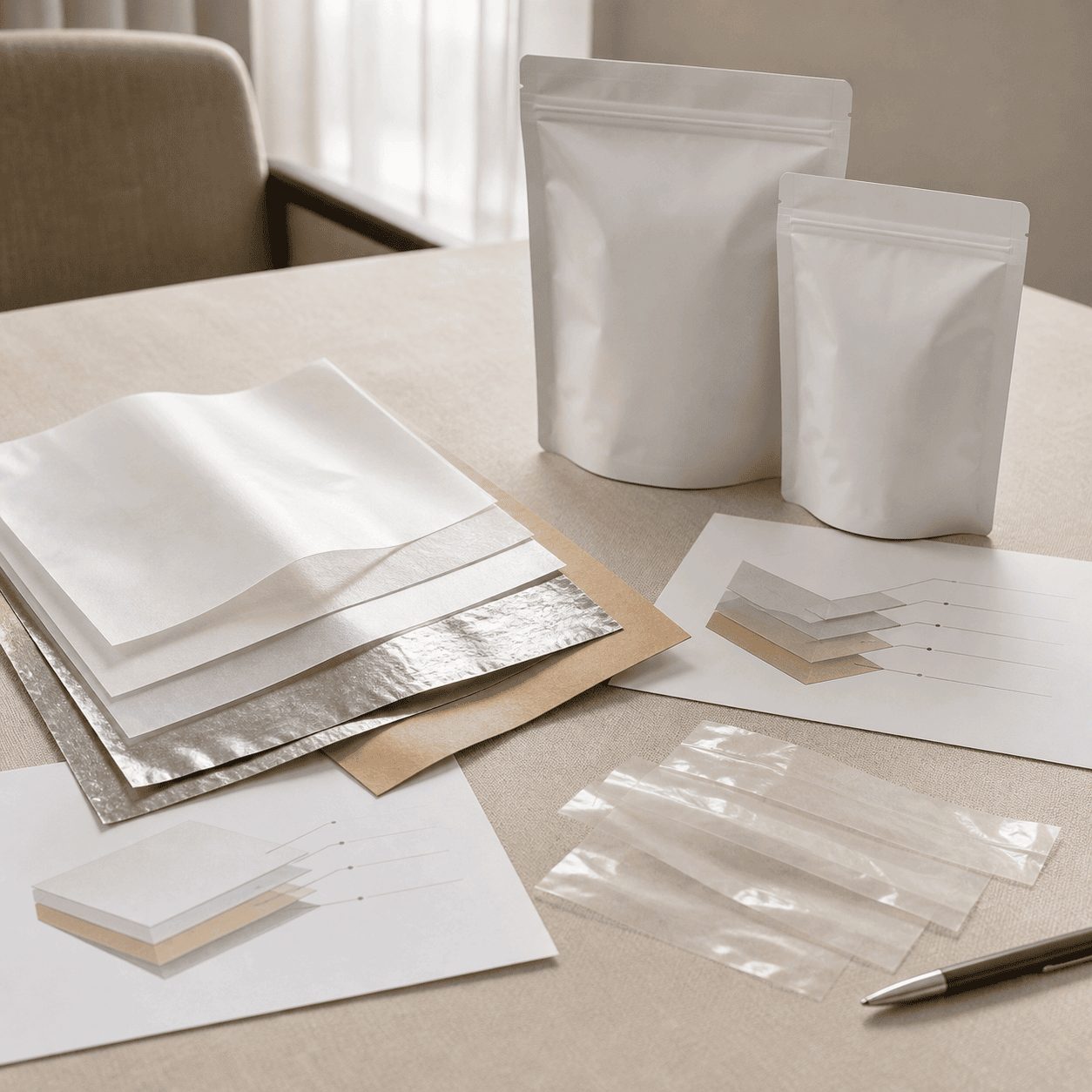
NIAITE coordinates material structure review and testing inputs with suitable technical partners, helping buyers evaluate laminate options for demanding product conditions.
Our current review priority is High-Barrier Mono-Material PE structures, including barrier targets, sealing behavior, stiffness, print route, and local recycling-program acceptance.
Every product creates different demands on its packaging barrier. NIAITE uses a structured review approach to translate product characteristics into measurable barrier targets before recommending a material structure.
The first step is understanding what the product is sensitive to. Oxygen-sensitive products such as coffee, nuts, and dried fruits require low OTR values to prevent oxidation and flavor loss. Moisture-sensitive products such as powders, supplements, and hygroscopic snacks need low WVTR to maintain texture and shelf life. Some products are sensitive to both oxygen and moisture, while others also need light barrier or aroma retention. We review the product's composition, filling method, and storage conditions to identify which barrier properties matter most and which can be deprioritized to manage cost.
Once barrier priorities are identified, we compare candidate structures against the product and process requirements. A dried snack with moderate oxygen sensitivity may be evaluated with a metallized laminate, while a retort project may use foil or validated foil-free structures depending on the product, process conditions, sealing system, barrier target, and validation plan. For buyers exploring recyclable-ready options, we compare mono-material PE or PP concepts with conventional multi-material laminates while keeping actual collection and recycling outcomes market-specific. Each review explains tradeoffs in barrier, cost, printability, sealing, and end-of-life route without presenting a preliminary structure as an approved result.
Not every project requires the same testing scope. We help buyers identify questions for review based on the product category, target market, structure, filling process, and buyer-side compliance requirements. A dried-goods project may focus on seal and barrier data, while a food-contact laminate for a regulated market may call for migration, residual-solvent, or other project-specific testing (see the guide to material declarations and third-party testing). Where applicable, NIAITE can coordinate sample submission and third-party test reports from accredited laboratories such as SGS, Intertek, or equivalent providers. The resulting report applies to the tested sample and scope; it is not a blanket NIAITE certification or a substitute for market-side regulatory review.
Material selection and environmental claim language must be reviewed separately. NIAITE can compare material concepts, supplier information, converting constraints, test scope, target-market rules, and end-of-life assumptions, but a material name or preliminary structure does not by itself establish actual recyclability, recycled-content suitability, compostability, or finished-package performance.
PE- or PP-based concepts can be compared against barrier, stiffness, print, seal, filling, and storage requirements. Actual collection, sorting, processing, and recycling-route compatibility are market-specific and require evidence for the complete structure rather than the resin family alone.
Post-consumer recycled content can affect printability, seal behavior, appearance, traceability, and documentation needs. Suitability depends on the application, layer placement, target market, supplier declaration, and any project-specific migration or food-contact evidence.
PLA-based, starch-blend, and other bio-based options may be reviewed, but bio-based does not automatically mean compostable. Any compostability claim must identify the intended route, applicable standard, tested material or package, certification holder where relevant, and target-market conditions.
From initial buyer brief to production validation, NIAITE coordinates each step of material structure development with selected partner facilities and third-party testing resources.
We review the product type, filling method, target shelf life, storage conditions, destination market, and any sustainability requirements to define the project scope.
Based on the brief, we recommend one or more laminate structures, comparing barrier performance, cost, printability, and recyclability tradeoffs for the buyer to evaluate.
Structural samples are produced through partner facilities. Barrier, seal strength, and physical property tests are coordinated through third-party labs when the project requires documented evidence.
Where included in scope, a production trial can provide project-specific observations on printing, lamination, pouch-making, sealing, or filling compatibility. It is supporting evidence for review, not a guarantee of scale performance, shelf life, or market compliance; production approval depends on the agreed acceptance criteria.
Flexible packaging structures should be reviewed against the product, filling process, target shelf life, storage conditions and destination market. NIAITE helps buyers compare suitable structure paths and coordinate project-specific testing where required. Final suitability depends on the complete package, production conditions and supporting evidence.
A project may need to balance oxygen-barrier targets with the requirements of a selected recycling route. The review can compare conventional multi-material laminates with PE-based structures that may include an EVOH barrier layer. Final barrier performance and recycling-route compatibility depend on the complete structure, converting process, filling conditions, target market and project-specific evidence. Review our recyclable packaging project paths.
Retort pouch structures should be reviewed against the product formulation, filling method, target process temperature and hold time, adhesive system, barrier layers, sealant and closure design. Foil and appropriately validated foil-free structures may both be considered. Production approval should depend on project-specific compatibility, seal-integrity and retort testing rather than a universal temperature or cycle claim. Explore our retort packaging options.
For liquid products, the review may compare barrier-film, sealant and closure options against the buyer's target shelf life, filling process, storage conditions and distribution route. OTR, WVTR, seal integrity, product compatibility and accelerated-aging testing can be coordinated where relevant. The final shelf-life result must be supported by project-specific evidence. Compare our spout pouch formats.
Hygiene and material consistency are critical for food, beverage, and sensitive liquid packaging. We review project requirements with selected production partners and testing resources so the production path can support the required handling context.
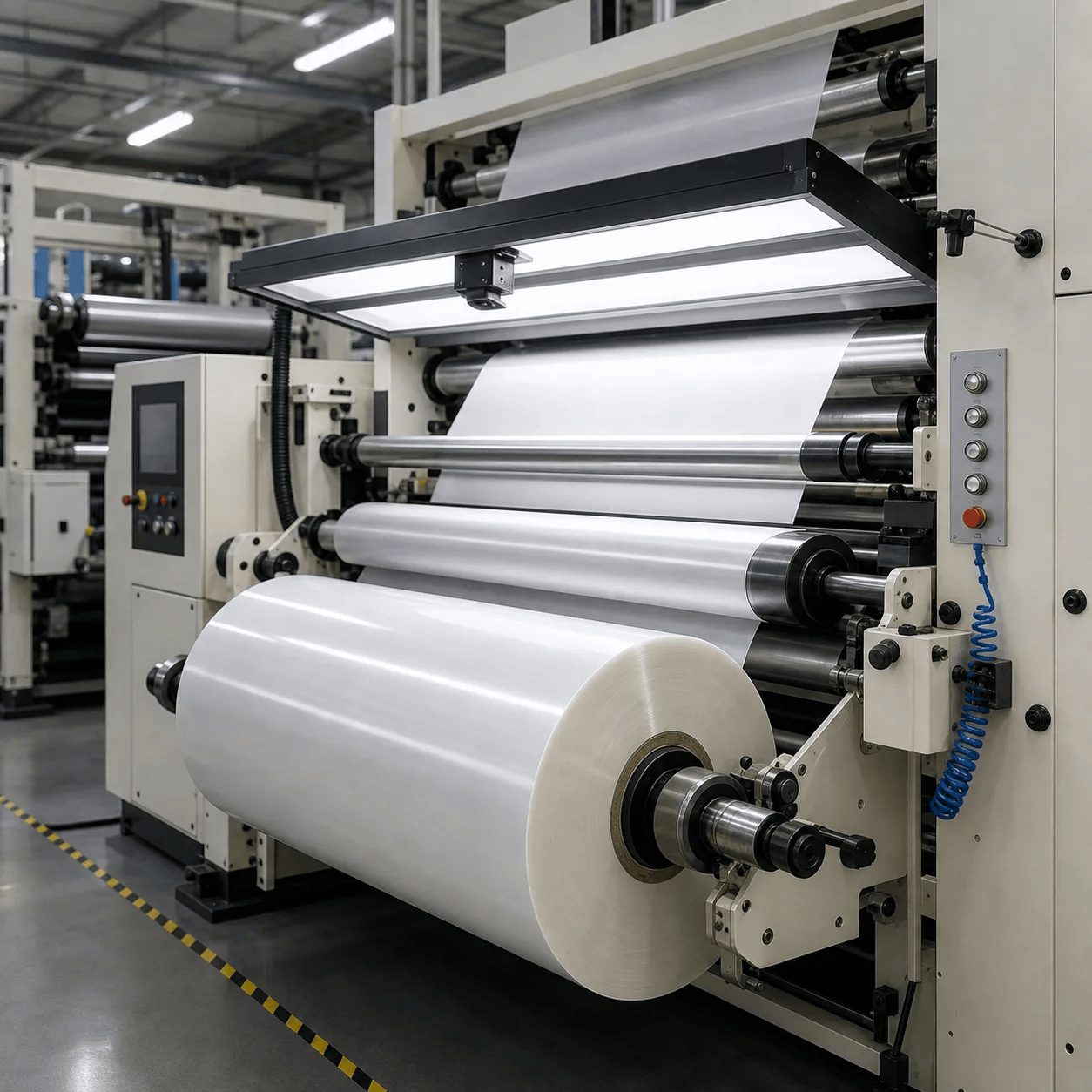
Material declarations, traceability records, and third-party testing questions can be scoped for a defined structure, intended food-contact use, and target market. Availability and regulatory responsibility remain project-specific.
Project hygiene requirements can be reviewed with selected partner factories or third-party resources when sensitive food-contact handling is involved.
Spout, bag shape, sample, and proof requirements are reviewed before a project is matched with a suitable production path.
Work with NIAITE for material review, sampling guidance, QC checkpoints, and export project coordination.