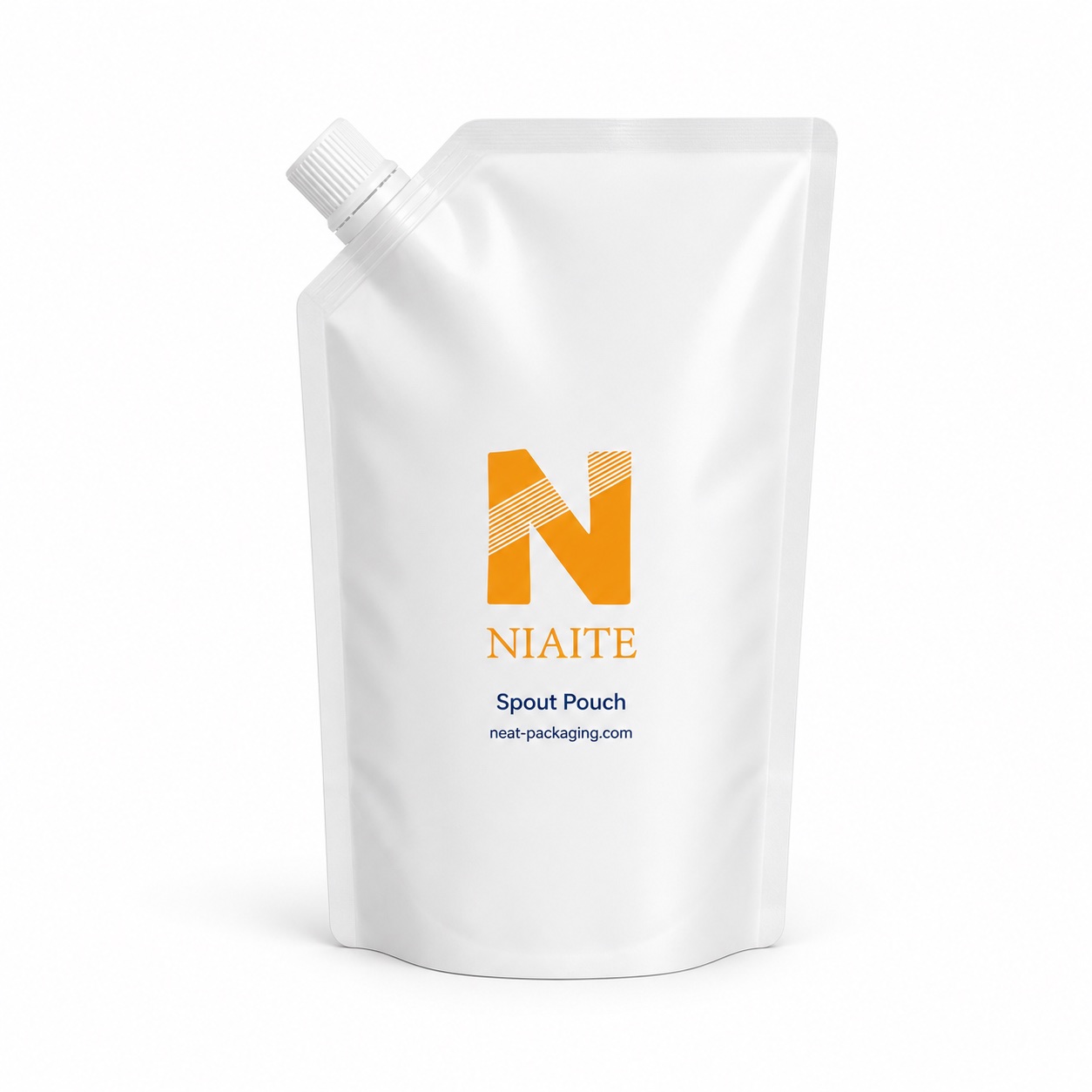
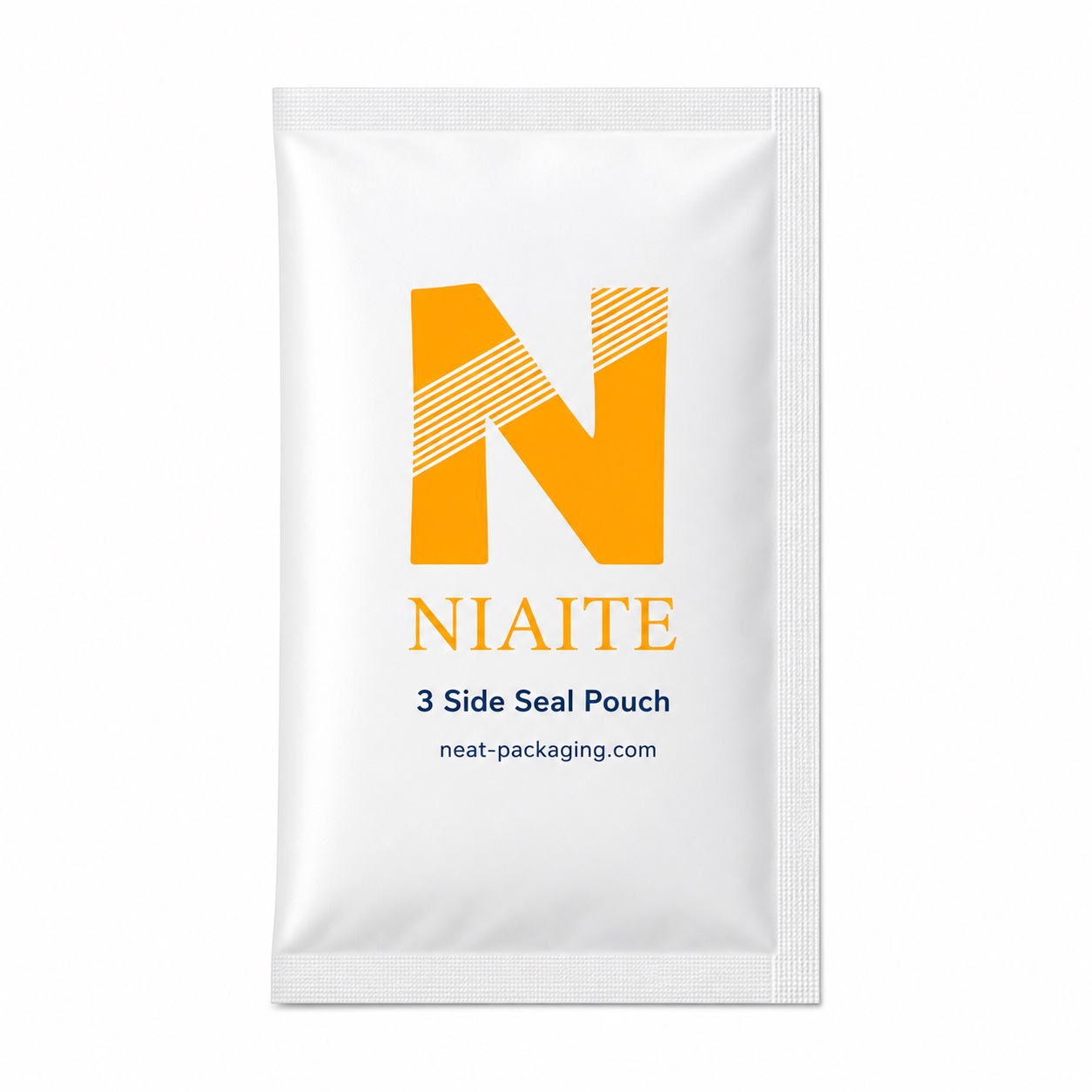
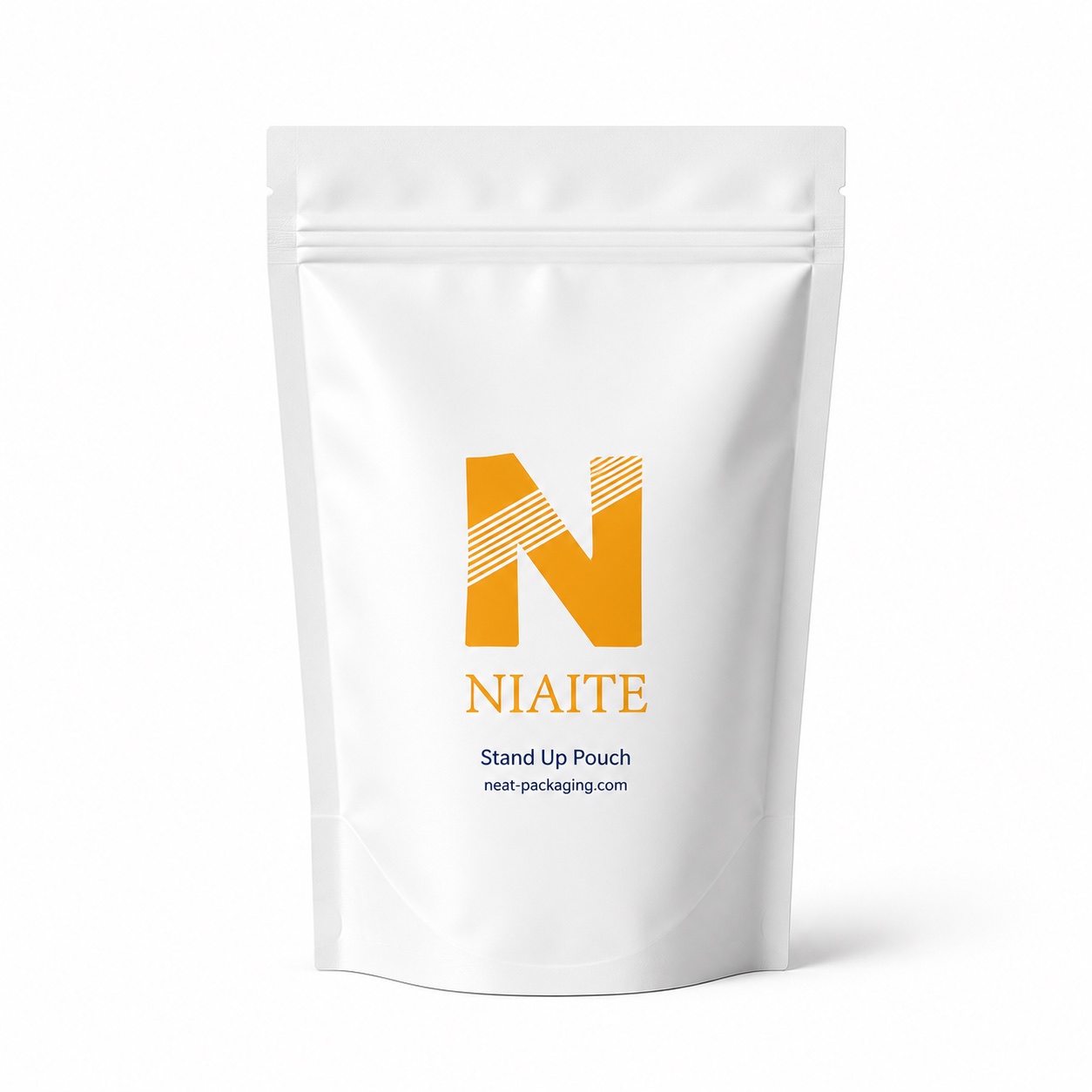
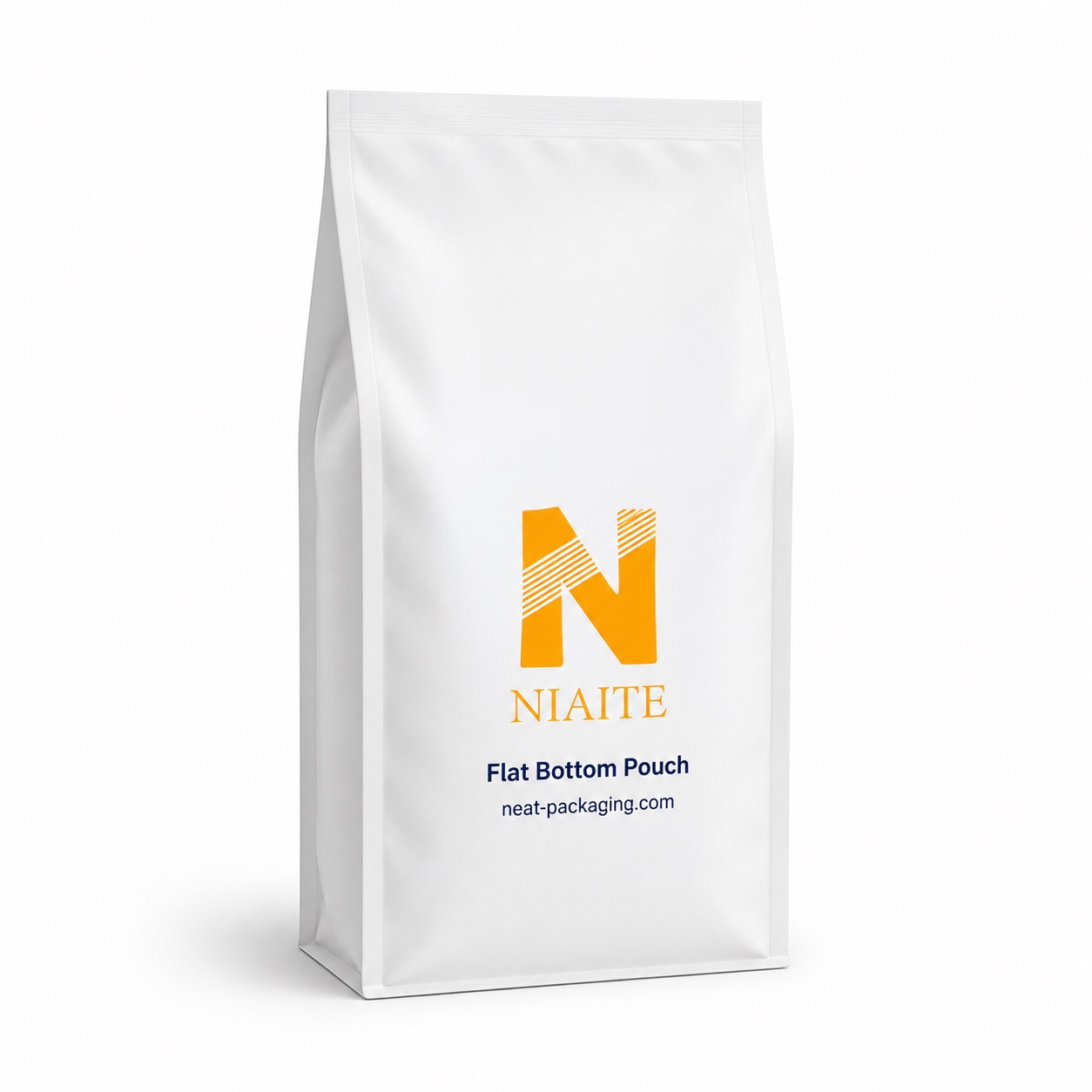
Retort pouches for ready meals, soups, sauces, and wet pet food projects that need heat resistance, seal strength, and process validation.
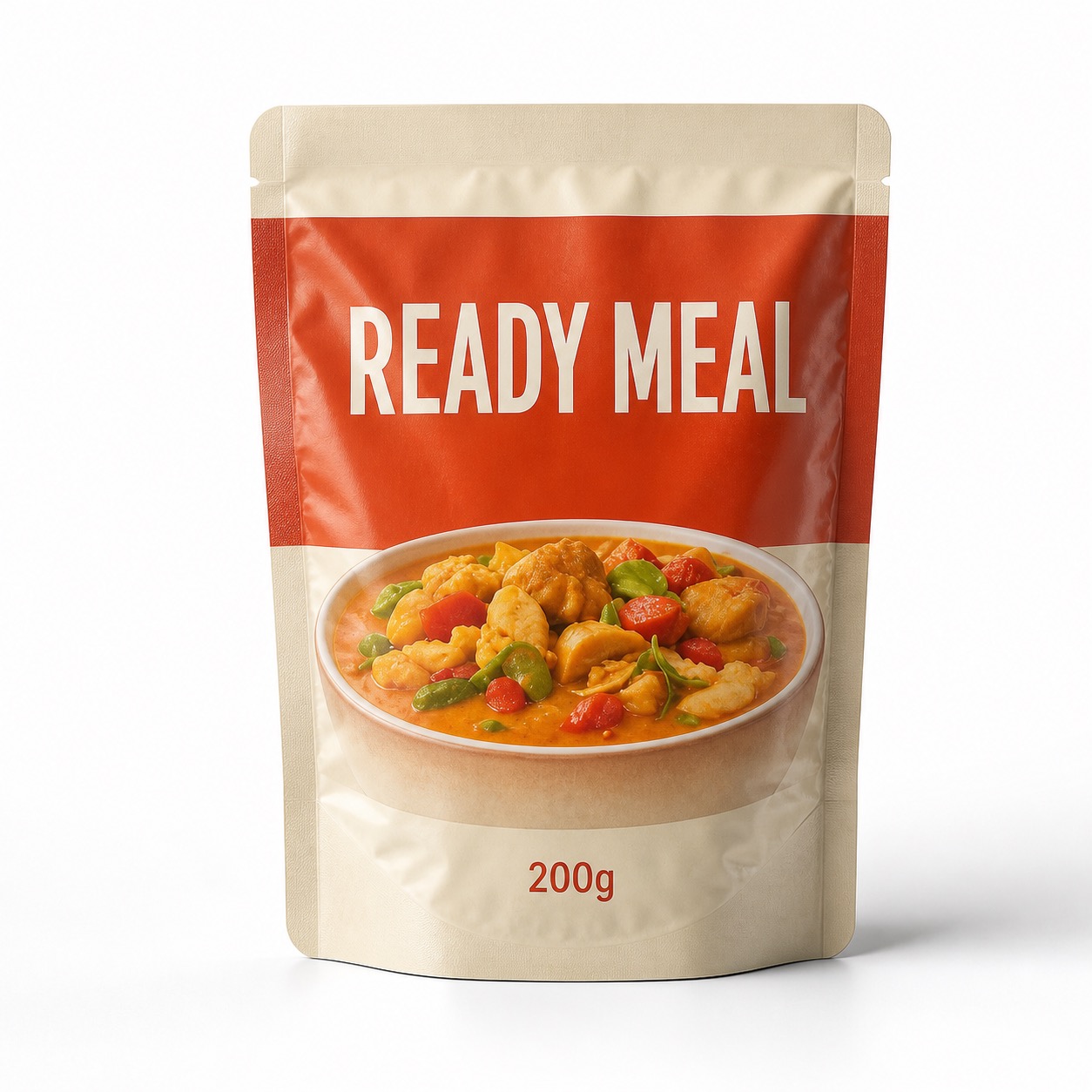
Heat-resistant retort pouch structures reviewed for high-temperature retort processes, supporting ready meals, soups, sauces, wet pet food, and shelf-stable product projects.
RCPP sealant layers, PET/AL/RCPP or PET/NY/RCPP structures, food-contact documentation, heat resistance, seal strength, and process validation inputs can be reviewed by project scope.
Production Traceability
Batch records
ISO 9001-Style QC
Quality system
Shipping term coordination
DDP / FOB / CIF
Material Review
Project-specific structures
From ready meals to wet pet food, retort pouches support high-temperature retort processing, heat resistance, seal strength, and process validation requirements.
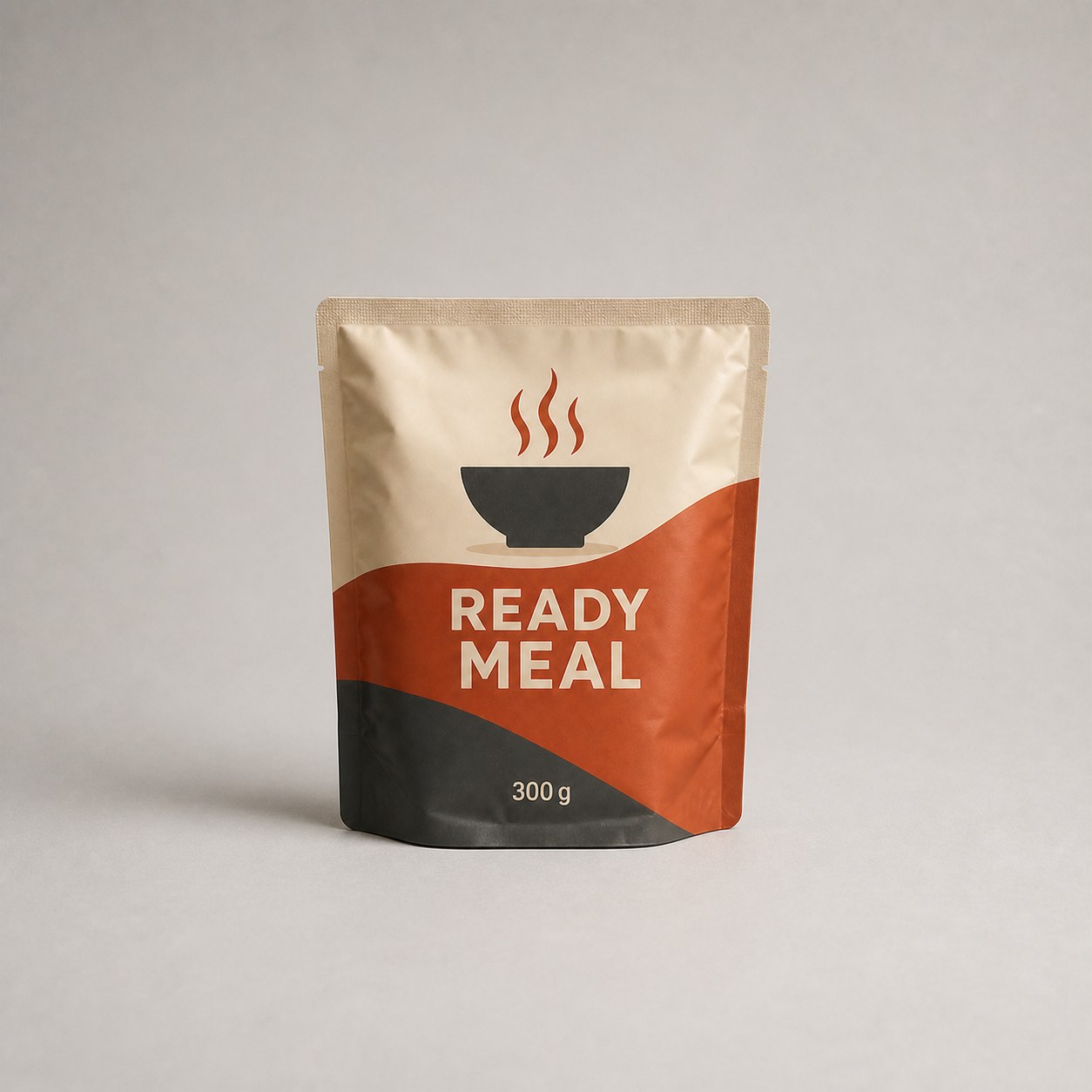
Complete meals, ready meals, and soups in stand-up retort pouches, specified by filling method, heat process, seal strength, and validation requirements.
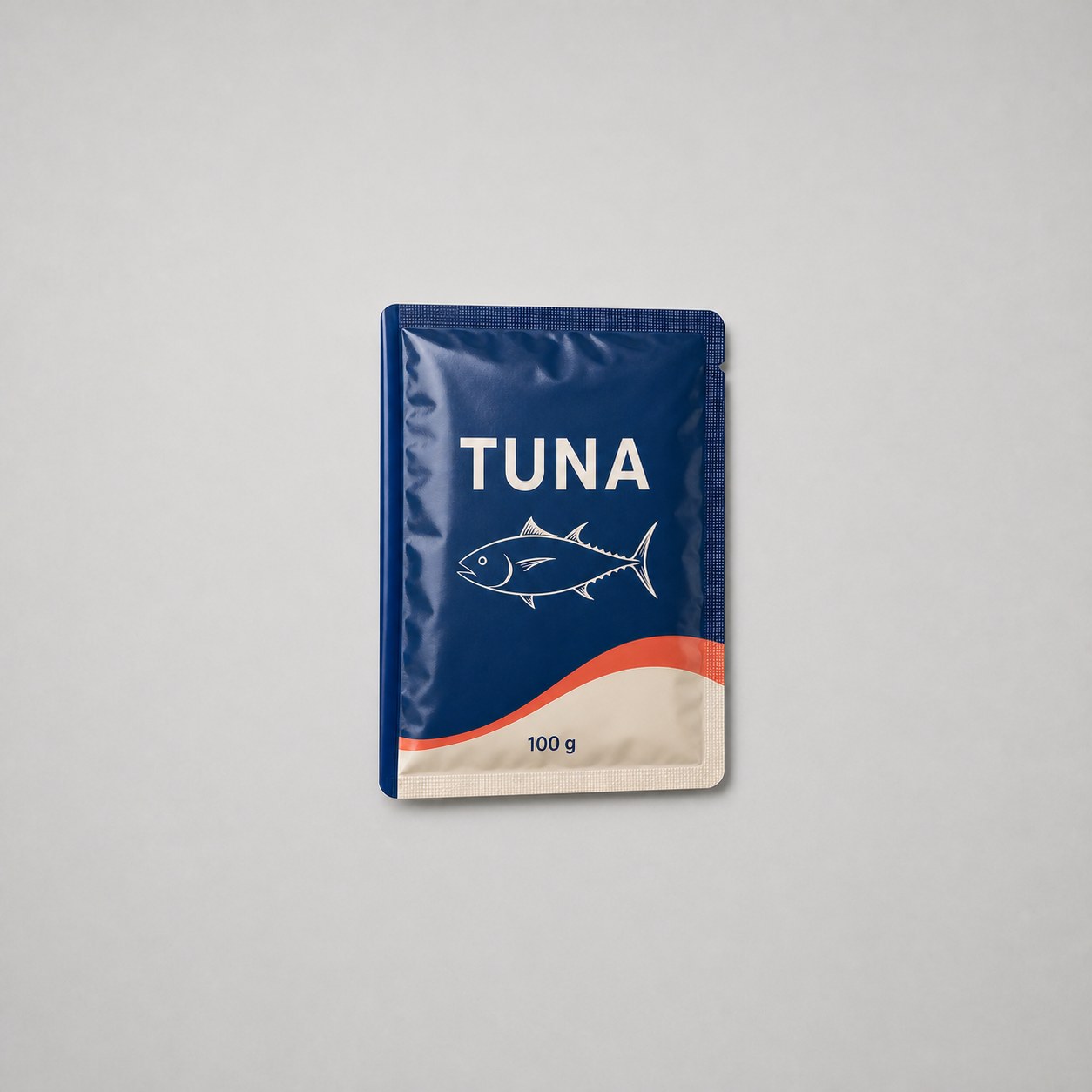
Flat 3-side-seal pouches for tuna, salmon, and seafood projects, using PET/AL/RCPP or PET/NY/RCPP structures selected by process validation and barrier target.
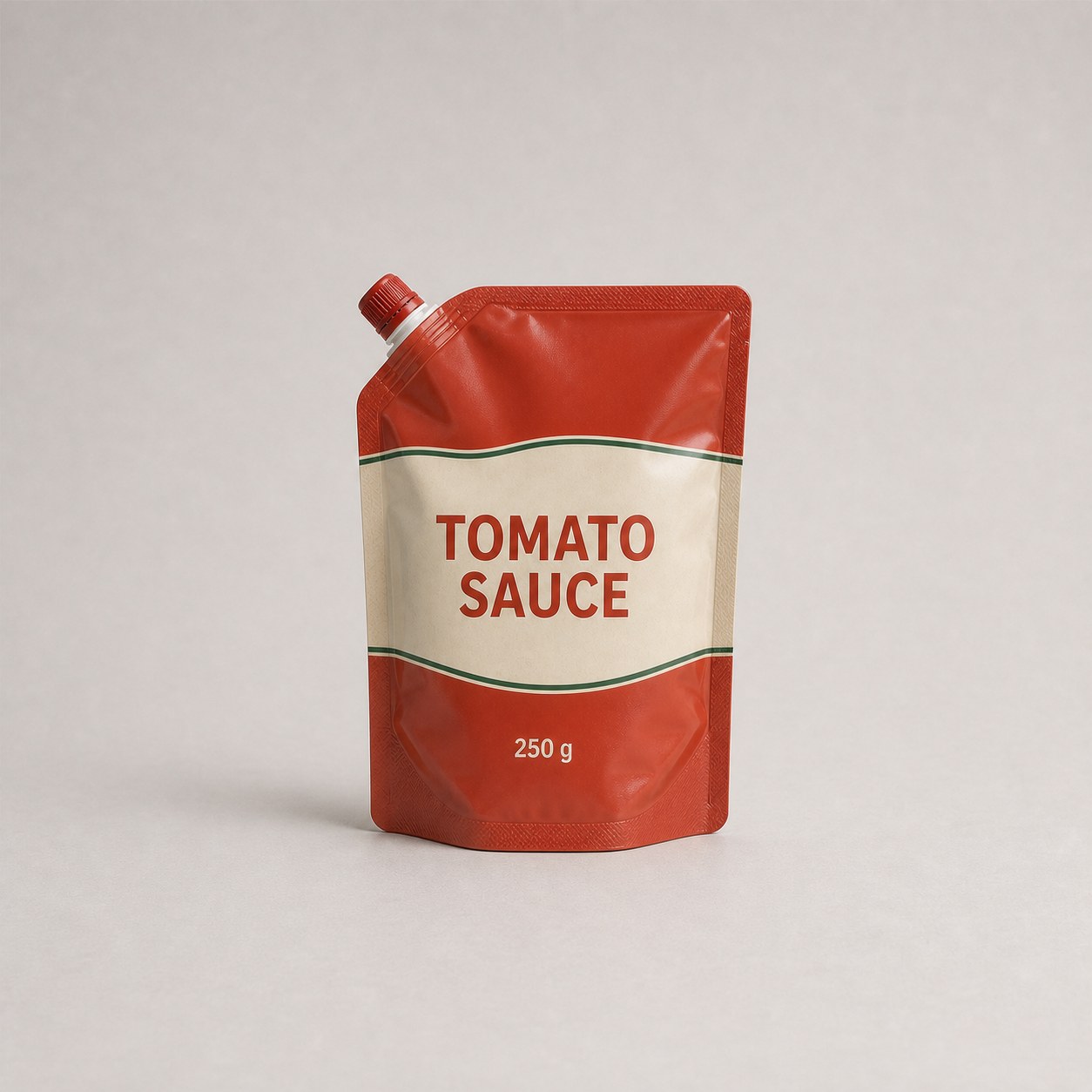
Retort pouches for sauces, curry paste, condiments, and cooking bases, with RCPP sealant and food-contact documentation reviewed against the final formula.
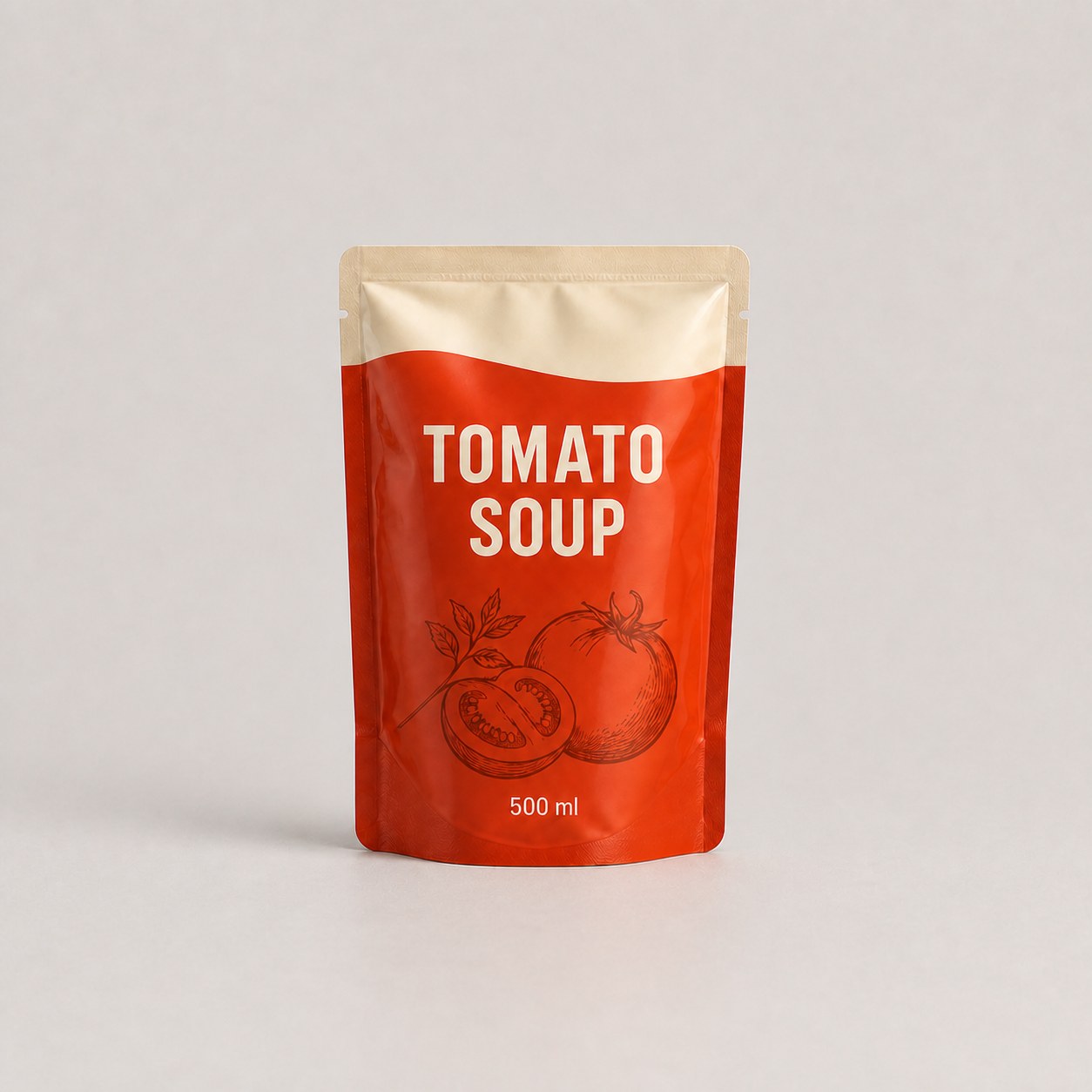
Retort pouches for soup bases, vegetable purees, and shelf-stable sauces, with process validation confirmed by the filler and final product requirements.
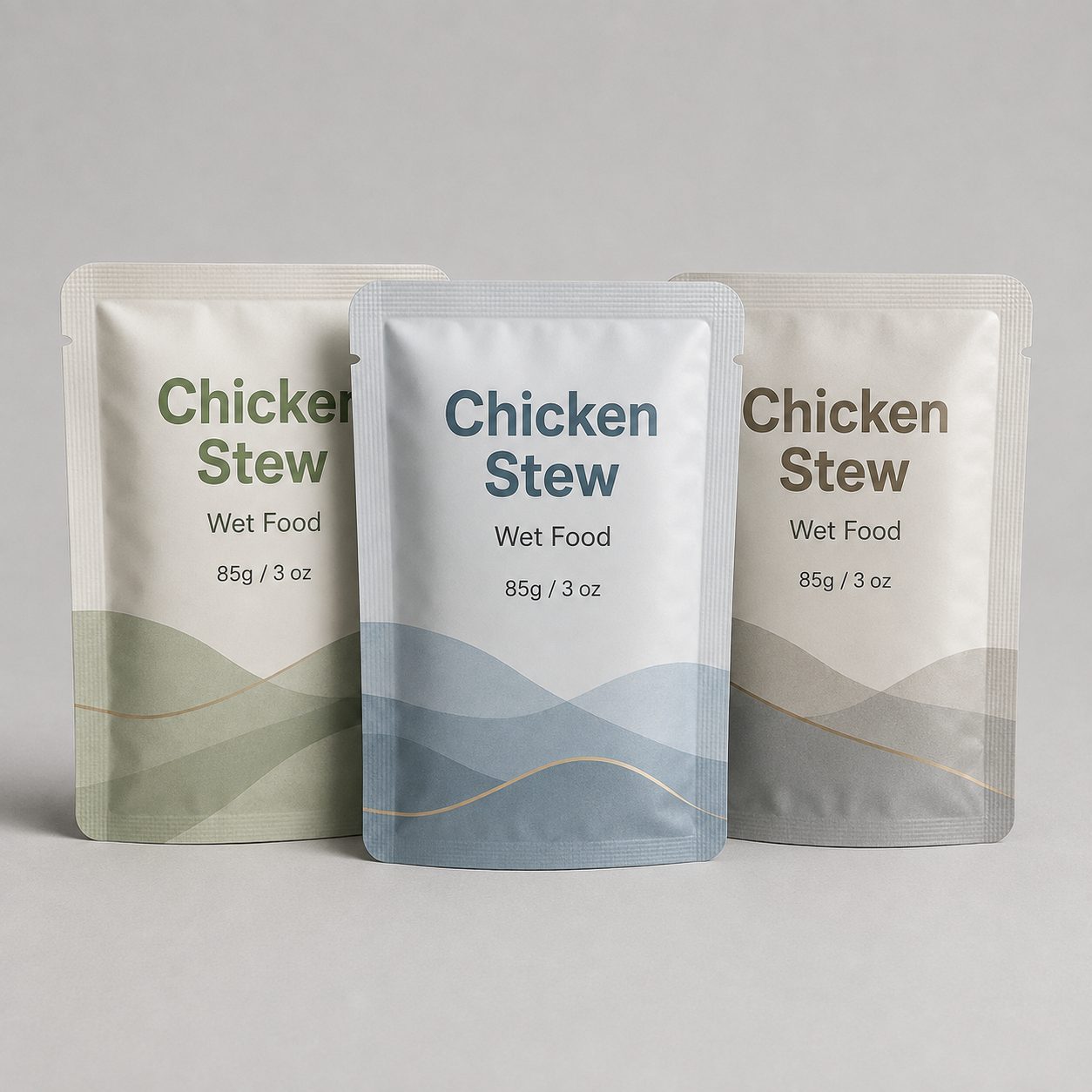
Single-serve sachets and stand-up pouches for wet pet food. Retort-resistant structures can be reviewed for 121°C-class processing.
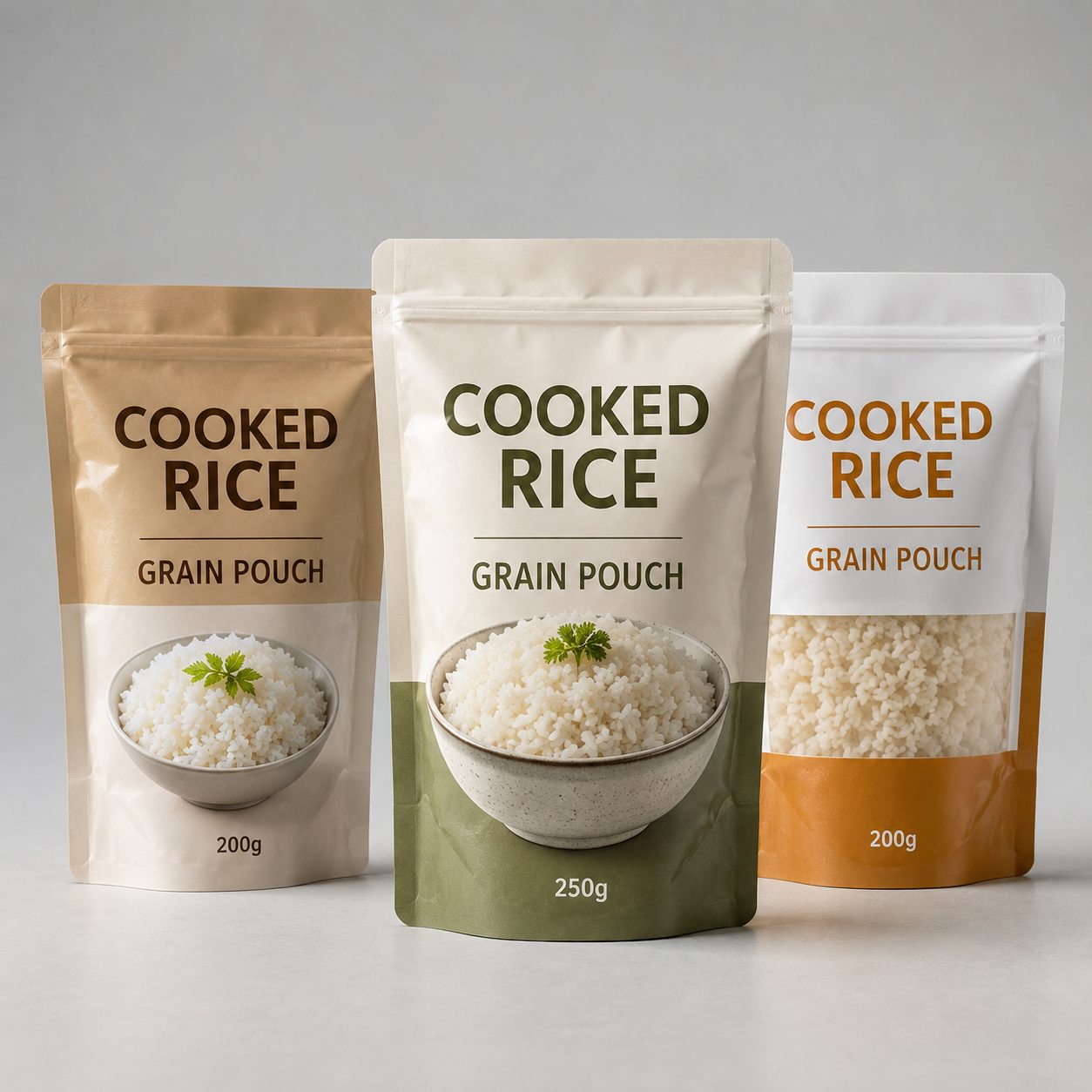
Pre-cooked rice and grain pouches are reviewed by fill weight, seal width, laminate structure, retort process, and final handling requirements.
PET/AL/RCPP and PET/NY/RCPP structures can be reviewed for high-temperature retort processing and final product handling.
RCPP sealant layers and seal width are specified around retort cycle demands, filling conditions, and sample approval checks.
Process validation should be confirmed with the filler, packed product, retort schedule, and final storage or distribution requirements.
Food-contact documentation, material declarations, migration testing, supplier records, and third-party reports can be reviewed by project.
Structures can be reviewed for high-temperature retort processing and project-specific pressure conditions. Shelf-life and process performance should be validated with the filler and final product requirements.
Retort-grade Cast Polypropylene (RCPP) inner layer is selected to maintain seal integrity under high heat and pressure. Compared with standard PE sealants, RCPP is better suited for retort cycle demands.
PET/NY/AL/RCPP (opaque) and TPET/NY/RCPP (transparent) structures. The nylon interlayer provides flex-crack resistance essential for products transported under varying pressure and temperature conditions.
Retort pouch format, seal geometry, opening method, and final handling instructions should be confirmed through sample approval and process validation before commercial launch.
Choose the right material structure based on retort process, heat resistance, seal strength, product formula, and food-contact documentation requirements.
★ Recommended for Retort Pouches
PET / NY / AL / RCPP
Opaque retort — ideal for solid foods requiring flatness
TPET / NY / RCPP
Transparent retort — product visibility for soups and sauces
| Structure | Application | Barrier Level |
|---|---|---|
PET / PE
|
Standard structure for non-retort dry trials only | Standard |
PET / VMPET / PE
|
Metallized barrier for non-retort comparison projects | Medium |
PET / AL / PE
|
Aluminum barrier for retort structure review | High |
PET / NY / PE
|
Puncture resistant for heavy products | High |
Kraft / AL / PE
|
Natural look with high barrier | High |
Mono PE
|
Recyclable mono-material structure | Standard |
A transparent look at how we build structural integrity into every Retort Packaging. Visit our material guide for more details.
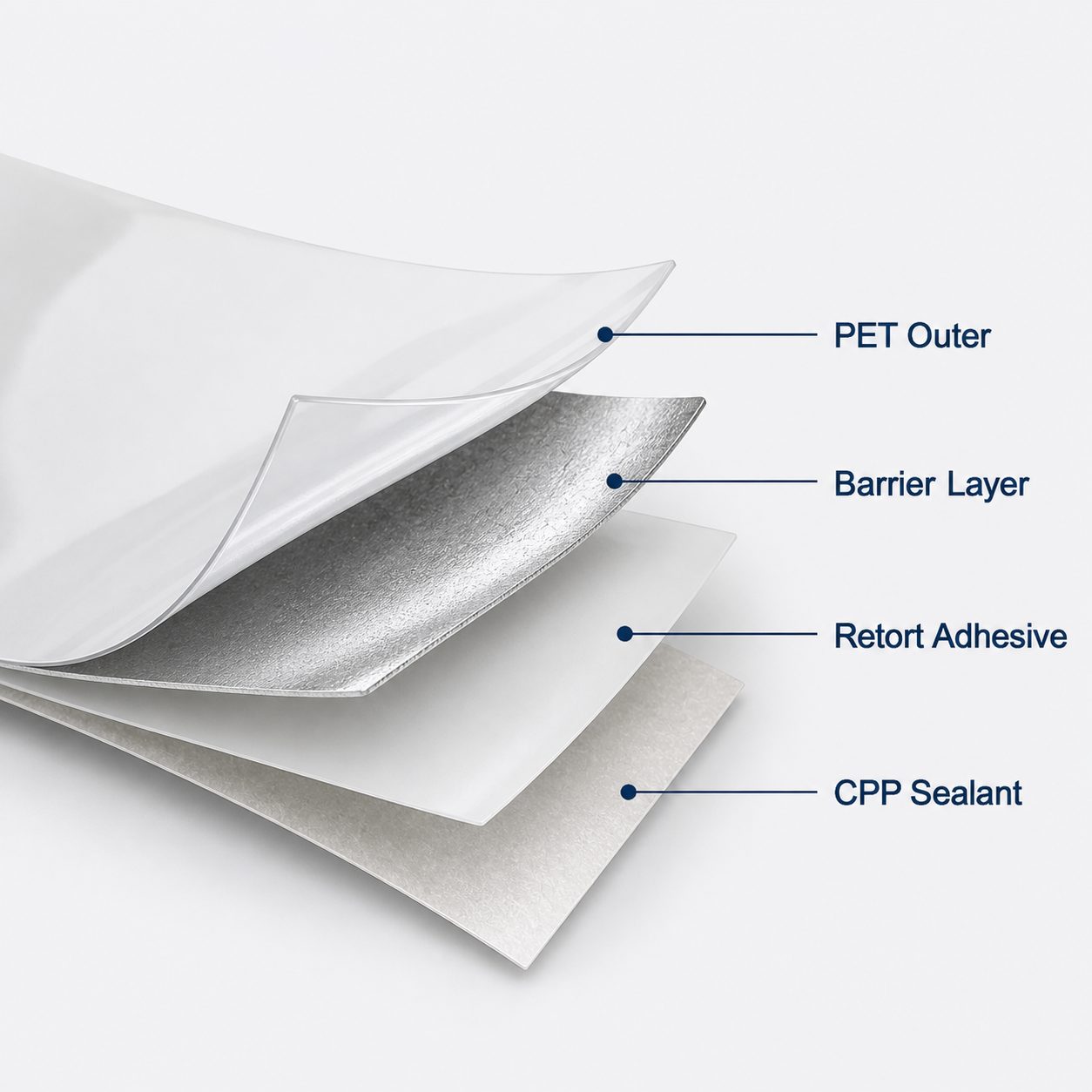
Specialized heat-stable PET selected for high-pressure retort processing and steam heating conditions.
Provides a high-barrier layer designed to remain intact during the heating process and support shelf-stable retort packaging requirements.
Retortable Cast Polypropylene designed specifically to maintain seal integrity under extreme pressure and heat.
Retort schedule, fill weight, product formula, seal width, and final handling conditions are reviewed before structure confirmation.
Tear notch, easy-open edge, pouch shape, and seal geometry are selected around retort cycle demands and consumer handling.
PET/AL/RCPP, PET/NY/RCPP, transparent structures, oxygen barrier, heat resistance, and seal strength are reviewed by project.
Food-contact documentation, material declarations, migration test scope, process validation inputs, MOQ, and sample approval are confirmed by project.
Representative parameters. Actual values depend on material structure and customization.
Film Thickness
Project-specific retort laminate, often PET/AL/RCPP or PET/NY/RCPP
Retort Temp
Defined by retort schedule and process validation
Pressure Resistance
Project-specific pressure condition and validation scope
Oxygen Barrier (OTR)
Project-specific oxygen barrier target
Shelf Life
Validated by packed product and retort process
Sealant Layer
RCPP (Retort Cast Polypropylene)
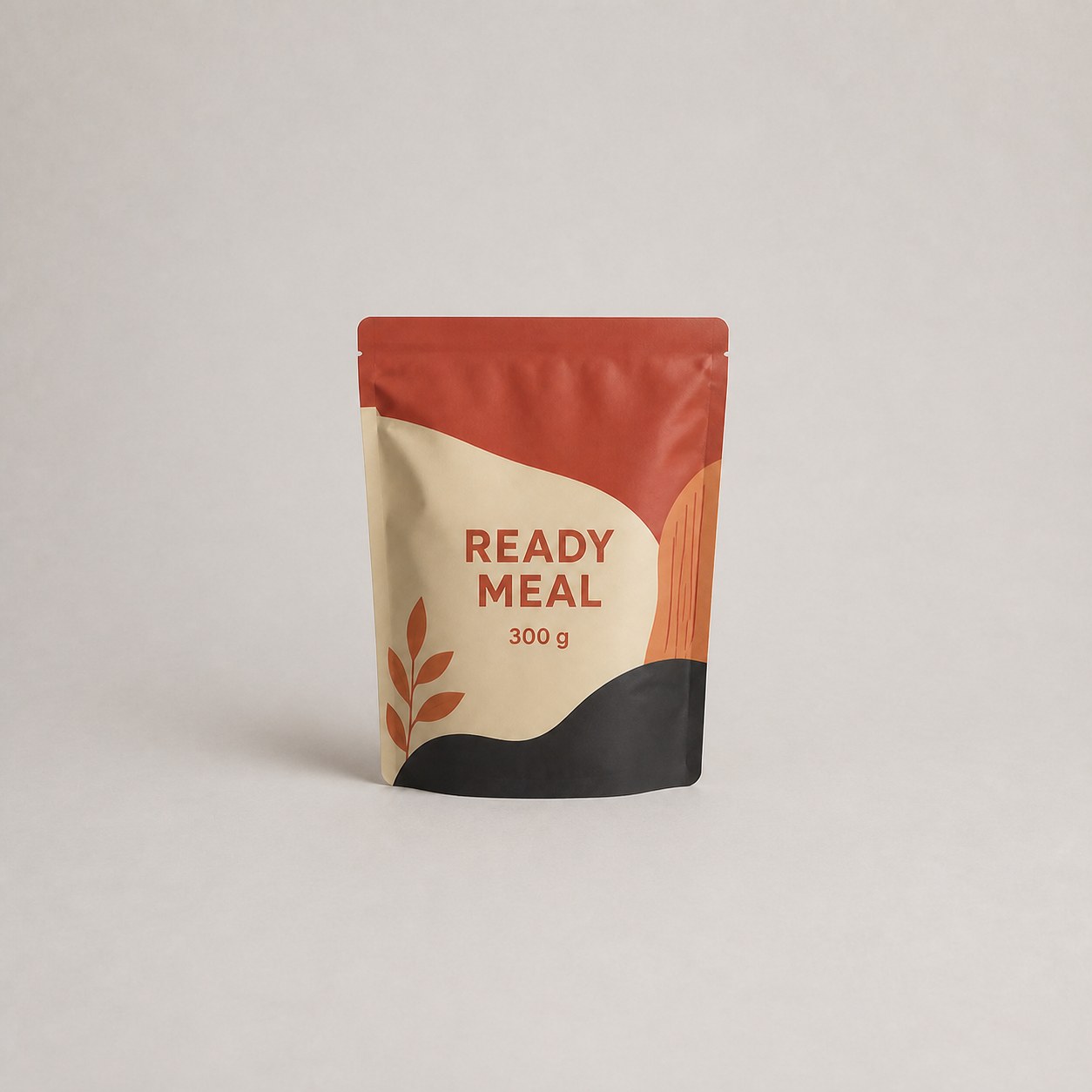
Low-glare printed finish on a filled ready-meal retort pouch
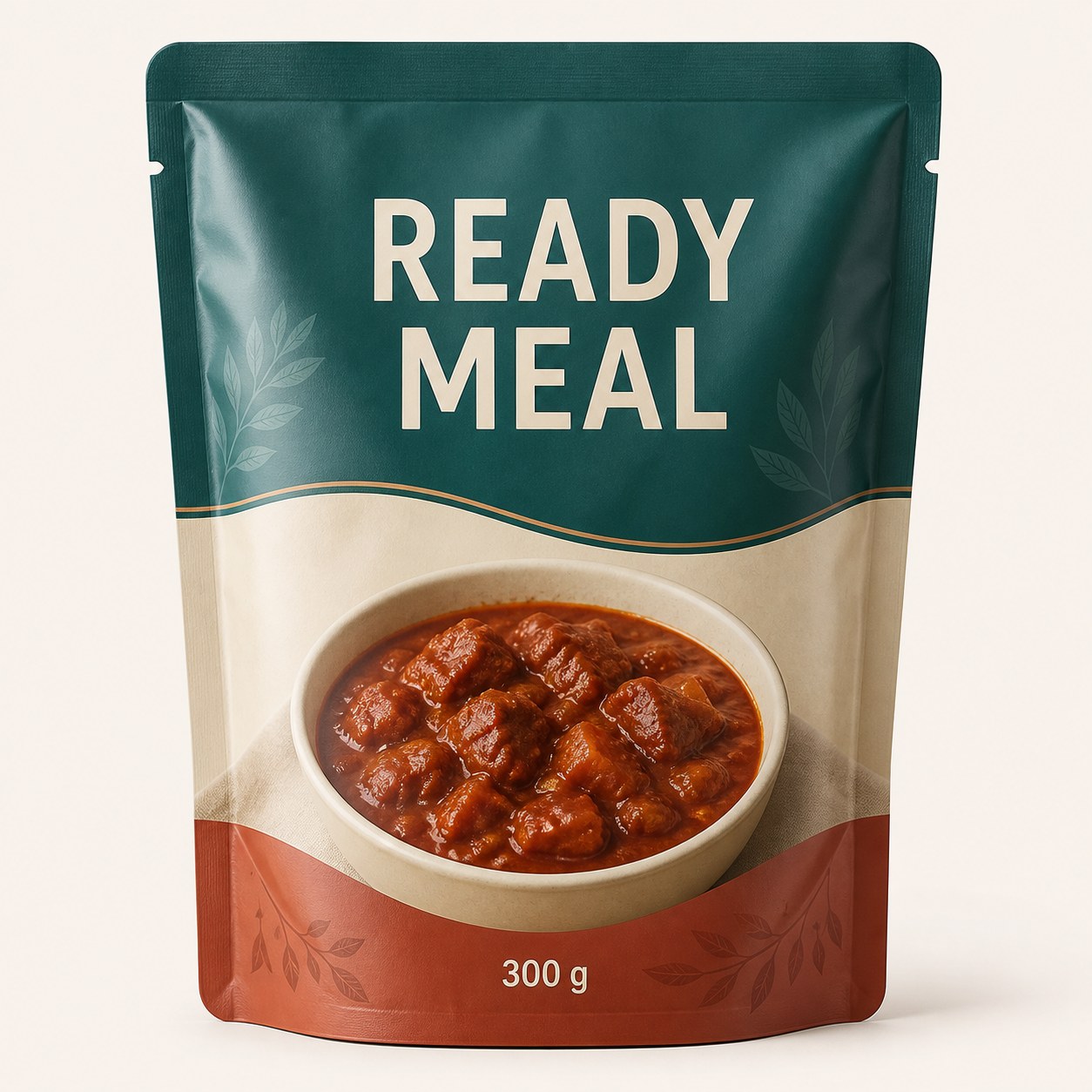
Clear product hierarchy and prepared-meal imagery for retail presentation
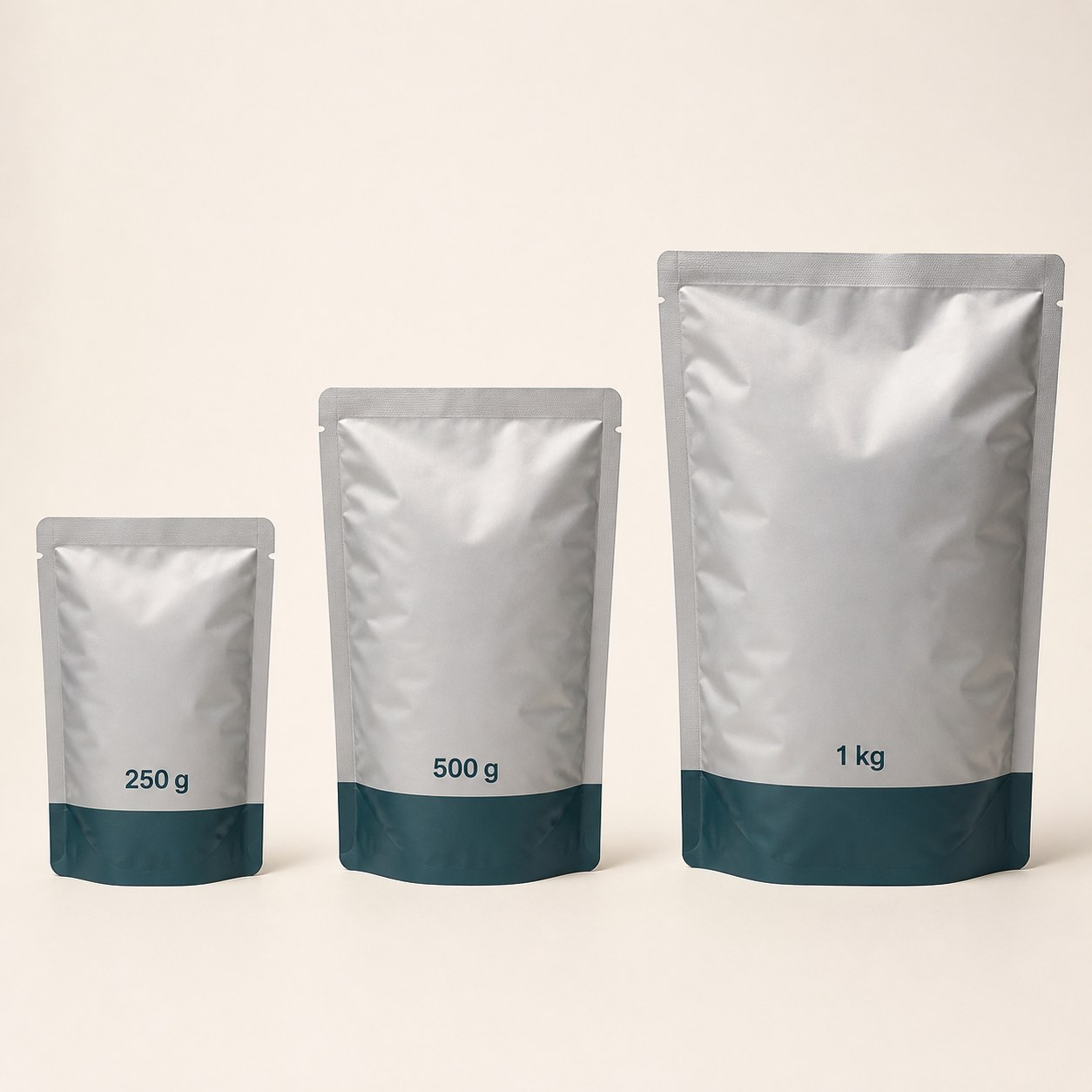
Coordinated 250 g, 500 g and 1 kg format references
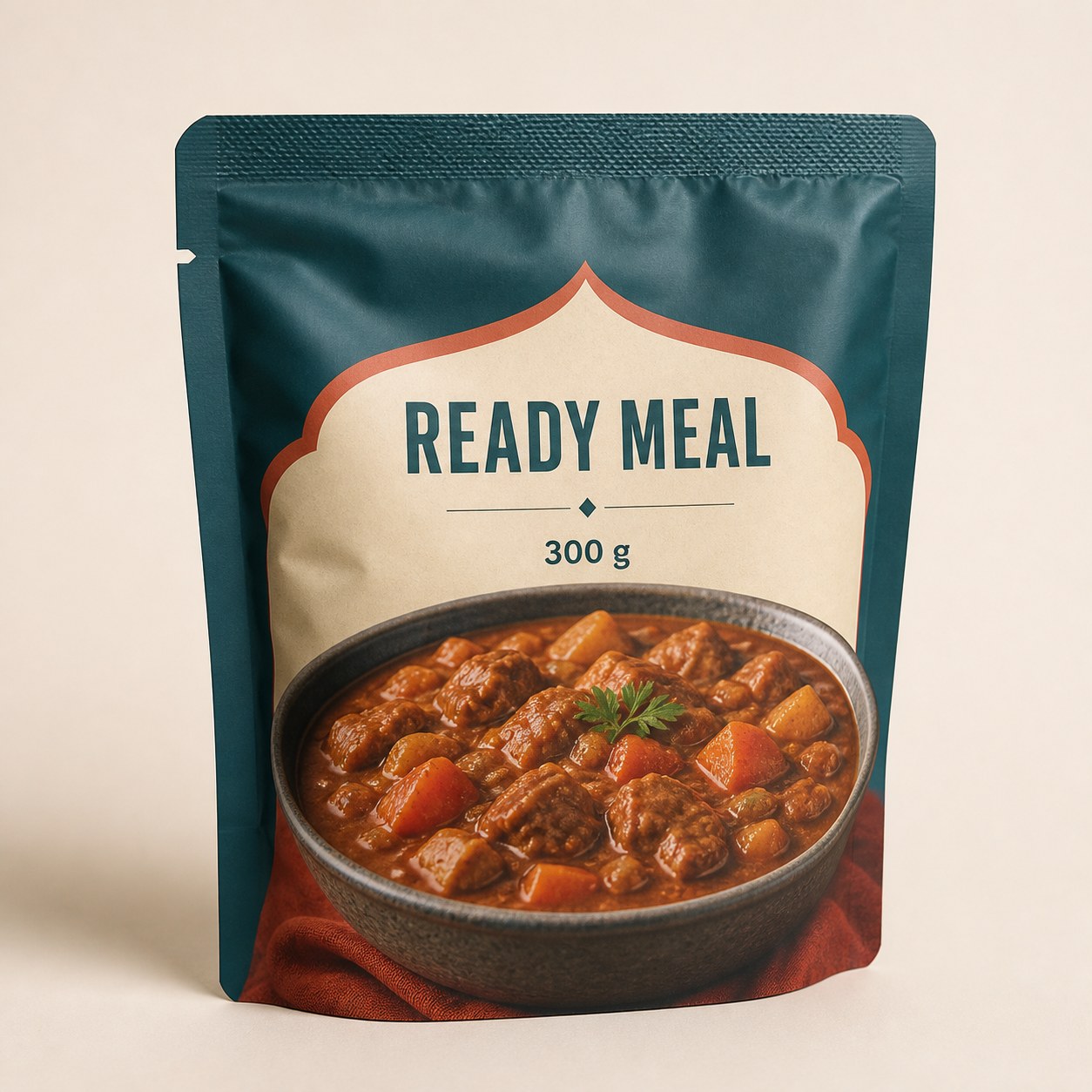
Side tear-notch placement on a sealed ready-meal retort pouch
Use these photos as format references. Final size, structure, print layout, and testing scope are reviewed against your product, filling method, and target market.
Lower-impact structure options can be reviewed when the product, filling process, target market, and recovery route support them.
Common issues we help retort packaging buyers avoid during project coordination.
Choosing a pouch rated for 121 degrees C when the actual thermal processing runs at 135 degrees C causes delamination or seal failure during retort. We help review the laminate temperature rating against the confirmed retort schedule before structure approval, so the structure is matched to the real process.
Insufficient vacuum or excess headspace during retort causes pouch ballooning, seal stress, and potential burst failures. We coordinate headspace and vacuum-level review with the filler and process owner so the pouch behaves predictably under heat and pressure.
Bond strength between laminate layers must survive repeated thermal cycling. Undertested laminates can delaminate months after production, causing recalls. We help confirm that the selected adhesive system and laminate structure have been validated for the required number of thermal cycles.
Seal width and sealant material must withstand internal pressure at thermal processing temperature. A seal that tests fine at ambient can fail under retort conditions. We help review seal-width specifications and RCPP sealant selection against the actual retort pressure and temperature profile.
Retort packaging requires accelerated aging tests specific to the thermal processing method. Standard ambient shelf-life tests do not replicate post-retort conditions. We help coordinate the right testing scope with the process owner so shelf-life claims are backed by retort-relevant evidence.
For Retort Pouches, buyers usually compare PET/AL/RCPP, PET/NY/RCPP, heat resistance, seal strength, process validation, filling, and food-contact documentation needs.
Common structures include PET/AL/RCPP, PET/NY/RCPP. The best choice depends on barrier target, filling process, packed product, shelf life, and target market.
Project-specific MOQ applies because pouch size, retort structure, process conditions, seal system, printing method, validation scope, and artwork count must be reviewed together. Setup and proofing costs may apply.
Food-contact documentation, supplier declarations, migration testing, process validation inputs, and third-party testing can be arranged by project scope and selected structure.
Retort Pouches are commonly specified for ready meals, sauces, wet pet food, and shelf-stable product projects. NIAITE can adjust barrier, sealant, closure, and print finish for the packed product.
Retort Packaging is typically specified for ready meals, soups, sauces, wet pet food, cooked grains, seafood, and shelf-stable product projects that will go through a validated retort process.
Yes. We tailor pouch format, fill weight, PET/AL/RCPP or PET/NY/RCPP structure, seal width, print design, process validation inputs, MOQ, and sample approval requirements.
Food-contact documentation, material declarations, migration testing, process validation inputs, traceability records, and third-party reports can be reviewed according to selected structure, resin source, destination market, and test scope.
NIAITE serves as the project support team connecting the buyer, process owner, testing scope, and selected partner factories. Final retort validation remains with the buyer's qualified process authority and filled-product process.
Product formula, fill weight, headspace, filling temperature, retort time-temperature-pressure profile, cooling route, shelf-life target, and validation criteria come from the buyer and process owner.
Selected partner factories are reviewed against the specified laminate, retort sealant, pouch format, print system, conversion capability, batch scope, and documentation requirements.
Artwork proofs, unfilled samples, seal checks, filled-pack trials, post-process inspection, and acceptance records follow the process owner's test plan before production approval.
Material declarations, batch traceability, laminate and sealant records, dimension checks, conversion QC, migration or third-party reports, and approval files are scoped per project.
Approved structure, artwork, process assumptions, test evidence, production release, deviations, and later material or process changes are recorded for buyer review.
Tell us your product, target weight, and requirements.
We recommend materials, structure, and provide pricing.
Confirm details, approve artwork, and production begins.
QC checkpoints and shipment scope are confirmed by project.
Updated:
Work with NIAITE for material review, sampling guidance, QC checkpoints, and export project coordination.