A coffee bag with valve is a high-barrier pouch fitted with a one-way degassing valve, which lets CO₂ from freshly roasted coffee escape while limiting outside air coming back in. Custom versions pair the valve with a zipper or tin-tie, kraft paper or foil laminate, and flat bottom, side gusset, or stand-up formats for whole bean coffee, ground coffee, and specialty roasters.
NIAITE is a flexible packaging project support team coordinating coffee bag structure, valve, artwork, sampling, and production follow-up with selected production partners.
Specialized coffee packaging with one-way degassing valve options that help manage CO₂ release while limiting oxygen ingress after roasting.
Valve, zipper, foil laminate, VMPET, kraft paper, and sealant choices are reviewed against roast level, grind, fill weight, and shelf-life target.
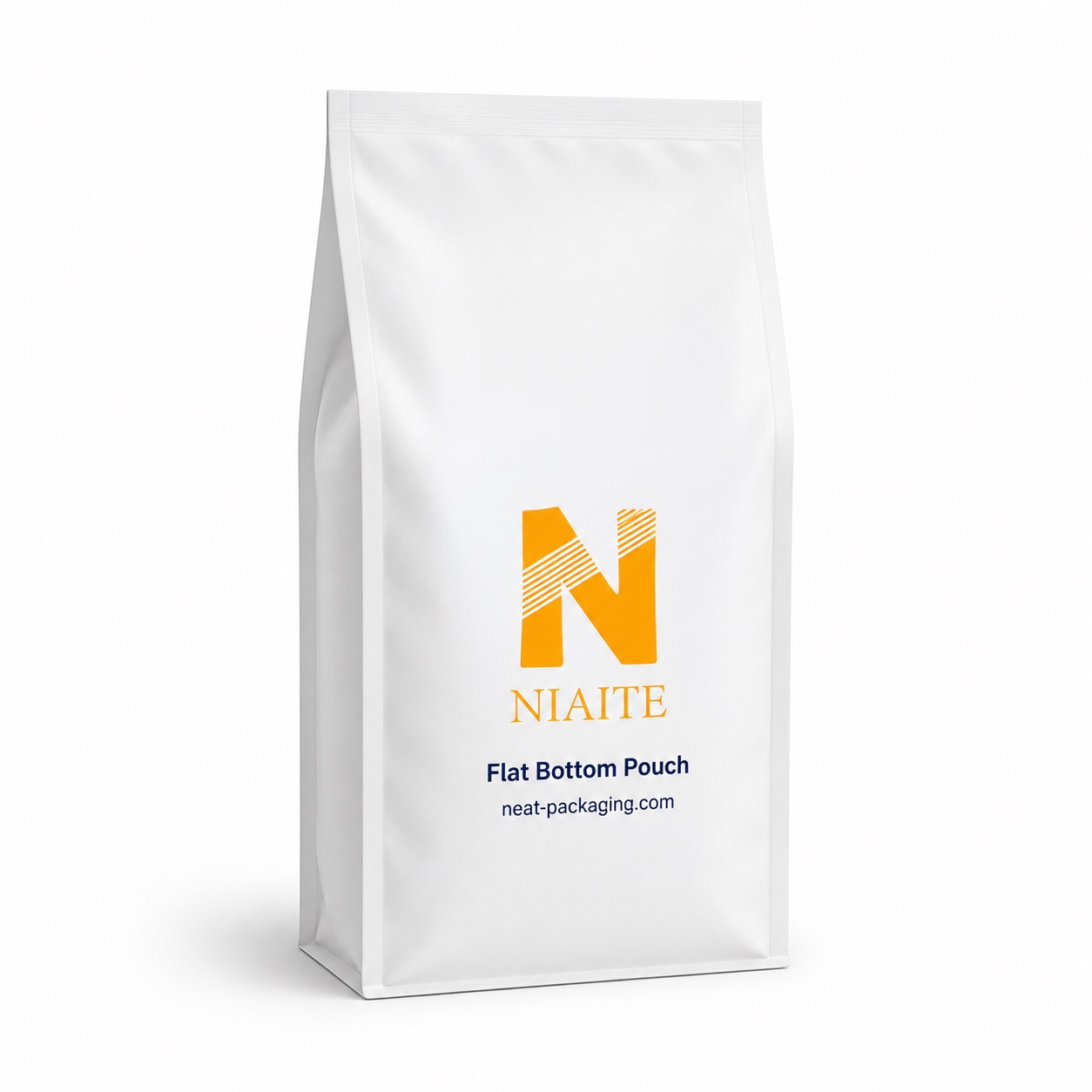
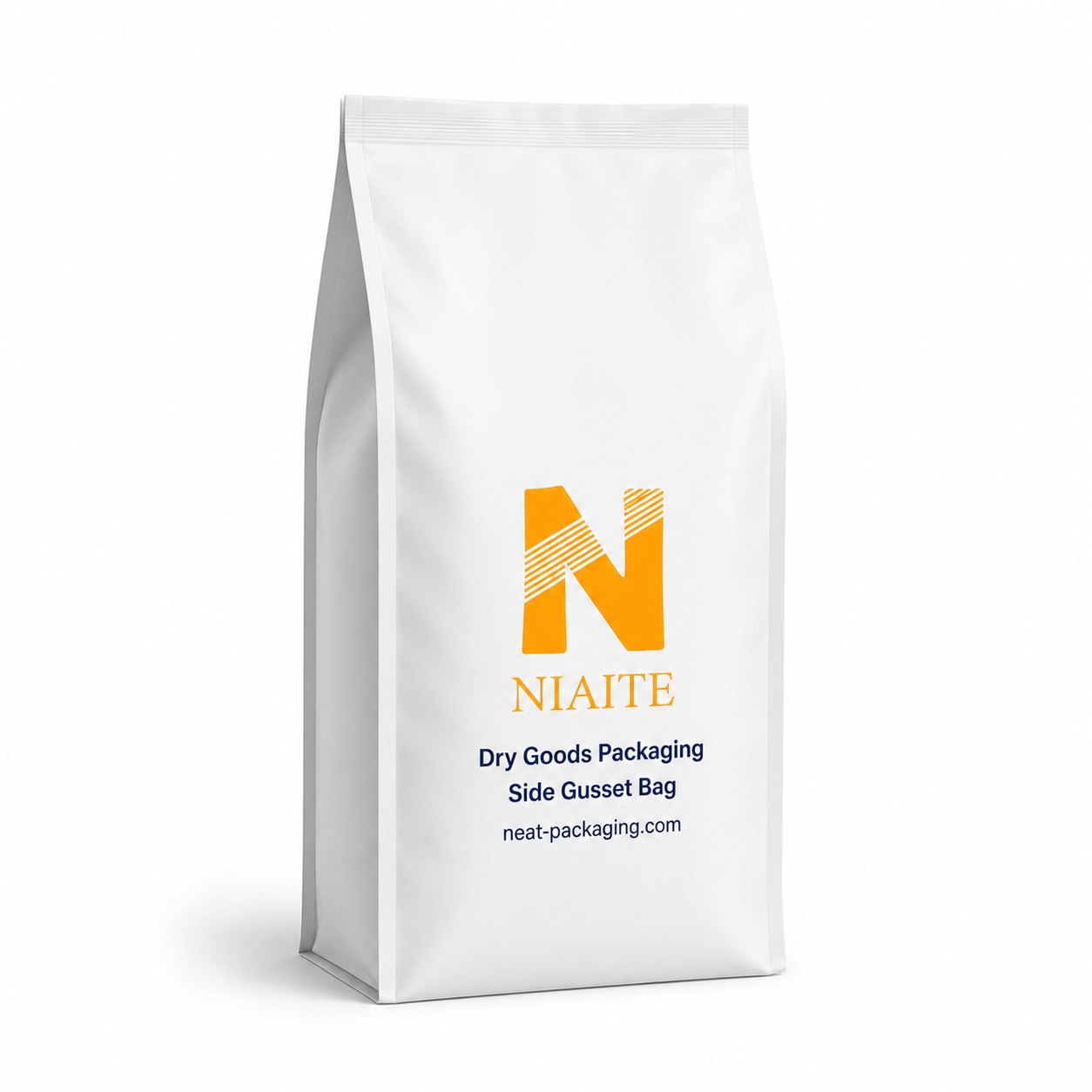
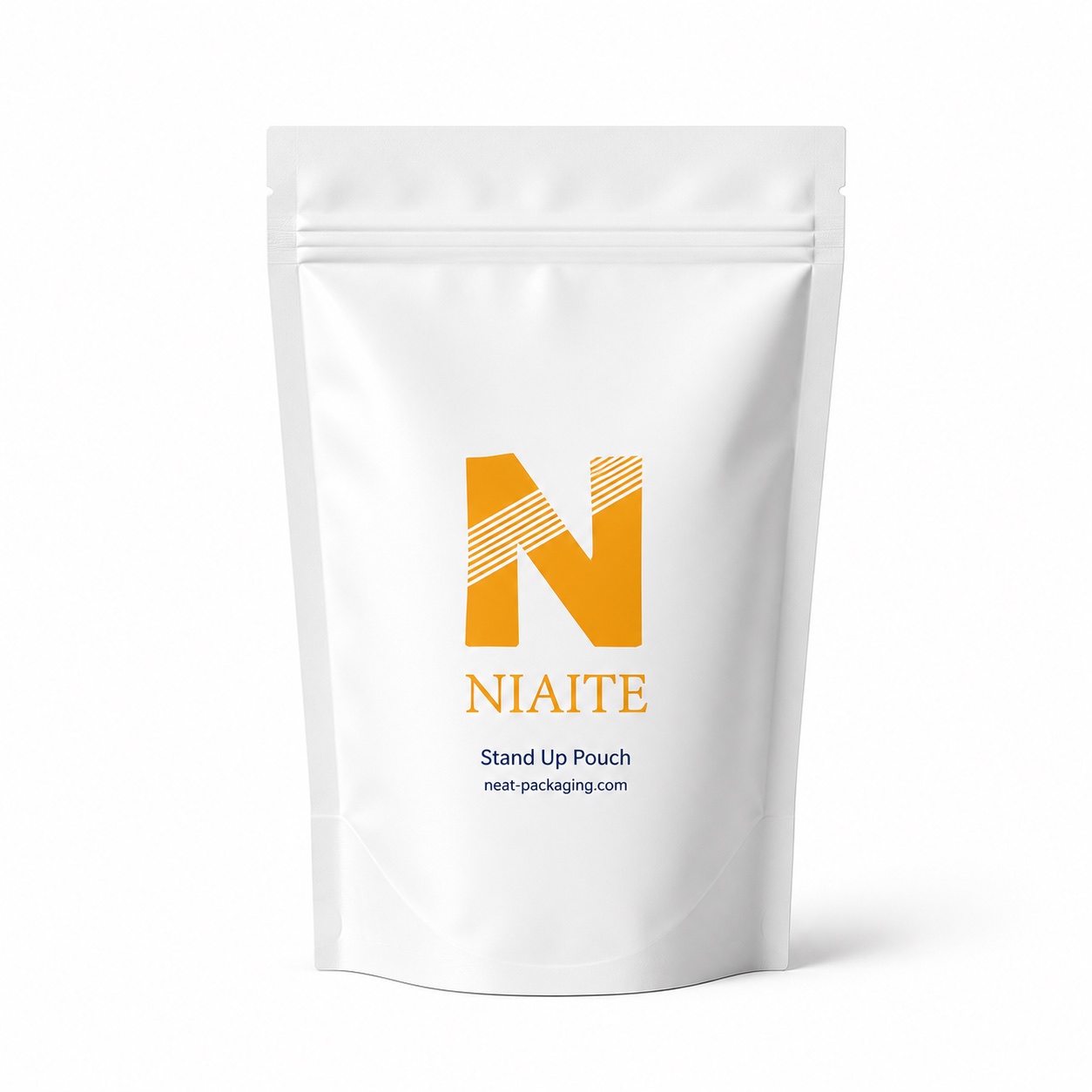
Most roasters choose between four valve-ready formats. Common retail references are 250 g / 8.8 oz, 340 g / 12 oz, and 500 g / 1.1 lb; roastery packs often run 1 kg / 2.2 lb, 2 lb, or 5 lb. Representative film thickness for a PET/AL/PE laminate is 80–150 μm.
| Format | Often chosen for | Closure and valve notes |
|---|---|---|
| Flat bottom (box bottom) bag | Retail whole bean or ground coffee, and larger roastery packs, where a stable, box-like shelf face is wanted | Front butterfly or PTC zipper below the brand panel; valve placed before the dieline is final |
| Side gusset bag | A traditional coffee bag profile with vertical fill space, used for retail and bulk packs | Tin-tie or heat-sealed top; check valve position against gusset depth |
| Stand-up pouch | Smaller retail packs of whole bean or ground coffee | PTC zipper; nitrogen flushing and valve reviewed against grind and roast |
| Quad seal pouch | Retail and bulk packs that need a squared, structured shape, including larger 2 lb and 5 lb roastery bags | Four corner seals hold the shape; valve and zipper reviewed by bag size |
MOQ starting points differ by bag format and are counted per design; see the pouch-style MOQ guide before planning several single-origin SKUs.
Partner production routing
Partner facilities
ISO 9001-Style QC
Quality system
Shipping term coordination
DDP / FOB / CIF
Recyclable-ready review
Project-specific structures
From single-origin specialty to commercial-scale roasting, our coffee bags are engineered for every segment of the coffee industry.
Common retail references include 250g / 8.8 oz, 340g / 12 oz, and 500g / 1.1 lb bags with degassing valve, tin-tie closure, and kraft paper finish for specialty coffee branding.
Common roastery references include 1kg / 2.2 lb, 2 lb, and 5 lb bags with quad-seal or flat-bottom format, high-barrier foil laminate, and front butterfly zipper for brand display.
Nitrogen-flushed stand-up pouches with PTC zipper. PET/AL/PE or VMPET structures can be reviewed against oxygen barrier and shelf-life targets.
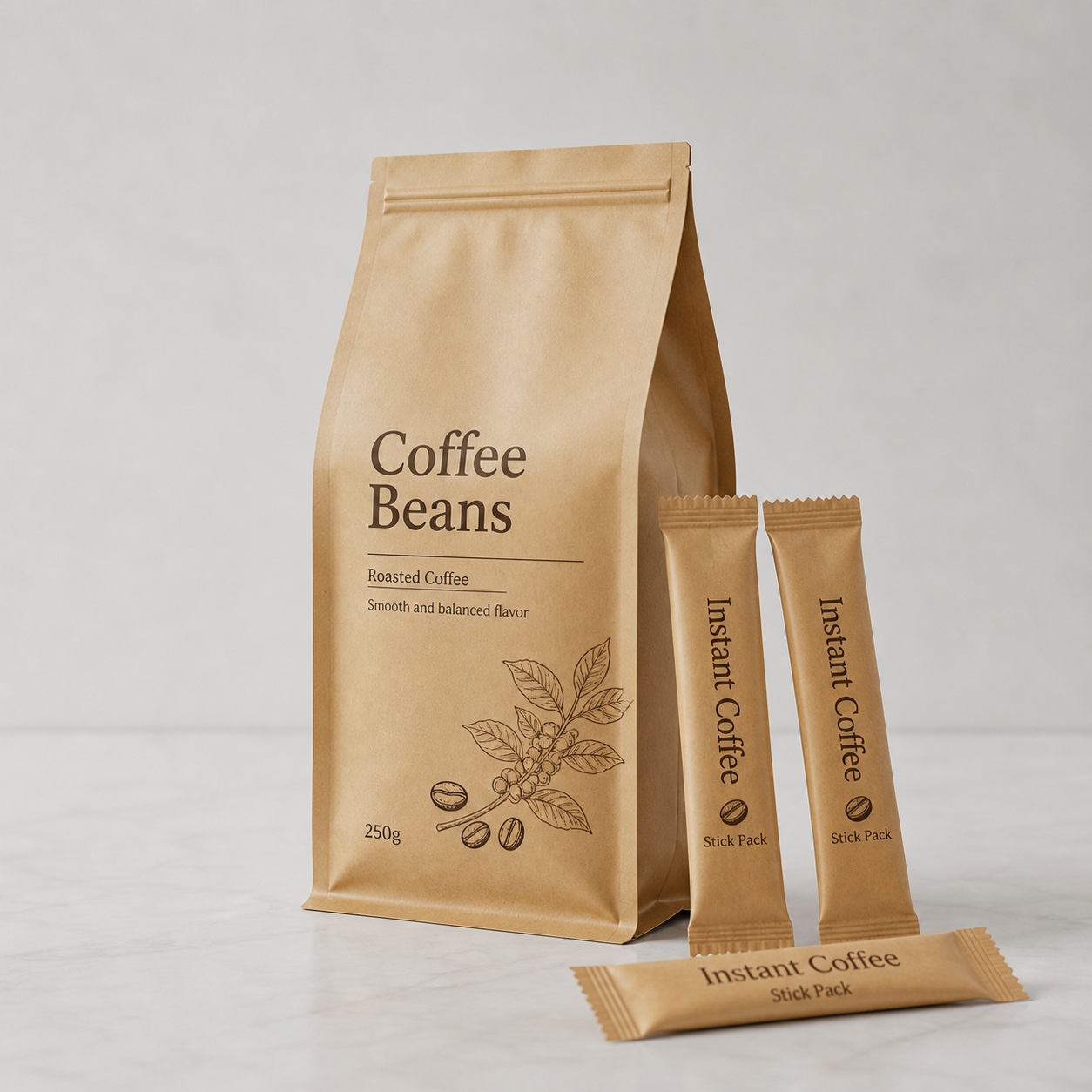
Moisture-sensitive packaging with project-specific MVTR targets. Individual stick packs or multi-serve pouches can include easy-tear opening.
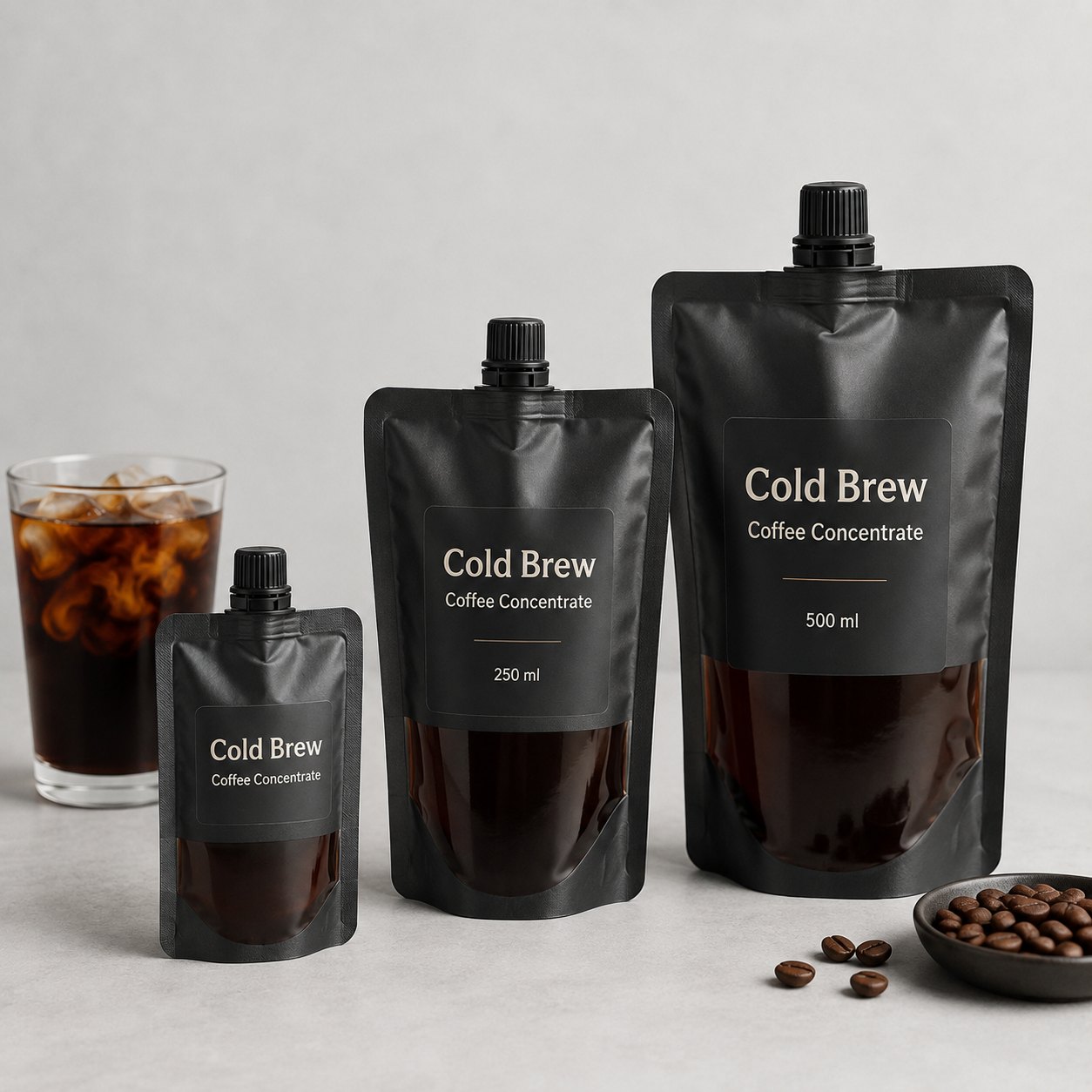
Spout pouches for liquid coffee concentrate can use liquid-compatible sealant layers reviewed for refrigerated distribution and burst-strength requirements.
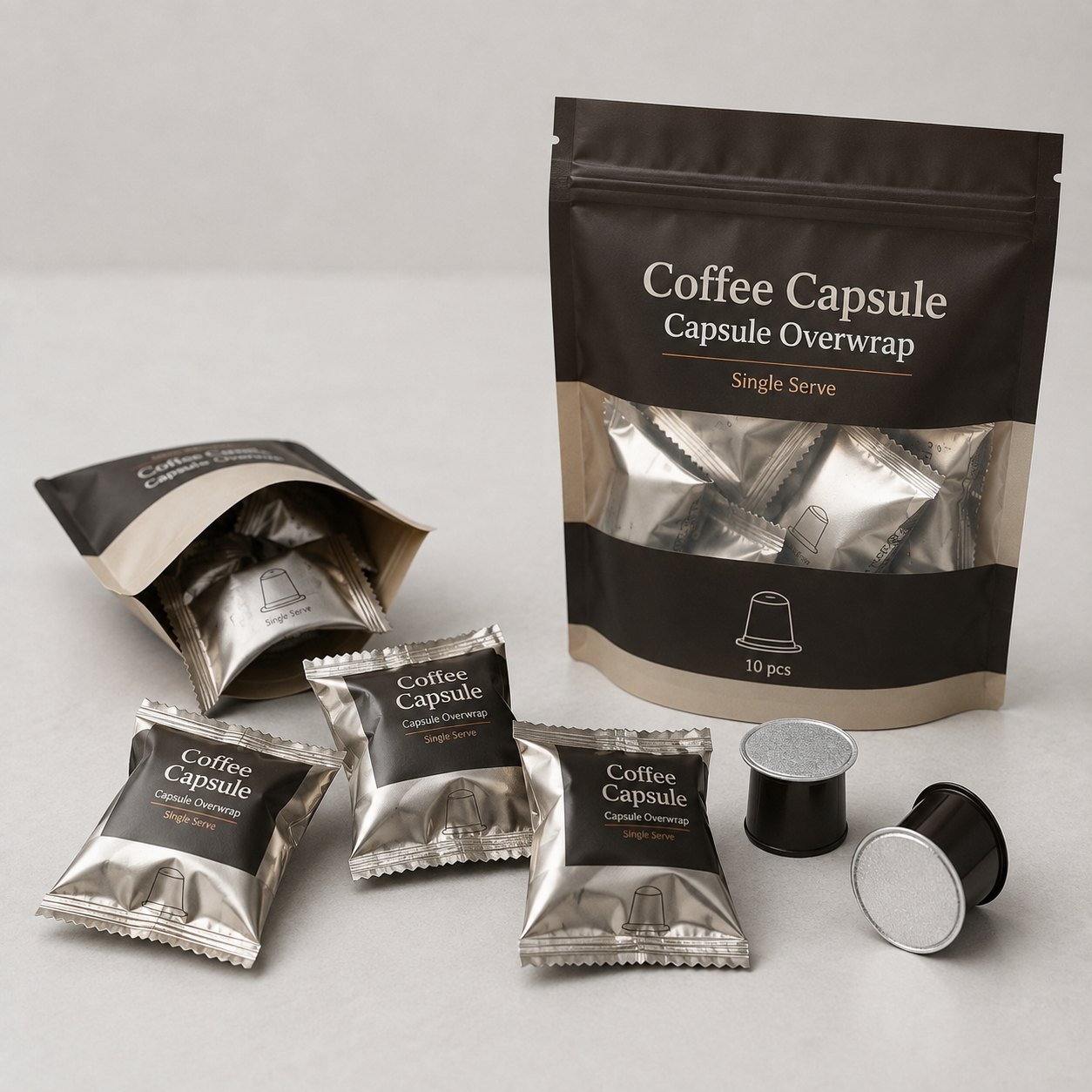
Individually sealed capsule wrappers with high-barrier aluminum laminate to support aroma and moisture-barrier targets by project.
Zipper, tin-tie, and flat-bottom formats can help retail coffee packs stand upright and close after repeated consumer use.
Stand-up, flat-bottom, quad-seal, side-gusset, and rollstock formats can be matched to fill weight, shelf display, and packing line.
Degassing valve, zipper, tin-tie, kraft paper appearance, matte varnish, spot UV, and print layout can be reviewed by project scope.
Share roast profile, grind type, fill weight, valve need, barrier target, artwork status, and target market so documentation support and sample approval are scoped correctly.
Helps release CO₂ from freshly roasted beans while limiting oxygen ingress. Valve type, placement, and sealant compatibility should be reviewed against roast profile and filling schedule.
PET/AL/PE and PET/VMPET/PE structures can be reviewed for low OTR, light barrier, moisture barrier, and aroma retention targets based on packed coffee and distribution plan.
Multiple closure options: PTC press-to-close zippers for daily use, butterfly zippers for brand display, and tin-tie closures for artisan craft branding. Closure choice should be checked with bag size and packed weight.
Matte varnish, soft-touch lamination, kraft paper substrates, and spot UV highlighting can be paired with flat-bottom construction and front zipper for retail shelf presentation. Compare these surface finishes in the soft-touch matte stand up pouch guide.
Choose the right material structure based on roast profile, grind, degassing valve, barrier target, fill weight, and shelf-life plan.
★ Recommended for Coffee Bags
PET / AL / PE
Common for ground coffee where low oxygen and light exposure are target requirements
Matte BOPP / Kraft / PET / AL / LLDPE
Craft coffee appearance with kraft paper outside and barrier lining inside
| Structure | Application | Barrier Level |
|---|---|---|
PET / PE
|
Light-duty coffee sample or short-cycle retail pack | Standard |
PET / VMPET / PE
|
Metallized barrier for whole bean or ground coffee projects | Medium |
PET / AL / PE
|
Foil laminate for stronger oxygen, moisture, and aroma barrier targets | High |
PA / PET / AL / PE
|
Premium high-barrier foil laminate with nylon (PA) for puncture and seal strength, paired with a one-way degassing valve | High |
PET / NY / PE
|
Heavier fill weights or bulk coffee packs needing extra handling strength | High |
Kraft / AL / PE
|
Kraft paper appearance with barrier lining for specialty roasters | High |
Mono PE
|
PE-based structure reviewed for local recycling stream compatibility | Standard |
A transparent look at how we build structural integrity into every Coffee Bag. Visit our material guide for more details.
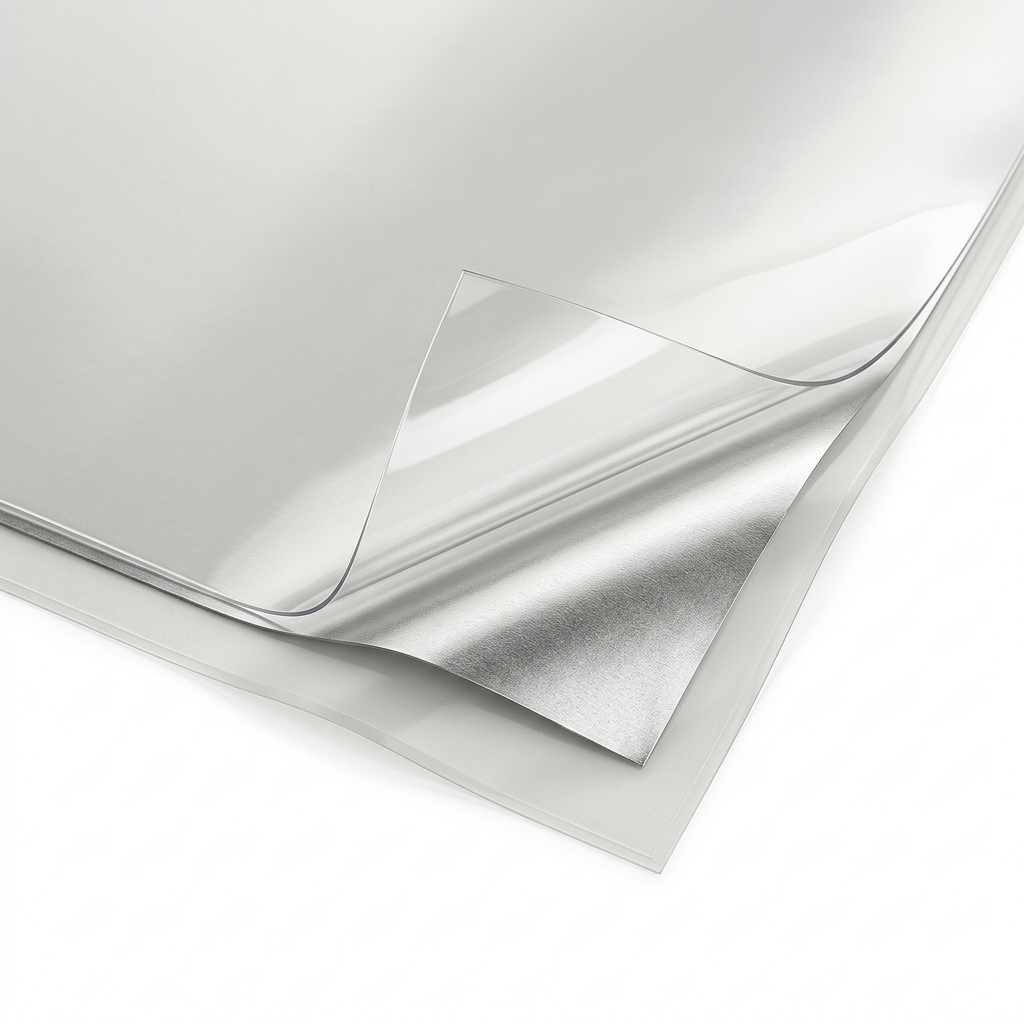
Printable PET supports front artwork, stiffness, surface finish, and handling performance.
Aluminum foil, metallized film, or EVOH-based options are selected by oxygen, aroma, moisture, and light-barrier targets.
Adhesive layers bond the print, barrier, and sealant webs into the finished laminate structure.
PE or CPP sealant is reviewed for seal strength, filling temperature, product contact, and processing conditions.
Coffee packaging can be specified with a one-way degassing valve, zipper, tin-tie, flat-bottom format, side gusset, or rollstock depending on roast profile and filling process.
Valve placement, closure type, kraft paper appearance, foil laminate, matte finish, and print layout can be reviewed before sampling.
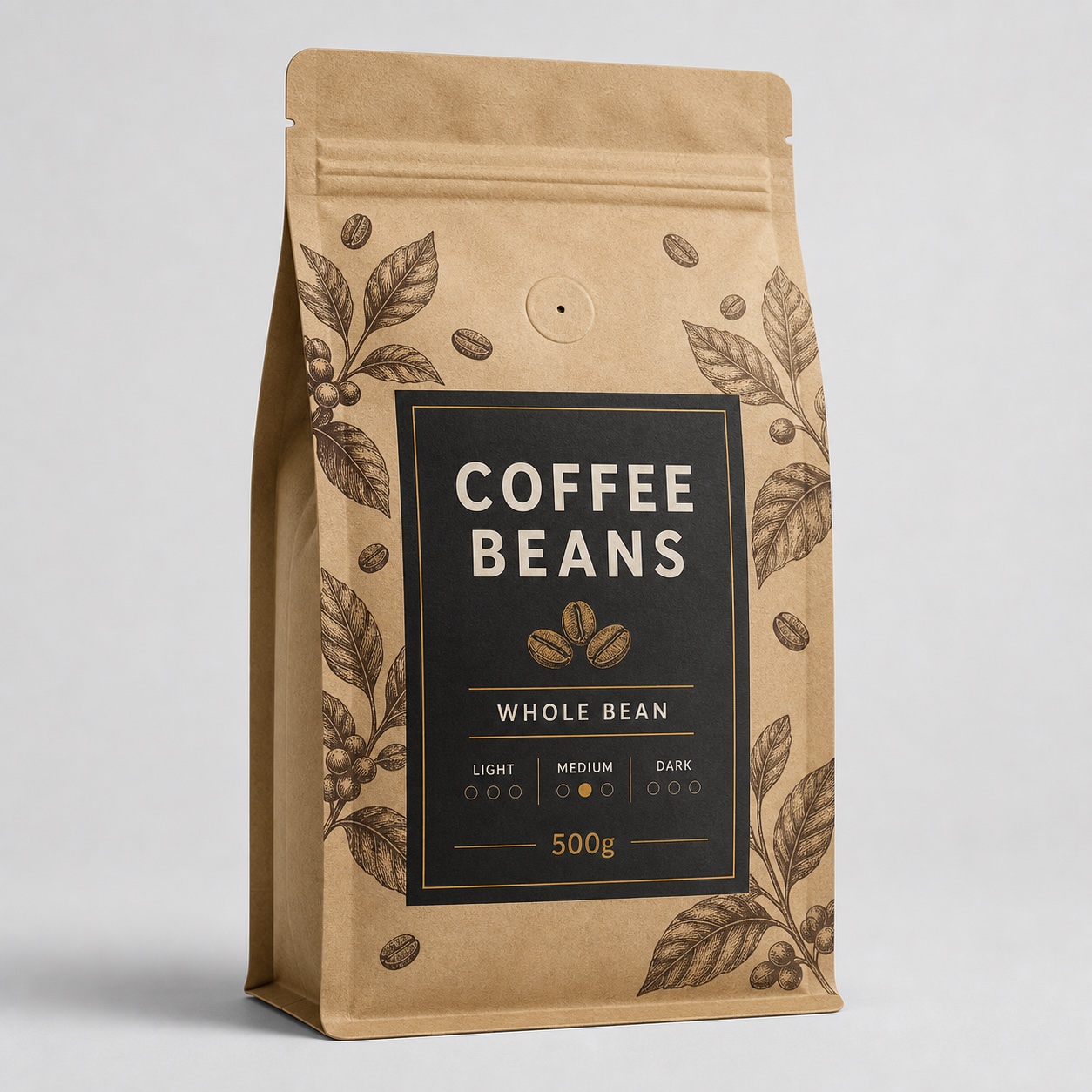
Flat-bottom, quad-seal, side-gusset, stand-up pouch, or rollstock formats can be matched to fill weight and shelf display.
Tear notch, laser score, zipper, tin-tie, or valve placement can be selected against consumer use and packing process.
Kraft paper appearance, matte varnish, soft-touch lamination, spot UV, and foil stamping can be reviewed with artwork.
Structure review, valve compatibility checks, print proofing, seal checks, and supplier documentation can be arranged by project scope.
Representative parameters. Actual values depend on material structure and customization.
Film Thickness
80–150 μm (PET/AL/PE standard)
Oxygen Barrier (OTR)
Project-specific target by selected barrier film
Moisture Barrier (MVTR)
Reviewed by coffee type, fill weight, and test method
Degassing Valve
One-way CO₂ valve optional by roast profile
Heat Resistance
Seal window reviewed by film and packing line
Closure Options
PTC zipper, butterfly zipper, tin-tie, valve
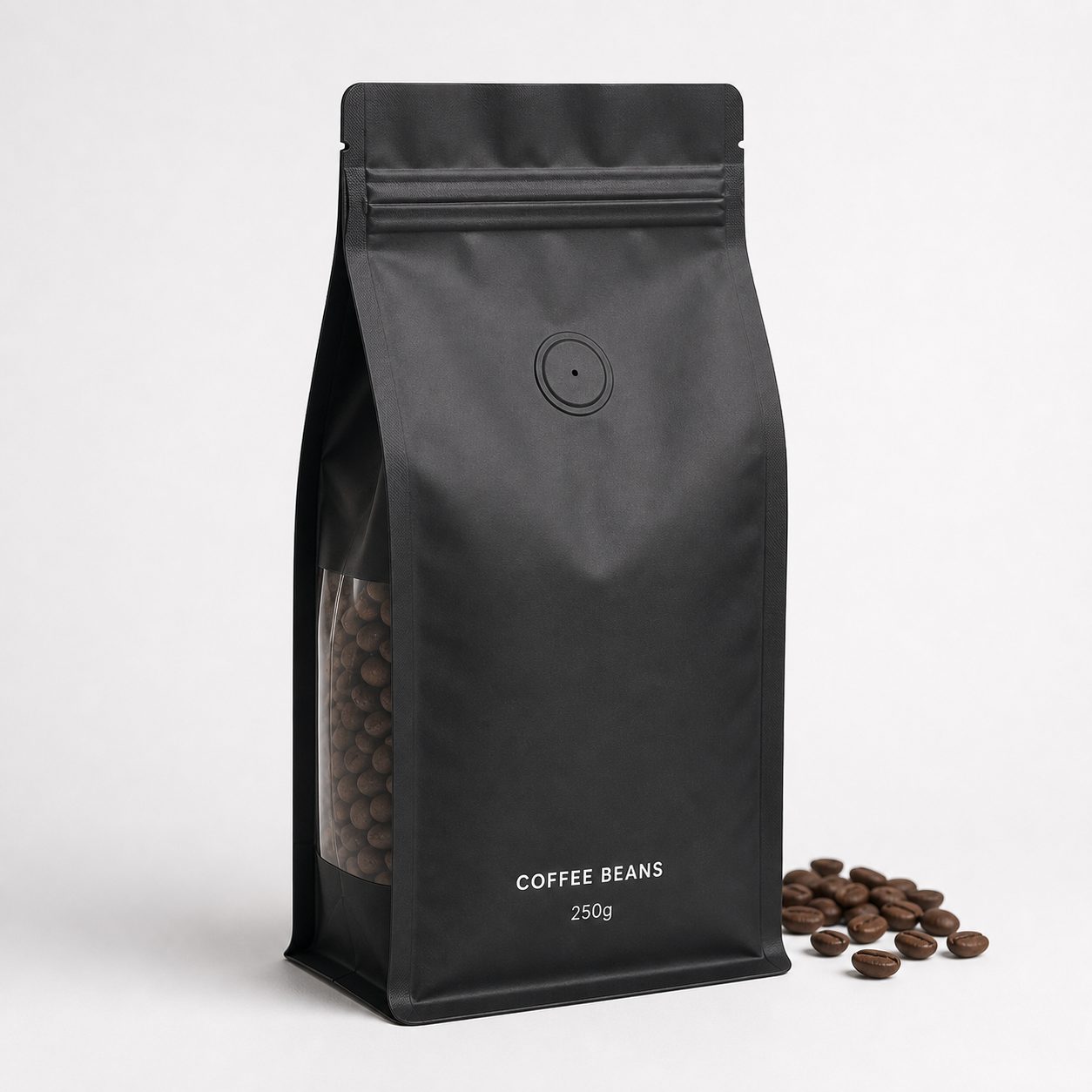
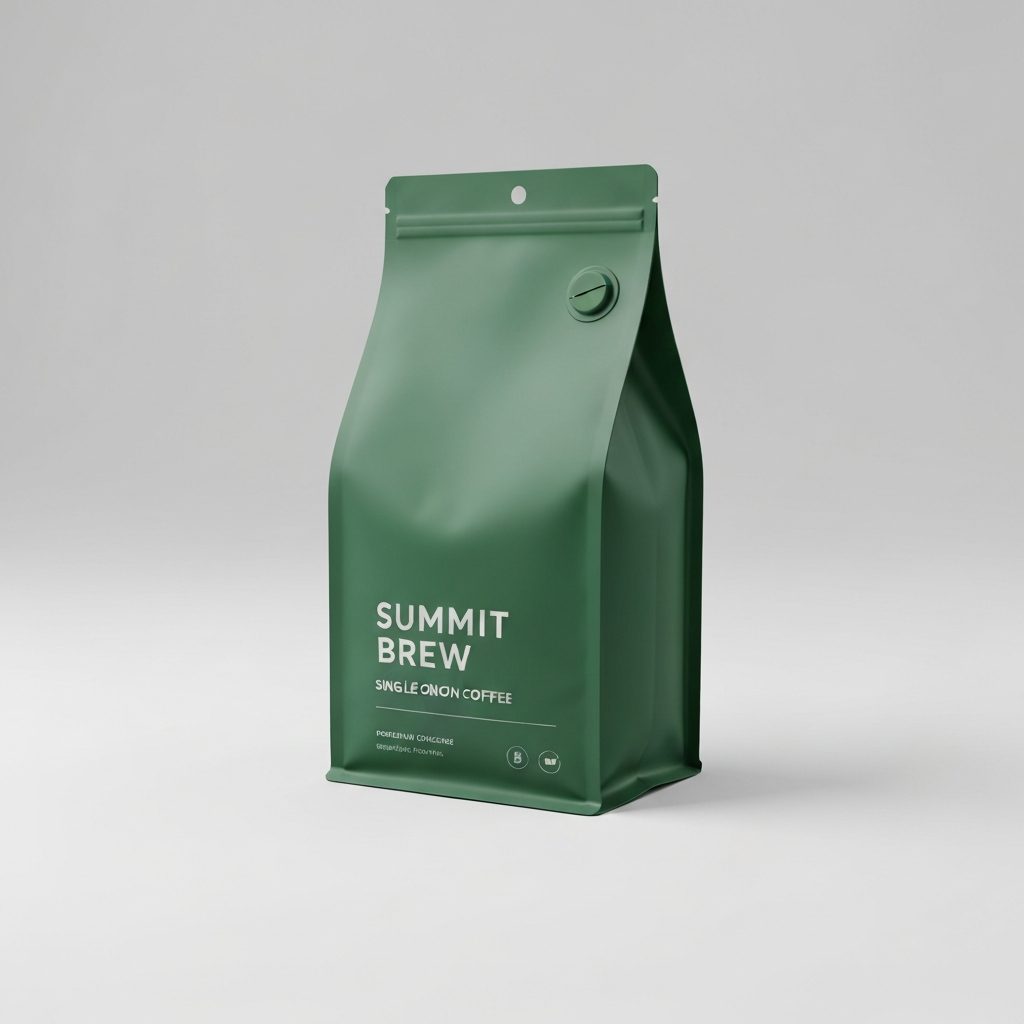
Matte flat-bottom coffee pouch with valve and side window
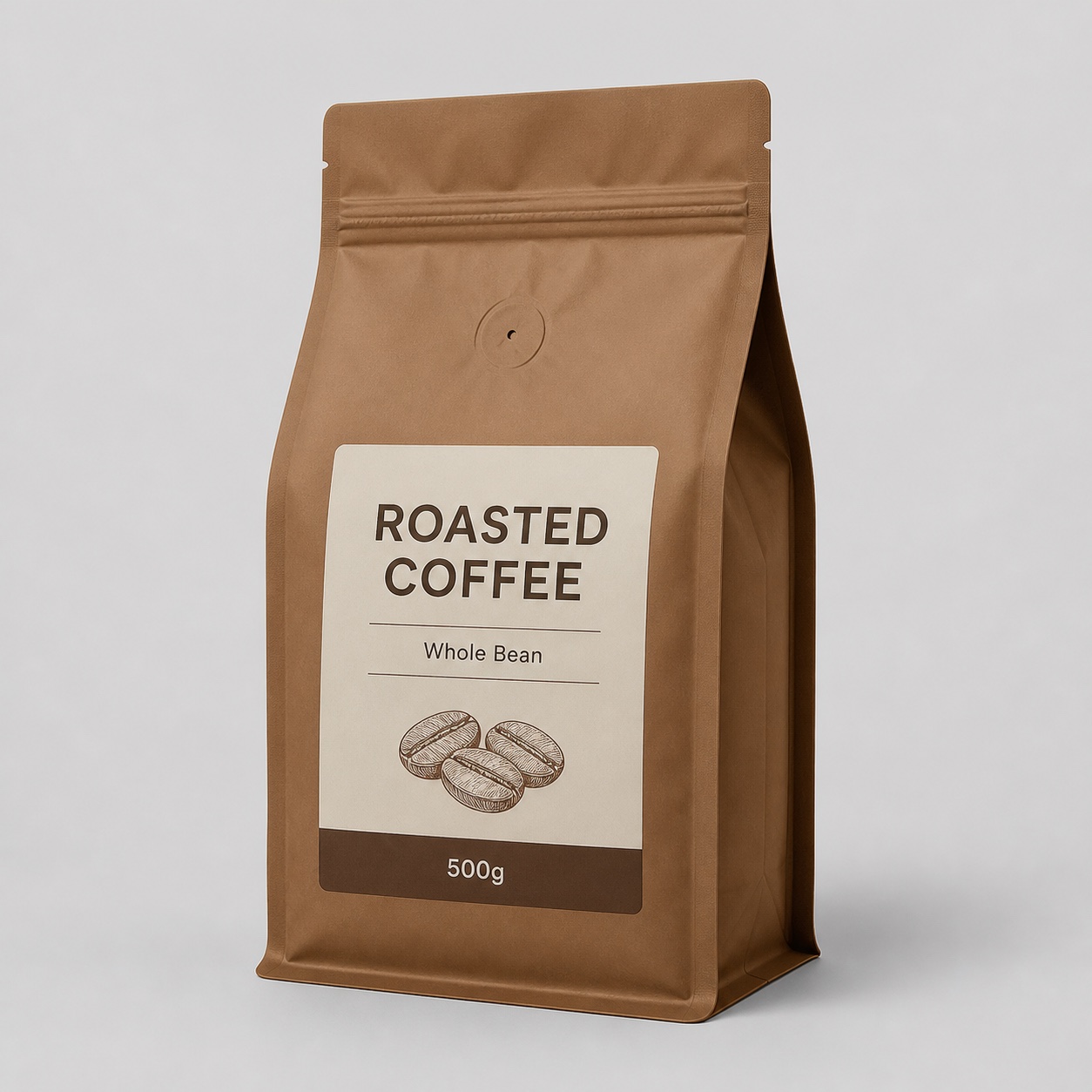
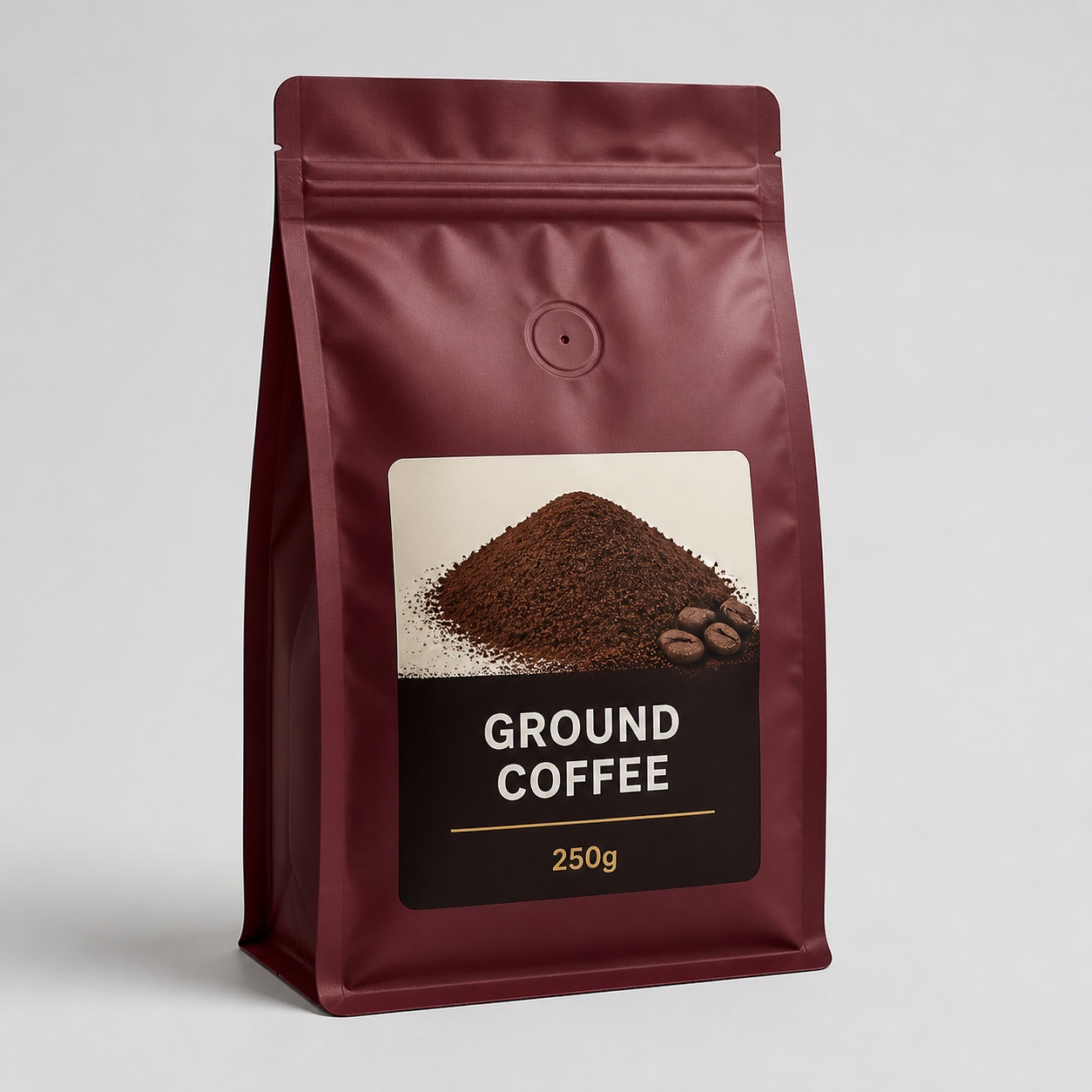
Generic whole bean coffee pouch with valve and box-bottom retail profile
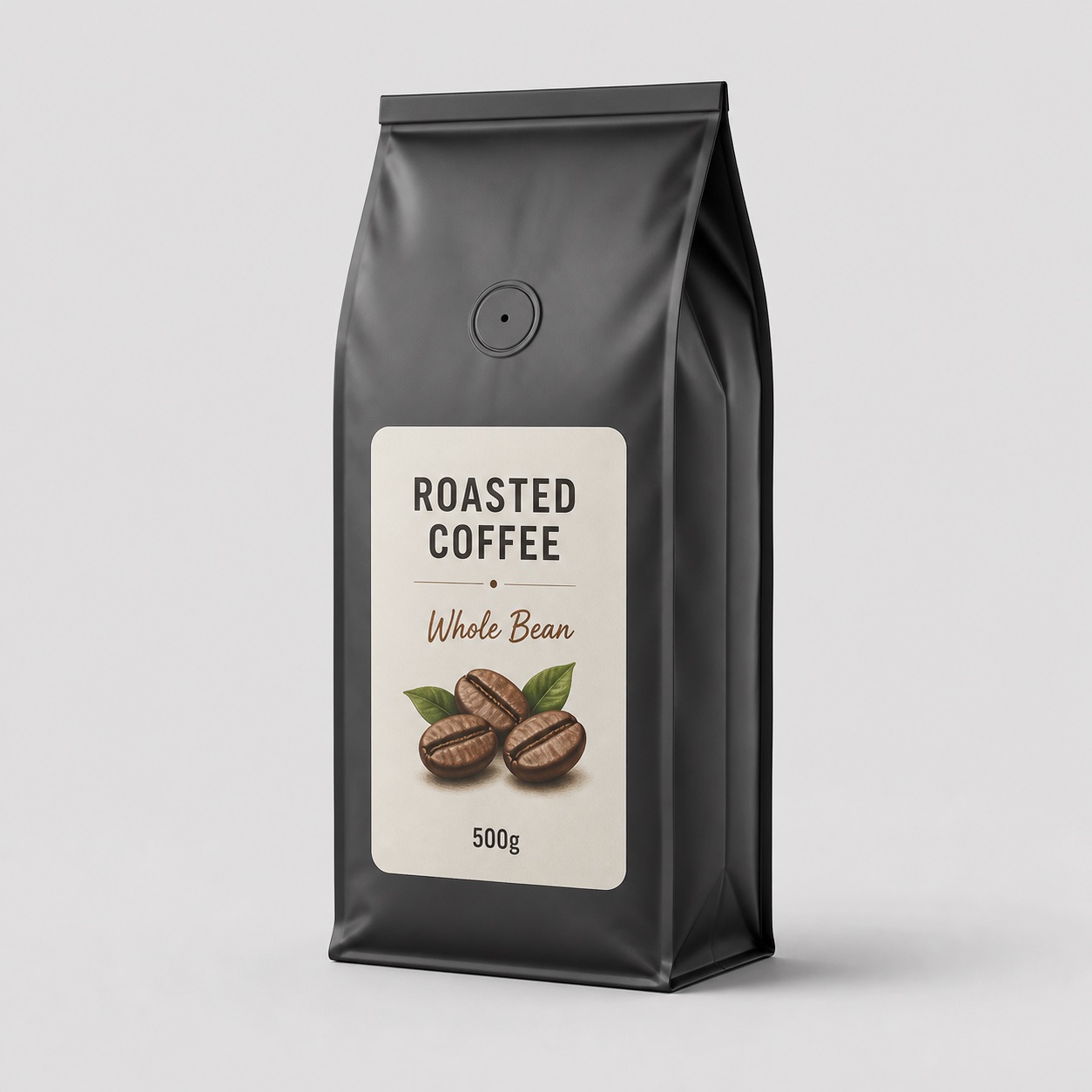
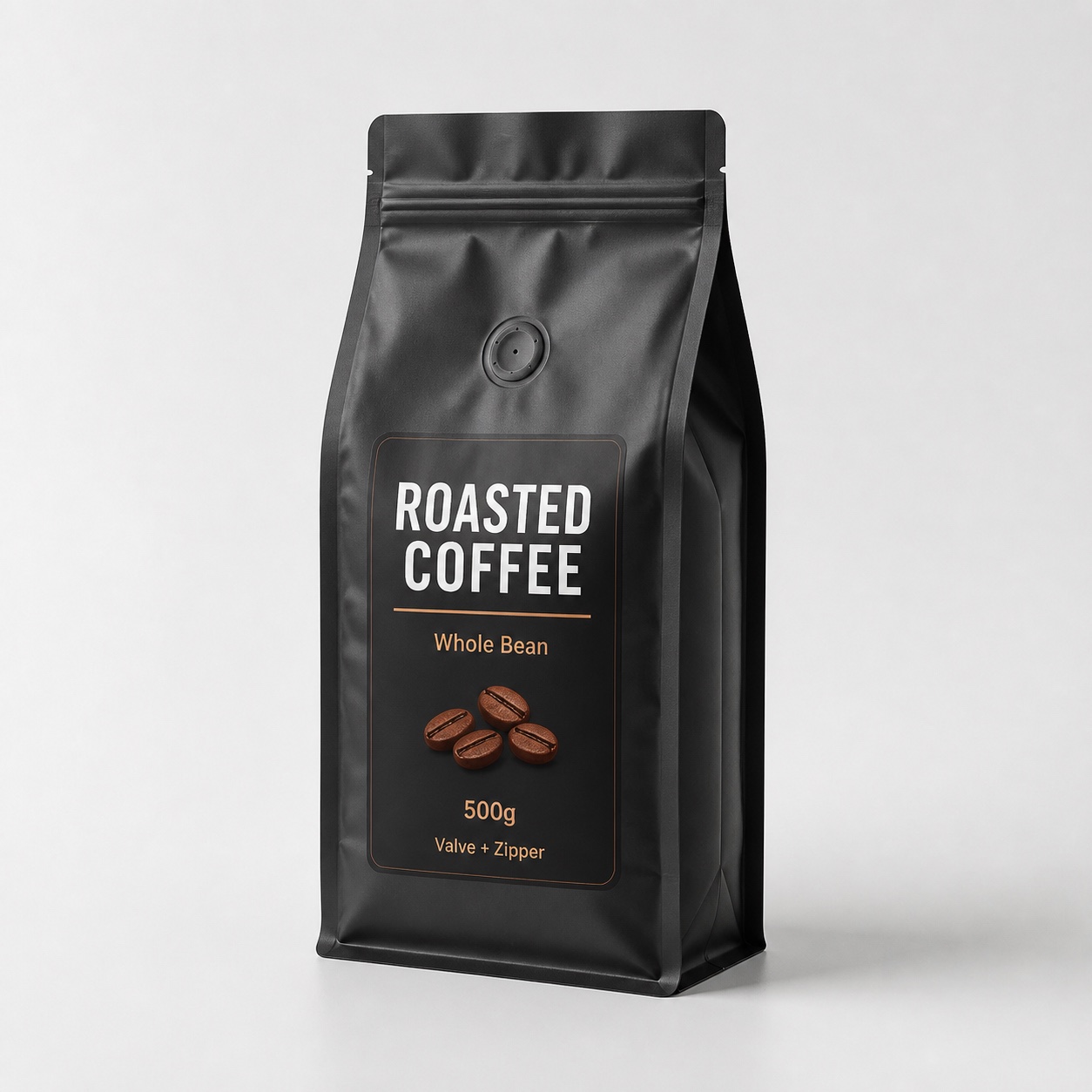
Generic roasted coffee pouch with valve, zipper track, and retail shelf profile
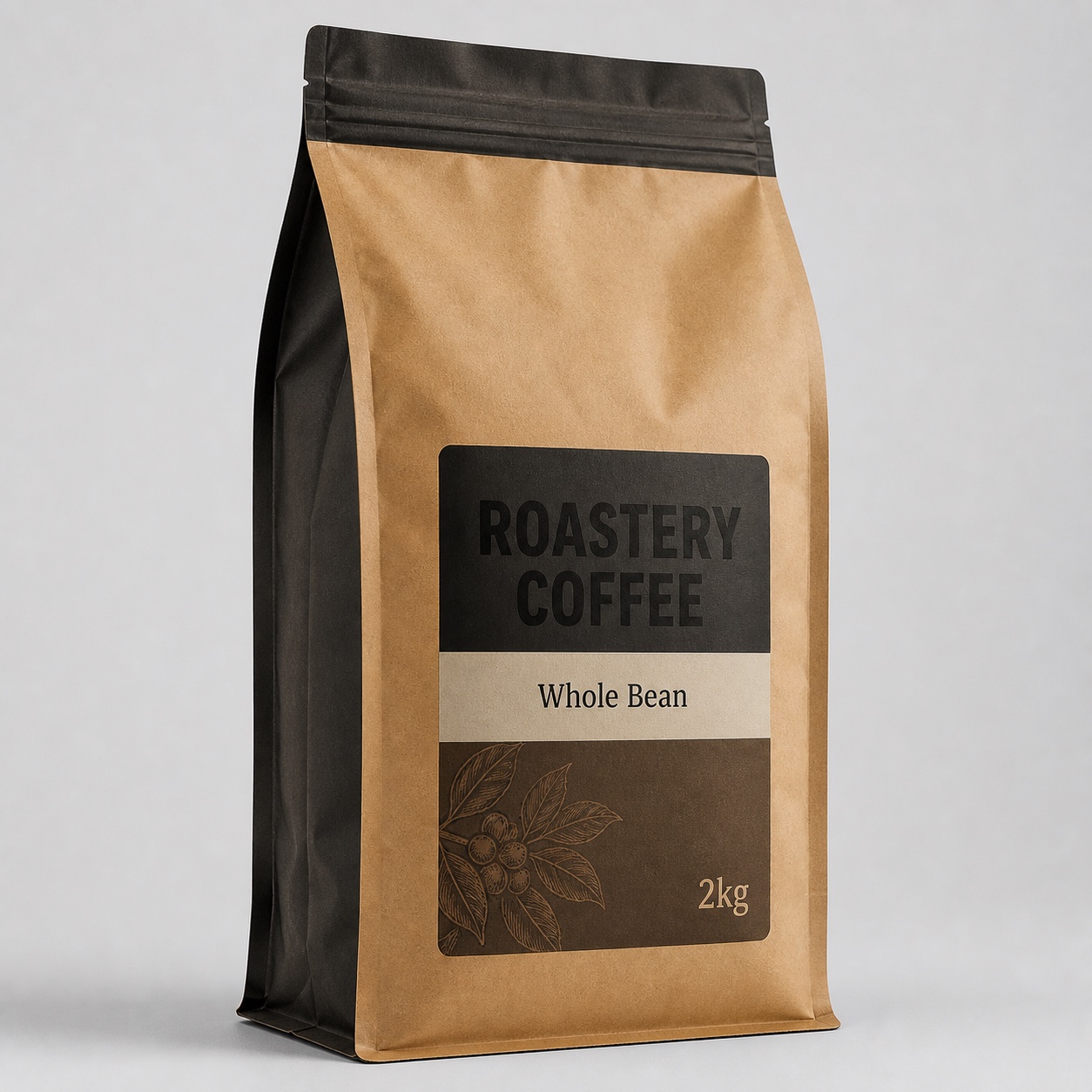
Warm kraft matte stand-up bag for coffee format and artwork review
Use these photos as format references. Final size, structure, print layout, and testing scope are reviewed against your product, filling method, and target market.
Lower-impact structure options can be reviewed when the product, filling process, target market, and recovery route support them.
Considering compostable options where certified for the target market? The compostable coffee bags guide explains why the valve, zipper, and label need the same composting target as the film.
Common issues we help coffee packaging buyers avoid during project coordination.
Freshly roasted beans release CO₂ for days after roasting. If the valve type, cracking pressure, or placement timing is wrong, pouches bloat on the shelf or beans go stale from oxygen ingress. We help review valve specs against your roast profile and filling schedule before sampling.
Choosing a standard PET/PE laminate instead of a high-barrier structure for whole bean coffee can increase oxidation risk depending on roast, structure, and distribution. We coordinate barrier-target review early so the selected structure matches the actual shelf-life plan, not just the budget.
Dark matte finishes are common in coffee branding, but they amplify color deviation between a digital proof and gravure or flexo production. We help coordinate press proofs and Pantone spot-color checks so the final bag matches the brand intent, not just the screen preview.
VFFS machines need the degassing valve placed in specific zones to avoid jaw interference. If valve position is decided without checking the filling line layout, the pouch jams during production. We review valve placement zones with the production team and your filler before tooling.
Roasters with four or more single-origin SKUs often underestimate total order quantity: each unique design has its own MOQ for print cylinders and material runs. We help map SKU count against realistic per-design minimums so the total commitment is clear before artwork begins.
For Coffee Bags with Valve, buyers usually compare PET/AL/PE, PET/VMPET/PE, kraft/PET/PE against shelf-life, filling, and compliance documentation needs.
The one-way degassing valve lets CO₂ released by freshly roasted coffee escape, which helps keep the bag from bloating, while limiting oxygen ingress. Valve type, placement, and sealant compatibility are reviewed against roast profile, grind, and filling schedule. For the background on why roasted coffee off-gasses, see the coffee packaging guide.
Coffee bags with valve are commonly specified for whole bean coffee, ground coffee, specialty single-origin roasts, and commercial roastery packs that need a degassing valve, zipper or tin-tie, kraft paper or foil laminate, and aroma barrier review. Instant coffee and cold brew usually need a different format, as noted above.
Common structures include PET/AL/PE for the highest barrier, PET/VMPET/PE for moderate barrier targets, and kraft/PET/PE for a natural paper look. The best choice depends on barrier target, roast and grind, filling process, shelf life, and target market.
Yes. Bag format, degassing valve, PTC or butterfly zipper, tin-tie, kraft paper finish, foil laminate, print finish, and fill weight can be reviewed by project scope. Valve and zipper positions change the dieline, so they are fixed before artwork is finalized.
MOQ depends on bag format, size, printing method, material structure, finishing, and the number of designs, and each design is counted separately. Per-format starting points for side-gusset, stand-up, and flat-bottom bags are listed in the pouch-style MOQ guide. Share dimensions, artwork, and annual volume so NIAITE can recommend a practical starting quantity.
Food-contact documentation depends on the selected film, sealant, valve, zipper, packed product, and destination market. Supplier declarations, migration testing, traceability records, and third-party testing support such as SGS or equivalent labs can be reviewed by project scope. For US projects, FDA explains its packaging rules on its food ingredients and packaging page; EU projects start from Regulation (EC) No 1935/2004.
Production workflow follows GMP-style hygiene and handling controls; no site-level GMP registration is claimed.
ISO 9001-style QC records and FDA/EU material documentation can be reviewed by project scope.
DDP / FOB / CIF coordination can be reviewed by destination and project scope.
Project-level recyclable-ready or lower-impact structures can be reviewed where the final specification supports them.
Project support for material review, artwork coordination, sampling, and production follow-up within the agreed scope.
Production routing, order volume, lead-time assumptions, and capacity fit are reviewed for each confirmed project.
NIAITE is a flexible packaging project support team working with selected partner factories, so coffee brands can turn roast, valve, barrier, artwork, and order-volume decisions into comparable production options.
Match flat bottom, stand up, side gusset, valve, zipper, and film structure choices to the line that fits each coffee project.
Coordinate dielines, artwork checks, valve notes, material specs, and sample comments through one practical project thread.
Review filling method, degassing valve, shelf life, finish, and carton assumptions early to reduce avoidable sample rounds.
Organize seal, print, packing, and available batch-record checks around the buyer brief; scope independent inspection separately when required.
Compare options on the same size, film, valve, zipper, finish, carton, testing, and shipping assumptions.
Share roast type, product form, fill weight such as 250g / 8.8 oz, 340g / 12 oz, 500g / 1.1 lb, 1kg / 2.2 lb, or 5 lb, bag format, valve need, artwork status, SKU count, target market, order volume, and sample/proof needs.
We recommend materials, structure, and provide pricing.
Confirm details, approve artwork, and production begins.
Inspection scope and shipping terms are confirmed by project.
Updated:
Work with NIAITE for material review, sampling guidance, QC checkpoints, and export project coordination.