Baby Food Spout Pouch packaging for puree, cereal blends, yogurt snack pouches, and toddler meals, with cap options, retort-capable structures, and food-contact documentation review.
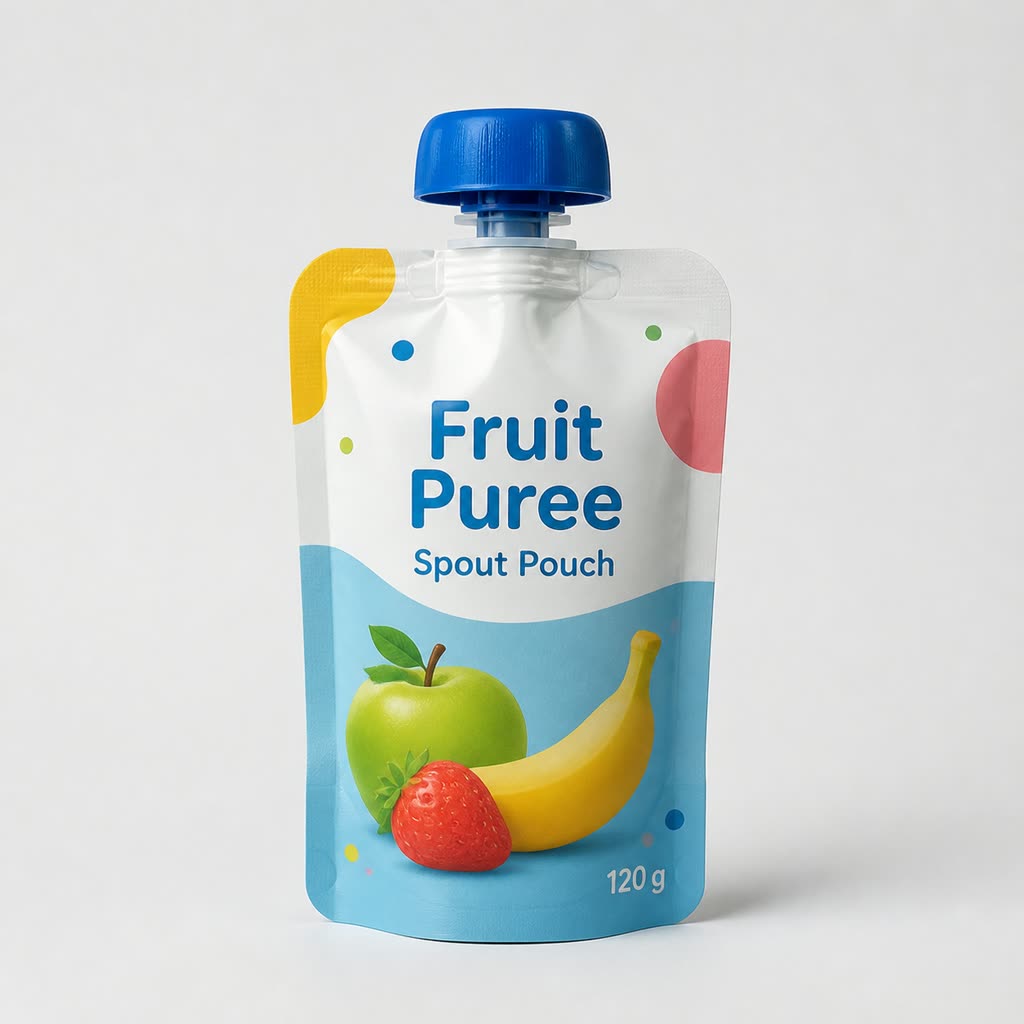
Spout pouch structures for baby food purees, cereals, and liquid nutrition projects, with food-contact documentation support and cap options selected by target market requirements.
Retort-capable laminates, filling-line fit, cap size, flow control, and labeling panels can be reviewed during project specification.
Production Traceability
Batch records
ISO 9001-Style QC
Quality system
Shipping term coordination
DDP / FOB / CIF
Material Review
Project-specific structures
Packaging inputs for baby food puree, cereal blends, yogurt snack pouches, and toddler meals, with cap options selected by product, filling route, and target market.
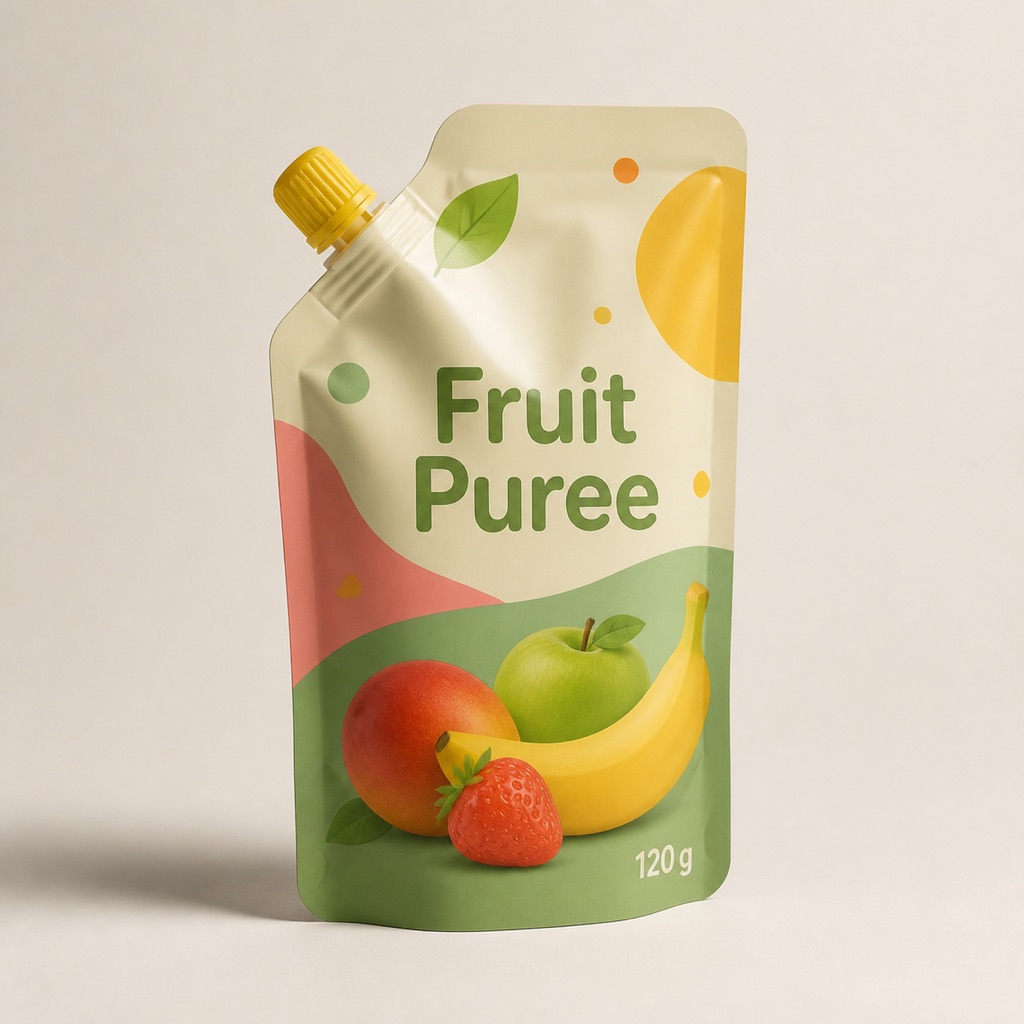
Baby food puree projects can review fill volume, cap options, flow control, spout welding, and retort-capable structures when shelf-stable processing is required.
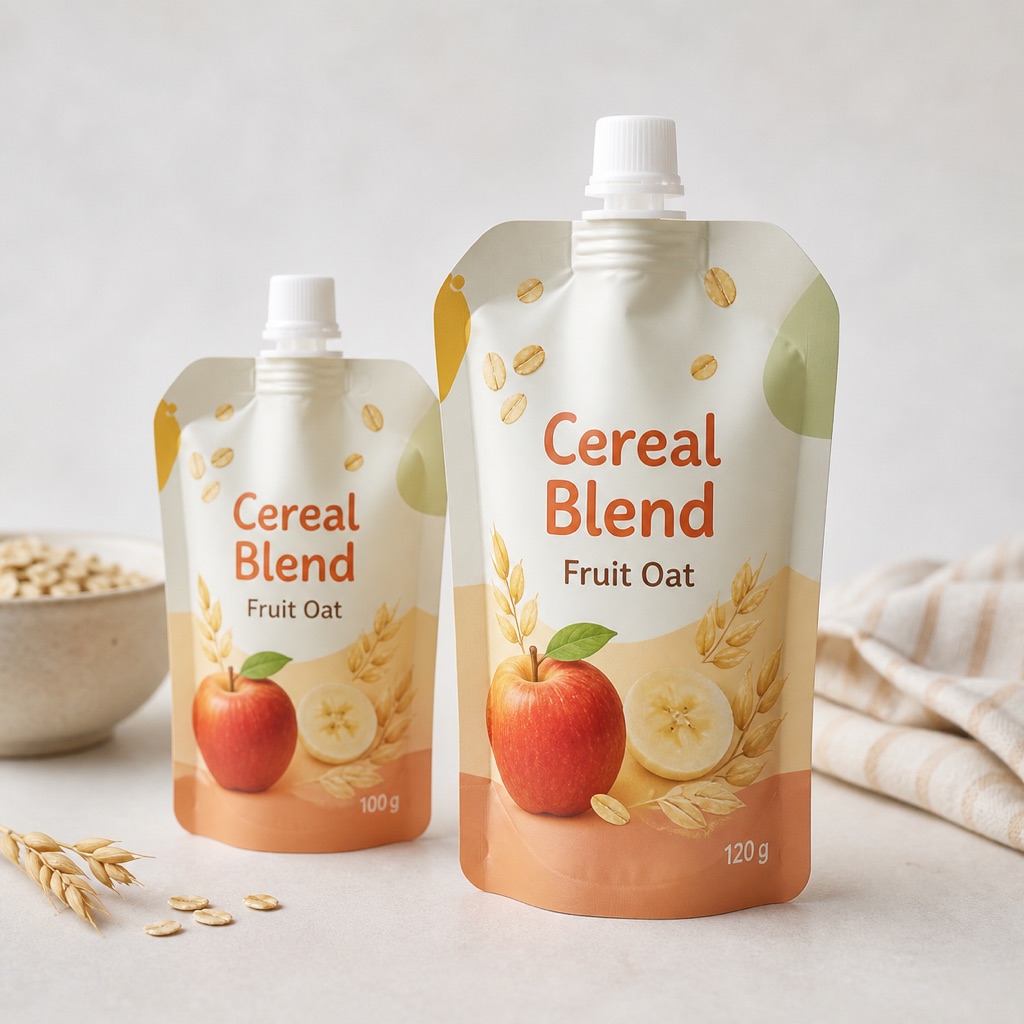
Cereal blends and thicker products can be reviewed for pouch size, cap opening, flow behavior, and filling compatibility.
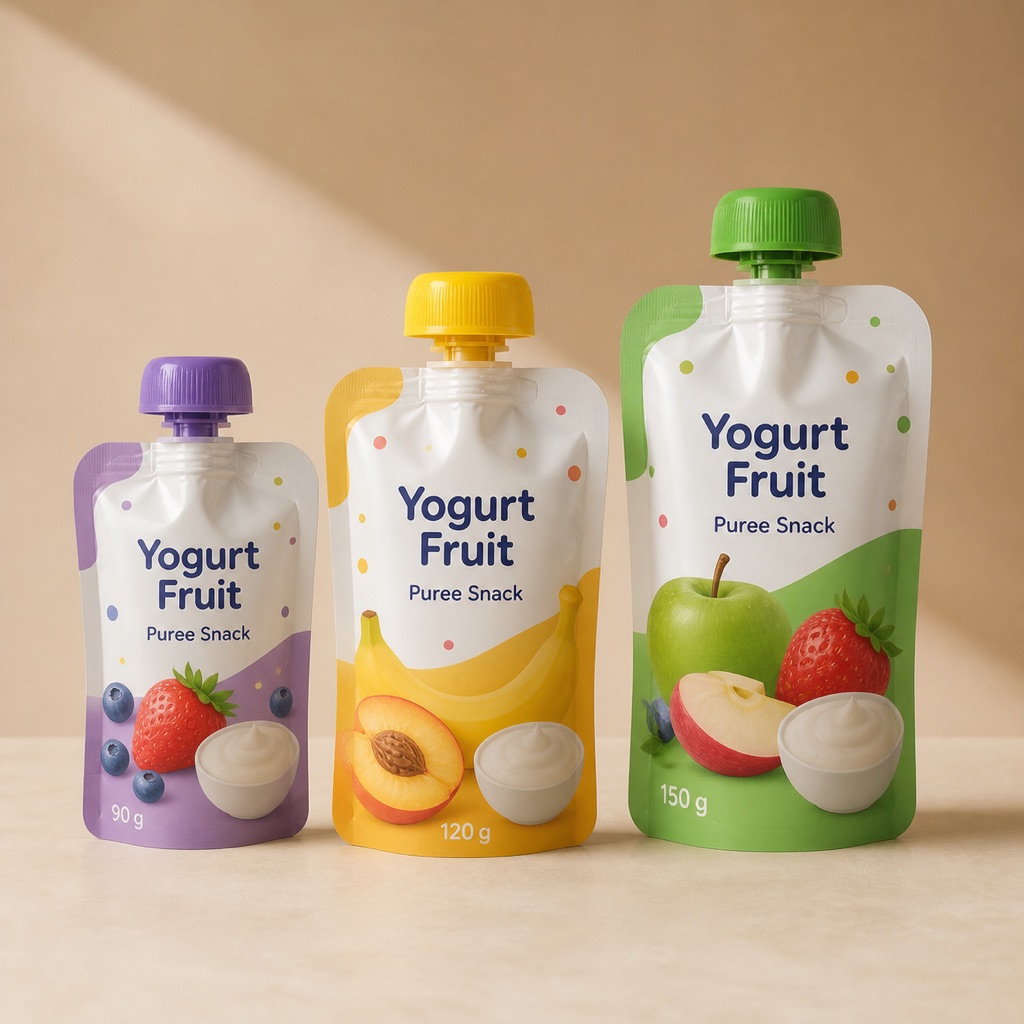
Yogurt snack pouches can be reviewed for chilled distribution, filling compatibility, cap options, and food-contact documentation.
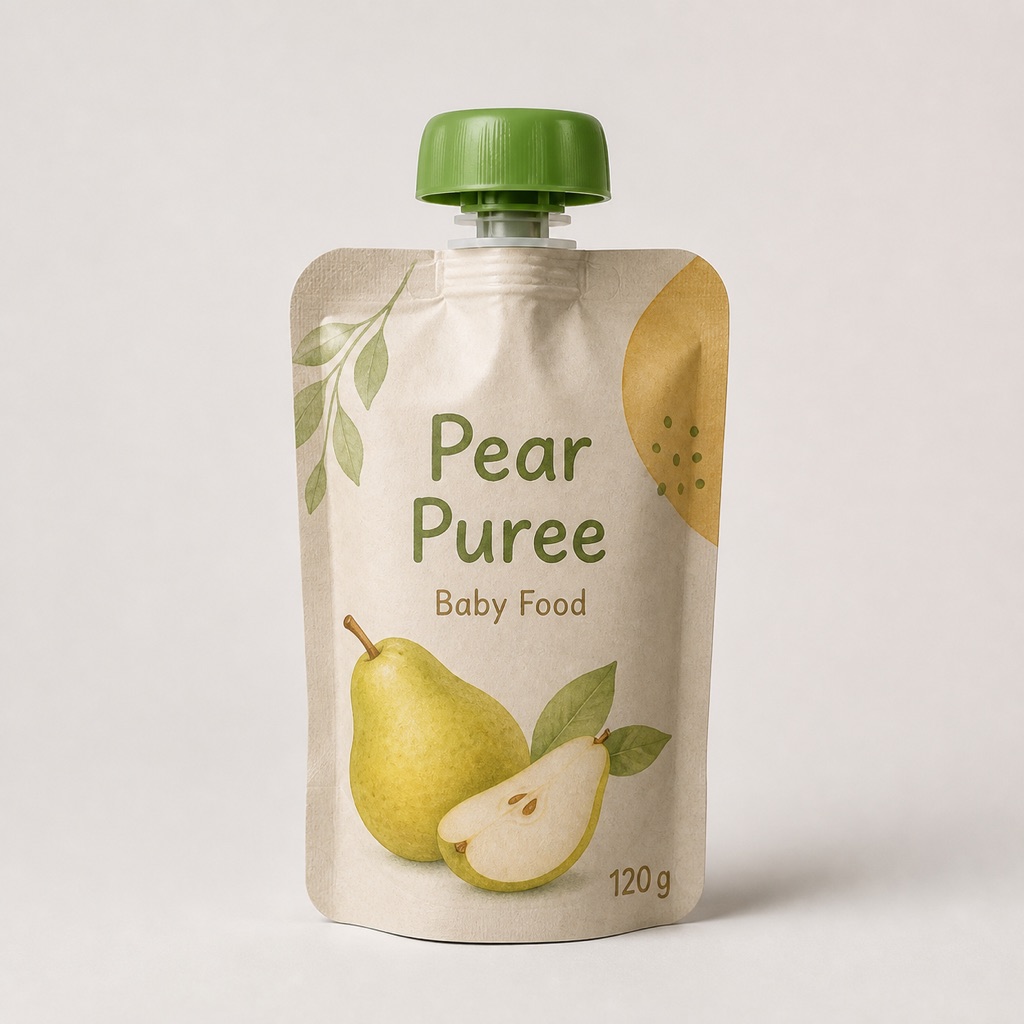
Kraft paper-look laminate finishes can be reviewed with lower-impact structures where the specification, food-contact documentation, and target market support the claim.
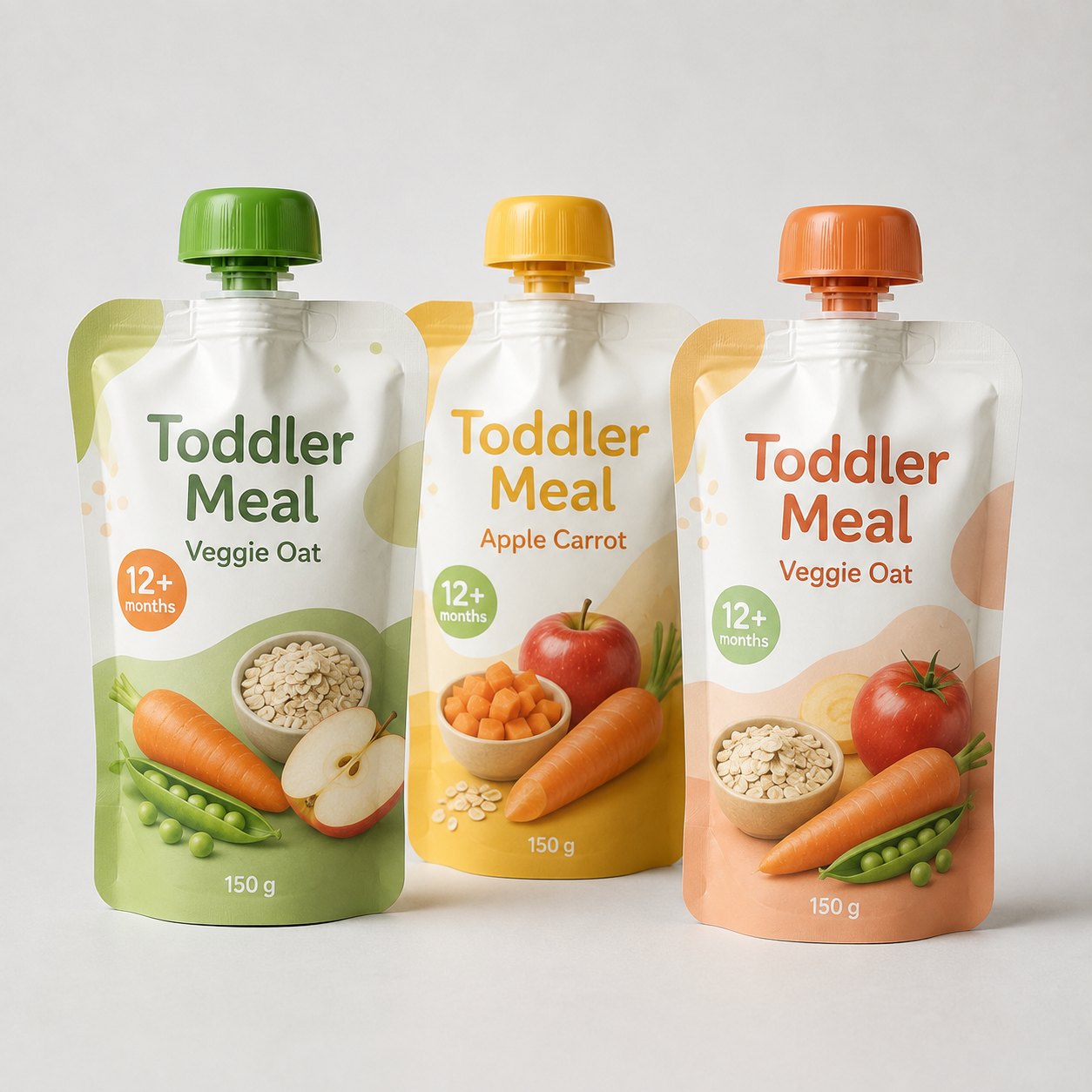
Toddler meal pouches can review fill volume, standing base, retort-capable structures, heat process, and sample approval requirements.
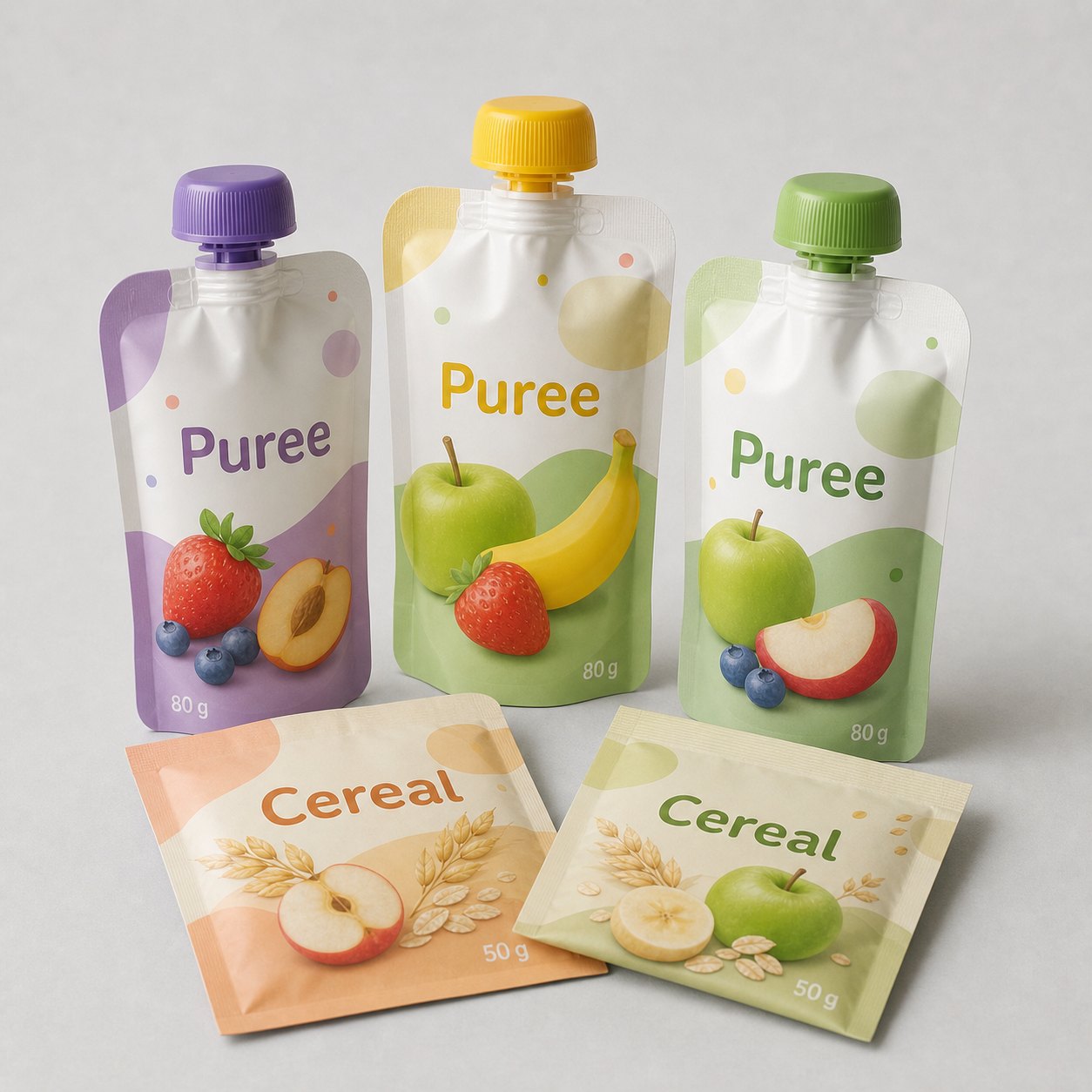
Sample packs can be reviewed for compact fill volume, print registration, cap options, and sample approval workflow.
Fill volume, pouch size, cap options, and flow control are selected by product viscosity, serving format, and target market.
Material declarations, migration testing support, and food-contact documentation can be reviewed by structure, contents, and test scope.
Spout welding, seal integrity, cap fit, and heat process compatibility can be checked before production confirmation.
Artwork, print registration, cap options, fill volume, and sample approval records are aligned before manufacturing.
Share the food, fill process, closure requirement, barrier target, and buyer validation plan before reviewing a baby-food pouch or sachet. Food safety and process acceptance remain tied to the final structure, packed product, destination rules, and qualified process owner.
Describe puree, yogurt, cereal, snack, powder, or other contents; viscosity; particulates; oil or acid exposure; allergens; and product contact or migration concerns.
Provide ambient, chilled, hot-fill, pasteurization, or retort route; fill temperature; time-temperature-pressure profile where applicable; cooling method; and process-owner criteria.
Specify sachet, stand-up pouch, or spout pouch; serving volume or fill weight; dimensions; headspace; spout and cap interface; and any buyer-defined child-safety test requirement.
Share oxygen, moisture, light, and aroma sensitivity; target shelf life; storage temperature; cold-chain or ambient distribution; and transport conditions for structure review.
Identify equipment, fitment insertion or welding route, seal area, product contamination risk, trial quantity, filled-pack checks, process validation owner, and sample acceptance plan.
Include order quantity, SKU and language count, artwork status, destination market, food-contact file scope, requested declarations or testing, approvers, and delivery target.
Cap diameter, grip profile, and flow-control inserts can be selected by project needs and reviewed against the requirements of the target market.
Material declarations, migration testing, and third-party reports can be arranged where required by the selected structure, contents, and project scope.
RCPP-based structures can be reviewed for 121°C-class retort processes when the filling process and final product requirements call for shelf-stable packaging.
Resealable caps, lightweight formats, and clear printed nutritional panels support portable baby food projects while leaving final labeling requirements to the brand and target market.
Choose the right material structure based on your product's barrier, durability, and shelf-life requirements.
| Structure | Application | Barrier Level |
|---|---|---|
PET / PE
|
Basic structure for baby food sample pouches | Standard |
PET / VMPET / PE
|
Metallized barrier review for moisture-sensitive puree projects | Medium |
PET / AL / PE
|
High-barrier laminate for retort-capable structures | High |
PET / NY / PE
|
Nylon-based structure for handling and spout welding review | High |
Kraft / AL / PE
|
Paper-look outer layer with food-contact documentation review | High |
Mono PE
|
PE-based structure review where barrier and heat process targets allow | Standard |
A transparent look at how we review barrier structures, spout welding, and heat process compatibility for Baby Food Spout Pouch projects. Visit our material guide for more details.

Printable PET supports graphics, stiffness, and surface protection for liquid and spout pouch projects.
Barrier film is chosen around liquid sensitivity, aroma, oxygen, moisture, and light-barrier targets.
Tie or adhesive layers are reviewed against laminate bonding, fitment sealing, flexing, and liquid-fill stress.
LLDPE sealant supports liquid sealing, burst-strength review, fitment area sealing, and filling-line compatibility.
Baby food puree and yogurt snack pouches may need cap options, spout welding, flow control, and fill volume review according to product viscosity, filling route, and target market.
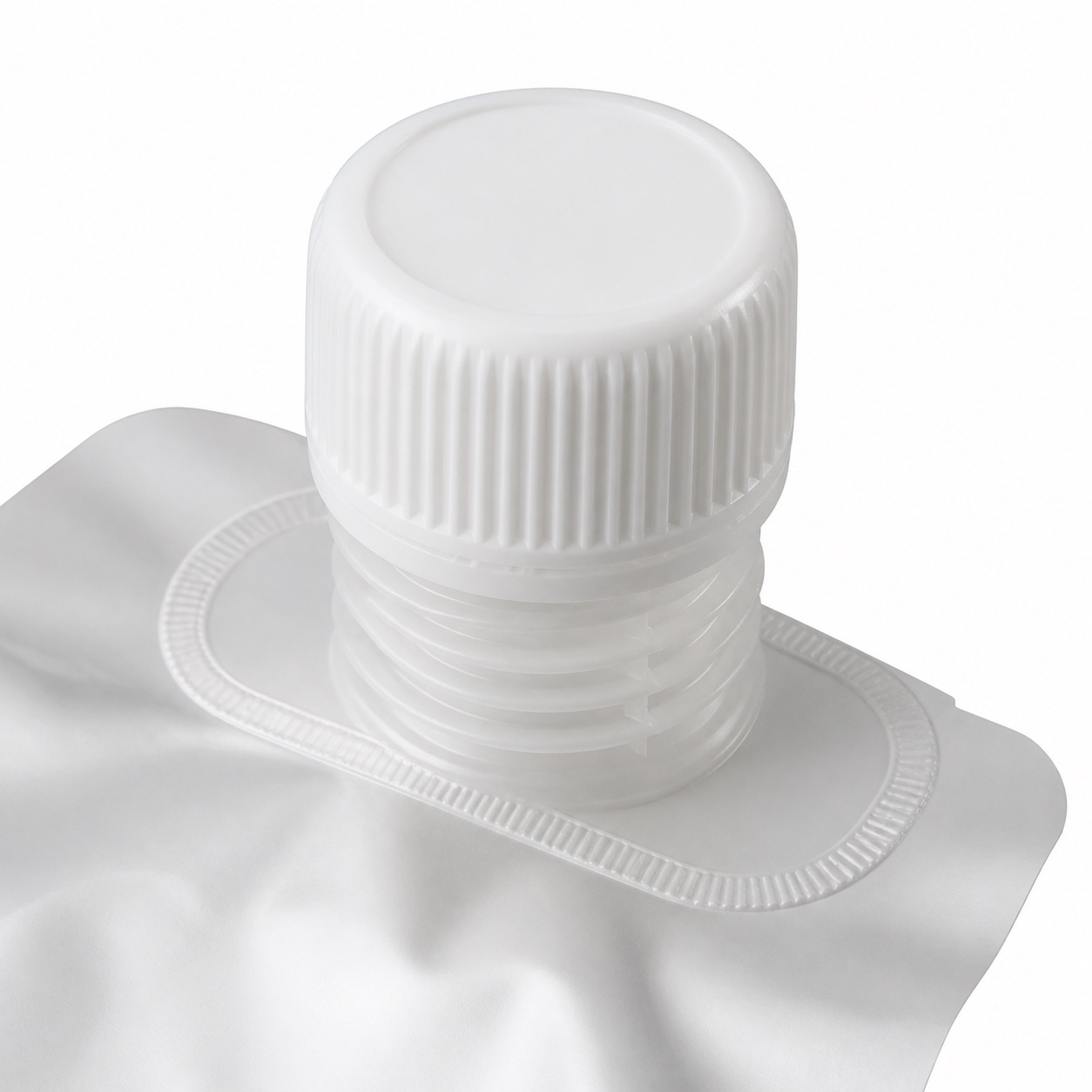
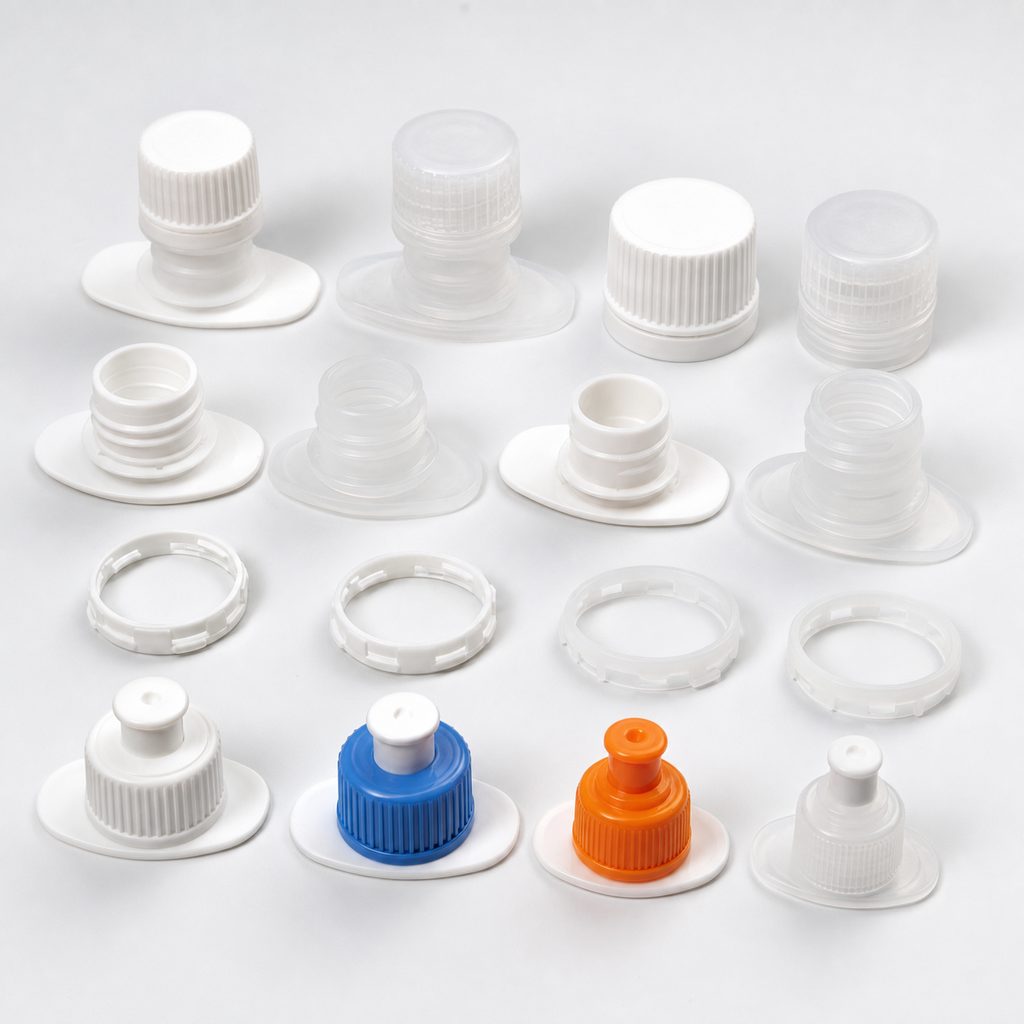
Cap style, grip profile, spout position, and sealing interface should be confirmed through artwork review, sample approval, and project-specific testing.
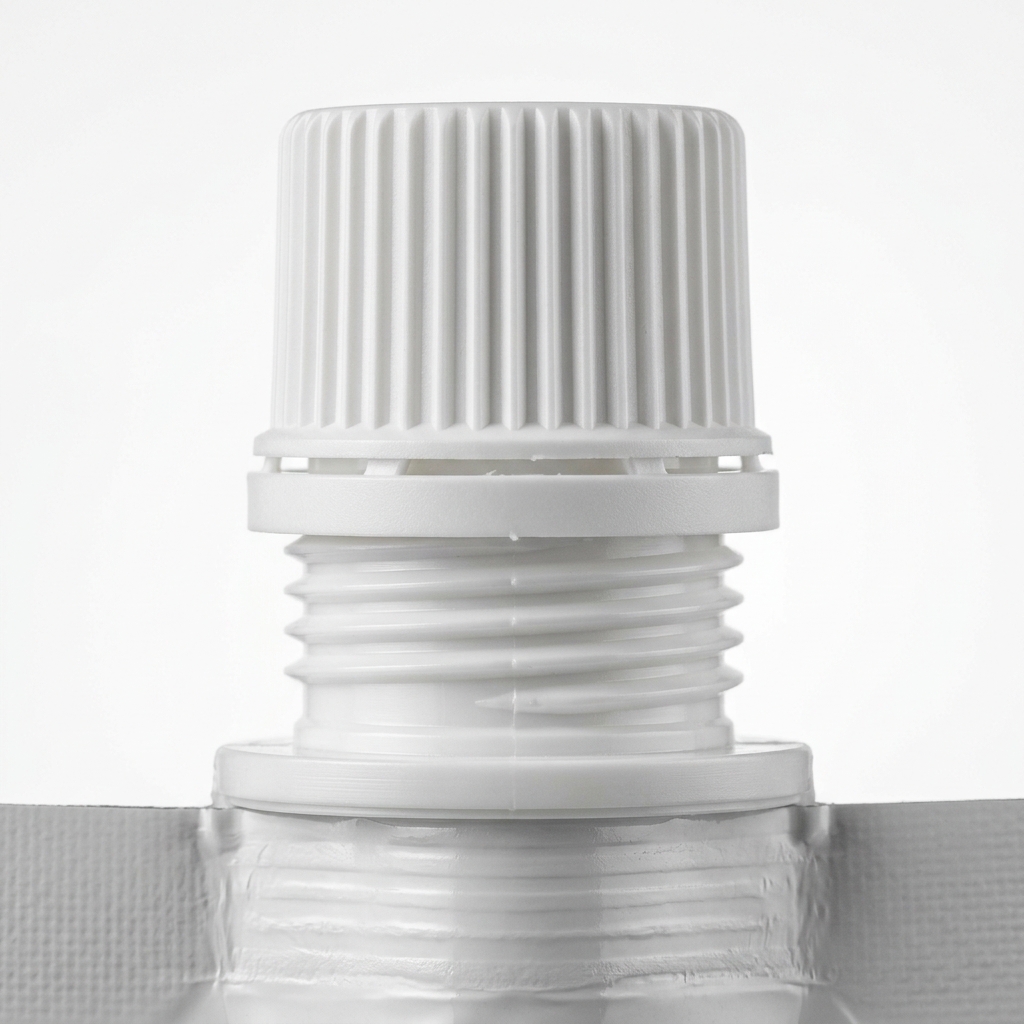

Nutrition panel, target market notes, lot coding, and print registration can be aligned before sample approval.
Cap options, grip profile, flow control, and spout welding can be reviewed by product viscosity and fill volume.
Retort-capable structures, seal integrity, and heat process compatibility are reviewed by filling route and test scope.
Food-contact documentation, material declarations, migration testing support, and sample approval records can be arranged by project.
Representative inputs. Actual values depend on product contents, heat process, material structure, and customization.
Film Structure
Project-specific retort-capable structures and film gauge
Heat Process
Heat process compatibility reviewed by filling route and validation scope
Cap Options
Cap options and flow-control features by target market review
Documentation
Food-contact documentation and migration testing support by material structure
Fill Volume
Fill volume confirmed by product viscosity and packing route
Sample Approval
Sample approval records before production confirmation
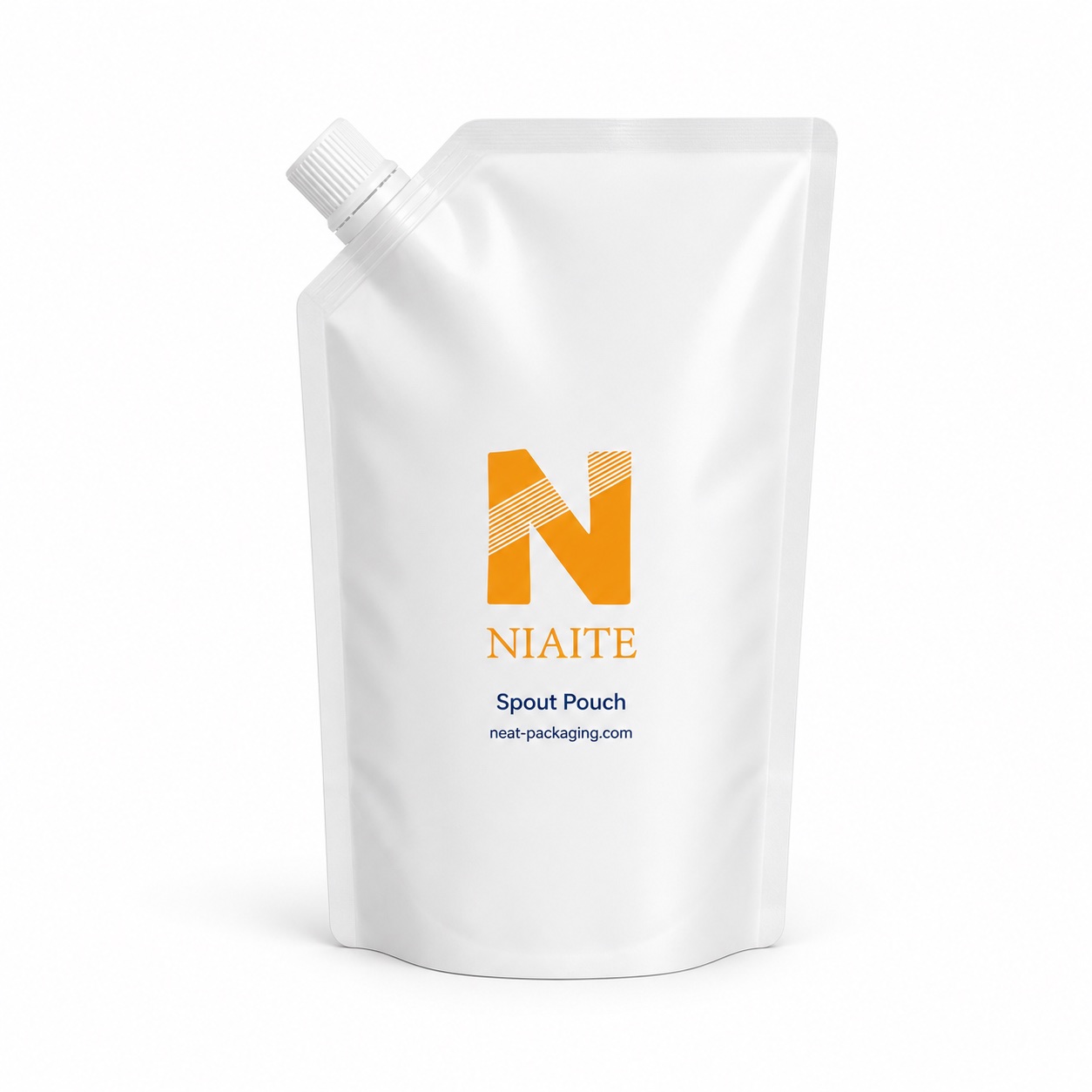
Fruit and vegetable puree spout pouch with cap options review
Cereal blends pouch with flow control and fill volume review
Yogurt snack pouches with filling route and food-contact documentation review
Paper-look baby food pouch with target market and sample approval review
Use these photos as format references. Final size, structure, print layout, and testing scope are reviewed against your product, filling method, and target market.
Lower-impact structure options can be reviewed when the product, filling process, target market, and recovery route support them.
Baby Food Spout Pouch projects can cover baby food puree, fruit and vegetable puree, cereal blends, yogurt snack pouches, toddler meal pouches, and sample packs with cap options, fill volume, and heat process review.
Yes. We can review pouch size, fill volume, cap options, spout welding, flow control, label panel layout, print registration, target market requirements, and sample approval workflow.
Food-contact documentation depends on the selected structure, resin source, contents, heat process, filling route, and test scope. Material declarations, migration testing support, spout welding review, and sample approval records can be arranged by project.
Project records can cover material batches, print version, sample approval, spout welding notes, and production checkpoints.
Quality records, material declarations, food-contact documentation, and migration testing support can be reviewed by project scope.
DDP / FOB / CIF coordination can be reviewed by destination and project scope.
Project-level recyclable-ready or lower-impact structures can be reviewed where the final specification supports them.
Project support for material review, artwork coordination, sampling, and production follow-up within the agreed scope.
Production routing, order volume, lead-time assumptions, and capacity fit are reviewed for each confirmed project.
Tell us your product, target weight, and requirements.
We recommend materials, structure, and provide pricing.
Confirm details, approve artwork, and production begins.
QC checkpoints and shipment scope are confirmed by project.
Common issues we help baby food packaging buyers avoid during project coordination.
Hot-fill baby food products seal at elevated temperatures where film properties change. A sealant layer that bonds well at room temperature may seal too aggressively or too weakly at actual fill temperatures, causing difficult-open or weak seals. We coordinate seal-window testing across your actual fill temperature range to find the reliable operating zone.
Baby food spout pouches require flow rates matched to infant feeding pace. A spout bore sized for adult beverages delivers product too fast, while one sized too small clogs with thicker purees. We help coordinate flow-rate testing with your actual product viscosity across the range of formulations you plan to fill on the same line.
Parents and caregivers squeeze baby food pouches repeatedly during feeding, creating internal pressure spikes that stress bottom seals and side gussets. Standard burst-pressure tests apply gradual force, but real-world squeeze patterns are abrupt and repeated. We coordinate squeeze-cycle testing that replicates actual feeding-session pressure patterns.
Baby food packaging requires broader food-contact documentation than general food packaging, covering migration testing, material declarations, and regulatory certificates for each target market. Buyers often receive incomplete documentation sets that satisfy one market but leave gaps for others. We help define your full documentation scope up front so the supplier delivers a complete file, not a partial one that delays market entry.
Stand-up baby food pouches must remain upright on retail shelves despite low fill weights and top-heavy spout caps. Pouches that stand in the factory may tip during shipping vibration or after partial dispensing. We help coordinate stability testing with realistic fill levels and cap weight to avoid retail complaints about pouches that won't stay upright.
Updated:
Work with NIAITE for material review, sampling guidance, QC checkpoints, and export project coordination.