Flexible packaging for seed packaging, fertilizer granules, soil amendments, animal feed concentrates, and dry agricultural inputs that need moisture barrier and puncture resistance.
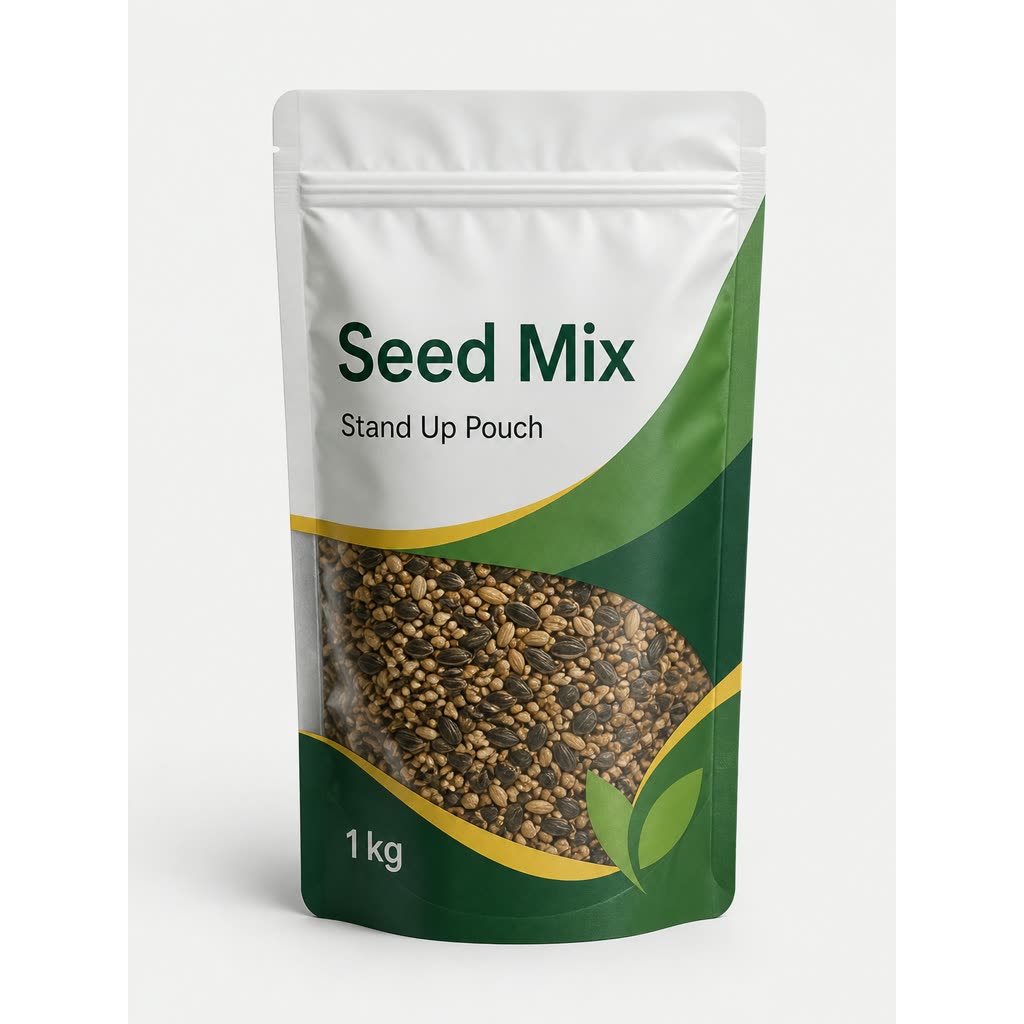
Agricultural packaging bags on this page are printed pouches and bags for dry farm inputs: seed, fertilizer granules, soil amendments, and feed concentrates. The bag choice usually comes down to three questions — how much moisture the input can take before it loses germination or starts caking, how sharp or dense the granules are, and how much weight the seals must carry through filling, stacking, and transport.
Retail seed packets, garden-centre bags, and heavier farm-supply packs are reviewed differently, so start from the input and the fill weight rather than from a bag style. Liquid products and regulated chemical projects, such as pesticides, need their classification and packaging requirements confirmed separately before any format is reviewed.
GMP-Style Production Controls
Partner facilities
ISO 9001-Style QC
Quality system
Shipping term coordination
DDP / FOB / CIF
Recyclable-ready review
Project-specific structures
Each input fails in a different way, so the first question is what goes in the bag: seed packaging, fertilizer granules, soil amendments, or feed concentrates.
Main risk is moisture pickup that lowers germination. Barrier level is matched to storage climate and sell-through time; small retail packets often add a hang hole and zipper, larger lawn-seed bags a handle and gusset.
Dense, abrasive granules stress the film and the bottom seal. Puncture resistance (often a nylon or thicker sealant layer), seal width, and dust control at the seal area are reviewed against fill weight.
Bulky, sometimes damp fills. Venting or perforation, gusset depth, and stacking strength are reviewed for garden-centre display and pallet storage.
Powders and pellets that may carry oil or fine dust. Grease resistance, sift-resistant seals, and a reclose option are reviewed with the feeding routine and documentation needed for the target market.
VMPET, foil, nylon, and PE-based structures can be reviewed for seeds, fertilizer granules, and powders that need controlled moisture exposure.
Reinforced PET, nylon, and thicker sealant layers help protect dense granules, pellets, and sharper agricultural inputs during filling and transit.
Stand-up pouches, flat-bottom bags, side-gusset bags, quad-seal formats, handles, zippers, and hang holes can be matched to pack weight and shelf display.
Send input type, granule size, pack weight, storage condition, artwork status, and handling requirements for material selection, sample approval, and documentation support.
Share the packed product, physical behavior, protection target, handling route, and destination requirements so the format and material structure can be reviewed without assuming one solution fits every agricultural product.
Identify seed, grain, dried produce, feed input, fertilizer, soil amendment, or other contents; intended use; and any regulated or restricted classification.
Provide target net weight or volume, bulk density, particle size, dust level, flow behavior, finished dimensions, and headspace needs.
State moisture, oxygen, light, odor, pest, and puncture concerns together with storage duration, climate, stacking, and shelf-life target.
Confirm whether perforation, venting, degassing, sift resistance, dust control, tamper evidence, or an inner liner needs project review.
Share pouch, sack, liner, or roll-stock preference; filling and sealing equipment; pallet pattern; drop or abrasion risks; and transport route.
Include quantity, SKU count, artwork and label status, destination market, applicable customer specifications, requested declarations, and sample approval plan.
Choose the right material structure based on your product's barrier, durability, and shelf-life requirements.
| Structure | Application | Barrier Level |
|---|---|---|
PET / PE
|
Seeds, dry powders, and light agricultural inputs | Standard |
PET / VMPET / PE
|
Moisture and aroma barrier for treated seeds or powders | Medium |
PET / AL / PE
|
Foil barrier for moisture-sensitive farm input packs | High |
PET / NY / PE
|
Fertilizer granules, pellets, and sharper fill products | High |
Kraft / AL / PE
|
Kraft-paper appearance with foil barrier for dry seed and soil amendment packs | High |
Mono PE
|
PE-based structure reviewed for local recycling stream compatibility | Standard |
How a puncture-focused laminate is layered for granules, pellets, and heavier farm-input packs. Visit our material guide for more details.
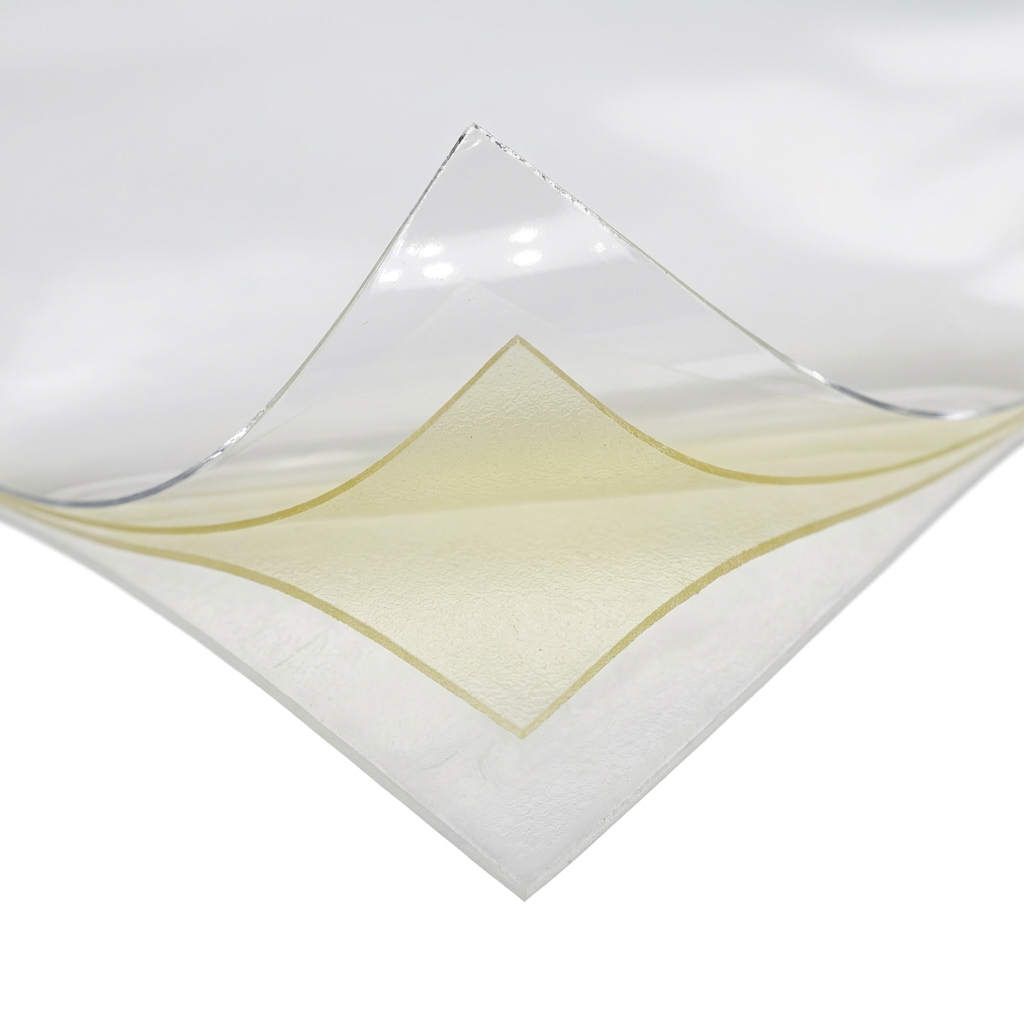
Printable PET supports graphics, stiffness, and the outside handling surface.
Nylon / PA adds puncture and flex-crack support where fertilizer granules, pellets, or angular seed press against the film during filling and stacking.
Adhesive bonds the toughness layer and sealant while maintaining the selected laminate structure.
PE sealant is reviewed for seal strength at the fill weight and for dust or powder contamination in the seal area on the packing line.
Euro hole, carry handle, or reinforced hang hole options for small seed packs, garden inputs, and retail agricultural shelves.
Precision tear notch systems: standard, linear, dot notches, and laser score technology for clean aesthetics.
Window placement can be reviewed for seed packaging or soil amendments where visibility helps buyers inspect fill color, size, or texture.
Structure review, drop and seal checks, print proofing, and supplier documentation can be arranged by project scope.
Representative parameters. Actual values depend on material structure and customization.
Film Thickness
100–250 μm (heavy-duty)
Puncture Resistance
High (reinforced PA or PET)
Light Exposure Review
Outer film and ink reviewed by storage condition
Compatibility Review
Checked by fill formulation, structure, and storage condition
Tear Strength
> 100 N (MD and TD)
MOQ
Project-specific — confirm pouch format, size, structure, and artwork count
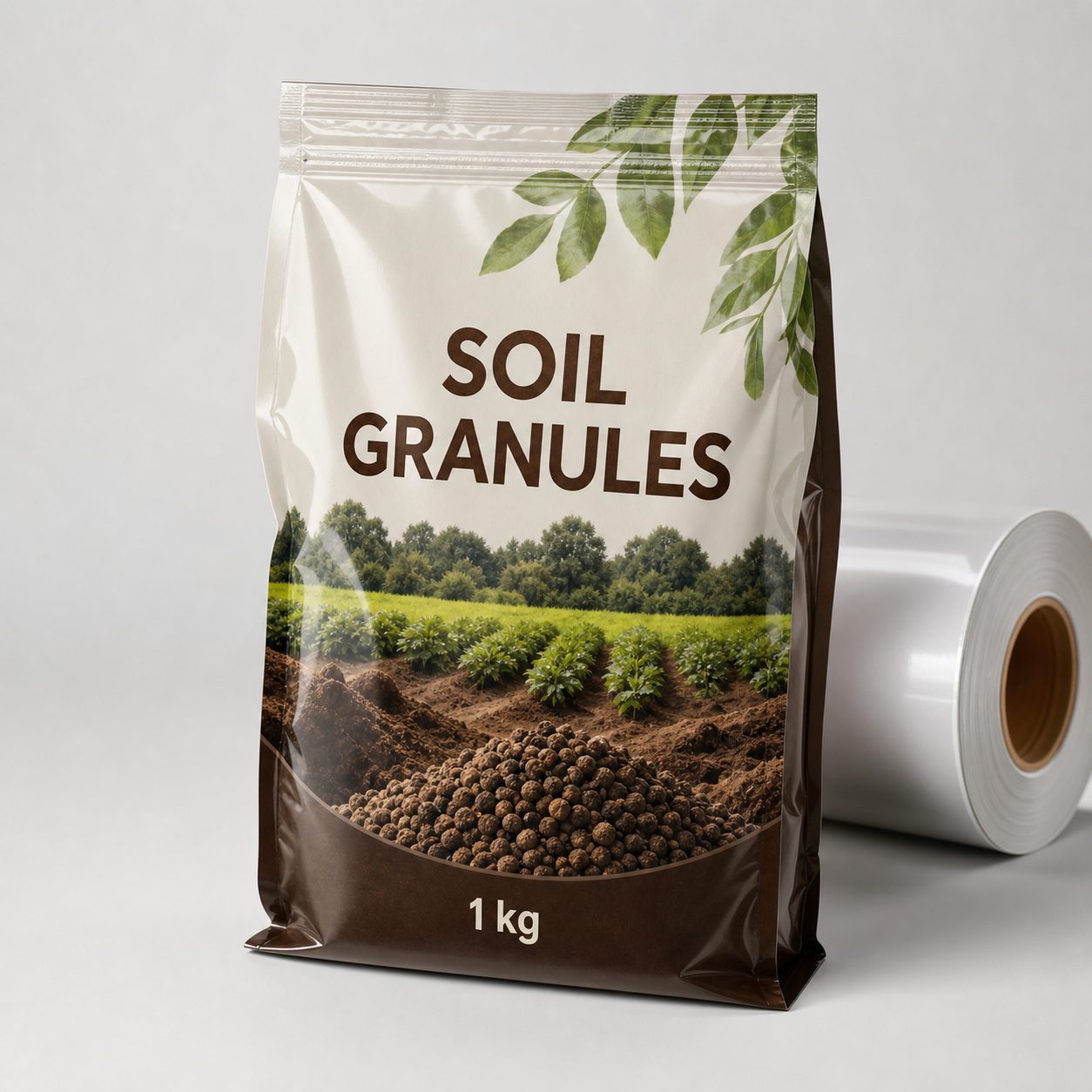
Laminate pouch and roll stock reference for dry granule packaging
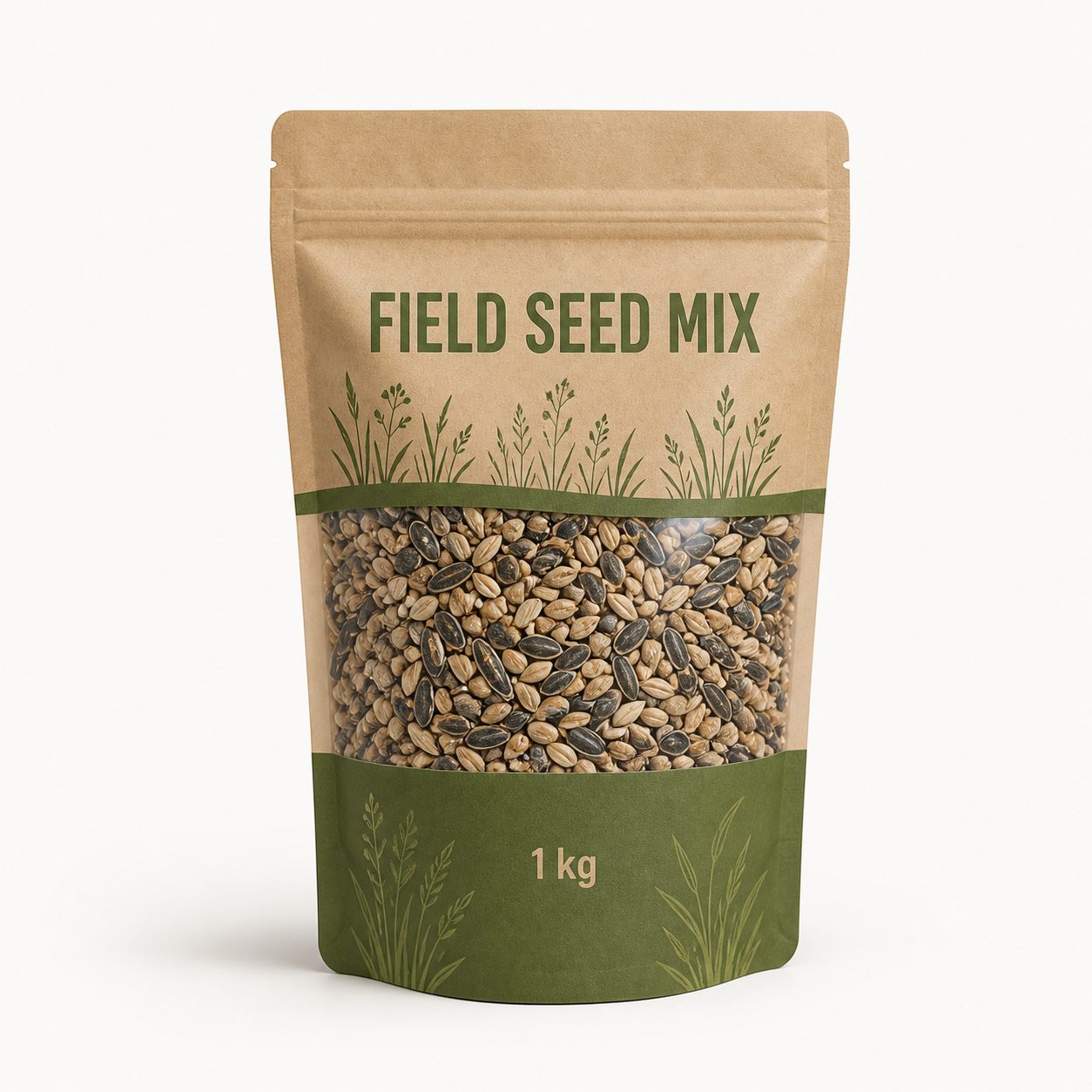
Window pouch options for seed mix and soil blend projects
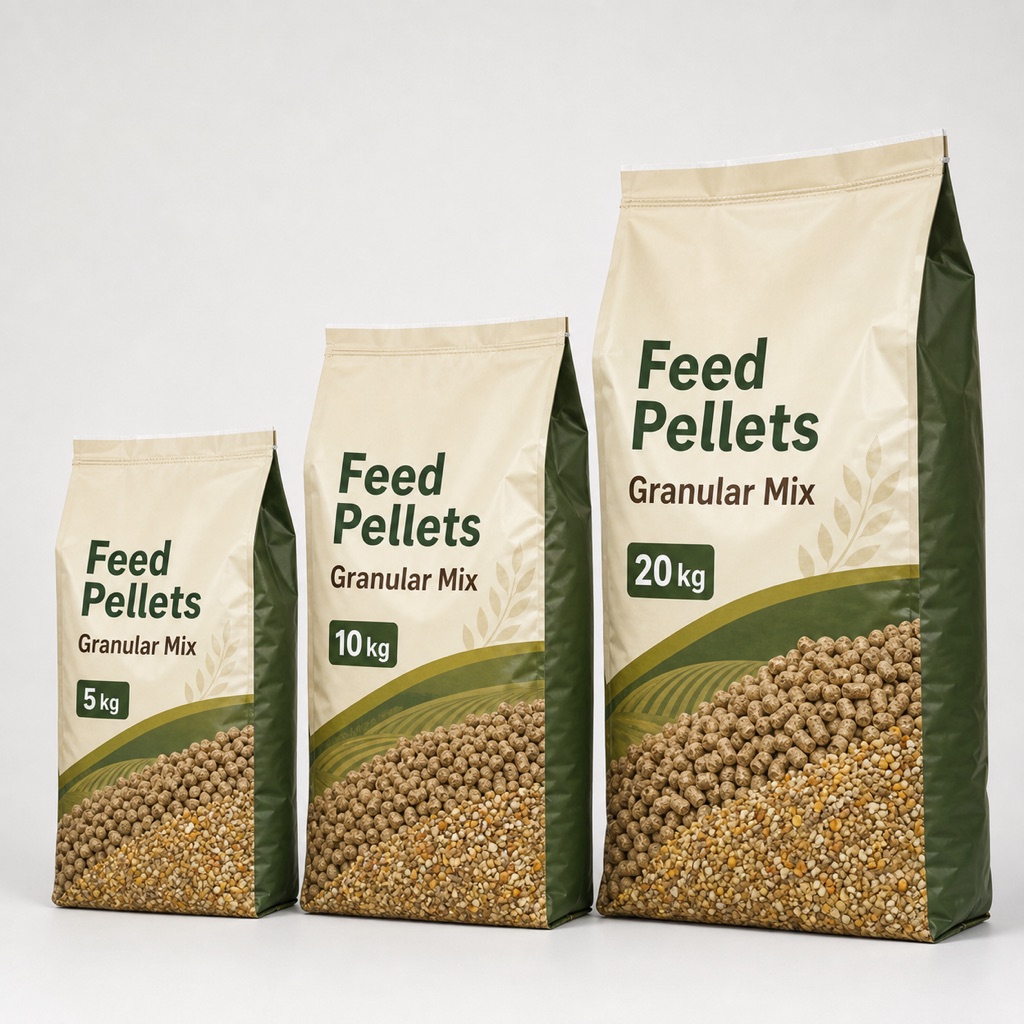
5 kg to 20 kg pouch references for feed and granular mixes
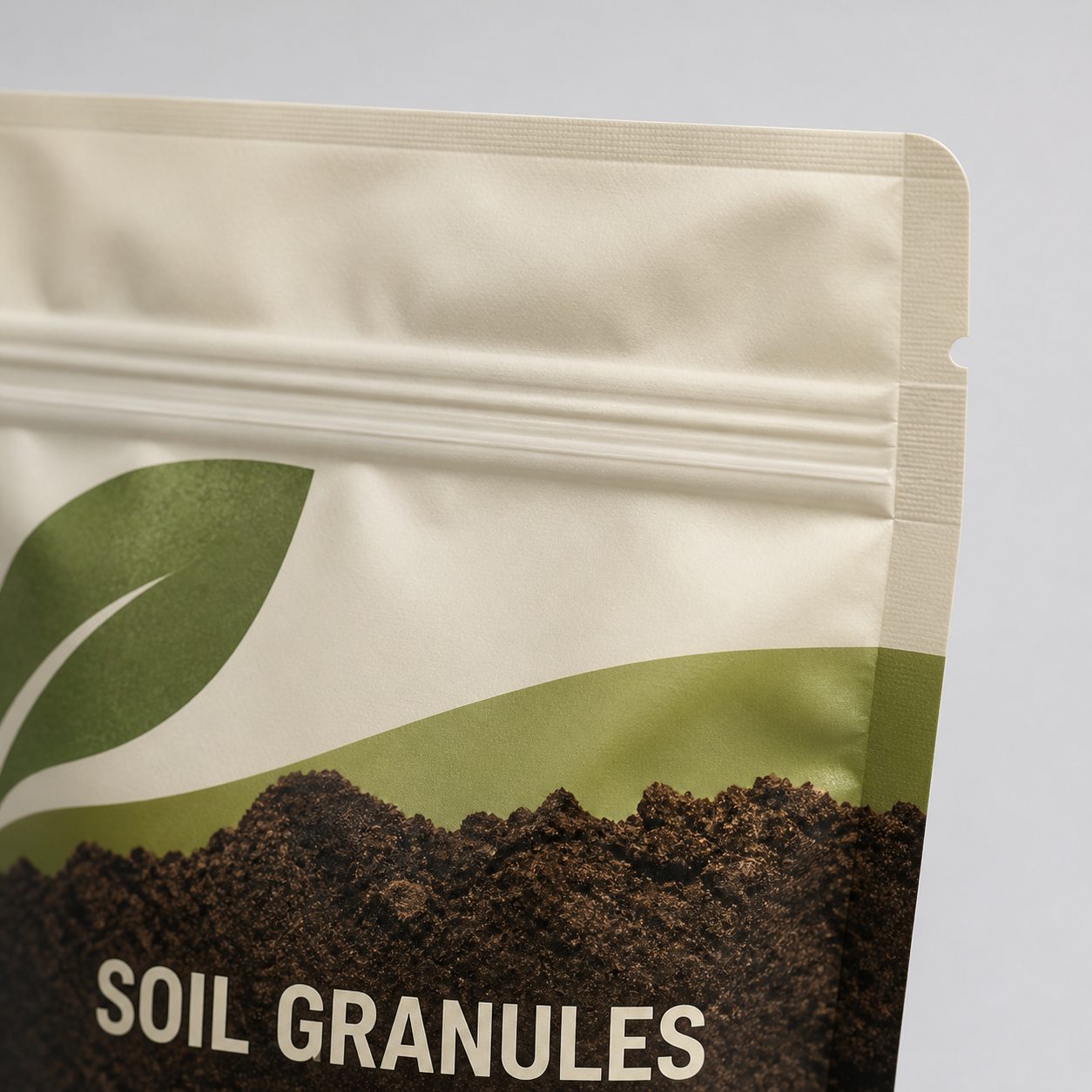
Heat seal, tear notch, and press-to-close zipper reference for granular product pouches
Use these photos as format references. Final size, structure, print layout, and testing scope are reviewed against your product, filling method, and target market.
Lower-impact structure options can be reviewed when the product, filling process, target market, and recovery route support them.
This page focuses on seed packaging, fertilizer granules, soil amendments, feed concentrates, and dry agricultural inputs that need moisture barrier, puncture resistance, and dependable seal strength. Liquid or regulated chemical projects should be reviewed separately.
Yes. Bag format, film thickness, gusset style, zipper, hang hole, handle, print layout, moisture barrier, puncture resistance, and compatibility checks can be reviewed against your fill weight and packing process.
Documentation depends on the packed product and destination market. For edible seeds, feed, or food-contact uses, supplier declarations, traceability records, and third-party testing can be reviewed by project scope.
Production workflow follows GMP-style hygiene and handling controls; no site-level GMP registration is claimed.
ISO 9001-style QC records and FDA/EU material documentation can be reviewed by project scope.
DDP / FOB / CIF coordination can be reviewed by destination and project scope.
Project-level recyclable-ready or lower-impact structures can be reviewed where the final specification supports them.
Project support for material review, artwork coordination, sampling, and production follow-up within the agreed scope.
Production routing, order volume, lead-time assumptions, and capacity fit are reviewed for each confirmed project.
Tell us your product, target weight, and requirements.
We recommend materials, structure, and provide pricing.
Confirm details, approve artwork, and production begins.
QC checkpoints and shipment scope are confirmed by project.
Common issues we help agricultural product buyers avoid during project coordination.
Seeds, grains, and pelletized fertilizers can have sharp edges that puncture standard films during filling or stacking. Specifying puncture-resistance thresholds based on your product's particle profile prevents bag failures in the supply chain.
Seeds and grains absorb ambient moisture through inadequate barrier films, reducing germination rates or causing clumping. Matching moisture vapor transmission rate (MVTR) to your product's sensitivity and storage climate is critical during material selection.
Agricultural products often sit in outdoor or semi-covered storage for weeks. Without UV-stabilized film or opaque outer layers, product quality degrades and packaging becomes brittle—specifying UV requirements upfront avoids field returns.
Heavy-fill bags (25–50 kg) put enormous stress on bottom seals during palletizing and transport. Coordinating seal width, material thickness, and drop-test requirements for your actual fill weight prevents burst failures in transit.
Fine fertilizer dust and feed powder can settle in the seal zone during filling and leave weak or leaking seals. Reviewing fill-head setup, seal width, and sealant choice against the real product on the packing line catches this before a production run.
Updated:
Work with NIAITE for material review, sampling guidance, QC checkpoints, and export project coordination.