Anti-Static Electronics Packaging for electrostatic discharge packaging reviews, ESD packaging materials selection, moisture-barrier laminates, and static shielding needs across electronic components, semiconductors, PCB assemblies, hard drives, lithium batteries, and optical components.
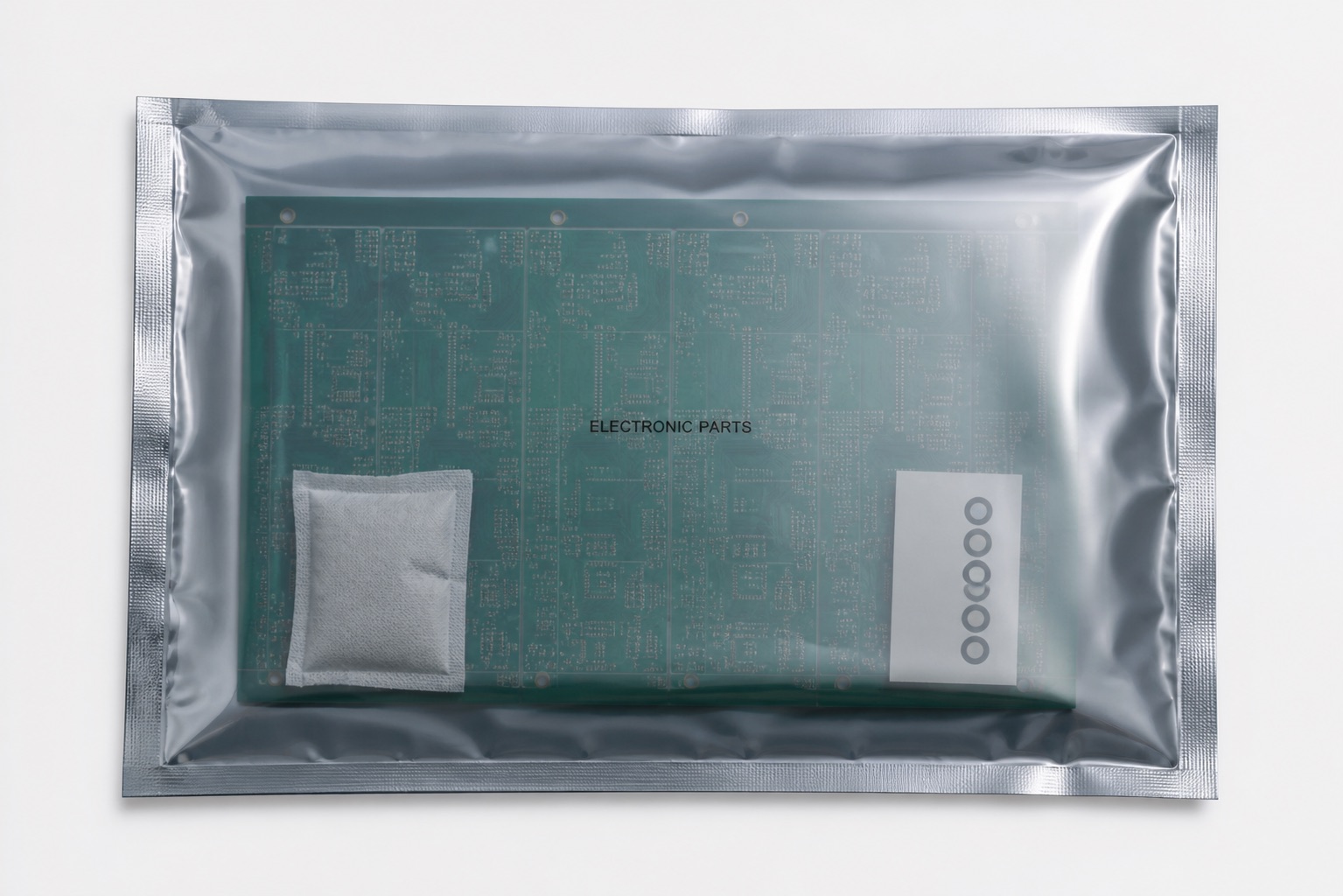
Sensitive electronic components often require humidity control and electrostatic discharge packaging review before sample approval. Our electronics packaging discussions can compare anti-static film, static shielding layers, barrier film, desiccant, and humidity indicator card planning.
Surface resistivity target, seal integrity, packing-line format, MOQ, and sample approval inputs are confirmed before production so the selected ESD packaging material structure matches the project brief.
Production Traceability
Batch records
ISO 9001-Style QC
Quality system
Shipping term coordination
DDP / FOB / CIF
Material Review
Project-specific structures
Typical projects include ESD packaging for components, electrostatic discharge packaging for PCB assemblies, static shielding bags, moisture-barrier pouches, desiccant kits, and humidity indicator card packing requirements. Explore all market solutions or review roll stock film options for packing-line projects. .
Anti-static and static shielding structures can be reviewed as part of an electrostatic discharge packaging plan for sensitive electronic components.
Moisture-barrier film, desiccant, and humidity indicator card options can be matched to storage and shipping conditions without assuming a fixed barrier value before testing.
Seal width, laminate selection, and pack format are reviewed around component size, edge sensitivity, and handling route.
Material declarations, surface resistivity test scope, moisture-barrier target, and ESD packaging sample approval records can be prepared by project.
Define the component, handling route, customer-specified ESD or moisture target, pack geometry, and test scope before selecting an anti-static, shielding, or moisture-barrier structure.
Identify the device, PCB, module, optical part, or other component; its handling stage; and known sensitivity to static, moisture, light, or contamination.
Provide component dimensions, unit weight, quantity per pack, tray or cushioning use, sharp edges, leads, and puncture-risk areas.
Share the required anti-static, dissipative, or shielding function plus any customer test method, surface-resistivity range, marking, and acceptance criteria.
State storage duration, humidity exposure, moisture-barrier target, desiccant or humidity-card use, vacuum or gas-flush need, and reseal expectations.
Describe manual or automated packing, clean-handling constraints, loading orientation, seal equipment, seal width, evacuation method, and inspection plan.
Include pouch quantity and sizes, print or label files, destination, requested declarations, test reports or sample checks, and approval responsibilities.
Key factors to evaluate when selecting ESD packaging for your project.
Different electronic components require different protection: anti-static bags prevent charge buildup on surfaces, while static-shielding bags block external electrostatic fields. We help review which protection tier matches your component sensitivity class.
Moisture-sensitive devices (MSD) need aluminum foil or high-barrier laminates with desiccant packs to prevent oxidation during ocean freight. We coordinate moisture barrier specs based on your MSD level and expected transit duration.
Open-top bags for manual insertion, zip-lock bags for reuse, and heat-seal bags for tamper evidence each suit different workflows. We help match the bag format to your packing line speed and component handling requirements. Similar clear zipper and open-top formats are reviewed for folded garments in custom apparel packaging.
ESD packaging often requires printed caution symbols, barcodes, and lot traceability. We coordinate print placement and adhesive label compatibility so markings survive handling without compromising the ESD shielding layer.
Compare anti-static, static shielding, and moisture-barrier material structures based on component sensitivity, storage route, packing quantity, and documentation scope.
| Structure | Application | Barrier Level |
|---|---|---|
PET / PE
|
Anti-static accessory bags where static shielding is not required by the project brief | Standard |
PET / VMPET / PE
|
Metallized static shielding and moisture-barrier packaging materials for ESD pouch review | Medium |
PET / AL / PE
|
Foil shielding layer for moisture-sensitive electronic components and electrostatic discharge packaging review | High |
PET / NY / PE
|
Puncture-resistant ESD packaging material structure for rigid modules and hardware kits | High |
Kraft / AL / PE
|
Paper-look outer layer with project-specific static shielding review | High |
Mono PE
|
PE-based structure review where ESD packaging and barrier targets allow | Standard |
An illustrative example of how electronics barrier laminates can combine print surface, shielding or moisture-barrier layers, optional PA / NY support, and PE sealant. Exact structures are reviewed by project testing. Visit our material guide for more details.
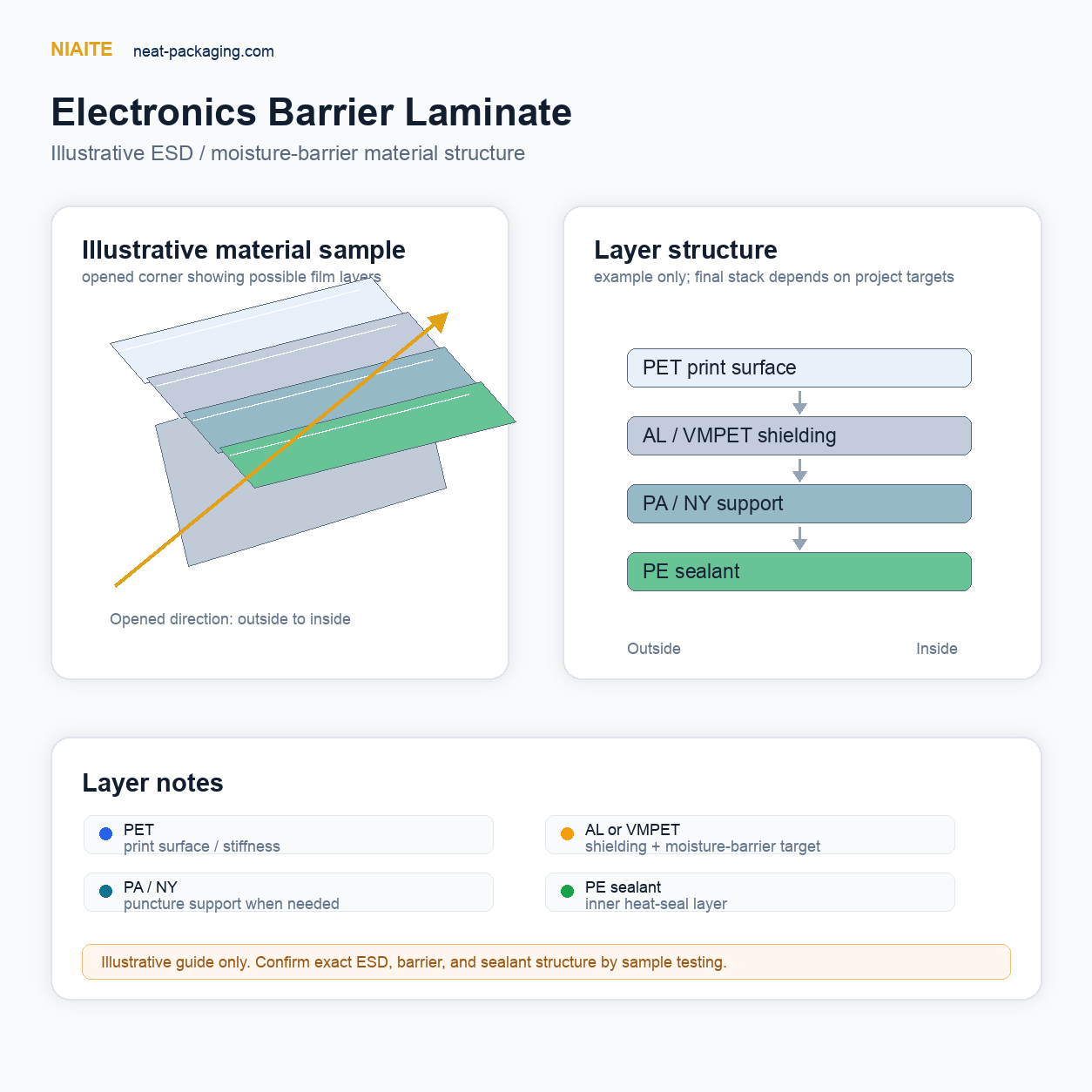
PET print surface supports graphics, stiffness, and the outside handling layer for electronics packaging projects.
AL or VMPET shielding options are reviewed around ESD, moisture-barrier, and handling requirements.
PA / NY support can be added where puncture resistance, flexing, or handling toughness is required.
PE sealant is reviewed for seal integrity, pouch format, product contact, and sample testing.
Desiccant placement, pouch headspace, and moisture-barrier target can be reviewed with your storage route.
Anti-static film, static shielding, surface resistivity target, and electrostatic discharge packaging labels can be specified by project.
Humidity indicator card position and bag size can be coordinated for moisture-sensitive component shipments.
Material declarations, surface resistivity test scope, barrier film review, and ESD packaging sample approval records can be arranged.
Representative purchasing inputs. Actual values depend on electronic component sensitivity, ESD packaging target, moisture-barrier target, packing quantity, and customization.
Film Structure
Project-specific anti-static, static shielding, or moisture-barrier ESD packaging laminate
ESD Packaging Target
Surface resistivity and shielding scope reviewed by project
Moisture Control
Desiccant and humidity indicator card requirements reviewed by route
Seal Integrity
Seal width and seal integrity checks matched to component weight and format
Packing Format
Flat pouch, resealable pouch, or roll stock film reviewed by packing process and electrostatic discharge packaging needs
MOQ
MOQ depends on structure, size, print plan, and sampling requirements
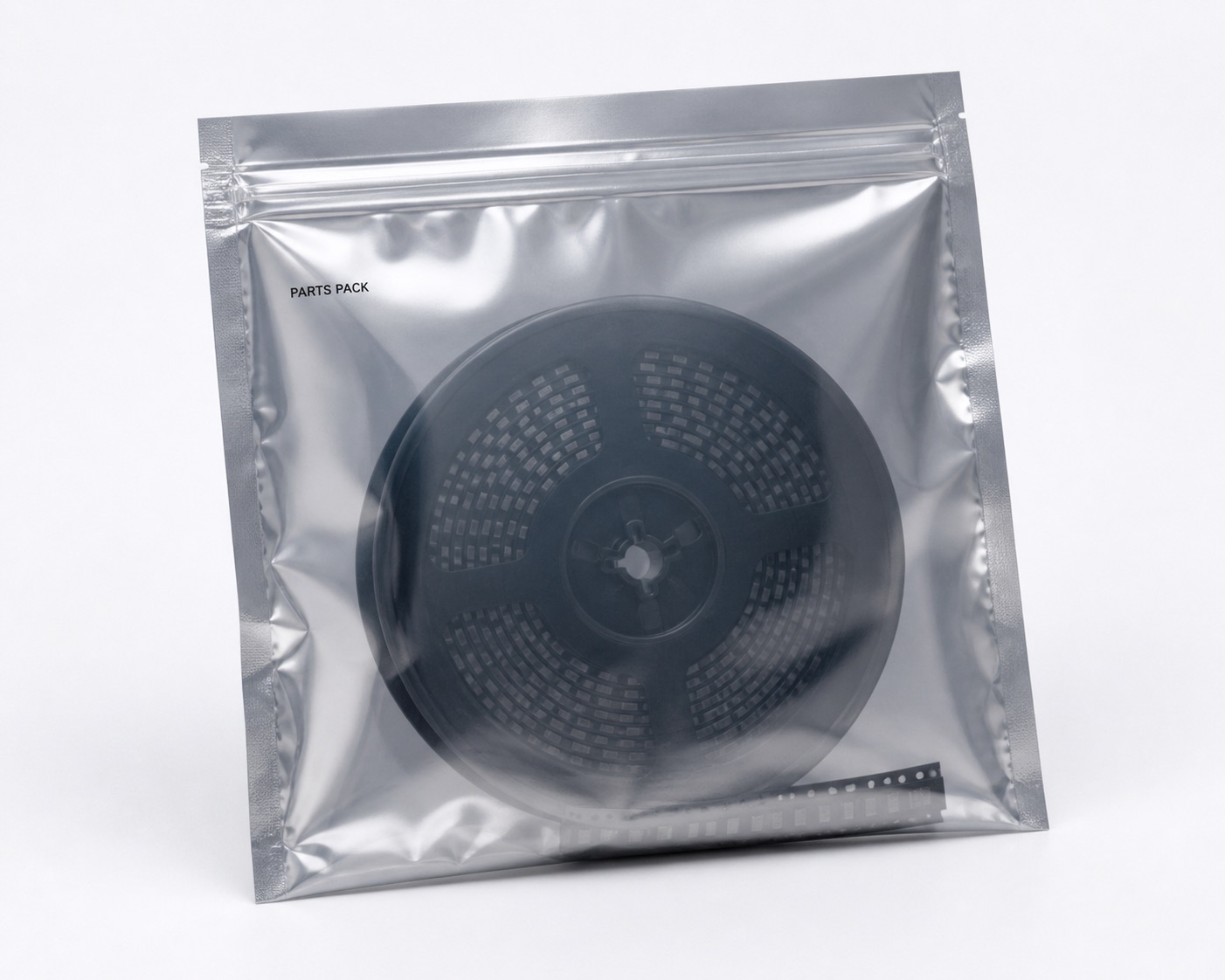
Static-control ESD pouch format reference for electronic components and PCB assemblies
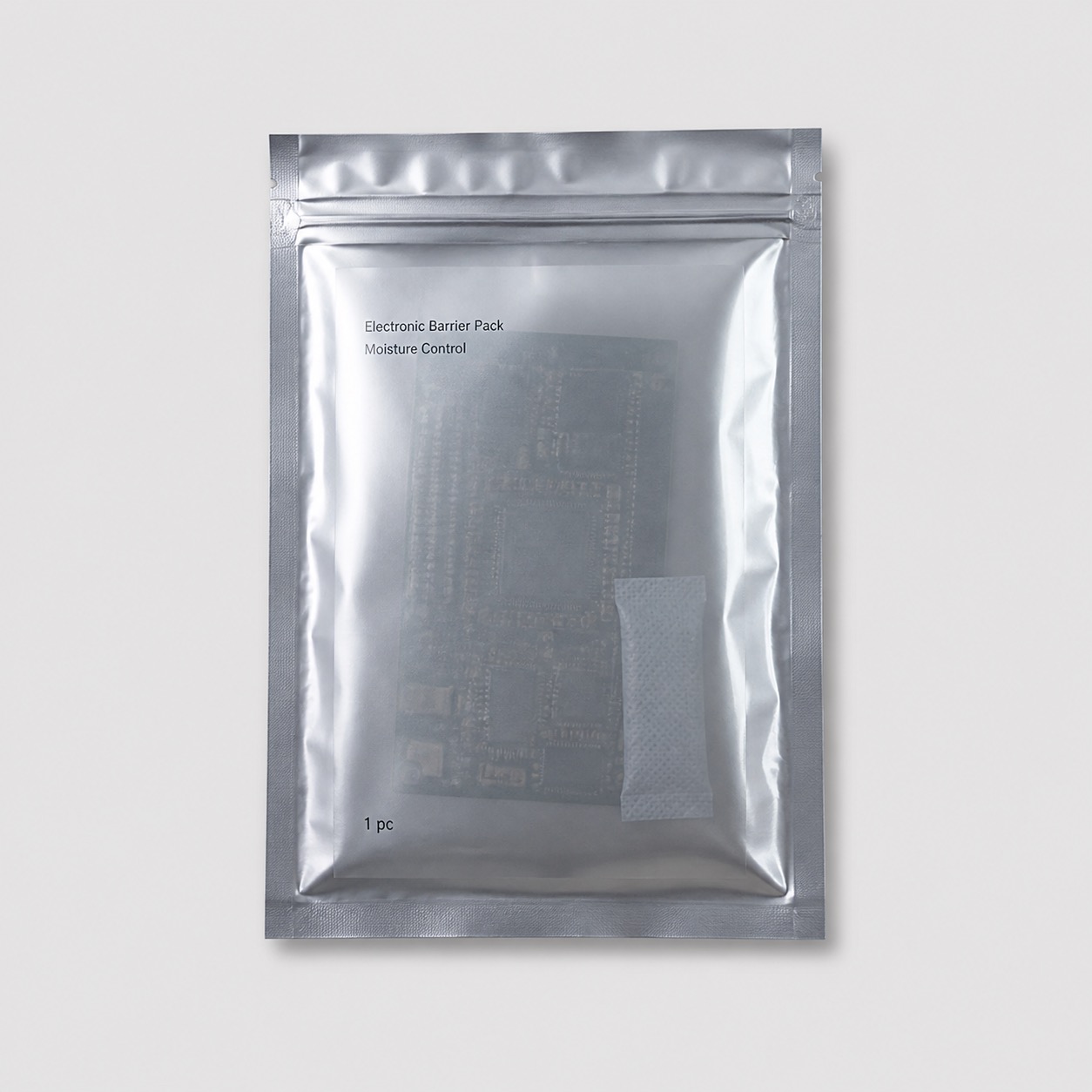
Moisture-barrier film planning with desiccant and humidity indicator card requirements
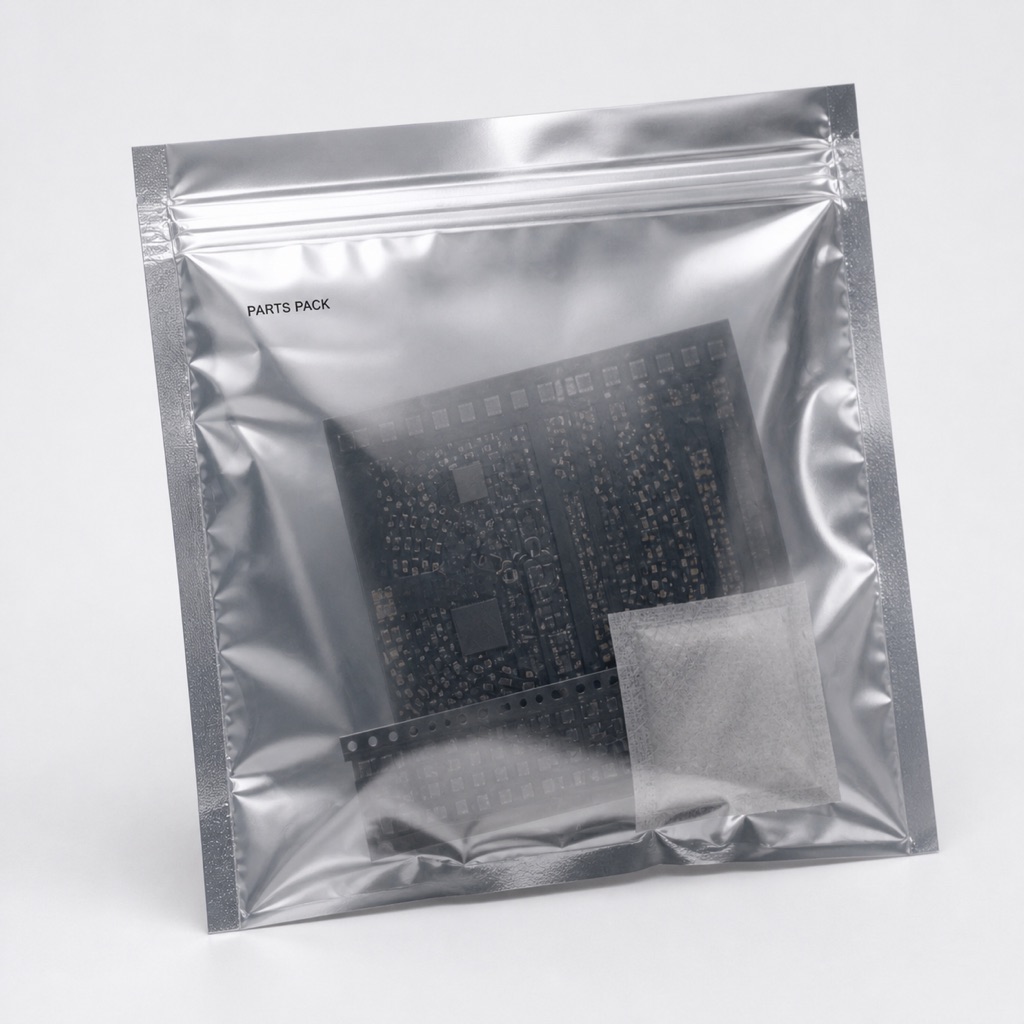
Anti-static pouch layout reference for semiconductors, hard drives, and components
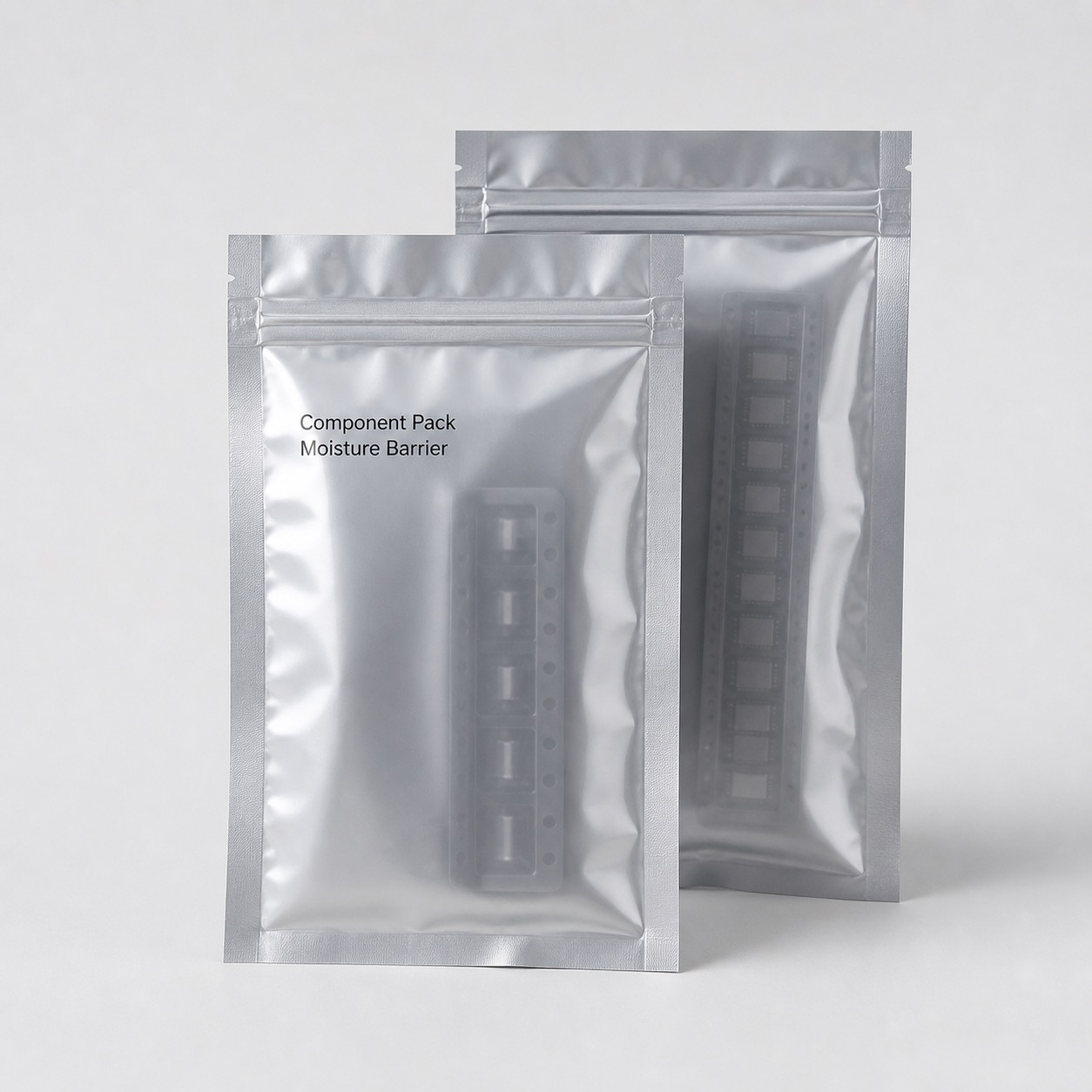
Pouch layout reference for seal integrity, surface resistivity, ESD packaging material review, MOQ, and print planning
Use these photos as format references. Final size, structure, print layout, and testing scope are reviewed against your product, filling method, and target market.
Lower-impact structure options can be reviewed when the product, filling process, target market, and recovery route support them.
Anti-Static Electronics Packaging is commonly reviewed for electronic components, semiconductors, PCB assemblies, hard drives, lithium batteries, optical components, and ESD handling kits that need electrostatic discharge packaging discussion.
Yes. Pouch size, shielding layer, barrier film, seal width, anti-static treatment, desiccant space, humidity indicator card placement, MOQ, and ESD packaging sample approval workflow can be confirmed before production.
Documentation can include material declarations, surface resistivity test scope, static shielding review, moisture-barrier target, seal integrity notes, and third-party report support by project scope.
Batch records, material checks, and production QC notes support traceability for electronics packaging orders.
Quality records, material declarations, ESD documentation, and third-party reports can be reviewed by project scope.
DDP / FOB / CIF coordination can be reviewed by destination and project scope.
Project-level recyclable-ready or lower-impact structures can be reviewed where the final specification supports them.
Project support for material review, artwork coordination, sampling, and production follow-up within the agreed scope.
Production routing, order volume, lead-time assumptions, and capacity fit are reviewed for each confirmed project.
Tell us your product, target weight, and requirements.
We recommend materials, structure, and provide pricing.
Confirm details, approve artwork, and production begins.
QC checkpoints and shipment scope are confirmed by project.
Common issues we help electronics packaging buyers avoid during project coordination.
Choosing a laminate with an MVTR (moisture vapor transmission rate) too high for the component's sensitivity class leads to corrosion or electrical failure in transit. We cross-reference your component's moisture sensitivity level with the laminate's barrier data to select the right structure before sampling.
A pouch may use a static-dissipative inner layer but pair it with an insulating outer layer that traps charge on the surface. We review the full layer stack's surface resistivity and shielding properties to ensure the discharge path is continuous from outer contact to inner ground plane.
An oversized pouch allows components to shift and collide during transit, while a too-tight fit risks puncturing the film on sharp edges. We coordinate internal dimensions, component geometry, and any insert or divider requirements so the product is held snugly without stress on the seal area.
Incorrect part numbers, date codes, or barcode formats on electronics pouches cause receiving rejections and inventory errors downstream. We confirm label content, placement zones, and barcode symbology against your warehouse scanning system requirements during artwork review.
Pouches stacked in cartons or on pallets experience sustained compression that can creep-open weak seals over time. We evaluate seal width, peel strength, and stacking load calculations for your typical pallet configuration to ensure seals hold throughout warehousing and shipping.
Updated:
Work with NIAITE for material review, sampling guidance, QC checkpoints, and export project coordination.