Home care and household product packaging for detergent refill pouches, cleaning wipes, laundry pods, powder packs, fabric softener refills, and surface cleaner concentrates. Structures are reviewed for chemical compatibility, closure options, and filling-line behavior.
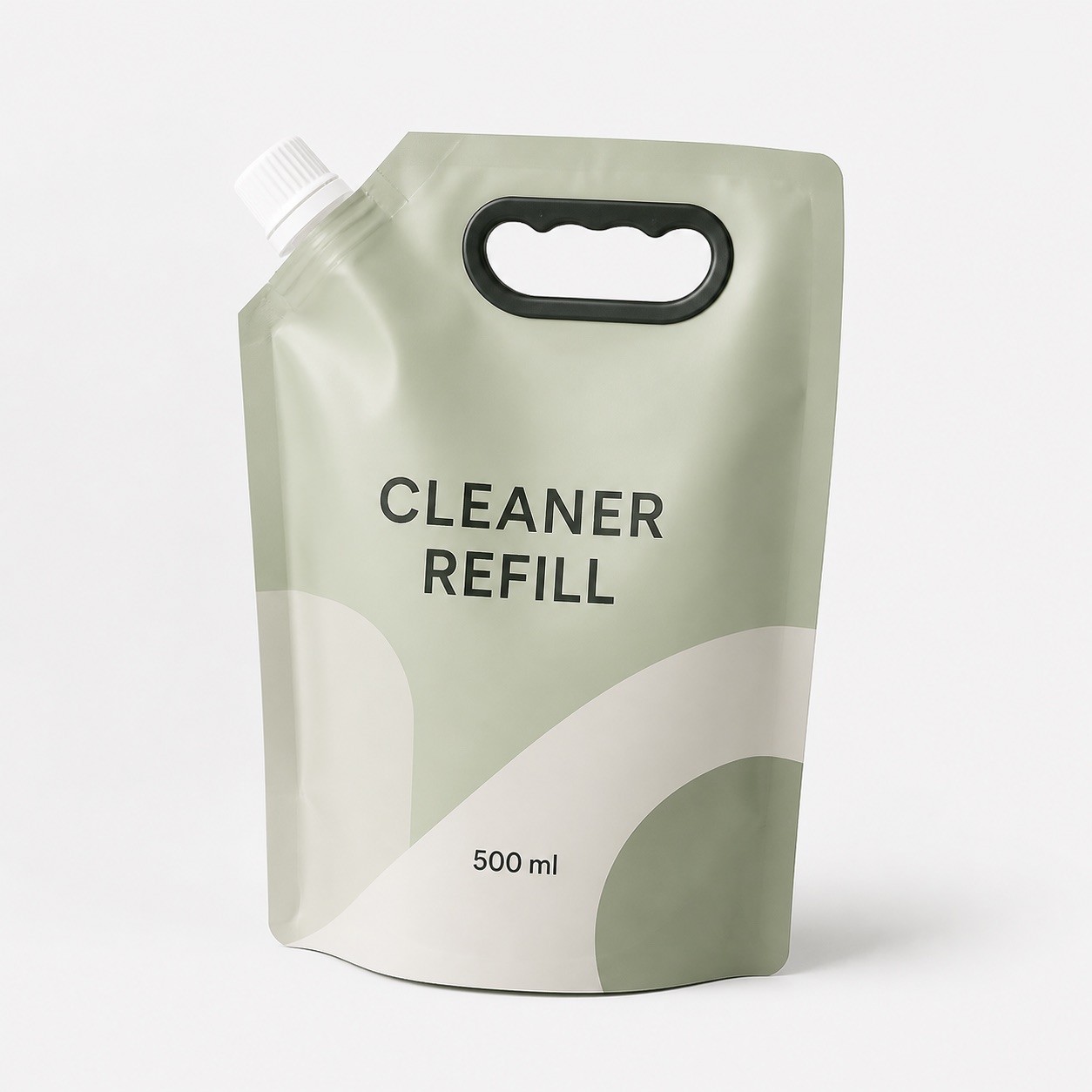
Flexible packaging for detergent refill pouches, laundry pods, cleaning wipes, powder packs, air freshener refills, and household concentrates needs more than a generic pouch structure.
We review project-specific compatibility, barrier targets, sealant choice, pack stiffness, puncture resistance, and closure options so the final pack matches the formula and distribution route.
GMP-Style Production Controls
Partner facilities
ISO 9001-Style QC
Quality system
Shipping term coordination
DDP / FOB / CIF
Recyclable-ready review
Project-specific structures
Home care packaging and household projects should be separated by formula state, pack format, closure options, and handling requirements, covering detergent refill pouches, cleaning refills, dish soap, laundry detergent, fabric softener, and surface cleaner projects. Explore all market solutions .
Film and sealant choices are reviewed against detergents, fragrance oils, powders, wipes, and concentrates before production.
Refill pouches, sachets, roll stock, and stand-up packs can reduce pack weight and carton volume compared with rigid containers.
Size, print artwork, hang holes, tear notches, zippers, spout fitments, and surface finish can be specified by project.
Material selection, traceability records, and production QC records can be aligned with household-product requirements.
Choose the right material structure based on the formula, pack format, chemical compatibility review, sealing method, and distribution route.
| Structure | Application | Barrier Level |
|---|---|---|
PET / PE
|
General dry household packs, trial sachets, and outer pouches | Standard |
PET / VMPET / PE
|
Moisture and aroma barrier for powder packs or fragrance-sensitive formulas | Medium |
PET / AL / PE
|
High-barrier option for concentrated powders or aroma-sensitive products | High |
PET / NY / PE
|
Tougher structure for detergent refill pouches and larger household packs | High |
Kraft / AL / PE
|
Natural-look pouch option where chemical compatibility is confirmed | High |
Mono PE
|
Mono-material review where formula, stiffness, and local recovery streams allow | Standard |
A transparent look at how household product packaging layers can support print protection, barrier control, and sealant behavior. Visit our material guide for more details.
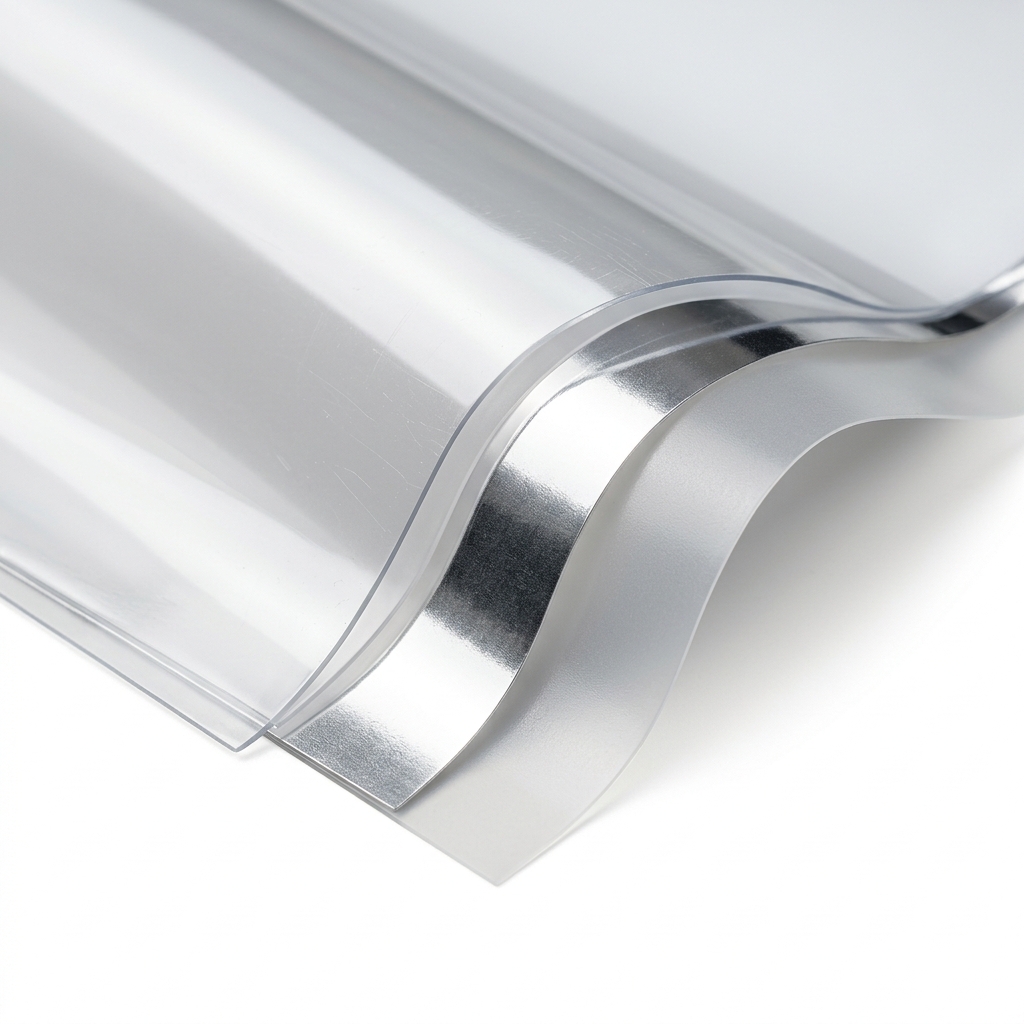
Printable PET supports artwork, registration marks, varnish or matte finish, and the outer handling surface.
Barrier film is selected around moisture, aroma, grease, light, and shelf-life targets for the packed product.
Adhesive bonds the print web, barrier option, and sealant into one stable laminate after curing and testing.
PE sealant is reviewed for heat-seal window, jaw temperature, dwell time, COF, filling conditions, and pack format.
Detergent refill pouches, cleaning wipes, laundry pods, powder packs, and surface cleaner concentrates each need different film stiffness, sealant, opening, and closure options.
Spout fitments are useful for some liquid refills, while wipes, pods, powders, and sachets may need zippers, tear notches, fin-seal roll stock, or seal-only pouch formats. Reseal options for wipes packs are compared further in wet wipes and hygiene packaging.
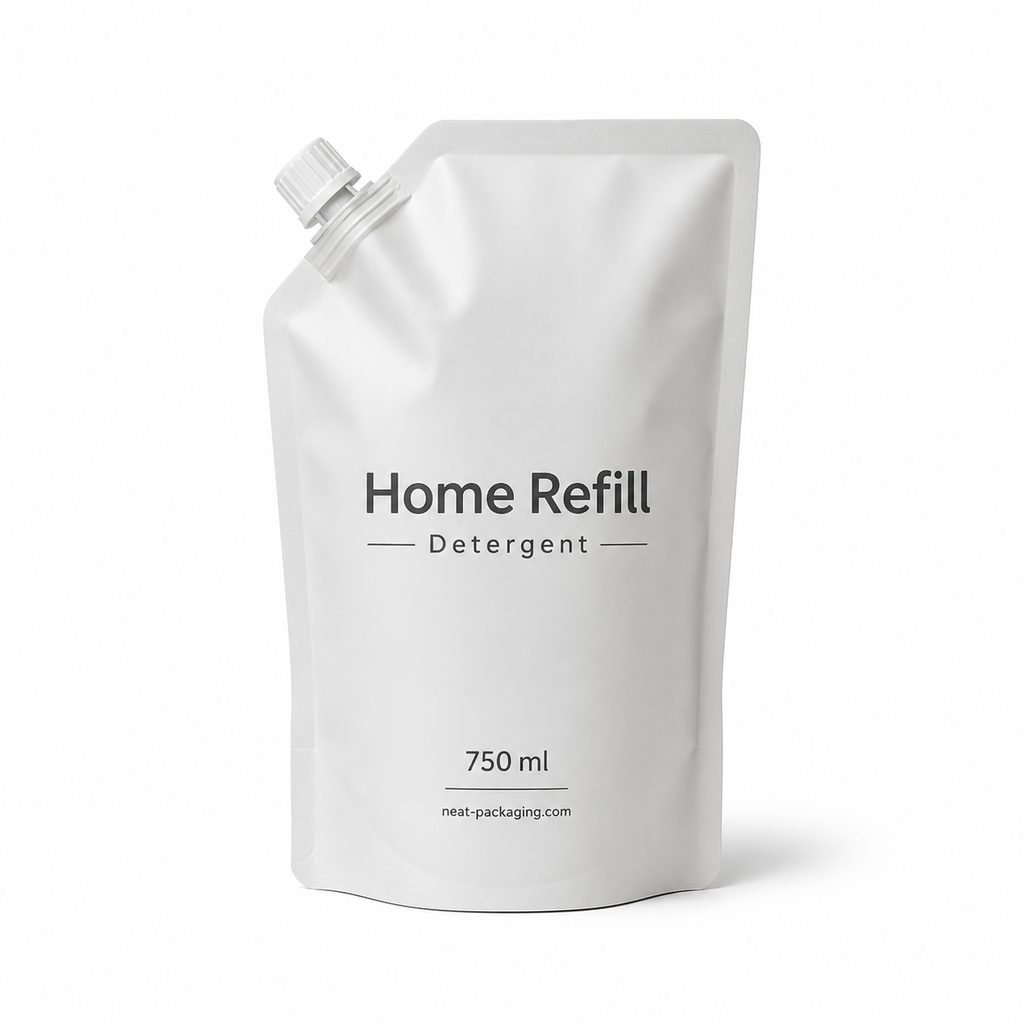
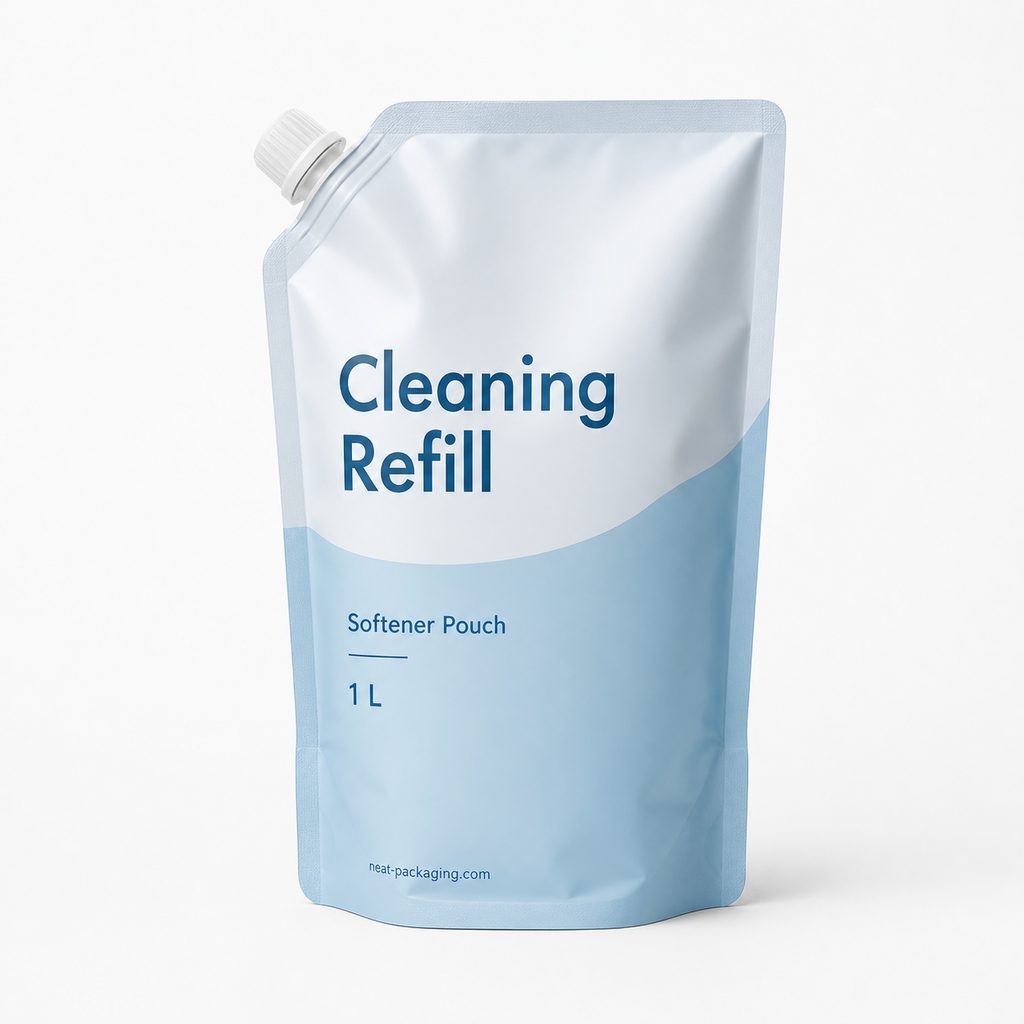
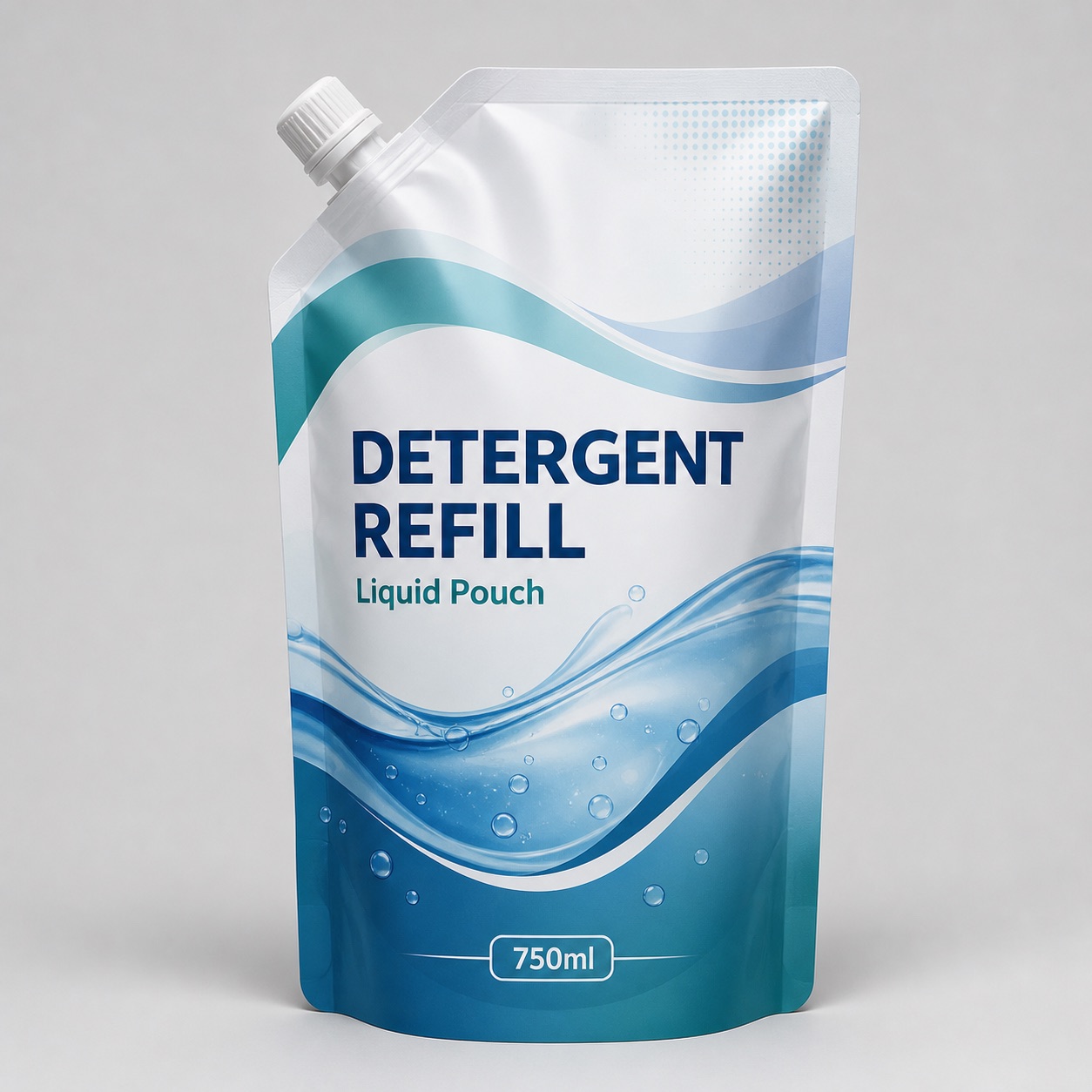
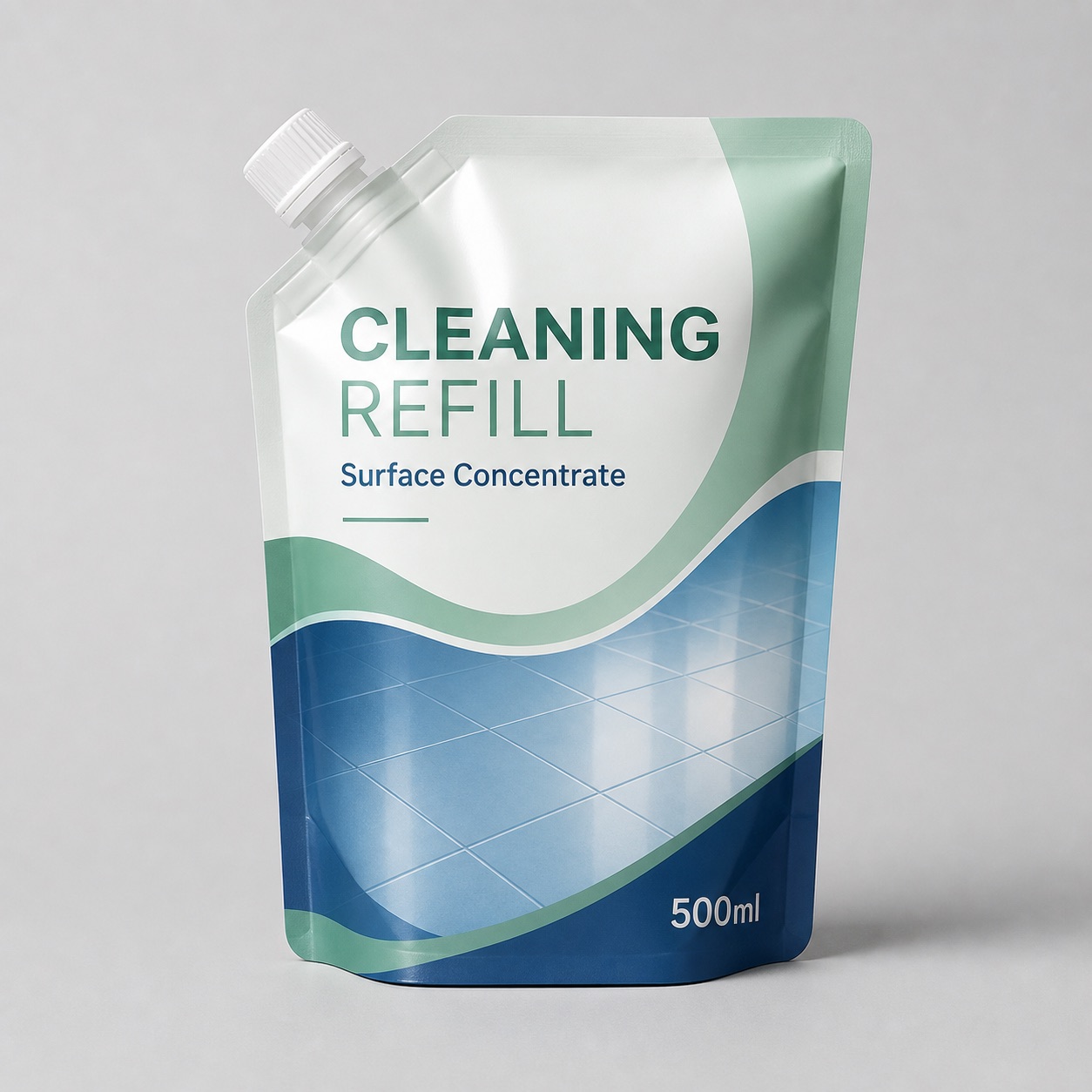
Euro holes, carry handles, round holes, and carton packout details can be selected for the target retail channel.
Tear notch, laser score, and easy-open placement are reviewed against pack format, film stiffness, and filling-line needs.
Transparent windows, matte/gloss finish, and opaque structures are selected based on formula appearance and barrier targets.
Compatibility review, filling-line feedback, seal checks, drop handling review, and project documentation can be coordinated before production.
Representative parameters. Actual values depend on material structure and customization.
Film Thickness
Reviewed by formula, fill weight, pack format, and stiffness target
Chemical Compatibility
Project-specific compatibility with detergent, powder, fragrance, wipe, and cleaner formulas
Closure Options
Zipper, tear notch, seal-only, or spout fitment reviewed by product type
Seal Strength
Target set by filling method, formula behavior, pack weight, and drop handling
Pack Size
Sachets, wipes packs, pods pouches, and refill sizes reviewed by project
MOQ
Project-specific — confirm pouch format, size, structure, and artwork count
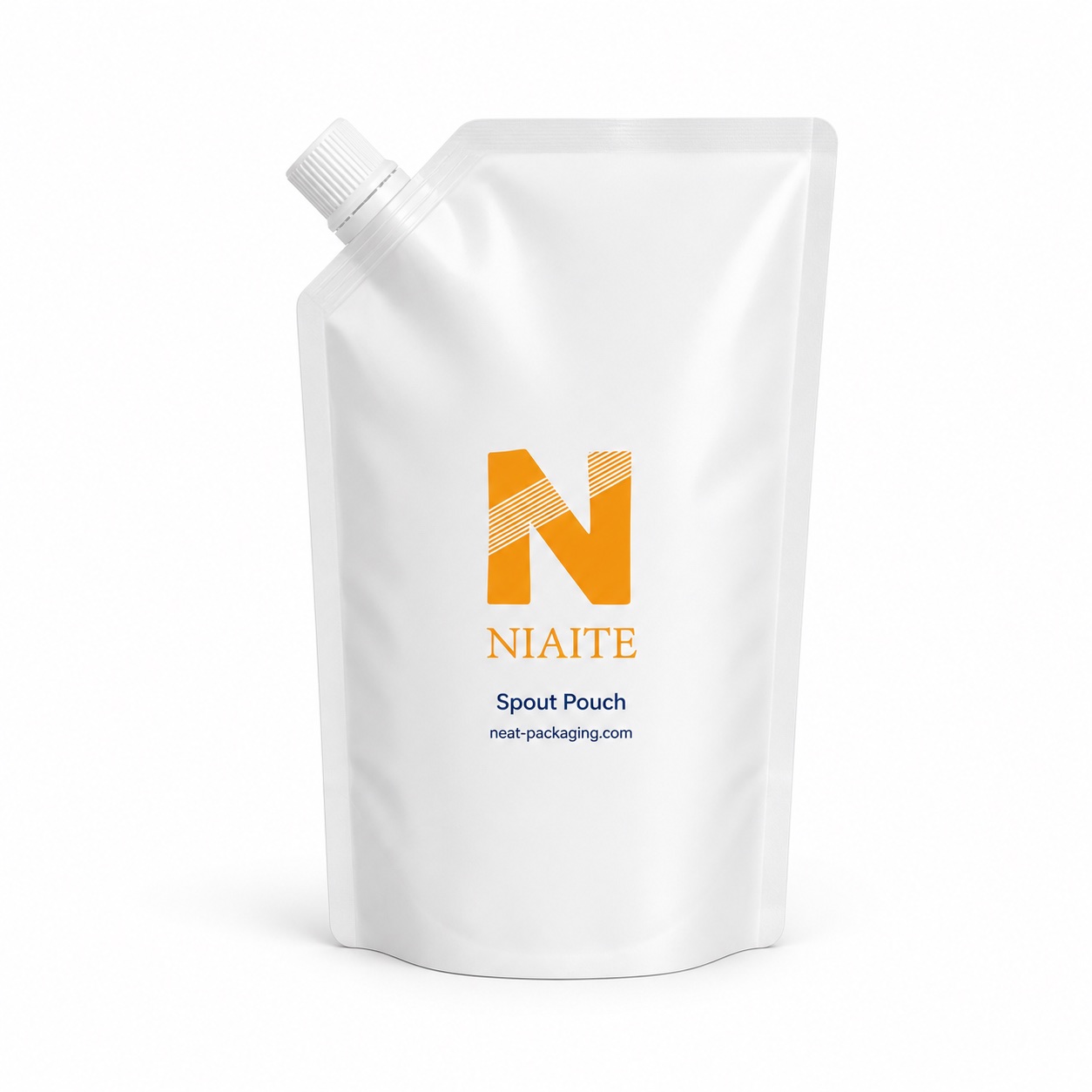
Laundry detergent refill pouch with project-reviewed fitment and sealant
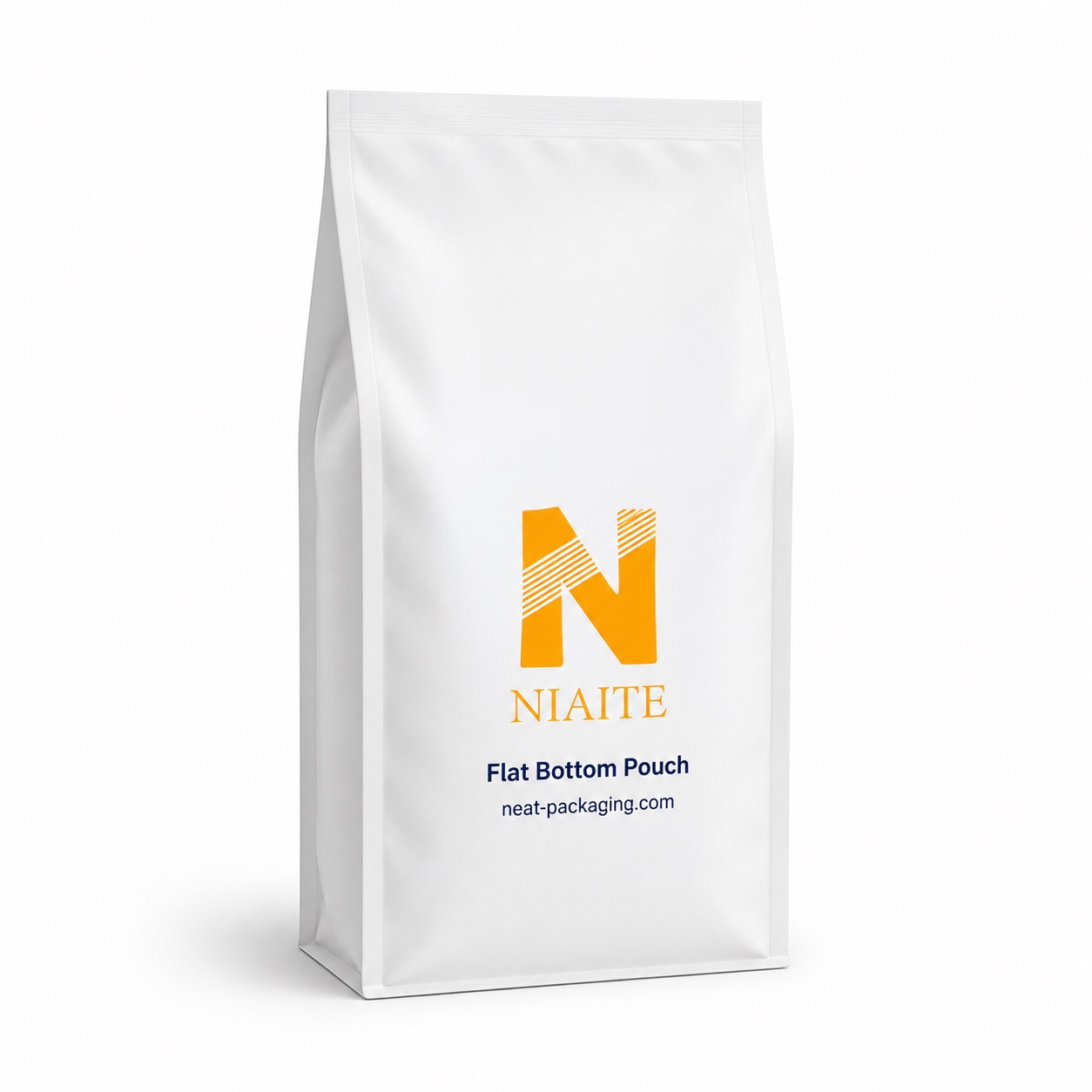
Flexible refill pack with fragrance and formula compatibility review
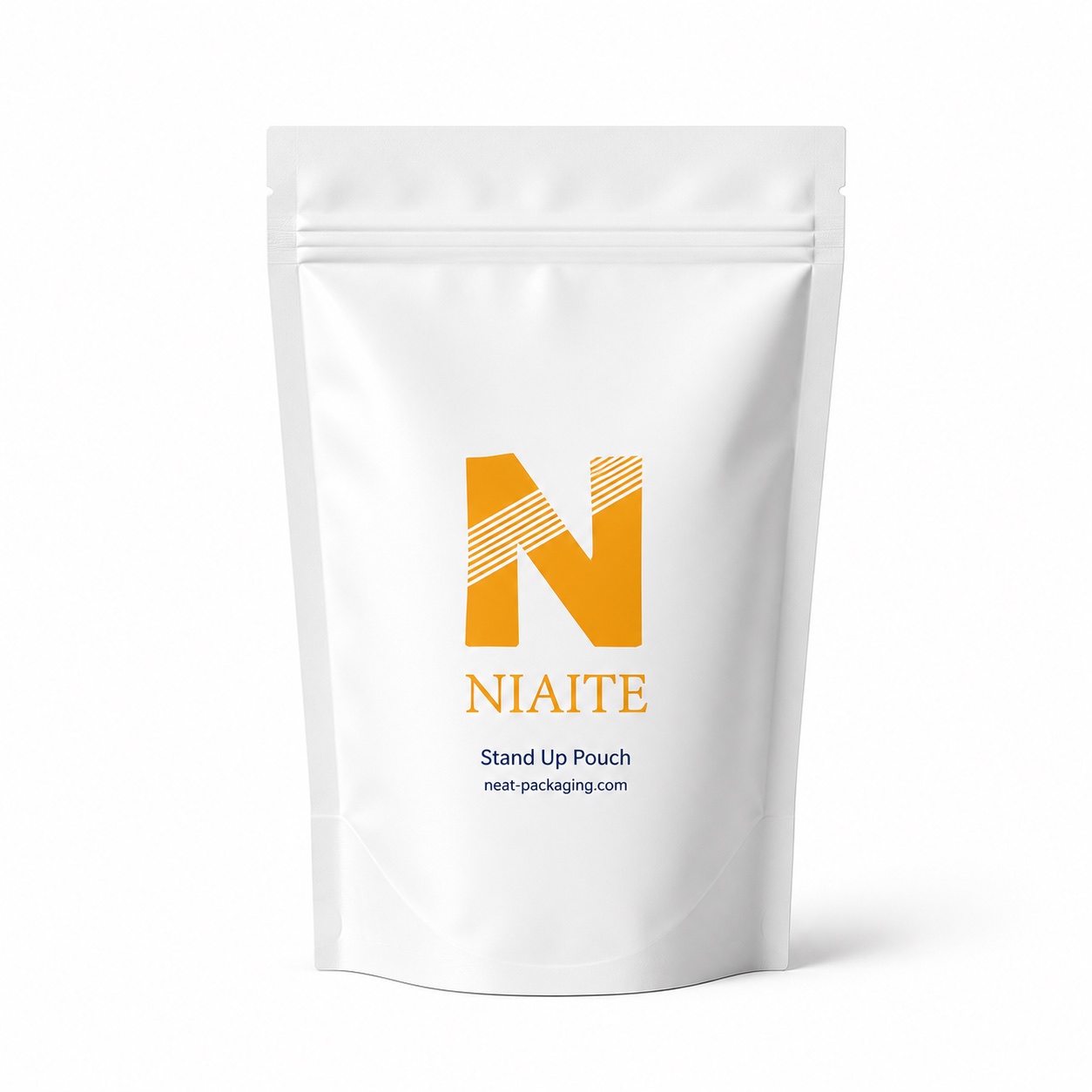
Resealable pouch for pods where stiffness and closure options are reviewed
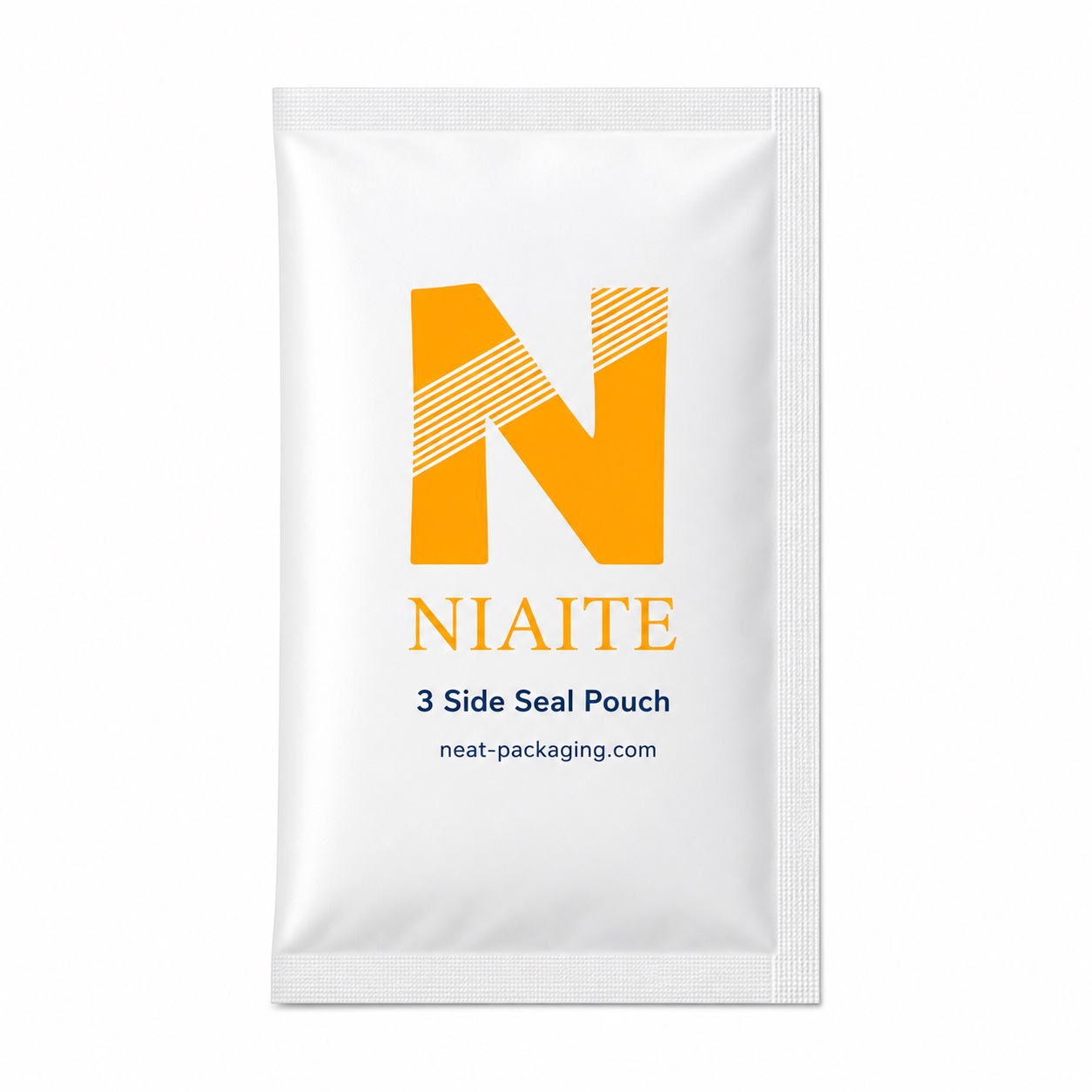
Concentrate refill pouch with formula and seal compatibility review
Use these photos as format references. Final size, structure, print layout, and testing scope are reviewed against your product, filling method, and target market.
Lower-impact structure options can be reviewed when the product, filling process, target market, and recovery route support them.
Household product packaging can be reviewed for detergent refill pouches, cleaning wipes, laundry pods, powder packs, fabric softener refills, and surface cleaner concentrates. The final structure depends on formula, pack size, and filling process.
Please share target pack size, formula state, artwork, surface finish, opening style, closure options, filling temperature, sealing method, carton packout, and distribution route.
Chemical compatibility should be reviewed for surfactants, fragrance oils, alcohol content, alkaline or acidic cleaners, powders, wipes, and long-term storage. Documentation depends on the selected film, sealant, fitment, and test scope.
Production workflow follows GMP-style hygiene and handling controls; no site-level GMP registration is claimed.
ISO 9001-style QC records, material traceability, and project documentation can be reviewed by household-product scope.
DDP / FOB / CIF coordination can be reviewed by destination and project scope.
Project-level recyclable-ready or lower-impact structures can be reviewed where the final specification supports them.
Project support for material review, artwork coordination, sampling, and production follow-up within the agreed scope.
Production routing, order volume, lead-time assumptions, and capacity fit are reviewed for each confirmed project.
Tell us your product, target weight, and requirements.
We recommend materials, structure, and provide pricing.
Confirm details, approve artwork, and production begins.
QC checkpoints and shipment scope are confirmed by project.
Common issues we help household product packaging buyers avoid during project coordination.
Bleach-based cleaners, acidic descalers, and solvent-heavy degreasers attack standard polyethylene sealant layers, causing delamination or pinhole leaks during shelf storage. We coordinate chemical compatibility testing between your formula and the proposed laminate structure before production to prevent in-market failures.
Thick detergent gels and concentrated cleaners require specific spout bore diameters and cap thread specs for proper dispensing. When spout components are sourced separately from the pouch, dimensional mismatches cause leaks or clogging on the filling line. We align component specs across suppliers before tooling begins.
Household products stored under sinks or in laundry rooms face persistent moisture that lifts labels and smears printed information. If the adhesive spec or surface treatment does not account for wet-storage environments, branding and usage instructions become illegible within months of purchase.
Many household cleaners and wax products are filled at elevated temperatures that can soften sealant layers or distort pouch dimensions if the film structure is not rated for the fill temperature. We confirm thermal tolerance specs with both the filling facility and the film supplier during project planning to avoid warped or leaking pouches.
Heavy liquid pouches stacked on pallets for weeks in distribution warehouses can crush bottom layers, bursting seals or deforming spouts. We specify compression-test requirements based on your actual pallet configuration and expected storage duration, and coordinate carton design to distribute load properly.
Updated:
Work with NIAITE for material review, sampling guidance, QC checkpoints, and export project coordination.