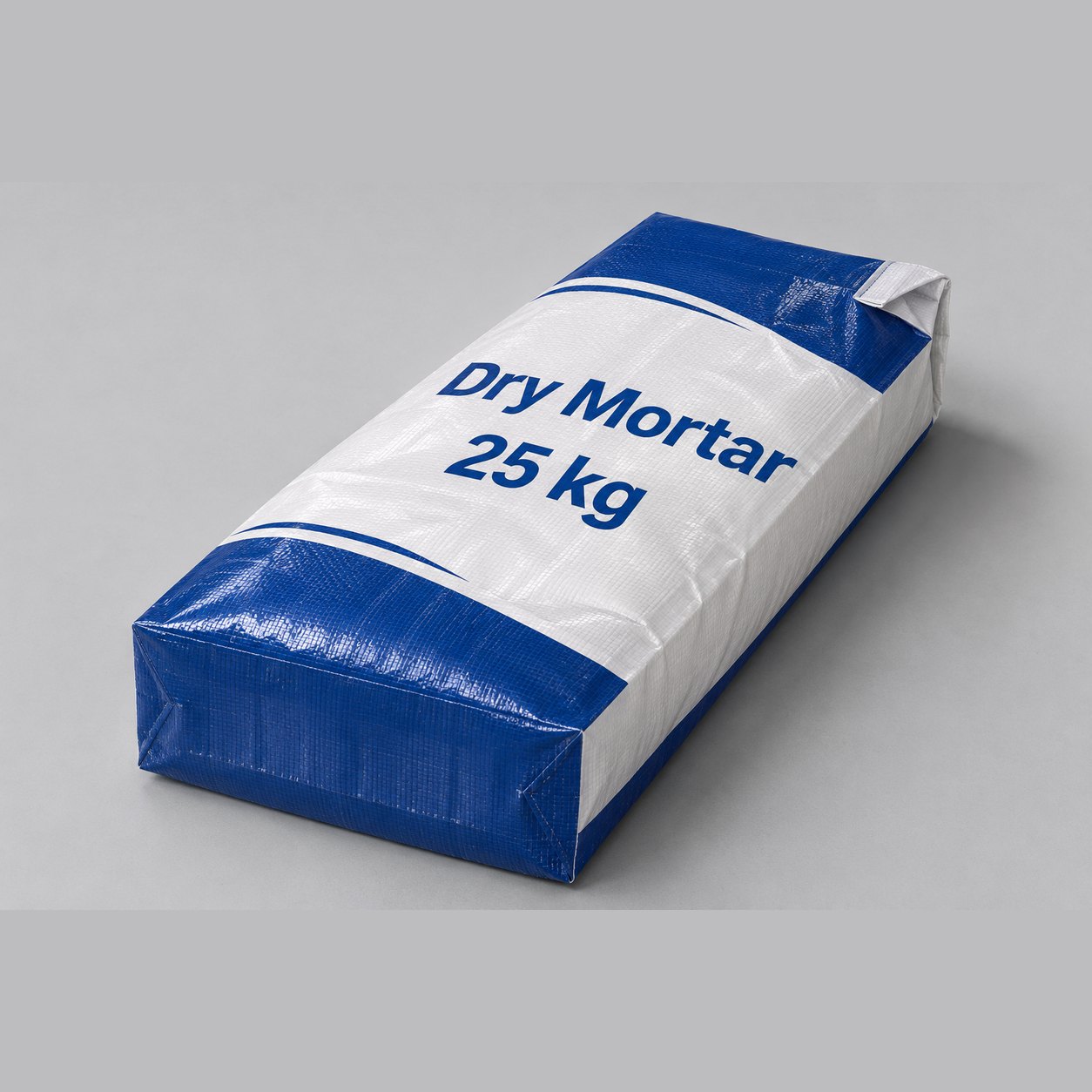
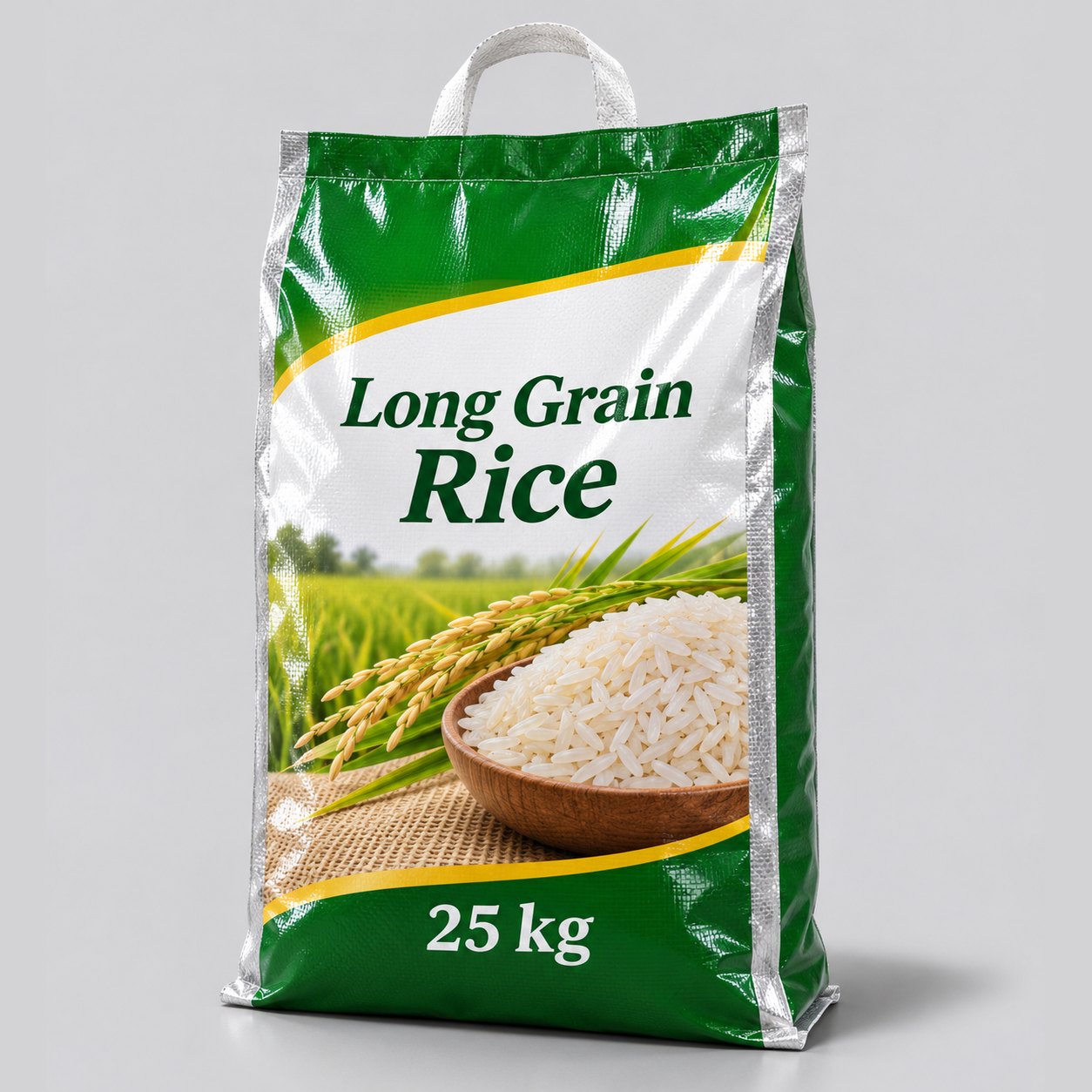
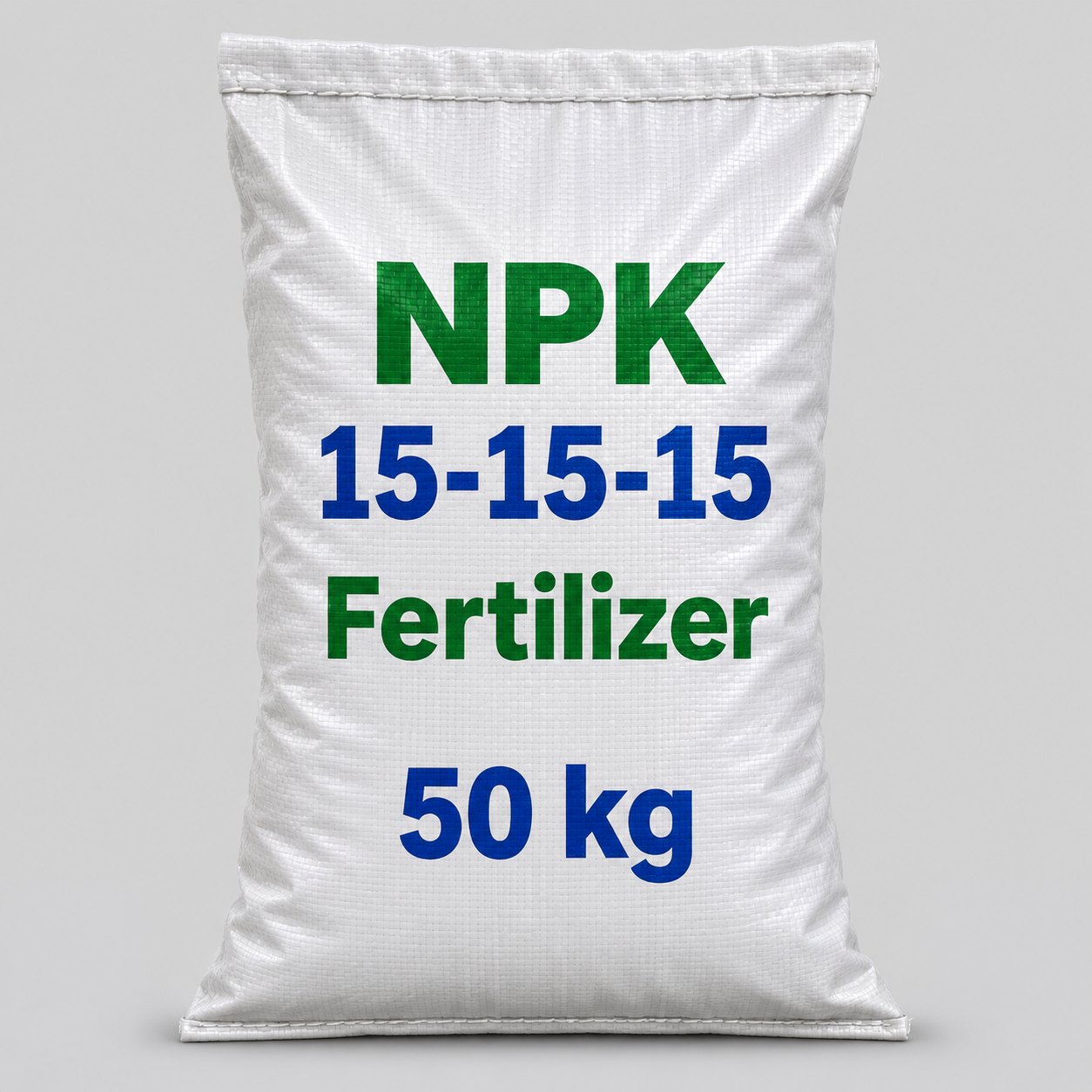
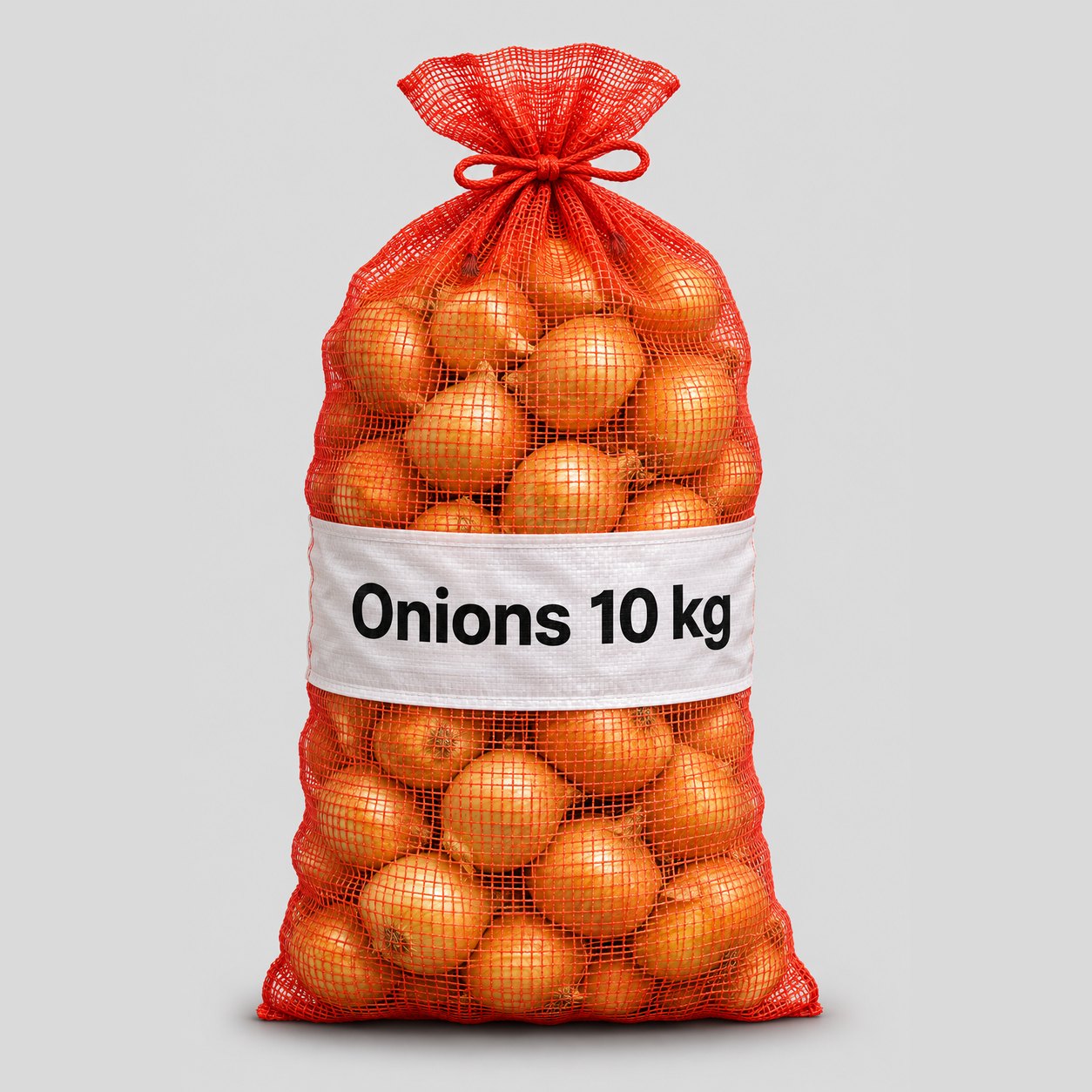
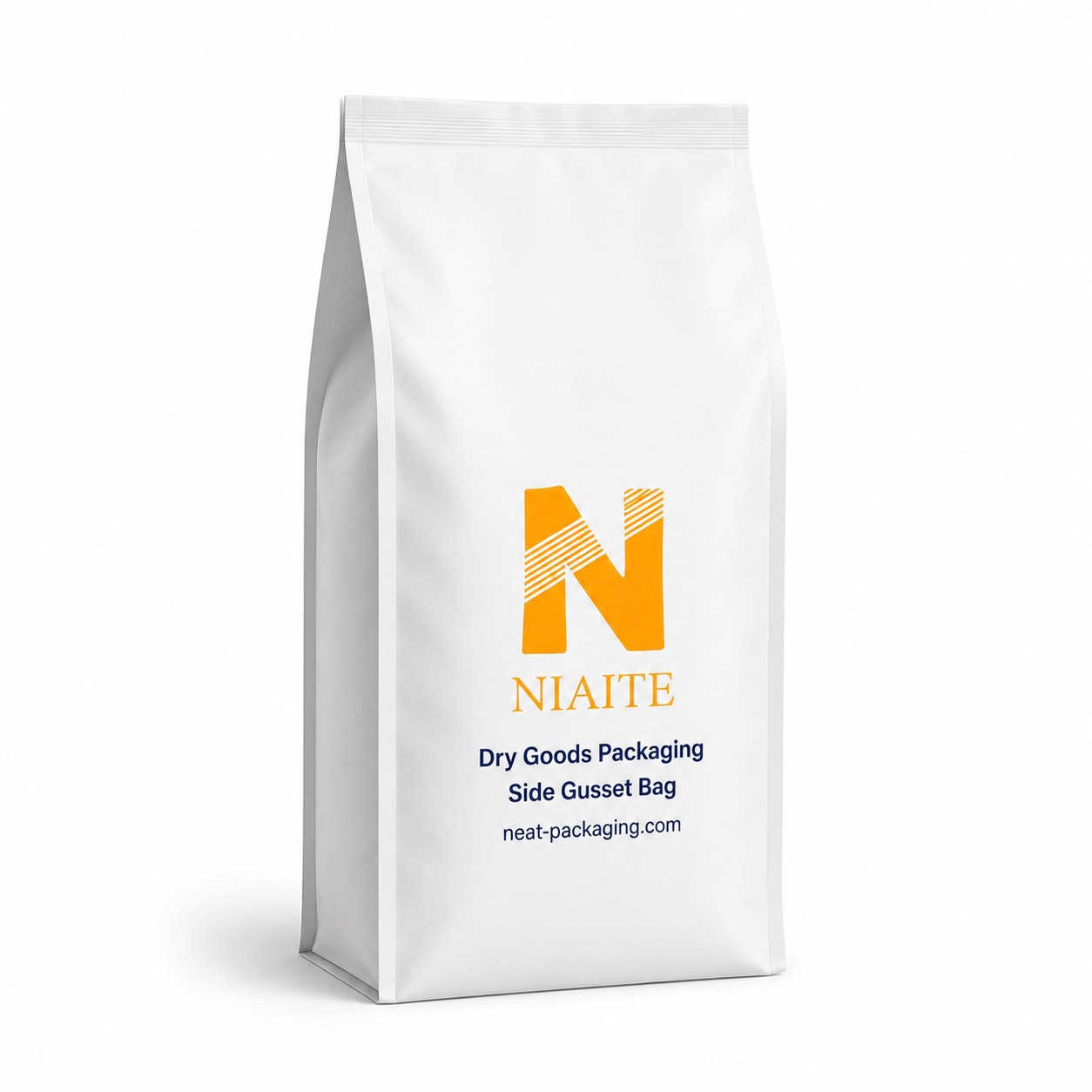
Open-mouth PP woven sacks, plain white or flexo printed, with an optional loose PE liner — the basic format for grain, seed, feed, fertilizer and other bulk dry goods. Tell us what you pack and the fill weight — we'll size the sack and suggest the moisture route.
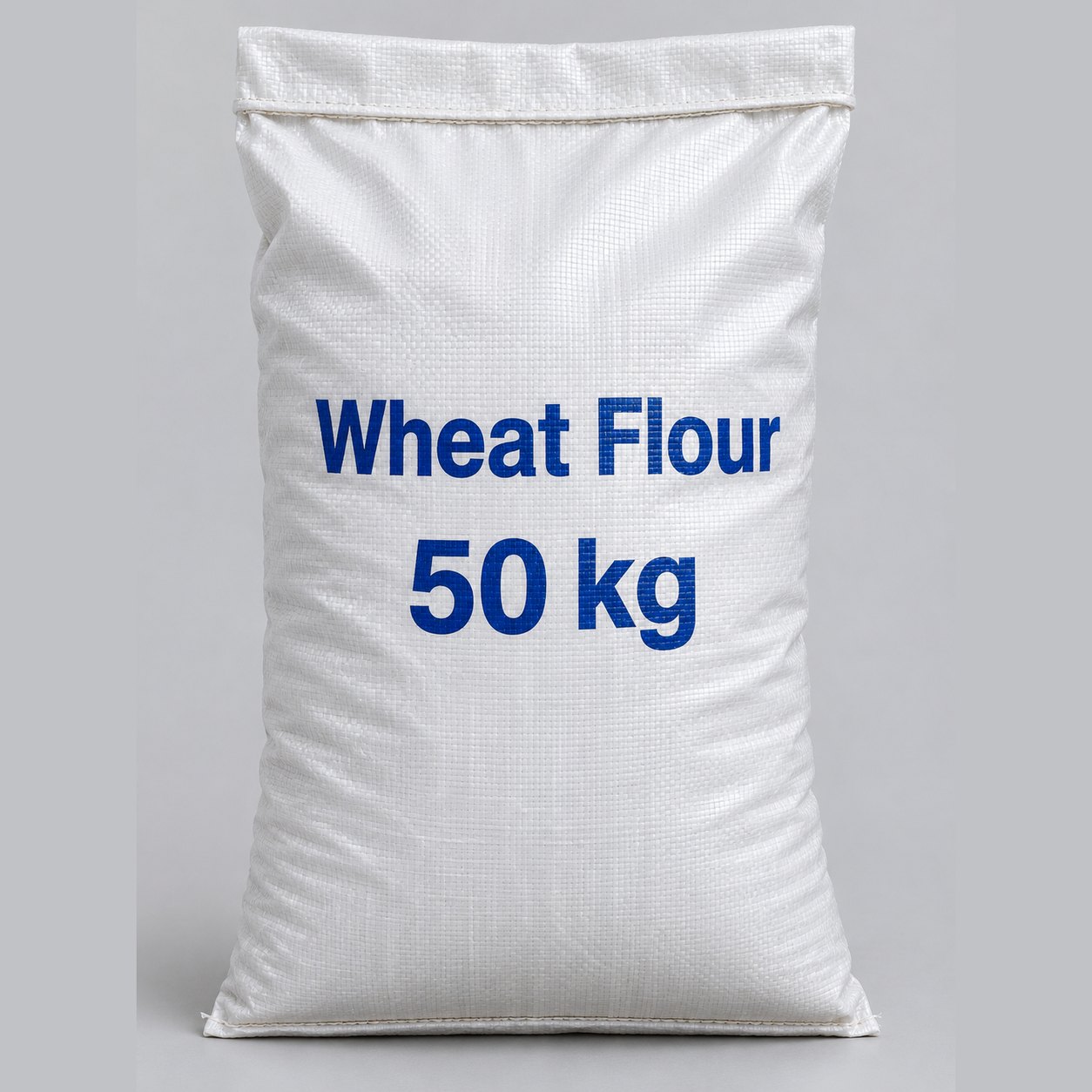
This page covers open-mouth woven sacks: filled from the top, then sewn or heat-sealed. They come plain white or flexo printed, uncoated for breathability or coated for moisture resistance, with a loose PE liner when the product needs one.
Need shelf-quality graphics? Move up to BOPP laminated woven bags. Filling powder on an automatic packer? Ask about block bottom valve bags. For seed and farm-input pouches, see agricultural packaging; for all formats, see PP woven bags. For produce, see leno mesh bags; for 500–2000 kg (1102.3–4409.2 lb) loads, see FIBC jumbo bags.
NIAITE (Neat Packaging) runs its own flexible packaging factory and brings in trusted partner factories when a project needs a structure or process outside that range. Our woven bag line runs in the same owned factory system.
Production routing
Own factory & partner lines
Project-Specific QC Checkpoints
Agreed per project
Shipping term coordination
DDP / FOB / CIF
Project-Scoped Materials
Material review
Open-mouth sacks carry most bulk dry goods from 5 kg (11 lb) to 50 kg (110.2 lb).
Food and feed uses need material and ink documentation reviewed per project.
Woven PP gives high tear resistance for a light bag, so heavy fills travel with less material.
Uncoated fabric lets the product breathe; a coating or PE liner keeps moisture out. You choose by product.
Run plain white sacks for trade packing, or flexo print your brand and product details on one or both sides.
Flat sacks bale compactly before filling and stack firmly on pallets once filled and closed.
Some products need to breathe, others need to stay dry. Choose the lightest route that protects the product.
| Route | How it works | Good for |
|---|---|---|
| Plain breathable fabric | Uncoated woven PP; air passes through the weave | Products that need to breathe, such as some grains, seed and produce |
| Coated fabric | A 15–25 g/m² PE or PP coating closes the weave | Fertilizer, minerals and products sensitive to sifting or damp |
| Loose PE liner | A separate LDPE, LLDPE or HDPE liner, typically 25–60 µm, inside the sack | Moisture-sensitive goods and fine powders |
| BOPP laminated | Printed film bonded to the fabric | Retail packs that need print quality plus a moisture route |
The liner is a separate insert: the sack and the liner are different plastics, which matters for recycling. For laminated bags, see BOPP laminated woven bags.
The fabric is chosen for the fill weight and handling; the coating and liner for moisture. Final values are agreed per project.
| Component | Common choice | What to confirm first |
|---|---|---|
Woven fabric
|
60–120 g/m², uncoated or PE/PP coated | Fill weight, stacking height, handling |
Mesh
|
10×10 to 12×12 tapes per inch as standard; 8×8 to 14×14 by specification | Fine powders need a denser weave or liner |
Tape
|
650–1,200 denier | Tensile strength of the fabric |
Coating
|
Optional, 15–25 g/m² | Moisture and sifting |
Liner
|
Optional PE liner, typically 25–60 µm; loose, stitched into the bottom or hemmed at the mouth | How the sack is filled and closed |
Printing
|
Plain, or flexo on one or both sides | Brand, product name and handling marks |
Most sacks are the woven fabric alone, or the fabric with a coating. The full diagram also shows the printed film used on laminated bags, for comparison.
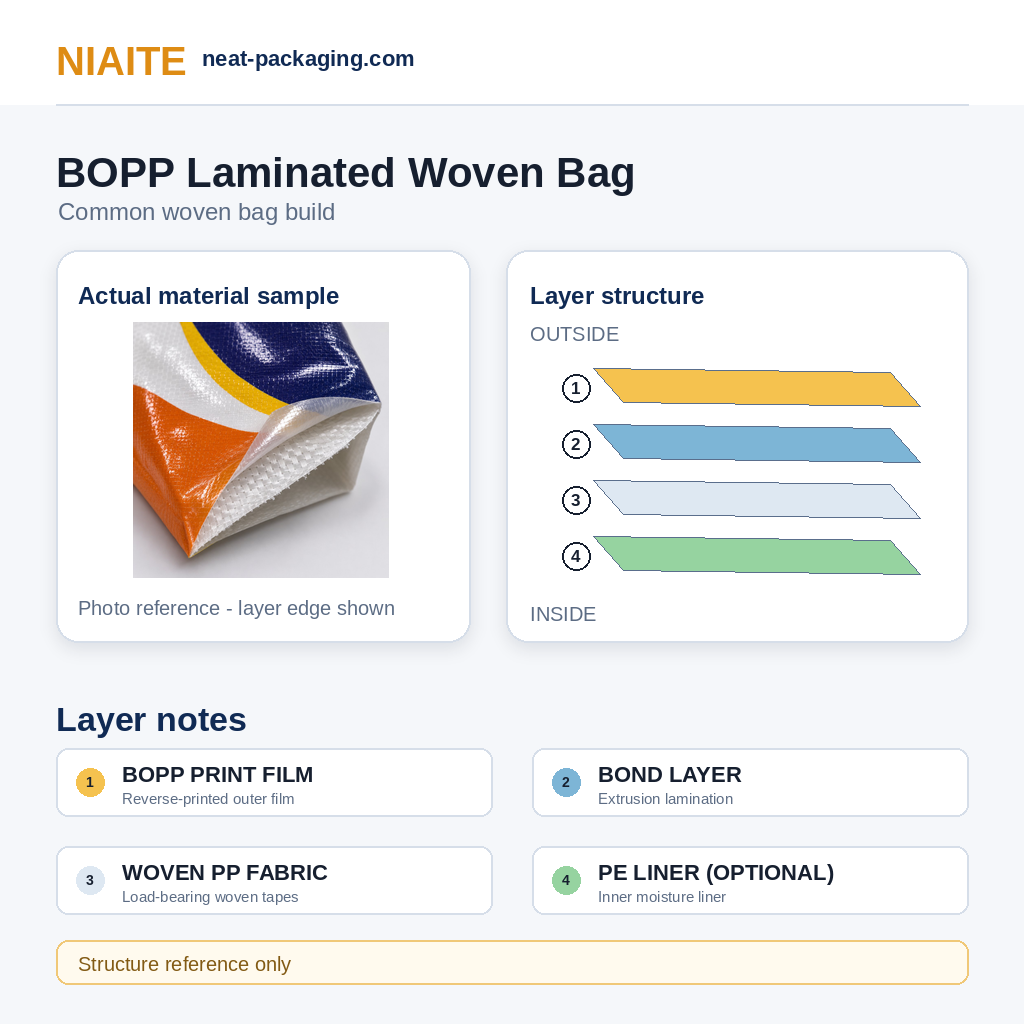
Not used on plain or flexo-printed sacks; it is added only when you move up to a laminated bag.
On coated sacks, a 15–25 g/m² PE or PP coating closes the weave against moisture and sifting.
Woven PP fabric of 60–120 g/m², plain or flexo printed, carries the fill weight.
A PE liner of typically 25–60 µm, loose or stitched in, protects moisture-sensitive goods and fine powders.
Choose the top and bottom around how the sack is filled and closed. Optional — tell us how the sack is used and we'll advise what's worth adding.
Heat-cut, cold-cut (zigzag) or hemmed top, sewn or heat-sealed after filling; easy-open on request.
Single- or double-fold bottom with single or double stitching.
Side gusset for a squarer filled shape; punched handle for smaller sacks.
UV stabilization for outdoor storage, anti-slip finish for pallet stability, micro-perforation for air release.
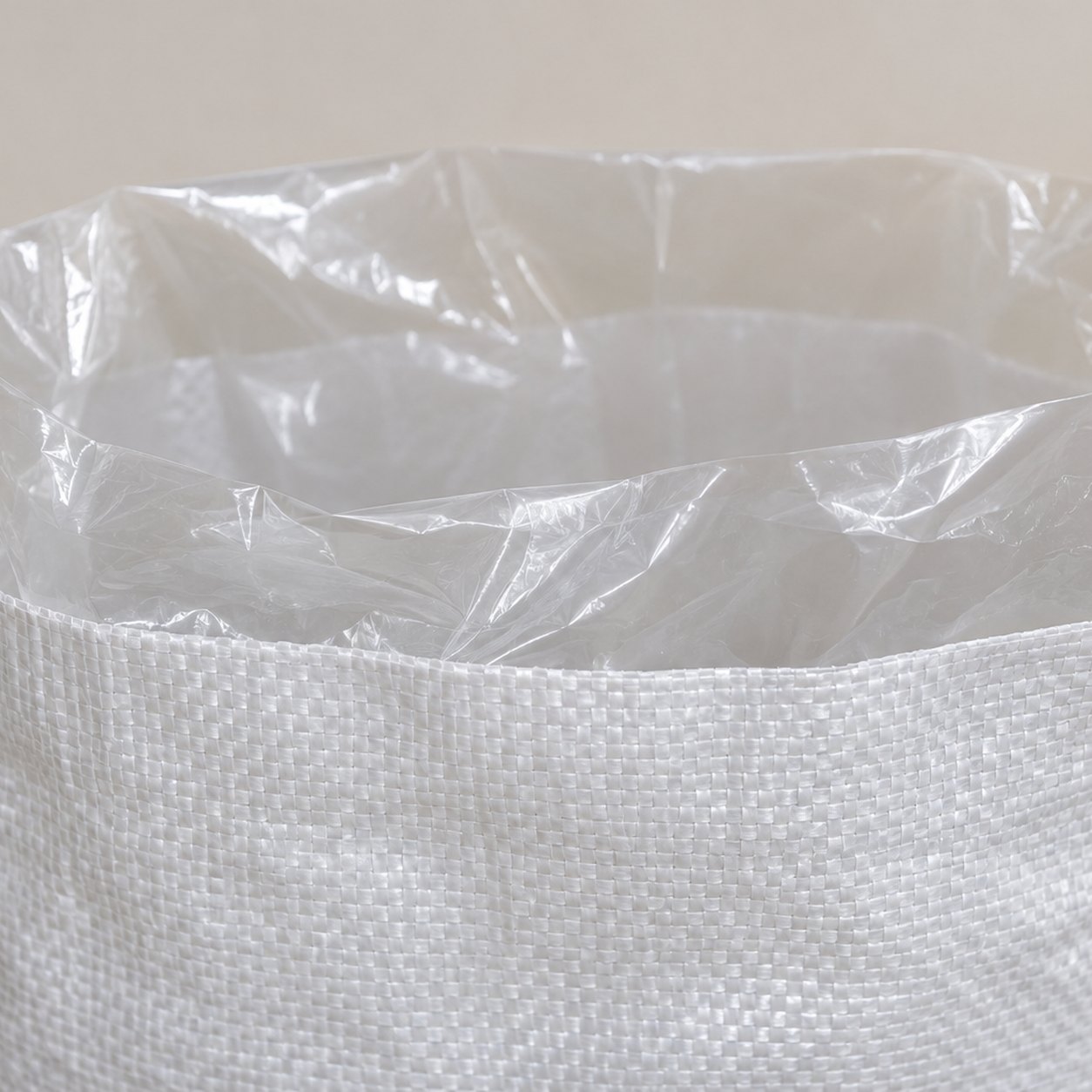
Typical ranges for plain and printed PP woven sacks.
| Specification | Typical range |
|---|---|
| Woven fabric | 60–120 g/m², uncoated or PE/PP coated |
| Mesh | 10×10 to 12×12 tapes per inch as standard; 8×8 to 14×14 by specification |
| Tape | 650–1,200 denier |
| Coating (optional) | 15–25 g/m² |
| Tubular width | Approx. 30–100 cm (11.8–39.4 in) |
| Finished size | About 35–70 × 50–110 cm (13.8–27.6 × 19.7–43.3 in) width × length, made to order |
| Fill weight | 5–50 kg (11–110.2 lb) |
| Printing | Plain, or flexographic print on one or both sides; color count confirmed per job |
| Top | Heat-cut, cold-cut (zigzag) or hemmed; easy-open on request |
| Bottom | Single- or double-fold, single or double stitched |
| Liner | Optional PE liner (LDPE, LLDPE or HDPE), typically 25–60 µm; loose, stitched into the bottom or hemmed at the mouth |
| Options | Side gusset, UV stabilization, anti-slip finish, micro-perforation, handle |
All figures are typical starting points for this bag type. Final fabric weight, size and construction are confirmed by sample for your product and filling line.
MOQ Planning
Plain sacks from 5,000 bags per size; printed sacks from 10,000 bags per design.
Minimum order quantities vary by bag type, size, fabric, printing method and the number of artworks. The figures above are practical starting points rather than universal minimums. Final eligibility is confirmed after we review your bag specification and artwork.
Printing plates or gravure cylinders are quoted separately. Setup and proofing costs may apply, especially for low-volume or multi-design orders.
Documentation
Material documents, artwork proofs and sample sign-off are agreed per project; food-contact documentation is reviewed where the product needs it.
Liner added for moisture-sensitive goods and fine powders
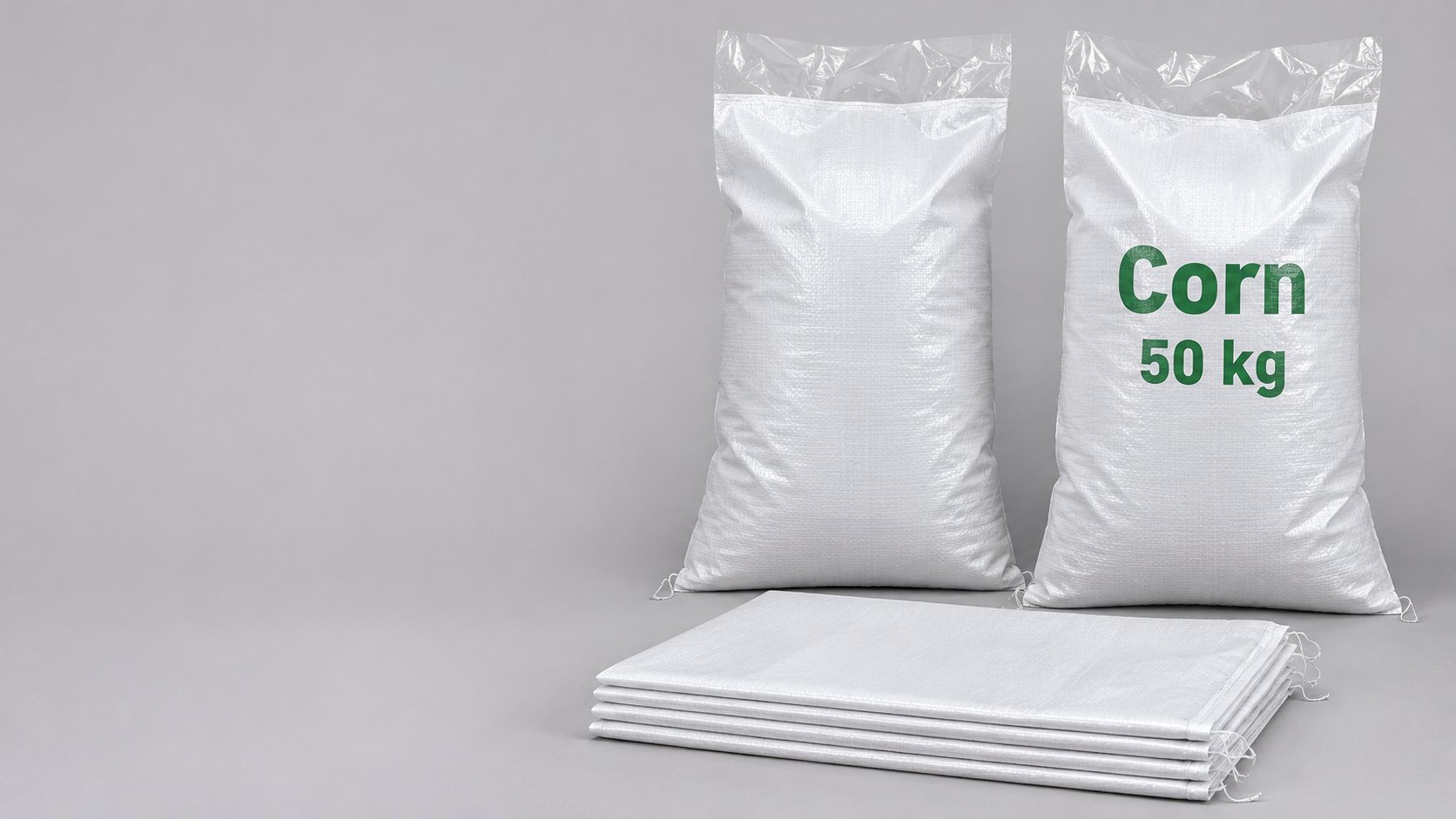
Plain and printed sacks reviewed for fill weight and stacking
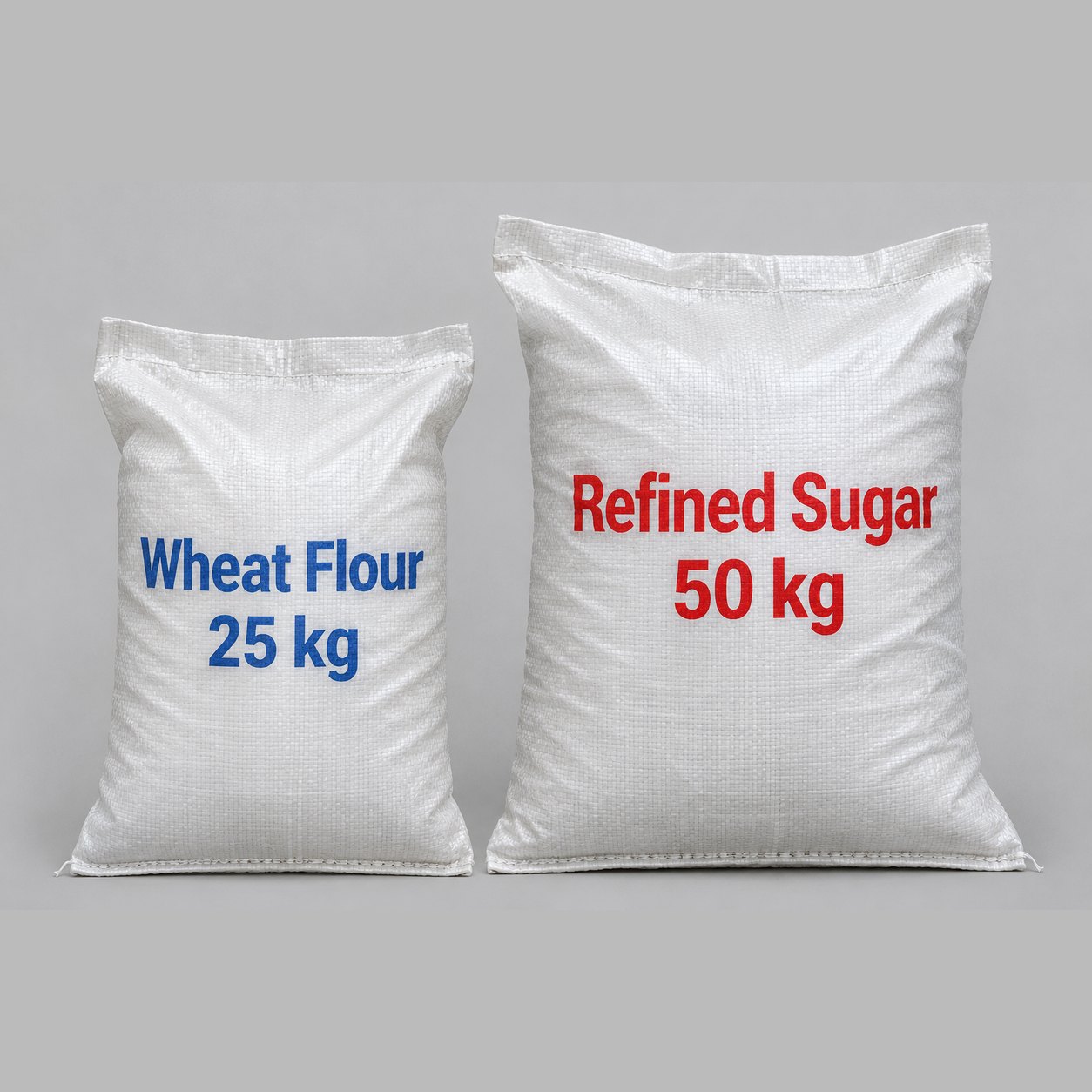
Woven sacks sized from product density
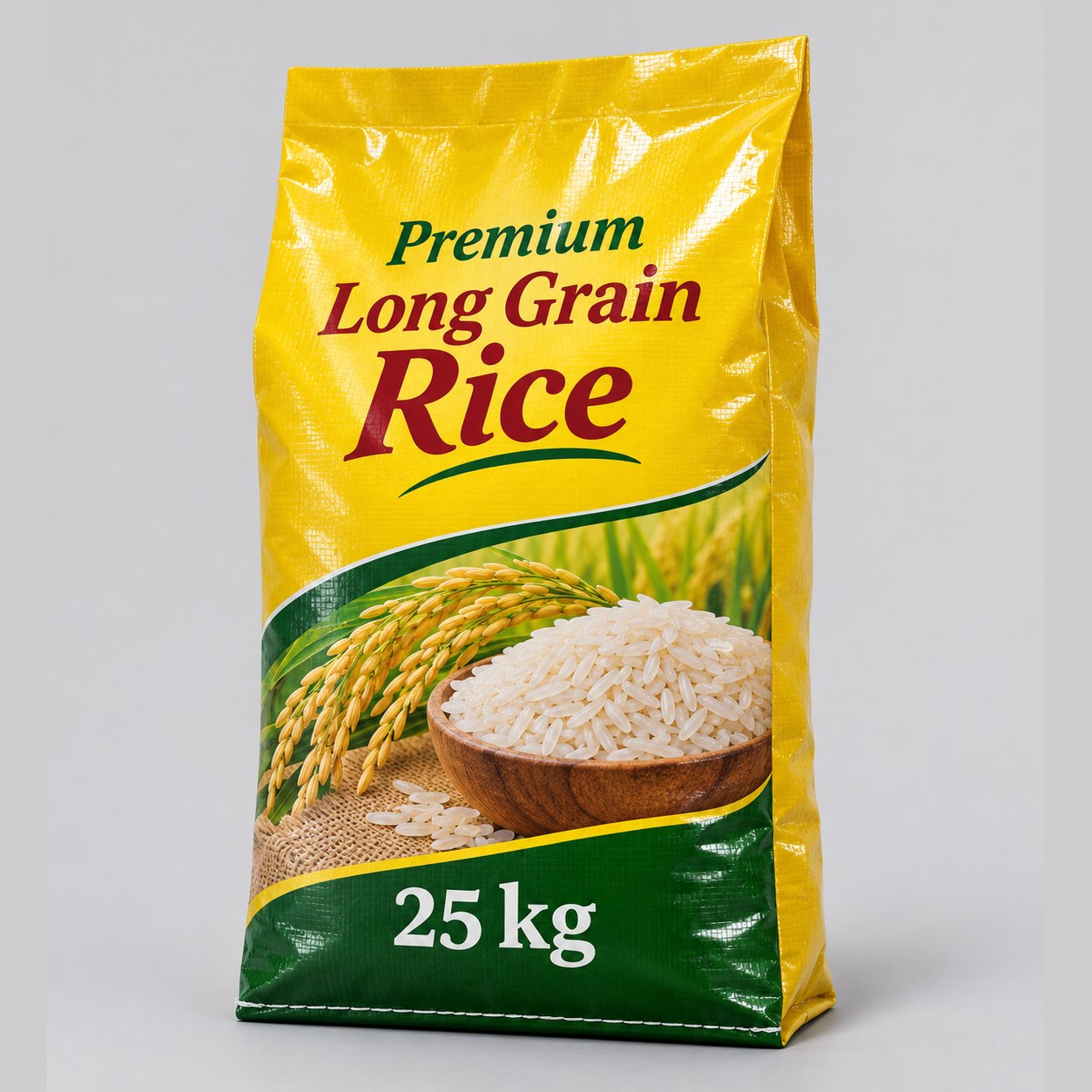
BOPP film over woven fabric when the sack needs shelf graphics
Use these photos as format references. Final size, structure, print layout, and testing scope are reviewed against your product, filling method, and target market.
Only if the product is sensitive to moisture or is a fine powder that sifts through the weave. Products that need to breathe usually go without one. Tell us the product and storage conditions and we'll recommend a route.
PE liners are typically 25–60 µm. Thicker liners suit heavier or sharper products; the final thickness is confirmed on a sample.
These are woven polypropylene (PP) sacks. Some markets also use the name HDPE woven sacks for a similar format; the PE in our range is the optional liner, not the woven fabric.
Plain white sacks suit trade and warehouse packing. Flexo print on one or both sides adds your brand, product name and handling marks; color count is confirmed per job.
Yes, both on request: UV-stabilized fabric for sacks stored outdoors, and an anti-slip finish for pallets that need to stay stable.
Plain sacks from 5,000 bags per size; printed sacks from 10,000 bags per design. These are practical starting points, not universal minimums; printing plates are quoted separately.
Bag size depends on how dense the product is, not only on the weight. Send the fill weight and, if you have one, a current bag or a photo of it; we propose a starting size and confirm it on a sample bag.
Yes. We coordinate sample and proof review so you can check the bag, the print and the fit on your filling line before the order runs. Sample terms are agreed per project.
Woven PP bags are widely used for rice, flour, sugar and feed. Food-contact documentation for materials and inks is reviewed per project for your target market, and a PE liner can be added where the product needs an inner layer.
Woven bags, printed pouches and roll stock can be planned, quoted and shipped together, so you keep one supplier for the full range.
Tell us the product, fill weight and how it is sold. We recommend fabric, film, liner and closure; no full spec needed.
Artwork proofs and sample bags are reviewed with you before production, and changes are accepted before proof sign-off.
Third-party lab testing can be arranged by project scope when your market or your customer asks for it.
DDP / FOB / CIF coordination can be reviewed by destination and project scope.
Production routing, order volume, lead-time assumptions, and capacity fit are reviewed for each confirmed project.
Tell us what you pack, the fill weight and how it's sold. A current bag, a photo or rough numbers are fine — no full spec needed.
We reply within 24 hours, recommend fabric, film, liner and closure, and provide pricing.
Confirm details, approve artwork, and production begins.
QC checkpoints and shipment scope are confirmed by project.
Common issues we help PP woven sack buyers avoid before production.
A liner adds cost and changes how the sack is filled and closed. If the product needs to breathe, a liner can trap moisture inside instead of keeping it out.
Flour and fine minerals sift through an uncoated weave and seams. A coating, a denser mesh or a liner is decided before the size is fixed.
The top hem and the sewing line take up length. A sack sized without that allowance can be too short to close once filled.
Untreated woven PP weakens in sunlight. If sacks will sit outdoors on site or in a yard, UV stabilization is planned from the start.
Updated:
Custom pouches and roll stock from our own factory, with one team from brief and samples to shipment.