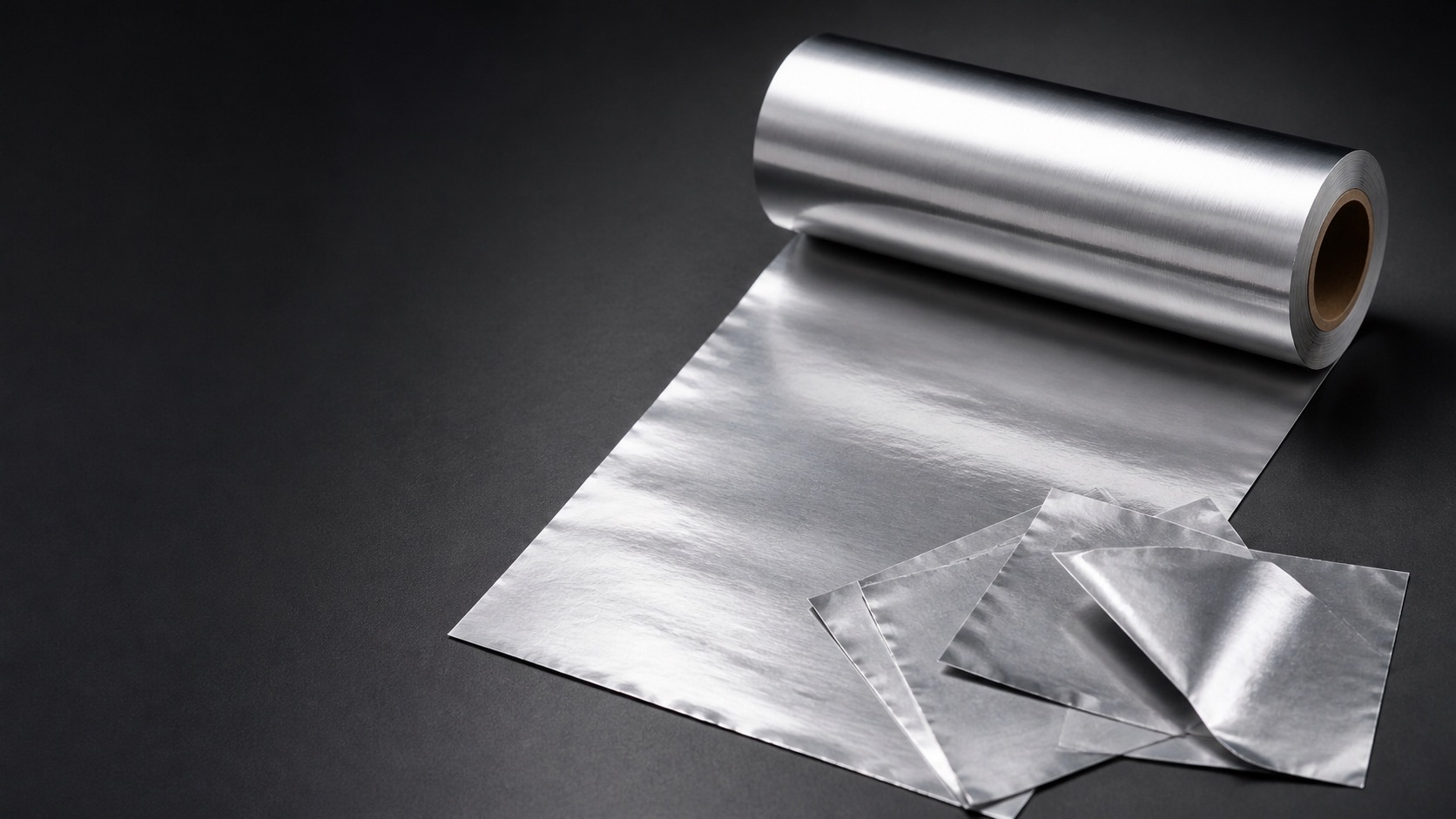
Aluminum foil is the opaque barrier layer inside laminates such as PET/AL/PE. Choose it when light, oxygen, aroma, or moisture protection matters more than seeing the product; avoid it for microwave use, in-line metal detection, or packs that flex heavily in transit.
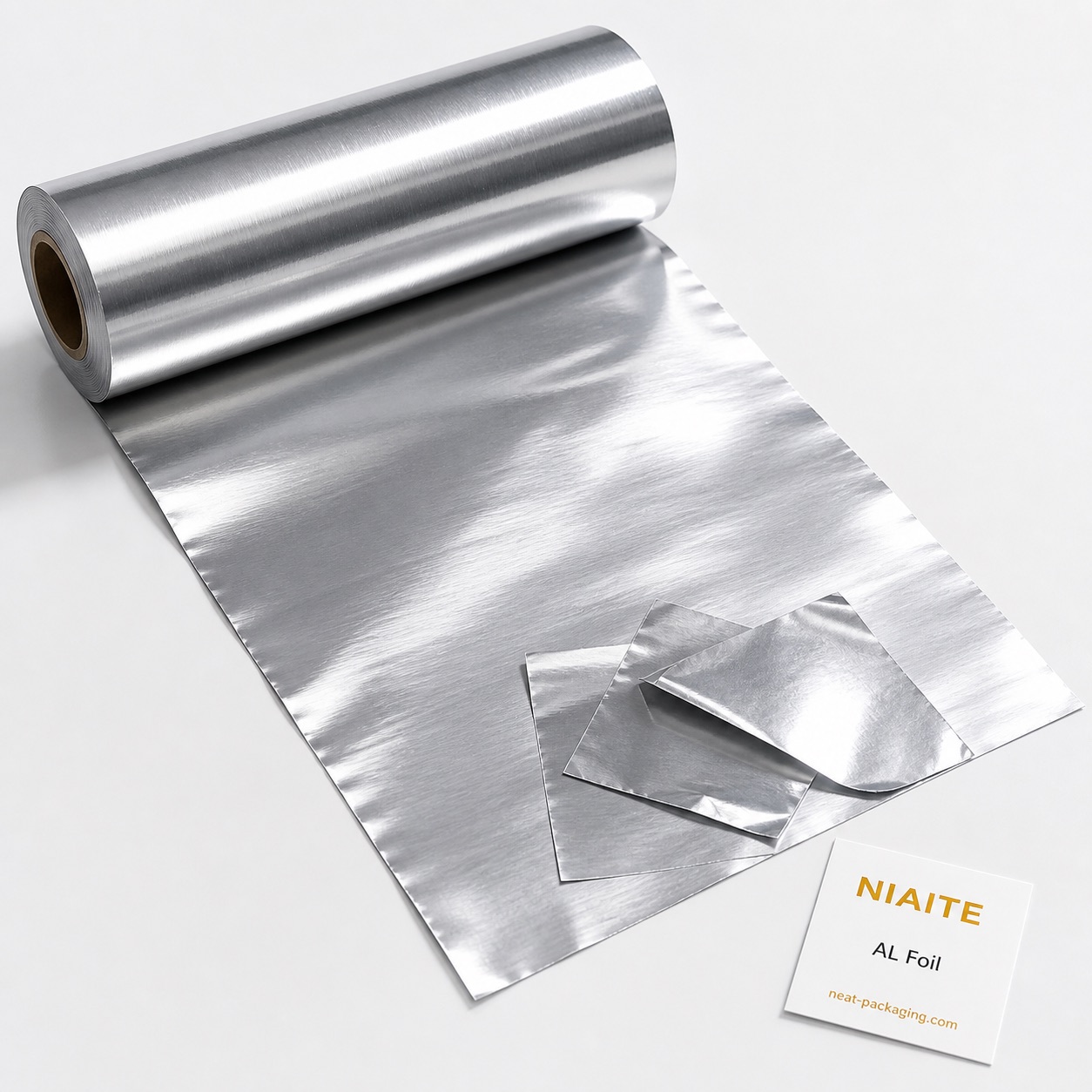
Aluminum foil is used when packaging needs very high barrier performance against light, oxygen, aroma loss, grease, and moisture.
It is specified inside laminated structures for coffee, sauces, retort-ready packs, and other products where transparency is not required.
GMP-Style Production Controls
Partner facilities
ISO 9001-Style QC
Quality system
Shipping term coordination
DDP / FOB / CIF
Structure Review
Project-dependent options
How foil behaves as the barrier layer of a laminate, and the limits to check before you specify it.
| Decision Factor | Aluminum Foil Guidance |
|---|---|
| Core advantage | Excellent light, oxygen, aroma, and moisture barrier |
| Barrier role | Very high barrier; not transparent or microwave-friendly |
| Typical structures | PET/AL/PE, PET/AL/RCPP, kraft/AL/PE |
| Best-fit applications | coffee, retort, sauces, high-barrier packaging |
| When to avoid | Foil is not microwaveable, can pinhole under repeated flexing, and blocks both see-through inspection and in-line metal detection. Avoid it where flex-cracking, microwave use, or metal detection matter to the packing line or the end user. |
| Buyer inputs to confirm | Required shelf life and barrier target, how much the pack is flexed during distribution, whether microwave use or in-line metal detection applies, and the documentation scope required in the destination market. |
| Documentation support | FDA/EU material documentation and SGS third-party testing can be arranged by project scope. |
Foil is chosen for the barrier, not the pack format. These are the routes where it most often earns its place.
PET/AL/PE is the usual high-barrier build for roasted coffee where aroma retention matters and no window is needed.
PET/AL/RCPP pairs foil with a retort-grade CPP sealant when the confirmed heat process requires it.
Kraft/AL/PE keeps a natural paper face on the outside while the foil carries the barrier role.
Opaque foil laminates suit sauces and condiments where transparency is not required.
Foil is the highest-barrier option in the common structures on this page, so it is the default when a metallized or clear barrier layer is not enough.
Foil is opaque. It suits products where light exposure is a concern and a see-through window is not part of the design.
Coffee, spices, sauces, and high-value ingredients are the typical cases where aroma protection justifies a foil layer.
Foil sits under PET, kraft paper, PE, CPP, or retort sealants, so the outer finish and sealant can still be chosen separately.
| Decision Point | Aluminum Foil | VMPET (metallized PET) |
|---|---|---|
| Barrier level in common structures | High: PET/AL/PE, PET/AL/RCPP, Kraft/AL/PE | Medium: PET/VMPET/PE, Kraft/VMPET/PE |
| Flex handling | Can pinhole under repeated flexing | Often reviewed where foil flex-cracking is a concern |
| Typical brief | Coffee, retort, and sensitive foods that need the highest barrier in the range | Aroma and shelf-life extension where a medium barrier is enough |
| Line checks | Blocks in-line metal detection; not microwaveable | Confirm detection and heating needs on the actual line |
If the brief sits between the two, ask for both routes to be compared against the same product, shelf-life target, and distribution route before sampling. Bag-level options are covered in the high-barrier aluminum foil bag guide.
Four common foil routes, from coffee laminates to retort-ready packs. The sealant and outer layer change with the filling process; the foil layer carries the barrier in each.
| Structure | Best-fit Use | Barrier / Role | |
|---|---|---|---|
PET / AL / PE |
Coffee, dry foods, and high-barrier pouches | High | Review structure options -> |
PET / AL / RCPP |
Retort-ready packs when heat process requires it | High | Review structure options -> |
Kraft / AL / PE |
Natural paper appearance with high barrier | High | Review structure options -> |
PET / AL / CPP |
High-barrier structures with polypropylene sealant | High | Review structure options -> |
Representative guidance only. Final values depend on selected grade, laminate structure, pack format, and test requirements.
Typical Role
Opaque barrier layer inside laminated structures
Common Gauge
6-12 micron foil depending on barrier and forming needs
Barrier Role
Very high oxygen, aroma, light, and moisture protection
Visibility
Opaque; not suitable when product window clarity is required
Common Pairings
PET, kraft paper, PE, CPP, retort sealants
Documentation
Food-contact material files and testing support by project scope
Foil laminates combine metal and plastic layers, so recovery options depend on the full structure and local collection. Where recyclability is a priority, compare a foil route with a metallized or PE-rich structure before artwork is fixed.
Aluminum foil laminate structures deliver superior oxygen, moisture, and light barrier performance — essential for coffee, retort-ready, and shelf-stable food packaging. The material is specified wherever extended shelf life and aroma preservation are critical requirements.
PET/AL/PE is the common starting point for coffee, dry foods, and high-barrier pouches. PET/AL/RCPP is reviewed when the confirmed heat process requires a retort-grade sealant. The filling temperature and process schedule decide between them, so share both before structure review.
Not as a standard route. Foil blocks in-line metal detection and is not microwaveable, so lines that rely on metal detection, or products heated in the pack, usually need a different barrier layer. Food-contact suitability of whichever structure is chosen depends on the grade, the full laminate, intended use, and destination market; supplier declarations and migration testing can be arranged by project scope.
Tell us your product, target weight, and requirements.
We recommend materials, structure, and provide pricing.
Confirm details, approve artwork, and production begins.
QC checkpoints and shipment scope are confirmed by project.
NIAITE is a flexible packaging project support team working with selected partner factories; foil structures are reviewed against your brief before sampling. Capacity Review by Project: production routing, order volume, and lead-time assumptions are checked for each confirmed project. DDP / FOB / CIF coordination can be reviewed by destination and project scope. See how projects are coordinated.
Updated:
Work with NIAITE for material review, sampling guidance, QC checkpoints, and export project coordination.
Recyclability and environmental benefits depend on local collection infrastructure, structure design, and supporting documentation. Contact us for application-specific guidance.