BOPP laminated woven bags for larger dry pet food packs, where print quality, strength and stacking all matter. Tell us the food, the bag weight and how it is sold — we'll suggest the film, fabric and closure.
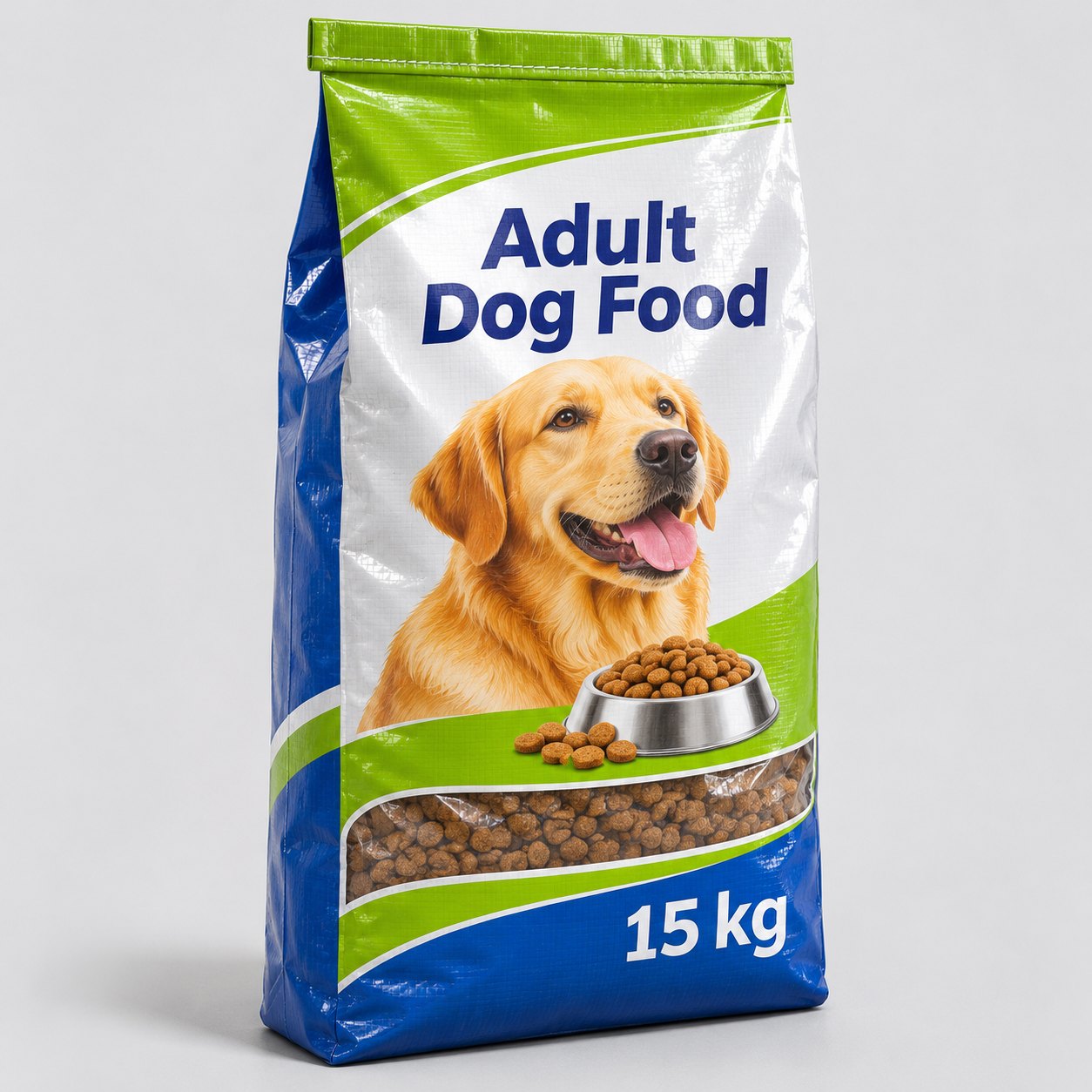
Woven pet food bags put a reverse-printed BOPP film over woven PP fabric, typically for 5–25 kg (11–55.1 lb) of dry food. The film carries the shelf graphics; the fabric handles the weight, drops and pallet stacking. A liner can be added where grease or moisture needs an extra layer.
Smaller retail packs usually work better as pouches, so it helps to compare both. The construction is the same as our BOPP laminated woven bags; see all PP woven bags.
NIAITE (Neat Packaging) runs its own flexible packaging factory and brings in trusted partner factories when a project needs a structure or process outside that range. Our woven bag line runs in the same owned factory system.
Production routing
Own factory & partner lines
Project-Specific QC Checkpoints
Agreed per project
Shipping term coordination
DDP / FOB / CIF
Project-Scoped Materials
Material review
Woven bags suit the larger sizes of dry pet food and related products sold by the bag.
Recipes with high fat content need a grease route reviewed per project. Food-contact documentation for materials and inks is reviewed for your market.
Woven PP fabric carries 5–25 kg (11–55.1 lb) of kibble through filling, warehouse handling and store shelves.
Front, back and gusset panels carry full-color graphics under the film, protected from scuffs in transport.
Side-gusset, pinch-bottom or block-bottom formats fill into a square shape that builds stable pallets.
Add a clear window to show the kibble, or an easy-open strip and slider re-close for the end user.
Both formats sell pet food. The choice mostly follows the pack weight and where the bag is sold.
| Woven pet food bag | Pouch | |
|---|---|---|
| Typical pack weight | 5–25 kg (11–55.1 lb) | Smaller retail and treat packs |
| Where it is sold | Bulk aisles, farm and feed stores, warehouse clubs | Retail shelves, online, specialty stores |
| Closure | Sewn or heat-sealed, with easy-open or slider re-close options | Zipper or slider, heat seal |
| Filling line | Open-mouth bag filling and sewing or sealing | Pouch filling and sealing |
For smaller packs and treats, see our pet food pouches.
Pet food bags are built around the fill weight and the recipe. Grease and moisture performance is confirmed per project.
| Component | Common choice | What to confirm first |
|---|---|---|
BOPP film
|
18–25 µm, gloss or matte, reverse printed | Shelf look and print area |
Woven fabric
|
70–120 g/m² | Fill weight, drops and stacking |
Format
|
Side-gusset, pinch-bottom or block-bottom | Filling line and pallet pattern |
Liner
|
Optional, depending on the barrier route | Fat content and storage conditions |
Grease
|
Grease resistance is reviewed for your recipe | Fat migration on the shelf |
Closure
|
Sewn or heat-sealed top; easy-open on request | How the end user opens the bag |
Four parts, with the liner optional. Whether a liner is needed depends on the fat content of the food and the barrier route.
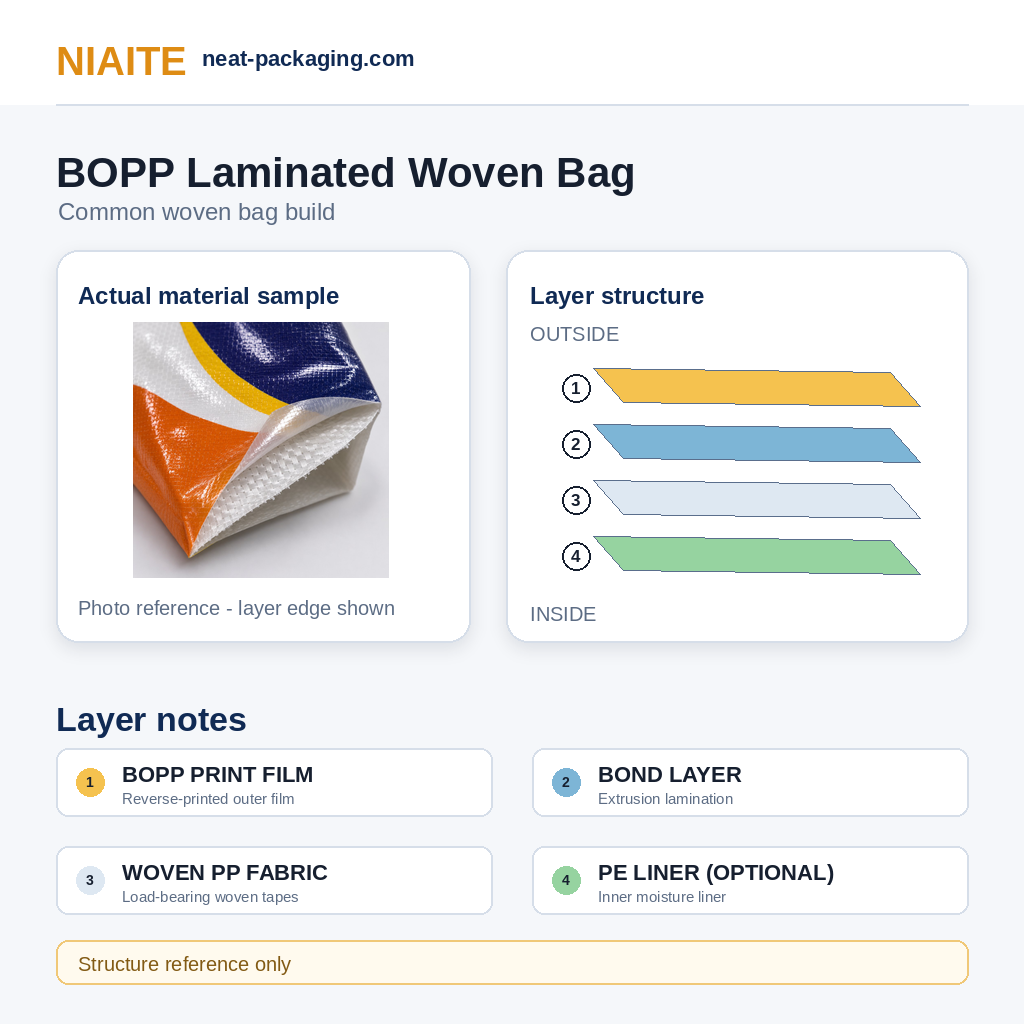
Gloss or matte BOPP film, 18–25 µm, reverse printed so the ink sits under the film.
The bond layer joins the printed film to the woven fabric so the bag behaves as one panel.
Woven PP fabric of 70–120 g/m² carries the kibble through drops and stacking.
Added only when the recipe or storage needs it; see liner or laminate.
Pick the opening and display features your customers will use. Optional — tell us how the bag is used and we'll advise what's worth adding.
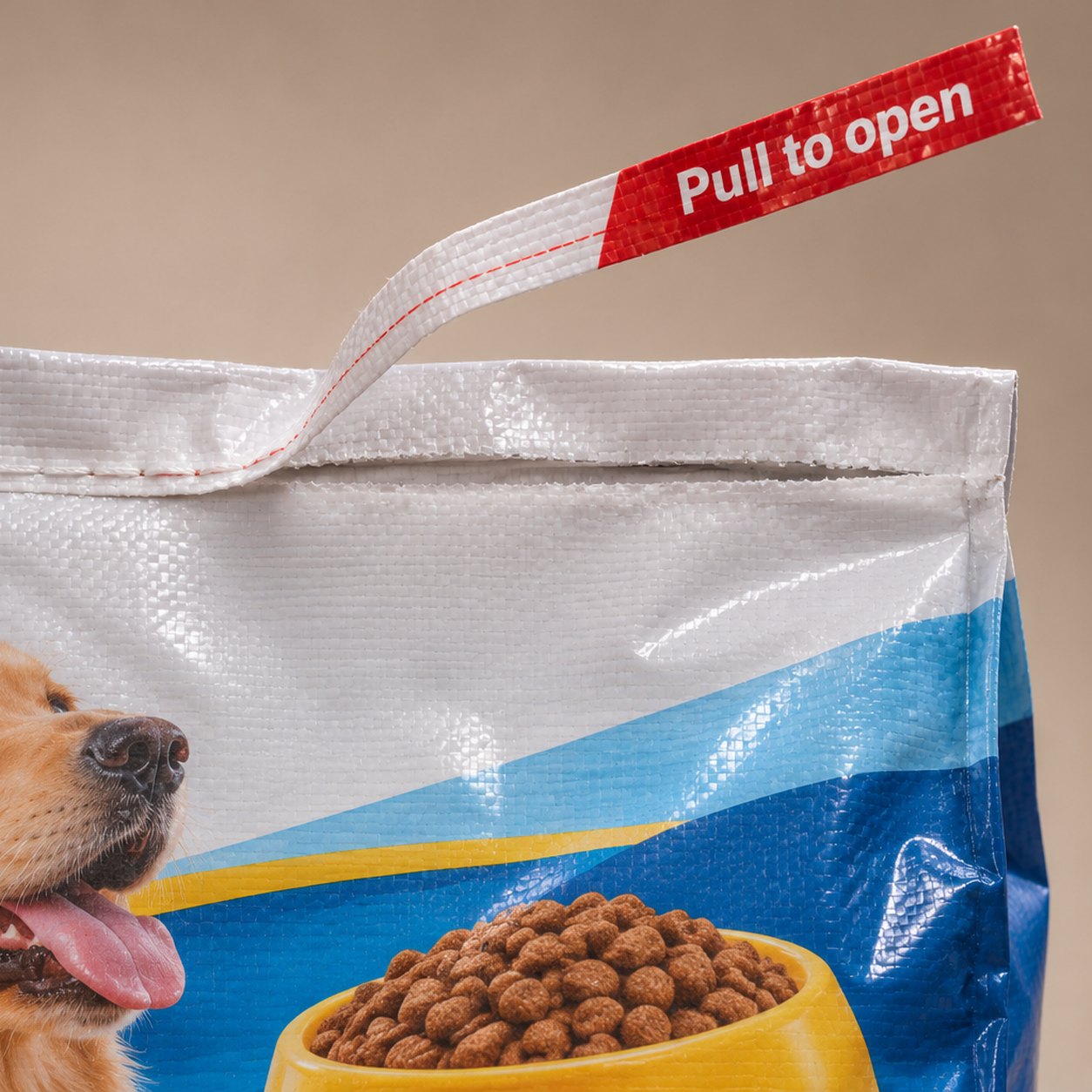
An easy-open stitch or tear tape across the closed top, so the bag opens without scissors.
Slider re-close options for bags that are opened and used over several weeks.
A clear window panel to show the kibble, and a punched or die-cut handle for carrying.
Micro-perforation for air release during filling, and an anti-slip finish for stable pallets.
Front, back and gusset panels are printed on the film before lamination. If you already have pouch artwork for the same brand, send it and we adapt it to the woven bag panels.
Typical ranges for woven pet food bags.
| Specification | Typical range |
|---|---|
| Fill weight | 5–25 kg (11–55.1 lb) |
| Construction | Reverse-printed BOPP film laminated to woven PP; side-gusset, pinch-bottom or block-bottom formats |
| Woven fabric | 70–120 g/m² |
| BOPP film | 18–25 µm, gloss or matte |
| Face width | About 30–48 cm (11.8–18.9 in) |
| Side gusset | About 6–20 cm (2.4–7.9 in) |
| Length | About 50–105 cm (19.7–41.3 in) |
| Printing | Reverse rotogravure; color count confirmed per job |
| Liner | Optional, depending on the barrier route |
| Options | Easy-open, slider re-close, handle, clear window, anti-slip finish, micro-perforation |
| Starting size by fill weight | Send your fill weight and kibble density; we propose a starting size and confirm it on a sample. |
All figures are typical starting points for this bag type. Final fabric weight, size and construction are confirmed by sample for your product and filling line.
MOQ Planning
From 10,000 bags per design.
Minimum order quantities vary by bag type, size, fabric, printing method and the number of artworks. The figures above are practical starting points rather than universal minimums. Final eligibility is confirmed after we review your bag specification and artwork.
Printing plates or gravure cylinders are quoted separately. Setup and proofing costs may apply, especially for low-volume or multi-design orders.
Documentation
Food-contact documentation for materials and inks is reviewed per project.
Tear strip across the closed top for opening without scissors
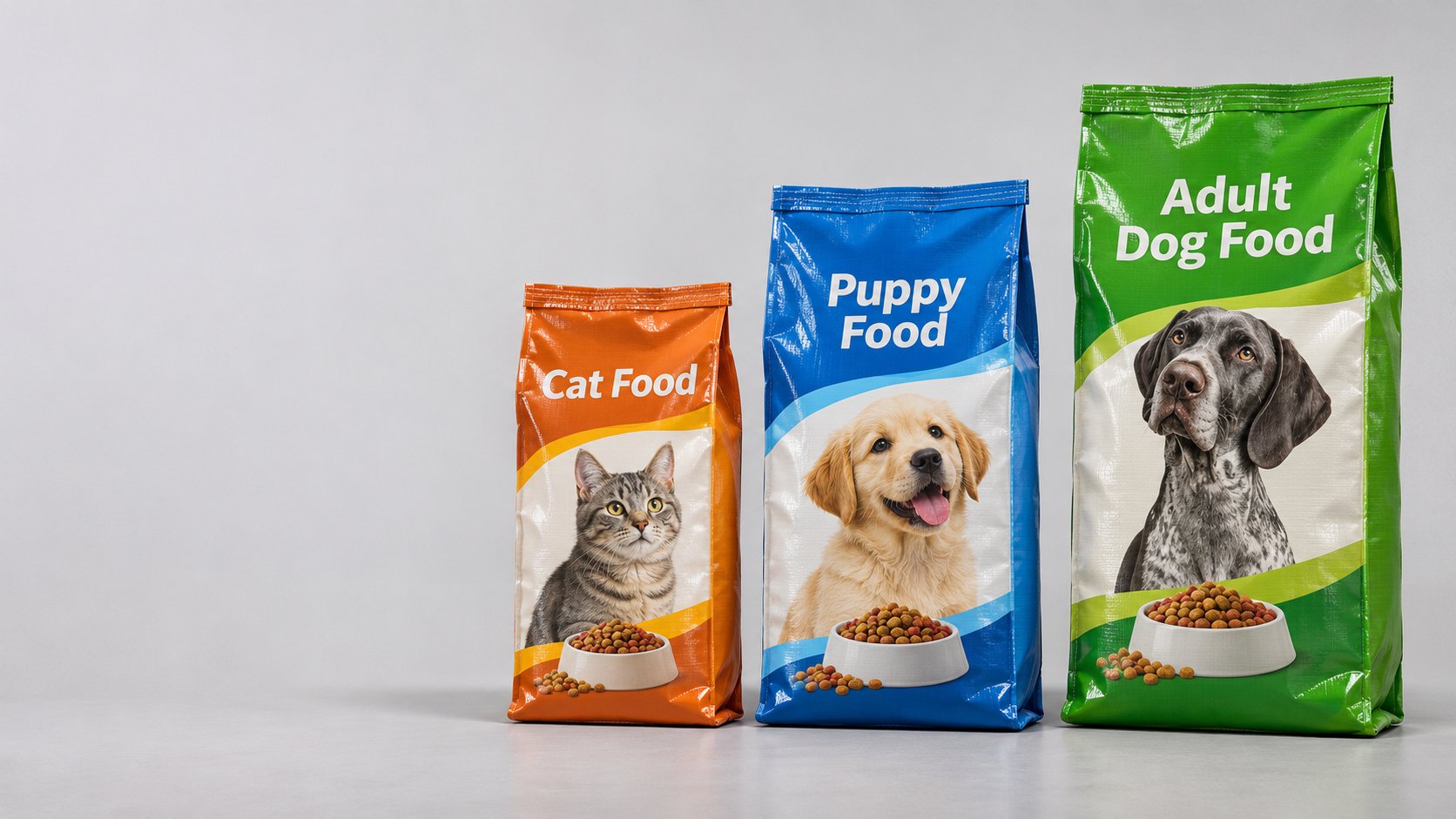
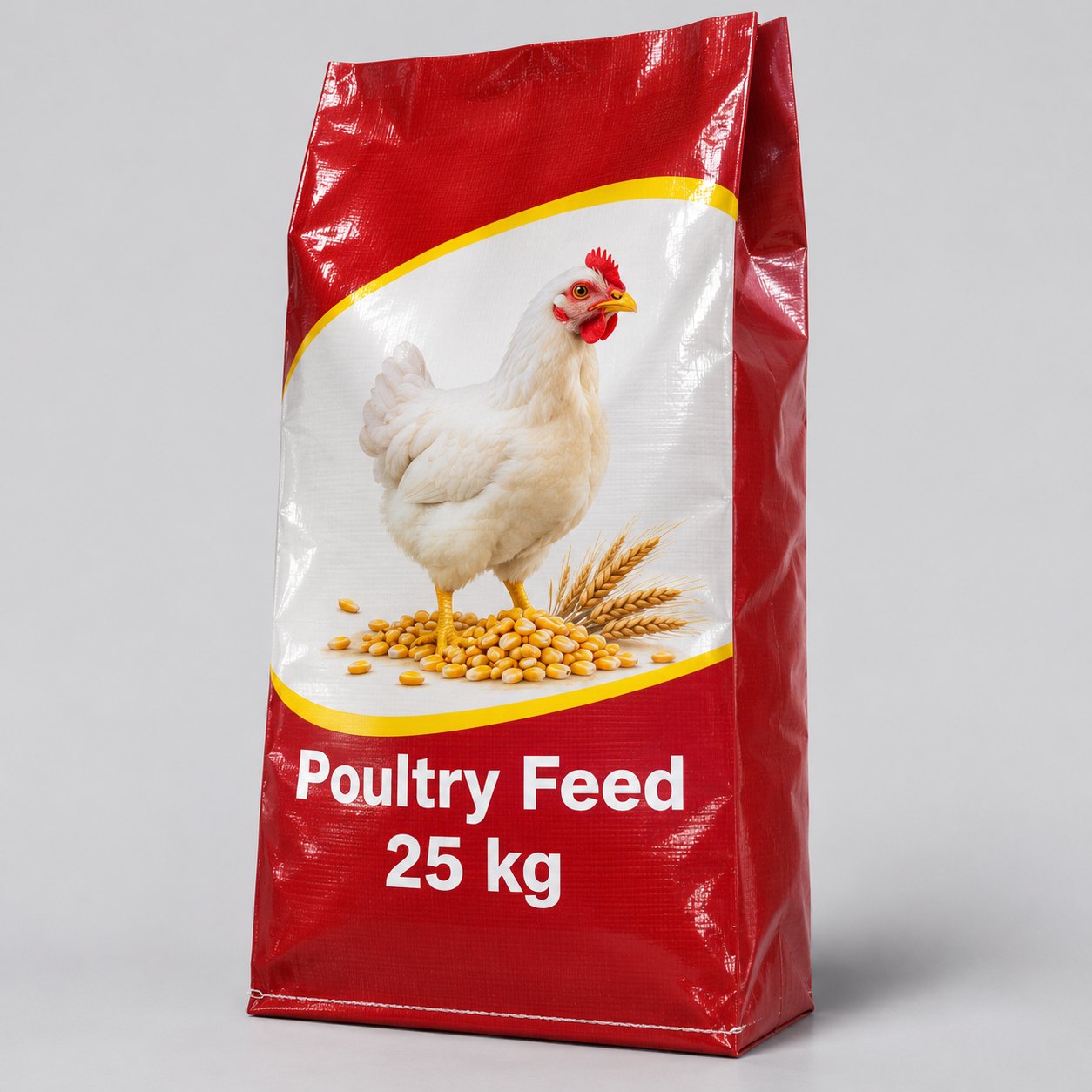
Gusseted bags reviewed for kibble volume and shelf stacking
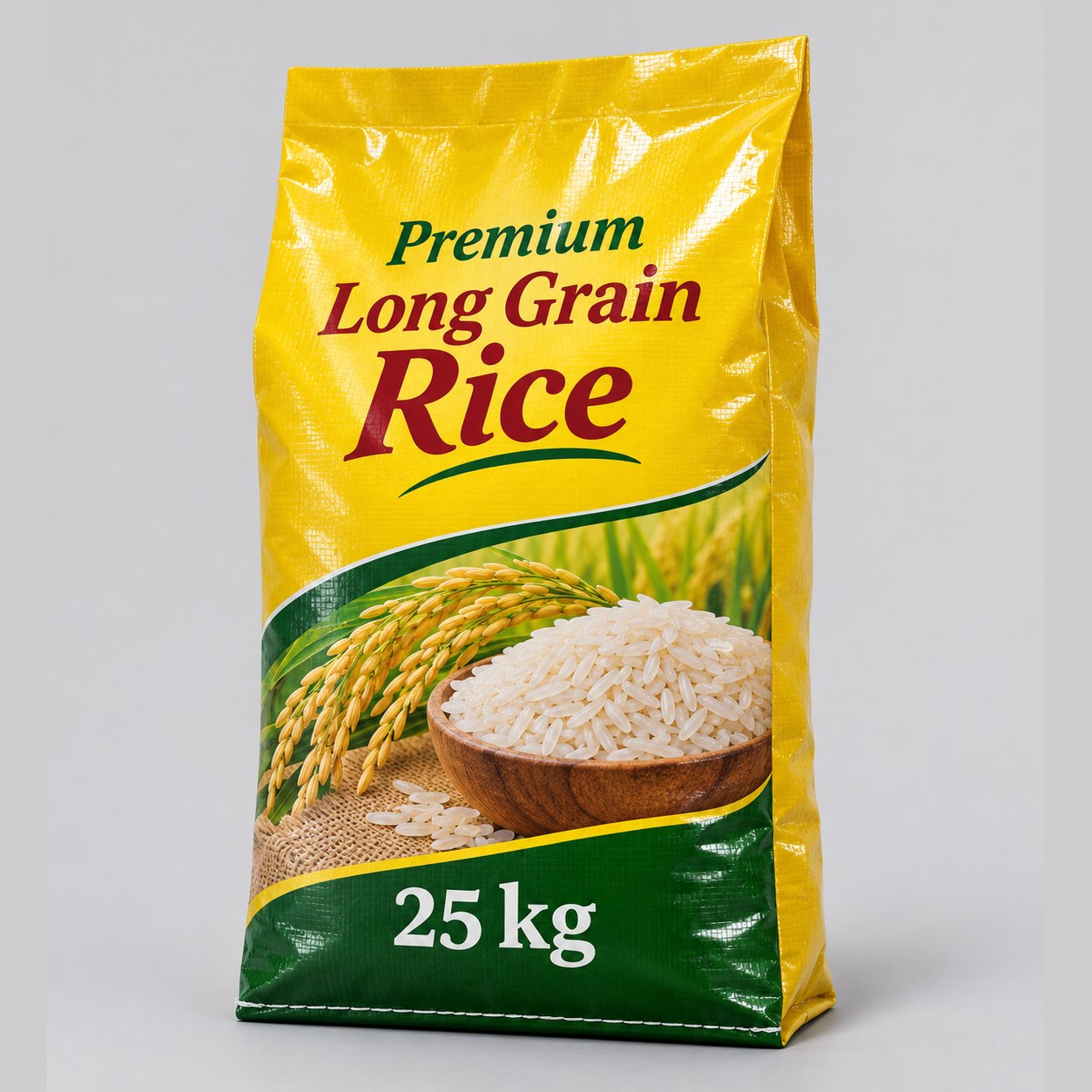
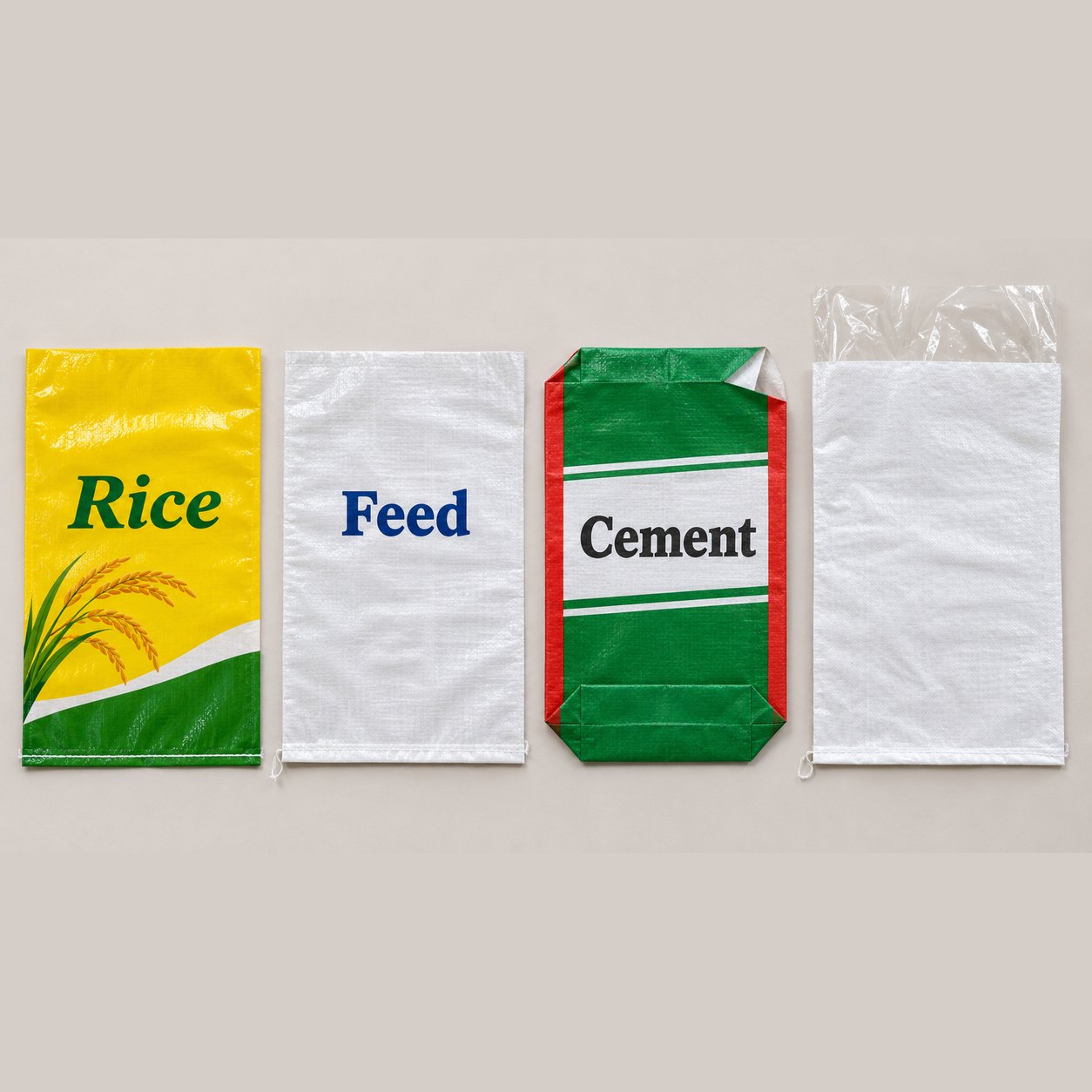
Printed BOPP film over woven PP, the base of every pet food bag
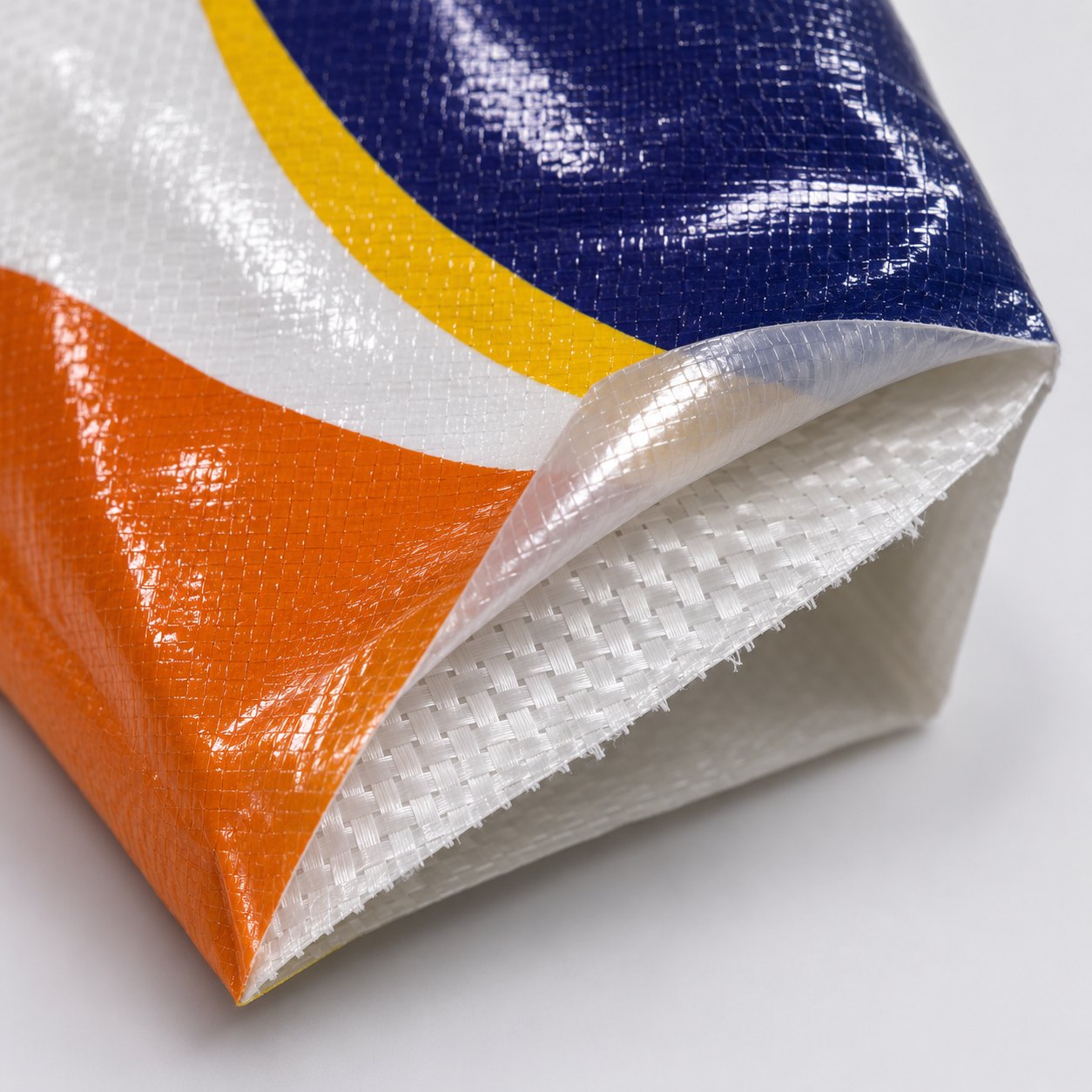
Reverse-printed film protects the ink in transport
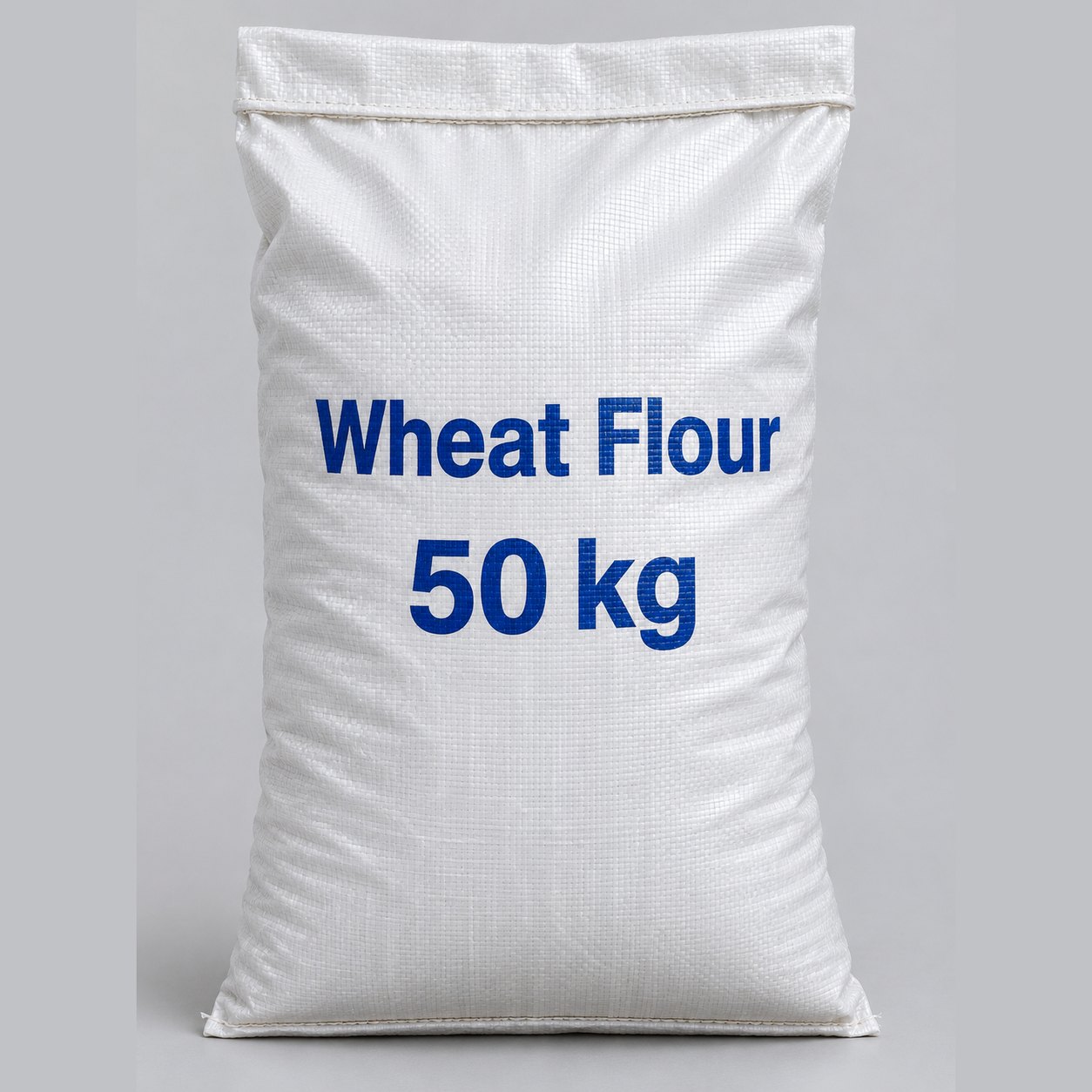
Use these photos as format references. Final size, structure, print layout, and testing scope are reviewed against your product, filling method, and target market.
It depends on the recipe. Grease resistance is reviewed for your recipe; where the fat content needs it, a liner or a different barrier route is added and checked on filled samples.
A clear window shows the kibble and helps on the shelf, but it reduces the printable area and lets light in. We'll suggest a window size and position that keeps the key panels readable.
Woven bags suit larger, heavier packs sold by the bag; pouches suit smaller retail and treat packs. If you sell both sizes, we can plan the artwork so the range looks consistent. Our guide to woven bag vs stand-up pouch for pet food compares the two in detail.
Usually, if the line already fills open-mouth bags. Tell us how the bags are filled and closed now, and we confirm the bag format, top finish and size with you and your line operator.
Send your fill weight and kibble density; we propose a starting size and confirm it on a sample.
From 10,000 bags per design for woven pet food bags. That figure is a practical starting point, not a universal minimum; printing plates or gravure cylinders are quoted separately.
Yes. Artwork is checked on a proof before production, and color count is confirmed per job. If you already have artwork from a pouch or another bag, send it and we adapt the layout to the woven bag panels.
Yes. We coordinate sample and proof review so you can check the bag, the print and the fit on your filling line before the order runs. Sample terms are agreed per project.
Woven bags, printed pouches and roll stock can be planned, quoted and shipped together, so you keep one supplier for the full range.
Tell us the product, fill weight and how it is sold. We recommend fabric, film, liner and closure; no full spec needed.
Artwork proofs and sample bags are reviewed with you before production, and changes are accepted before proof sign-off.
Third-party lab testing can be arranged by project scope when your market or your customer asks for it.
DDP / FOB / CIF coordination can be reviewed by destination and project scope.
Production routing, order volume, lead-time assumptions, and capacity fit are reviewed for each confirmed project.
Tell us what you pack, the fill weight and how it's sold. A current bag, a photo or rough numbers are fine — no full spec needed.
We reply within 24 hours, recommend fabric, film, liner and closure, and provide pricing.
Confirm details, approve artwork, and production begins.
QC checkpoints and shipment scope are confirmed by project.
Common issues we help woven pet food bag buyers avoid before production.
High-fat recipes can mark the bag over time. Checking the grease route on filled samples before the run avoids stained bags on the shelf.
Kibble size and density change how much space the same weight takes. A size copied from another product can leave the bag overfilled or slack.
A window that cuts into the brand name or feeding guide weakens both. The window is placed on the proof together with the artwork.
An easy-open strip or re-close needs space at the top of the bag. Planning it after the artwork is set can push text into the closure area.
Updated:
Custom pouches and roll stock from our own factory, with one team from brief and samples to shipment.