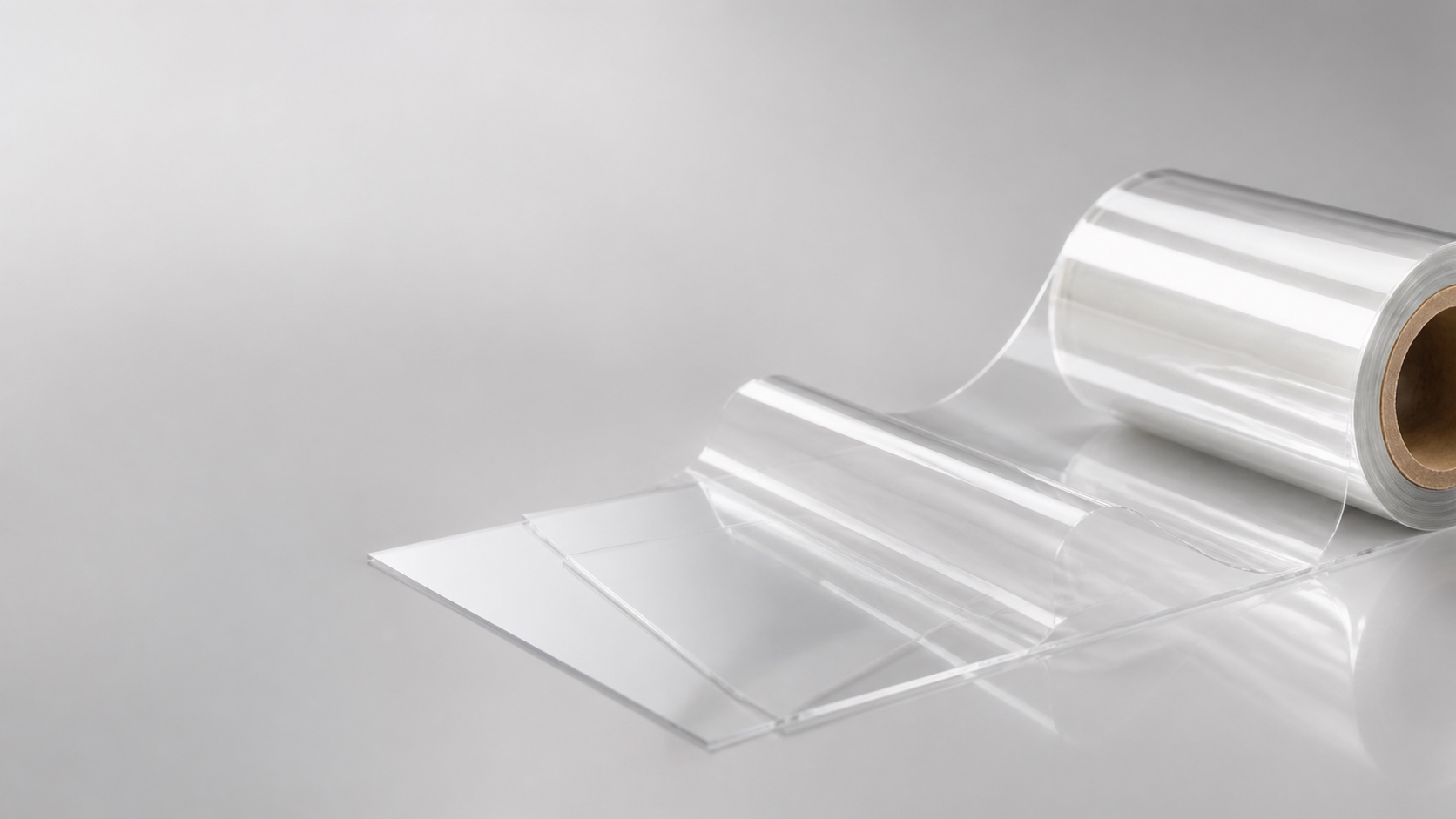
PET film is the printable outer layer of laminates such as PET/PE and PET/AL/PE. Choose it for print clarity, stiffness, and flat pouch panels. It is not a sealant or a moisture barrier on its own, so it is always paired with an inner layer.
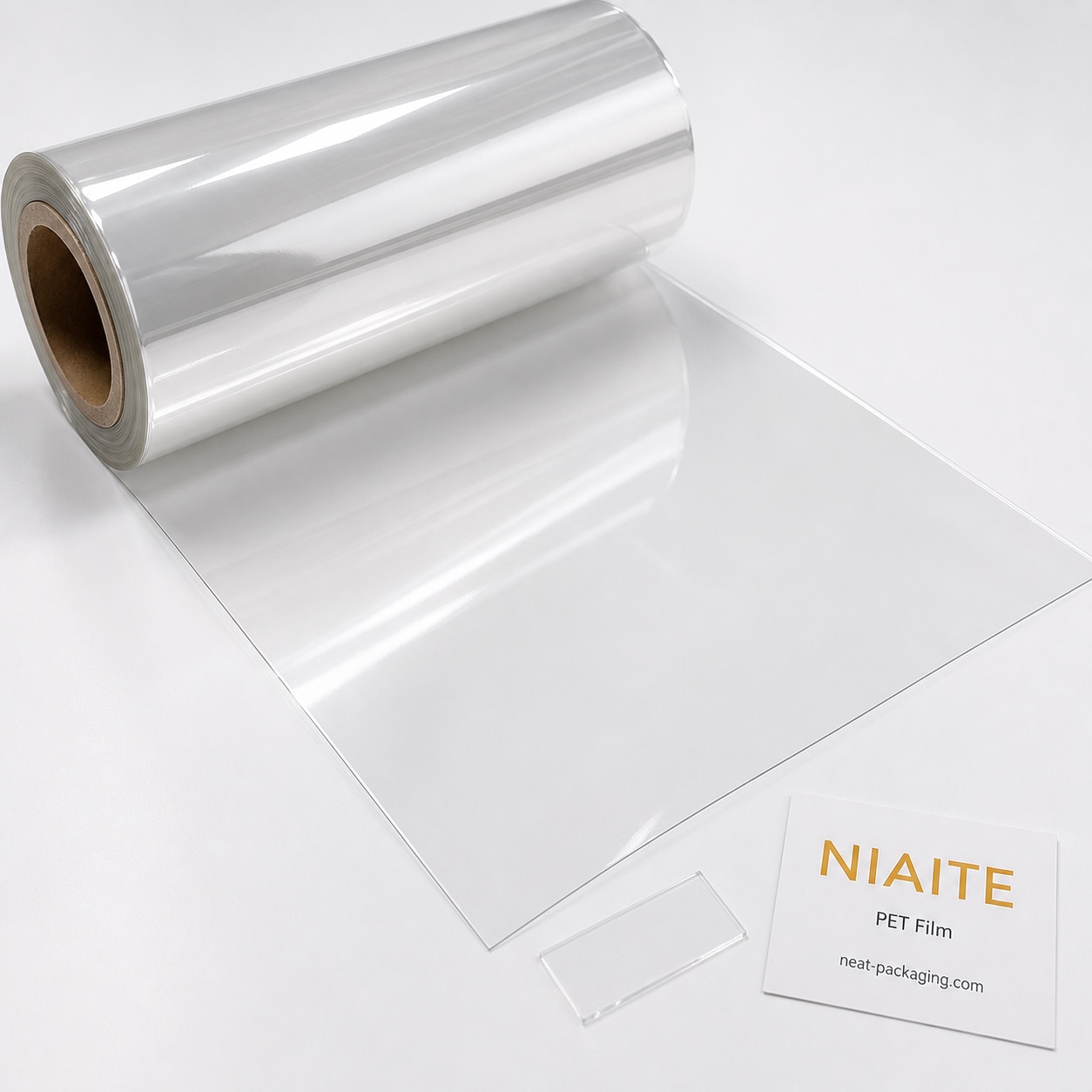
PET (Polyethylene Terephthalate) provides a clear, stable print surface for high-resolution flexible packaging laminates.
It is typically paired with PE, CPP, foil, VMPET, or nylon depending on sealing method, shelf-life target, and product sensitivity.
GMP-Style Production Controls
Partner facilities
ISO 9001-Style QC
Quality system
Shipping term coordination
DDP / FOB / CIF
Structure Review
Project-dependent options
How PET performs as the outer web, and what it needs from the layers underneath.
| Decision Factor | PET Film Guidance |
|---|---|
| Core advantage | High stiffness, print clarity, dimensional stability |
| Barrier role | Medium gas barrier; often paired with AL, VMPET, PE, or CPP |
| Typical structures | PET/PE, PET/AL/PE, PET/VMPET/PE |
| Best-fit applications | coffee bags, snacks, stand up pouches, lidding |
| When to avoid | PET is a print and stiffness layer, not a sealant and not a moisture barrier on its own. Avoid specifying PET alone where the pack must survive retort, deep-freeze impact, or a low oxygen target without a metallized, foil, or EVOH layer. |
| Buyer inputs to confirm | Packed product and fill weight, target shelf life, filling temperature and process (including hot fill or retort), print colour count, and the documentation scope required in the destination market. |
| Documentation support | FDA/EU material documentation and SGS third-party testing can be arranged by project scope. |
PET is the print face. The pack format and the inner layers decide which PET laminate fits.
PET/PE is the general starting laminate for printed stand up pouches holding dry goods and snacks.
PET/AL/PE puts a foil barrier under the PET print face for aroma-sensitive coffee.
A PET outer web carries sharp graphics; barrier is added below the print layer only as far as the snack needs.
PET/NY/PE combines a PET print face with a nylon layer for puncture resistance.
PET supports reverse printing and fine graphics, with the ink protected between PET and the inner layer.
Dimensional stability keeps pouch panels flatter through lamination, slitting, and filling.
PET/PE, PET/VMPET/PE, and PET/AL/PE share the same outer layer, so the barrier can rise without redesigning the print face.
FDA/EU material documents and testing support for the PET web can be arranged by project scope.
| Decision Point | PET | BOPP |
|---|---|---|
| Main strength | Stiffness, print clarity, dimensional stability | Gloss, stiffness, printability, high-speed converting |
| Barrier role | Medium gas barrier; upgraded with foil, VMPET, EVOH, or nylon | Moisture barrier; limited oxygen barrier without an added layer |
| Typical structures | PET/PE, PET/VMPET/PE, PET/AL/PE | BOPP/CPP, BOPP/PE, metalized BOPP laminates |
| Typical uses | Coffee bags, stand up pouches, snacks, lidding | Snacks, confectionery, flow wrap, labels |
Choose PET when the outer web must stay flat on a pouch panel or carry a foil or VMPET upgrade path. Look at BOPP film when gloss, moisture resistance, and line speed lead and oxygen barrier is not the main driver.
PET/PE is the base laminate. PET/VMPET/PE adds a metallized barrier, PET/AL/PE adds foil, and PET/NY/PE shifts the focus to puncture resistance.
| Structure | Best-fit Use | Barrier / Role | |
|---|---|---|---|
PET / PE |
General dry goods, snacks, and printed pouches | Standard | Review structure options -> |
PET / VMPET / PE |
Metallized barrier for aroma and shelf-life extension | Medium | Review structure options -> |
PET / AL / PE |
Opaque high barrier for coffee and sensitive foods | High | Review structure options -> |
PET / NY / PE |
Puncture-resistant vacuum and frozen applications | High | Review structure options -> |
Representative guidance only. Final values depend on selected grade, laminate structure, pack format, and test requirements.
Typical Role
Printable outer film in laminated structures
Common Gauge
12-23 micron outer film; final laminate varies
Barrier Role
Moderate gas barrier; upgraded by foil, VMPET, EVOH, or nylon
Print Surface
Reverse gravure or flexographic printing support
Common Pairings
PE, CPP, aluminum foil, VMPET, nylon
Documentation
Food-contact material files and testing support by project scope
PET laminated to PE is a multi-polymer structure. If a recyclability goal is set, compare it early with an MDO-PE/PE route on the PE material page, because changing the outer layer also changes print, stiffness, and sealing behavior.
PET (Polyethylene Terephthalate) offers high tensile strength and dimensional stability, with a moderate gas barrier that is usually upgraded with foil, VMPET, EVOH, or nylon layers. It is specified as the outer print substrate in most high-performance laminate structures for food, supplement, and personal care packaging.
PET/PE suits general dry goods, snacks, and printed pouches. PET/AL/PE adds an opaque foil layer for coffee and sensitive foods that need a high barrier. PET/VMPET/PE sits between them with a metallized, medium barrier. Target shelf life, product sensitivity, and whether a window is needed decide the choice.
Not in standard laminates. PET is a print and stiffness layer, so the seal comes from a PE or CPP inner layer chosen for the filling line. Food-contact suitability then depends on the grade of each layer, the full structure, intended use, and destination market; supplier declarations, FDA/EU material files, and migration testing can be arranged by project scope.
Tell us your product, target weight, and requirements.
We recommend materials, structure, and provide pricing.
Confirm details, approve artwork, and production begins.
QC checkpoints and shipment scope are confirmed by project.
NIAITE is a flexible packaging project support team working with selected partner factories; PET structures are reviewed against your brief before sampling. Capacity Review by Project: production routing, order volume, and lead-time assumptions are checked for each confirmed project. DDP / FOB / CIF coordination can be reviewed by destination and project scope. See how projects are coordinated.
Updated:
Work with NIAITE for material review, sampling guidance, QC checkpoints, and export project coordination.
Recyclability and environmental benefits depend on local collection infrastructure, structure design, and supporting documentation. Contact us for application-specific guidance.