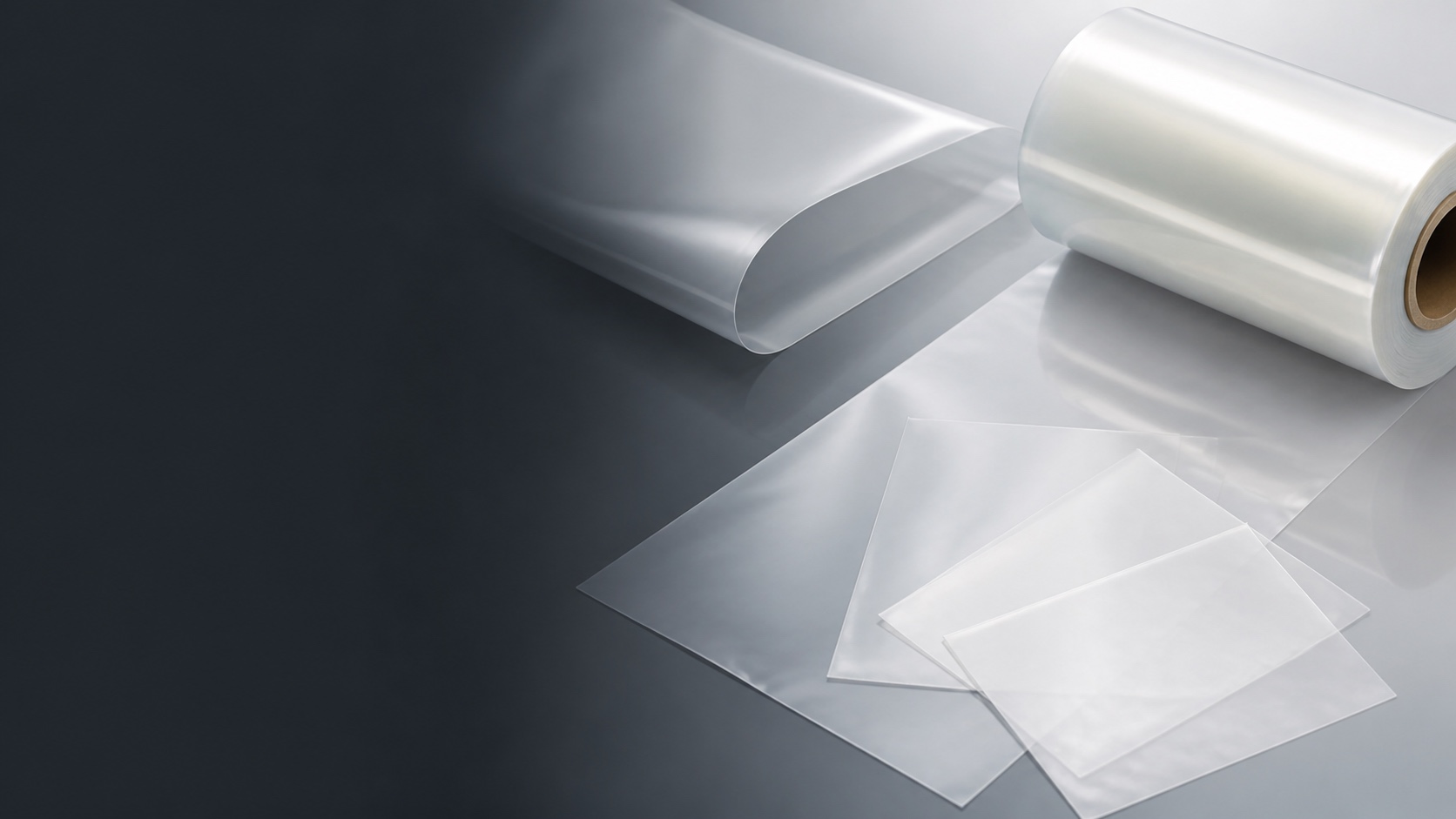
Nylon (PA) film is the toughness layer in laminates such as PA/PE and PET/PA/PE. Choose it when bones, sharp edges, vacuum, or frozen handling could puncture the pack. Avoid it in humid storage without an outer moisture barrier, or where a mono-polyolefin recovery stream is required.
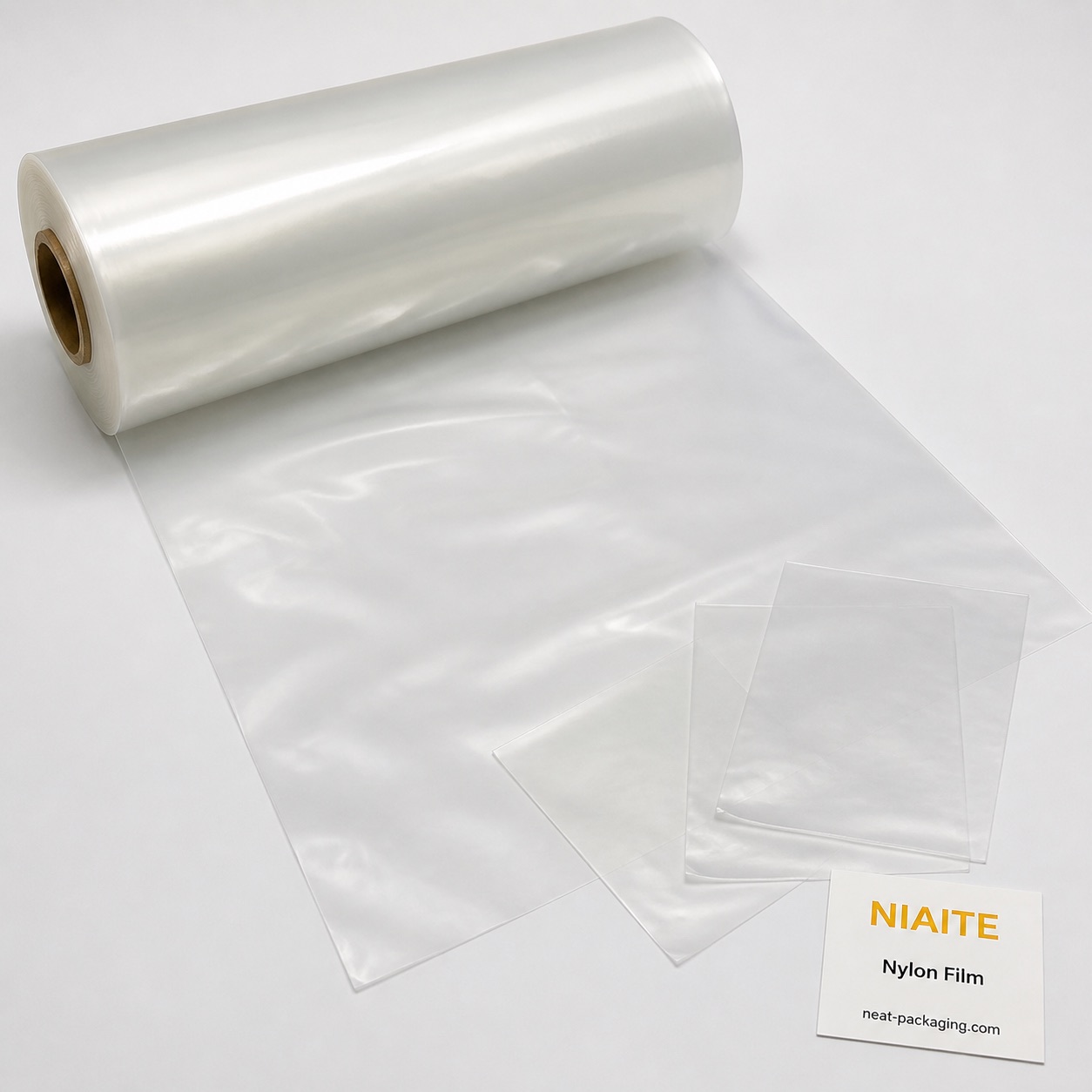
Nylon (PA) film is specified when flexible packaging needs toughness under stress, sharp edges, cold chain handling, or vacuum compression.
It is usually paired with PE, CPP, PET, EVOH, or foil to balance puncture resistance, seal performance, and shelf-life requirements.
GMP-Style Production Controls
Partner facilities
ISO 9001-Style QC
Quality system
Shipping term coordination
DDP / FOB / CIF
Structure Review
Project-dependent options
How a nylon layer changes a laminate, and the storage and recovery limits that come with it.
| Decision Factor | Nylon/PA Film Guidance |
|---|---|
| Core advantage | Puncture resistance, flex-crack resistance, and vacuum pack durability |
| Barrier role | Medium oxygen barrier; excellent toughness |
| Typical structures | PA/PE, PET/PA/PE, PA/RCPP |
| Best-fit applications | vacuum pouches, meat, seafood, frozen food |
| When to avoid | Nylon absorbs moisture and can lose barrier performance in humid storage. Avoid nylon-containing laminates where a mono-material polyolefin recovery stream is required, or where the pack sits in high humidity without an outer moisture barrier. |
| Buyer inputs to confirm | Cold-chain or frozen requirement, puncture risk from bone or sharp contents, humidity during storage and transit, and whether recyclability targets rule out multi-polymer laminates. |
| Documentation support | FDA/EU material documentation and SGS third-party testing can be arranged by project scope. |
Nylon is added when the pack is under mechanical stress. These are the formats where that is the normal case.
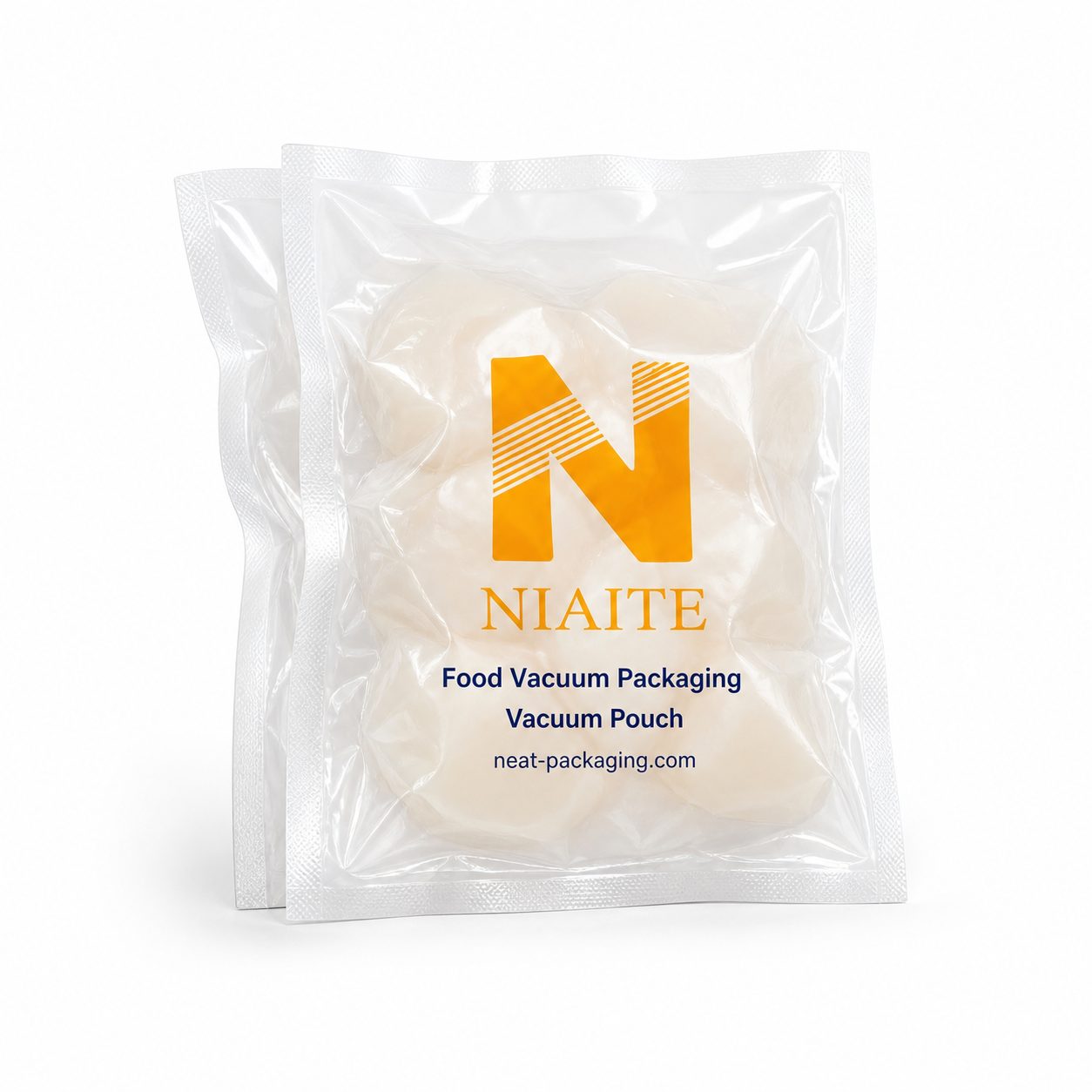
PA/PE is the common vacuum pouch structure, holding up to compression and handling.
Bone-in and edged cuts are the classic reason to add a puncture-resistant PA layer.
Seafood packs combine sharp edges, frozen blocks, and cold-chain handling.
Flex-crack resistance helps through freezing, handling, and distribution.
Bones, edges, frozen blocks, and heavy contents are the main triggers for a PA layer.
Vacuum and thermoforming packs for meat, seafood, and cheese rely on nylon toughness.
Flex-crack resistance improves durability through freezing, vacuuming, and distribution.
PA/EVOH/PE moves a vacuum pack from a medium to a high barrier role when shelf life requires it.
| Decision Point | PET/PA/PE (with nylon) | PET/PE (without nylon) |
|---|---|---|
| Puncture and flex-crack | Added resistance from the PA layer | Standard; no dedicated toughness layer |
| Barrier role in structure tables | Medium | Standard |
| Typical contents | Printed heavy-duty pouches, vacuum and frozen packs | General dry goods, snacks, and printed pouches |
| Storage and recovery | Multi-polymer; PA absorbs moisture in humid storage | Multi-polymer as well; no PA moisture uptake to manage |
Add the PA layer when puncture or vacuum stress is the failure risk. Stay with a PET/PE laminate from the PET material page when the product is dry, soft-edged, and handled at ambient conditions.
PA/PE covers most vacuum and frozen packs, PET/PA/PE adds a print face, PA/EVOH/PE raises the oxygen barrier, and PET/PA/RCPP is reviewed when a retort grade is required.
| Structure | Best-fit Use | Barrier / Role | |
|---|---|---|---|
PA / PE |
Vacuum pouches, frozen foods, and puncture-resistant packs | Medium | Review Structure -> |
PET / PA / PE |
Printed heavy-duty pouches with toughness | Medium | Review Structure -> |
PA / EVOH / PE |
Vacuum packs needing stronger oxygen barrier | High | Review Structure -> |
PET / PA / RCPP |
Heat-process structures when retort grade is required | High | Review Structure -> |
Representative guidance only. Final values depend on selected grade, laminate structure, pack format, and test requirements.
Typical Role
Puncture-resistant and flex-crack-resistant layer
Common Gauge
15-25 micron PA film; final laminate varies
Barrier Role
Medium oxygen barrier; often paired with EVOH or foil
Cold Chain Fit
Suitable for frozen, vacuum, seafood, and meat structures
Common Pairings
PE, CPP, PET, EVOH, aluminum foil
Documentation
Food-contact files and migration testing support by project scope
Nylon adds another polymer to most laminates, which usually rules the pack out of mono-material polyolefin recovery. Weigh the puncture risk against any recyclability target before the structure is fixed.
Nylon (Polyamide) film delivers strong puncture resistance and thermoformability, with a medium oxygen barrier that is often paired with EVOH or foil. It is specified for vacuum-sealed meat packaging, retort pouches, and any application where mechanical durability under stress is a critical requirement.
PA/PE is the common route for vacuum pouches, frozen foods, and puncture-resistant packs, with a medium barrier role. PA/EVOH/PE is reviewed when the vacuum pack needs a stronger oxygen barrier. Target shelf life and storage conditions decide between them.
Usually not. Nylon-containing laminates conflict with mono-material polyolefin recovery targets. If recyclability is a requirement, say so in the brief so a PE-rich route can be compared; food-contact files and migration testing support for the chosen structure are arranged by project scope.
Tell us your product, target weight, and requirements.
We recommend materials, structure, and provide pricing.
Confirm details, approve artwork, and production begins.
QC checkpoints and shipment scope are confirmed by project.
NIAITE is a flexible packaging project support team working with selected partner factories; nylon structures are reviewed against your brief before sampling. Capacity Review by Project: production routing, order volume, and lead-time assumptions are checked for each confirmed project. DDP / FOB / CIF coordination can be reviewed by destination and project scope. See how projects are coordinated.
Updated:
Work with NIAITE for material review, sampling guidance, QC checkpoints, and export project coordination.
Recyclability and environmental benefits depend on local collection infrastructure, structure design, and supporting documentation. Contact us for application-specific guidance.