Anti-counterfeit flexible packaging with tamper-evident seals, QR traceability, variable data, security inks, and project-specific traceability support.
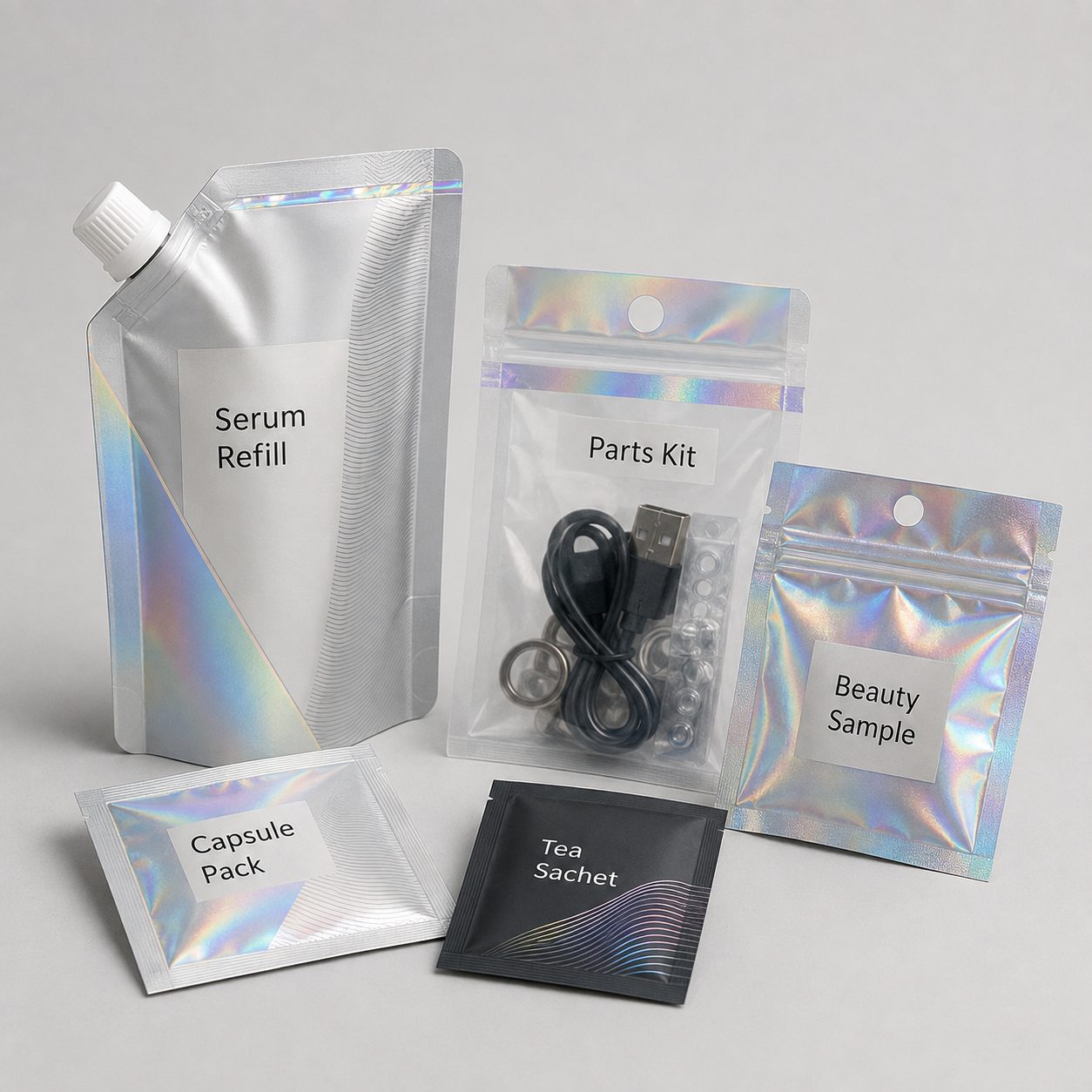
Anti-counterfeit flexible packaging featuring holographic film, micro-text printing, QR traceability, variable data, serial number workflows, security inks, UV ink, NFC tag ready labels, and tamper-evident closures.
Security features can be integrated into the print layer, label area, seal pattern, or traceability workflow and verified through sample approval.
Production Traceability
Batch records
ISO 9001-Style QC
Quality system
Shipping term coordination
DDP / FOB / CIF
Material Review
Project-specific structures
Select security features by authentication workflow, tamper evidence, print method, variable data, and sample approval requirements.
Tear strips, void seals, security labels, and seal pattern changes can help buyers inspect whether a pack has been opened.
QR traceability and serial number workflows can connect each pack to project-specific records, verification pages, or batch tracking systems.
Security inks, holographic film, micro-text, UV ink, variable data, and NFC tag ready labels can be positioned within the artwork plan.
Print proofs, code readability, serial number sequencing, tamper-evident seal samples, and material declarations can be reviewed before production.
Authentication features should be selected around a defined threat and verification workflow. They can support deterrence, traceability, tamper evidence, or buyer checks, but no single printed feature proves product authenticity by itself.
Describe the product, sales channels, destination markets, known risks such as imitation, diversion, refill, label replacement, or tampering, and who needs to perform each check.
State whether buyers need overt cues, tamper-evident construction, holographic or specialty labels, microtext, UV-responsive elements, hidden marks, or a layered review rather than one feature.
Define variable-code format, serial source, issuing party, database or domain owner, activation timing, privacy boundary, duplicate handling, and who controls code status after shipment.
Share pack material, format, dimensions, print method, artwork zones, security-feature registration, lamination or sealing exposure, label application route, and line-speed constraints.
Map consumer, distributor, warehouse, customs, or internal checks; scan or inspection steps; valid and exception messages; escalation owner; record retention; and acceptance criteria.
Include quantity, SKU and language count, markets, artwork status, sample and proof route, requested testing, authorized approvers, change control, and launch timing.
Choose the right structure based on print method, security feature, tamper-evident seal, traceability label, and handling requirements.
| Structure | Application | Barrier Level |
|---|---|---|
PET / PE
|
Standard structure for security print and label areas | Standard |
PET / VMPET / PE
|
Metallized structure for visual contrast and moderate barrier needs | Medium |
PET / AL / PE
|
Foil laminate where opacity, light barrier, or premium security finish is required | High |
PET / NY / PE
|
Puncture resistance for larger packs and heavier retail formats | High |
Kraft / AL / PE
|
Natural look with high barrier | High |
Mono PE
|
Recyclable mono-material structure | Standard |
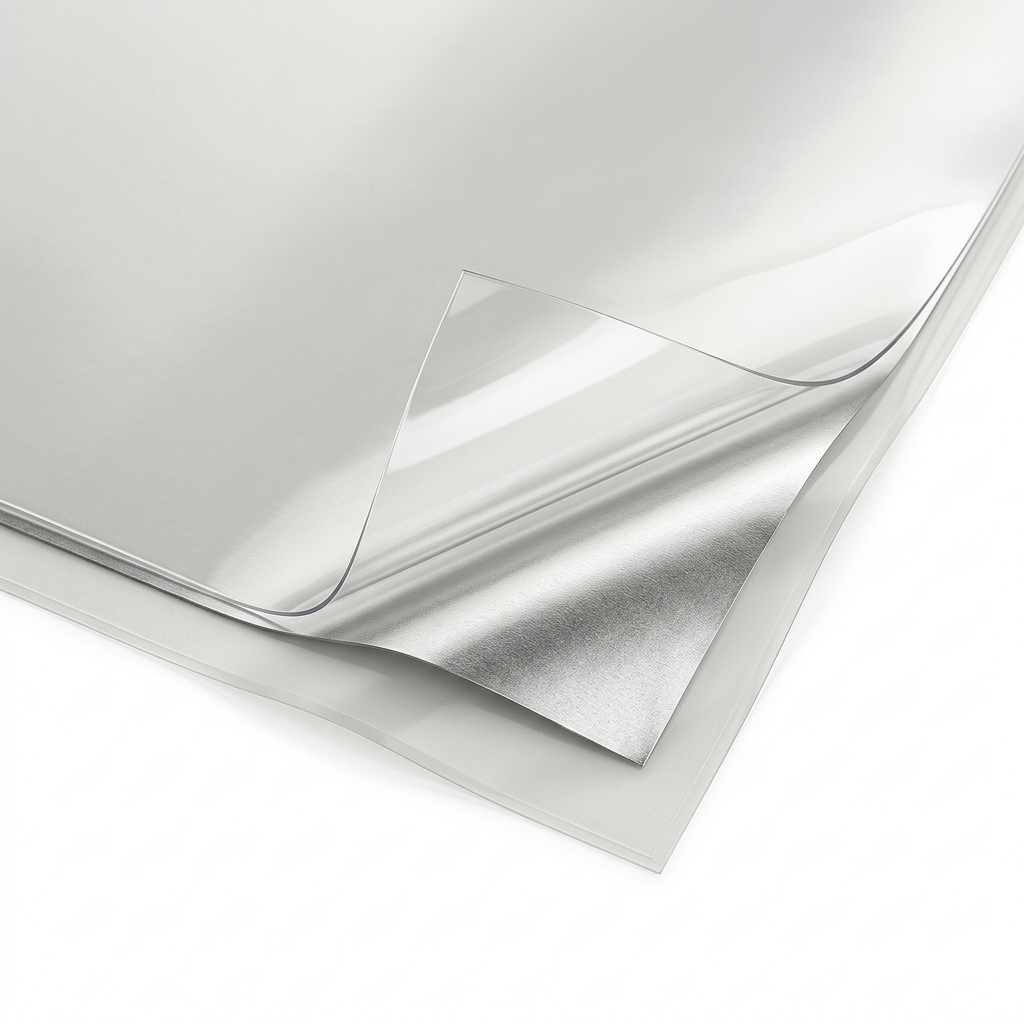
A transparent look at how we build structural integrity into every Anti Counterfeit Packaging. Visit our material guide for more details.
The ideal surface for high-resolution graphics, providing a professional look and protecting the design from scratches.
Metalized film can support visual contrast, opacity, and moderate barrier targets after the security feature plan is confirmed.
PE sealant is selected for seal strength, pouch handling, tamper-evident seal layout, and the documentation package required by the project.
QR traceability, serial number, barcode, batch code, and verification URL placement are checked against the final artwork.
Tear notch, tear strip, void label, seal pattern, and laser score options can be reviewed for visible tamper evidence.
Security inks, holographic film, micro-text, UV ink, matte/gloss contrast, and NFC tag ready labels can be added by project scope.
MOQ, print proof, code readability check, variable data file review, sample approval, and third-party testing needs are confirmed by project.
Representative parameters. Actual values depend on material structure and customization.
Film Thickness
80–150 μm (PET/AL/PE base)
Security Features
Holographic film, micro-text, UV ink
Traceability
QR code, serial number, NFC tag ready
Tamper Evidence
Void seal, shrink band, tear strip
Oxygen Barrier (OTR)
Project-specific barrier target
MOQ
Project-specific MOQ and security feature review
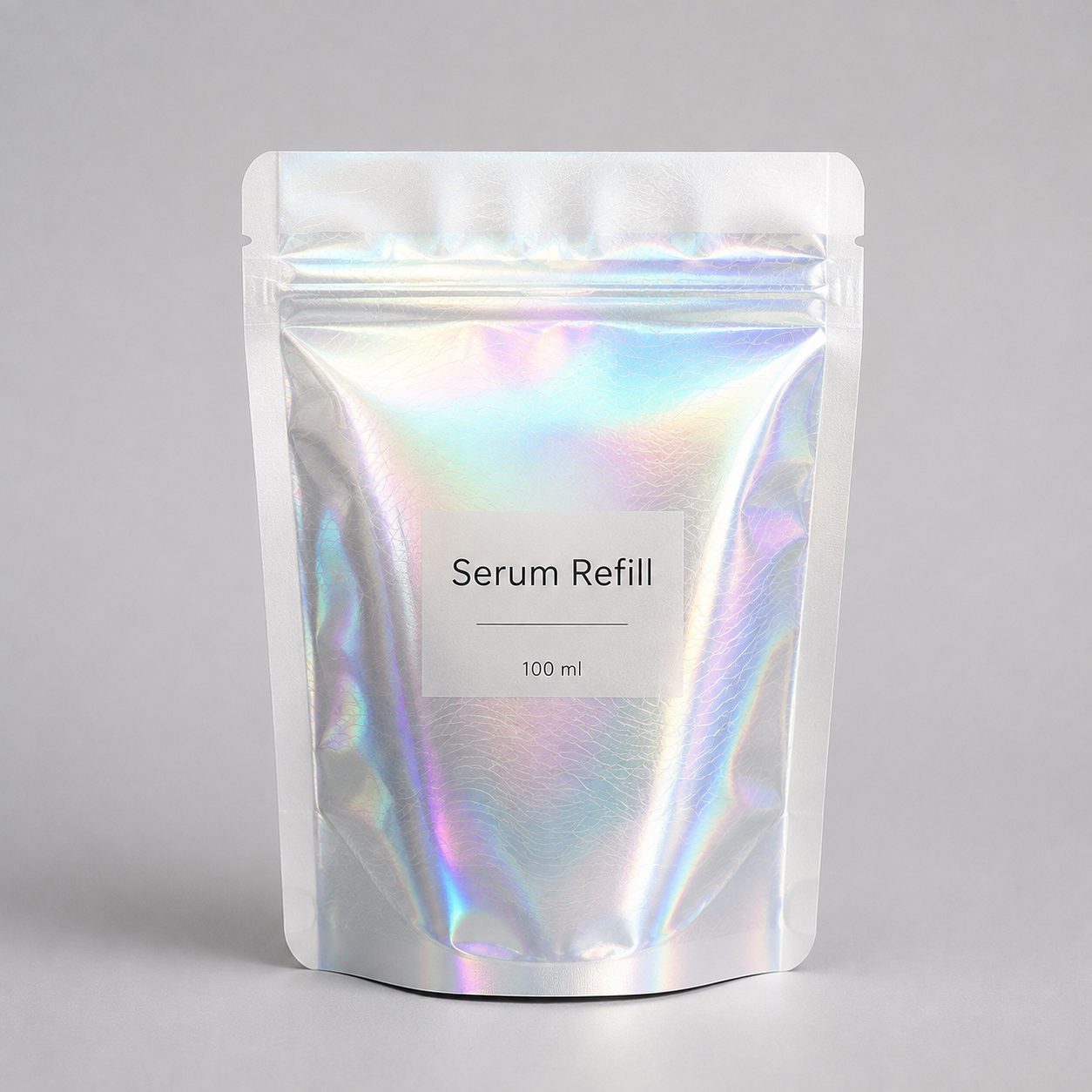
Serum refill pouch with holographic laminate and security pattern texture.
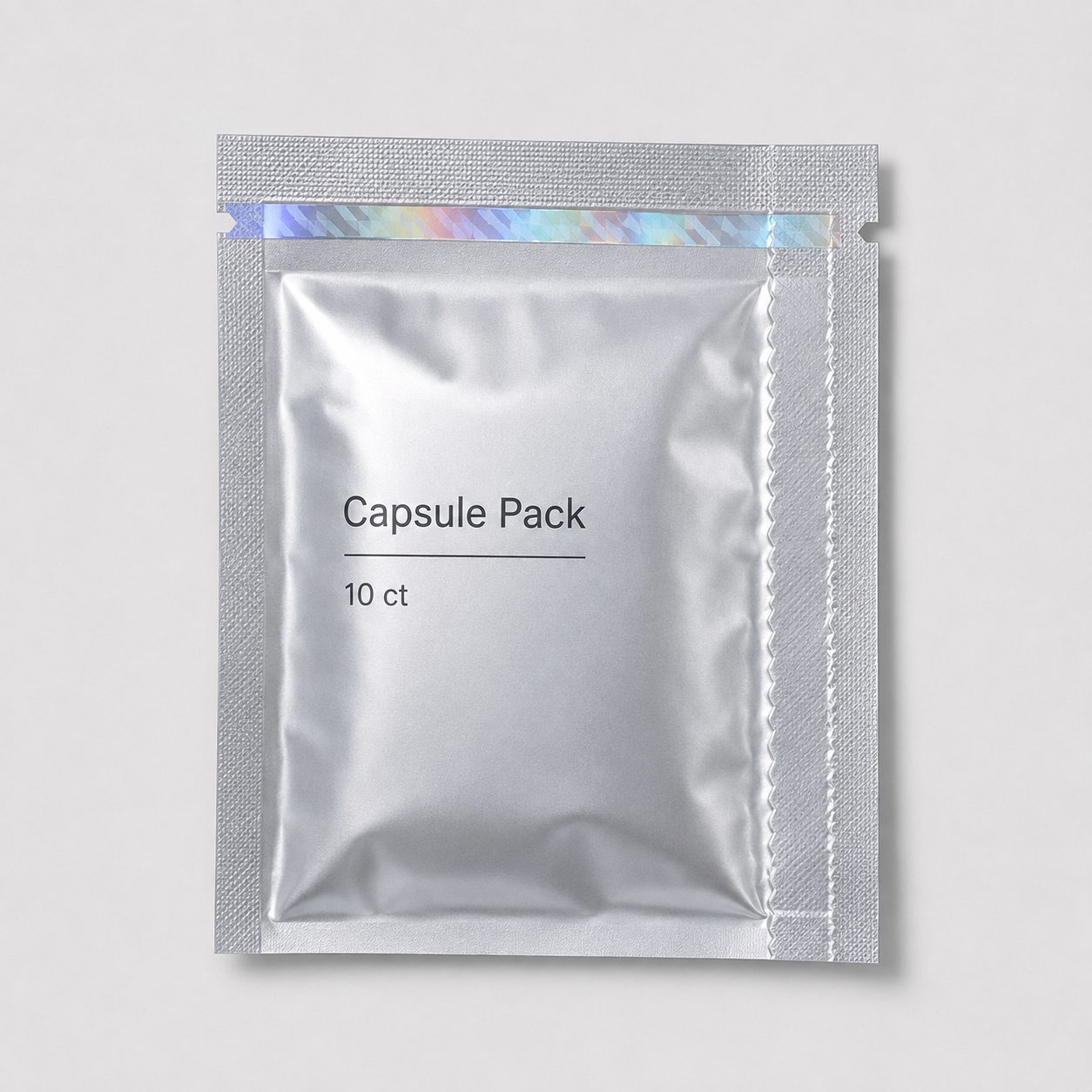
Flat sachet with holographic strip, tear notch, and controlled label area.
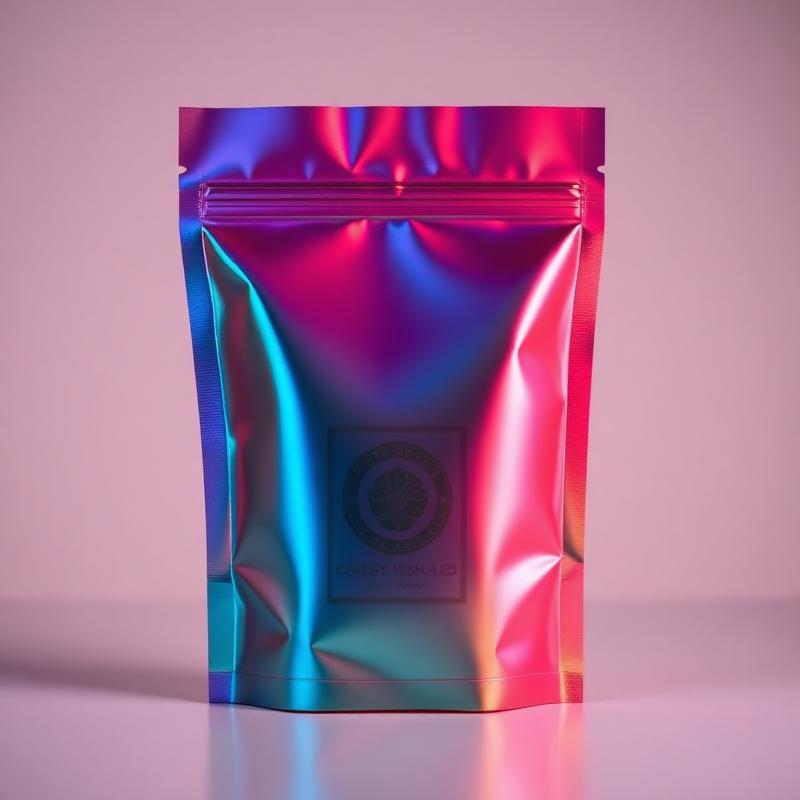
Protected tamper-evident matte security flexible packaging
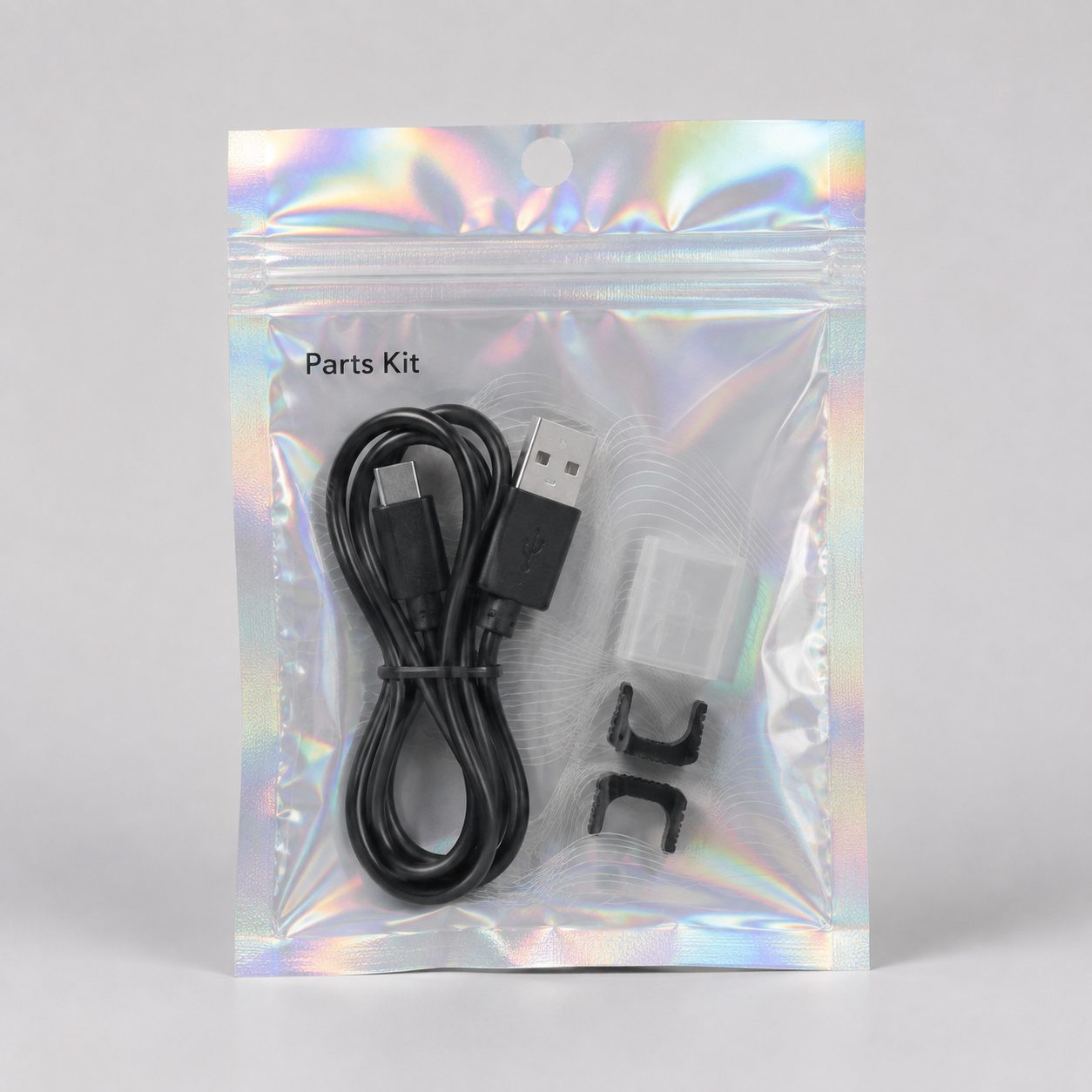
Clear-front accessory pouch with holographic zipper band and security texture.
Use these photos as format references. Final size, structure, print layout, and testing scope are reviewed against your product, filling method, and target market.
Lower-impact material structures can be reviewed by project, including recyclable-ready options where local recovery streams accept the final structure and testing supports the specification.
Anti-Counterfeit Packaging fits brand-protection projects that need tamper-evident seals, QR traceability, variable data, serial number control, security inks, holographic film, micro-text, UV ink, or NFC tag ready labels.
Yes. We tailor pouch size, security print areas, QR traceability, serial number logic, variable data files, tamper-evident seal samples, MOQ, and sample approval requirements.
Print proofs, variable data files, code readability checks, traceability records, material declarations, and third-party reports can be reviewed according to project scope.
Production records, material batches, print approvals, serial number files, and sample approval notes can be organized around the selected security feature set.
QC records, material declarations, print proofs, variable data review, and third-party documentation can be reviewed by project scope.
DDP / FOB / CIF coordination can be reviewed by destination and project scope.
Project-level recyclable-ready or lower-impact structures can be reviewed where the final specification supports them.
Project support for material review, artwork coordination, sampling, and production follow-up by confirmed scope.
Production routing, order volume, lead-time assumptions, and capacity fit are reviewed for each confirmed project.
Tell us your product, target weight, and requirements.
We recommend materials, structure, and provide pricing.
Confirm details, approve artwork, and production begins.
QC checkpoints and shipment scope are confirmed by project.
Updated:
Work with NIAITE for material review, sampling guidance, QC checkpoints, and export project coordination.