A practical overview of the reviewable workflow, project files, and buyer inputs NIAITE can support before custom flexible packaging moves into production.
The sections below describe the project support NIAITE can coordinate. Exact records, testing, artwork checks, and approval steps depend on the pouch structure, target market, and buyer-side regulatory review.
For a defined order, available QC inputs may include incoming-material references, in-process print or lamination checks, seal-integrity records, finished-pouch inspection summaries, and pre-shipment packing records. Record availability, sampling levels, approval gates, and hold points should be agreed before production. These records help buyers review the project while on-site control and final release remain with the responsible production or inspection party.
Blank structural samples, digital artwork proofs, printed proof discussion, and production reference samples help align structure, print, and buyer expectations before scale-up. This staged approach reduces costly reprints and material waste by catching issues before full production commitment.
Product type, pouch size, barrier target, filling method, estimated quantity, artwork readiness, destination market, and documentation needs are reviewed before a quote path is confirmed. These inputs create a more consistent basis for comparing supplier scope, exclusions, and separately listed charges. Final quote completeness still depends on the agreed project scope, supplier confirmation, and buyer approval.
NIAITE can compare printing, lamination, pouch-making, and finishing routes against the buyer's volume, artwork, structure, format, and budget. Actual equipment, web width, color count, MOQ, tooling, and special-process availability must be confirmed for the selected production route.
Printing routes can be compared by volume, artwork detail, SKU count, setup path, and budget. Dry and solventless bonding options are explained in the flexible film lamination guide.
Common pouch-format routes for review include the following; structure, dimensions, fitments, tooling, and production availability remain project-specific.
Special processes that may be reviewed include the following; material compatibility, equipment route, MOQ, setup, testing, and current availability must be confirmed.
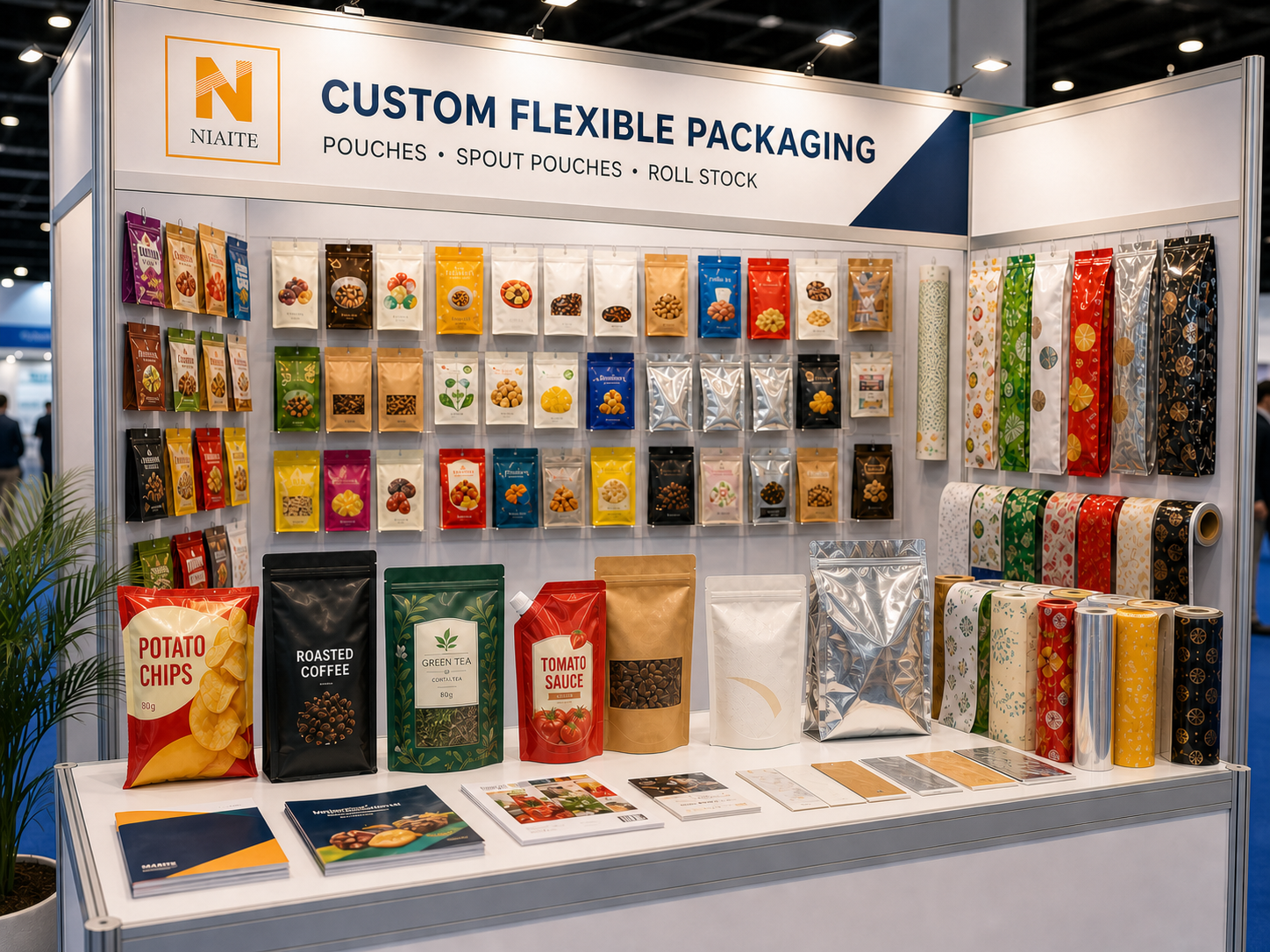
Most flexible packaging projects follow a predictable sequence of decisions and checkpoints. NIAITE coordinates each stage so that the buyer maintains visibility and approval authority throughout the process, without needing to manage every interaction with the production partner directly.
Every project starts with a buyer brief that covers the product type, pouch format, estimated quantity, target market, artwork status, and any documentation or compliance needs. NIAITE reviews this brief to identify missing inputs, clarify ambiguous requirements, and define a project scope that production partners can quote against. A well-defined scope can reduce changes caused by incomplete initial requirements. Barrier targets, filling-method questions, and documentation needs are recorded for review with selected production partners whose declared scope is reviewed against the project brief and, where applicable, external testing providers.
Based on the product's barrier needs, shelf-life target, and budget, NIAITE recommends one or more material structures for the buyer to evaluate. Each recommendation explains the tradeoffs between barrier performance, cost, printability, and recyclability. For products that require specific barrier evidence such as OTR or WVTR data, we define the testing scope at this stage so results are available before production commitment. Structure selection is a collaborative decision between the buyer and NIAITE, not a unilateral recommendation.
Where included in the agreed project scope, structural samples can support review of material feel, seal quality, and pouch dimensions, while digital or printed proofs can support artwork and color review. NIAITE coordinates the applicable sample or proof path, tracks buyer feedback, and relays approval or revision requests to the production partner. Scheduling and approval gates are defined for each project rather than assumed to follow one universal sequence.
During production, NIAITE coordinates the QC checkpoints agreed for the project. Depending on the production route, these may include incoming material review, in-process print or lamination checks, finished pouch inspection, and packing verification. Available checkpoint records can be organized for buyer review. Deviation notification, hold points, and corrective-action approval are handled according to the agreed project plan and the production partner's documented procedures.
Throughout the project, NIAITE can help collect and organize the documents named in the agreed scope. Depending on availability and project requirements, these may include structure notes, inspection summaries, material declarations, third-party test reports, or production batch records. The handoff covers the documents actually requested and available for that order; it is not a blanket compliance file or certification package.
Once the agreed release conditions are met, NIAITE can coordinate the export steps included in the project scope. These may include confirming packing quantities and carton labels, arranging freight, preparing commercial invoices and packing lists, or coordinating with the buyer's forwarder. Document ownership, customs review, certificates, tracking, and delivery updates depend on the agreed Incoterm, destination, and logistics route.
NIAITE can help organize material declaration support and third-party testing support such as SGS or equivalent labs when the buyer defines the target structure, market, and evidence scope.
This project-specific documentation boundary keeps each file tied to the final packed product, target sales market, intended claim language, filling method, storage conditions, and artwork before production decisions are locked.
Confirm product contents, structure goals, pouch format, quantity, and target market for the packaging project.
Check artwork status, filling conditions, target barrier needs, shipment route, and requested files before quoting.
Match internal records or external testing support to the agreed structure instead of using broad, site-wide promises.
We can help organize project inputs, while final regulatory approval remains with the brand, importer, or market-side compliance owner.
Beyond material and production capabilities, NIAITE provides hands-on project coordination that helps buyers move from initial concept to delivered shipment without managing every detail directly with each partner facility.
We review artwork files for print-readiness, check color mode and resolution, confirm dieline fit, and coordinate revisions between the buyer's design team and the production partner's prepress department. Buyers preparing files can start with the flexible packaging artwork checklist.
Digital proofs, printed proof sheets, and physical color-match samples are coordinated so buyers can approve visual output before full production begins. We track proof versions and revision history throughout the approval cycle.
Blank structural samples for fitment testing, printed samples for buyer review, and pre-production reference samples are arranged through partner facilities with clear timelines and shipping follow-up.
Material declarations, food-contact documentation, third-party test reports, and traceability records can be collected and organized according to the agreed project scope. Each document type is explained in the project-level material declaration guide. NIAITE follows up with the selected production partner against the agreed document list before shipment. Final availability depends on the order, document issuer, tested sample, and confirmed scope; the handoff is not a blanket compliance or certification package.
We coordinate container loading, packing lists, commercial invoices, and shipping documentation with freight forwarders. Ocean freight, air freight, and courier shipment options are reviewed based on order size and destination.
NIAITE is a flexible packaging project support team working with selected partner factories. This model helps buyers connect evidence, files, sampling, QC, and quote scope before production decisions are made.
Different pouch formats, films, print methods, MOQ paths, and finishing steps can be compared across available partner routes. Buyers can avoid repeating the same initial brief across multiple suppliers while retaining authority to review supporting evidence, approve the proposed route, or request an independent supplier audit.
Artwork, material structure, documentation scope, sample/proof needs, and target-market inputs are organized before production review. This consolidation saves buyers the time of repeating project details across multiple suppliers.
Early review helps reduce avoidable mistakes in structure, print direction, sealing, sizing, documentation, and claim language. Catching these issues before production starts can lower the risk of re-runs and material waste.
QC checkpoints are framed from the buyer's project brief, with available records organized for review alongside the production partner's procedures. NIAITE does not act as an independent inspection body; buyers can request a separately scoped third-party inspection when required.
Product cost, setup, artwork review, sample/proof, QC, documentation, and shipping coordination are separated for clearer comparison. Buyers can evaluate each cost element independently rather than working with bundled, opaque pricing.
Buyer inputs, required files, target market, and proof expectations are clarified before the brief moves into quotation, so price discussions start from an agreed scope rather than assumptions.
Review NIAITE quality control checkpoints for incoming, process, final, and shipment checks.
Compare samples and proofs before a custom pouch order moves to production.
Prepare quote inputs for structure advice, testing scope, and project documentation.
Work with NIAITE for material review, sampling guidance, QC checkpoints, and export project coordination.