Vacuum pouch and barrier film options for fresh meat, poultry, processed meats, bone-in cuts, and cold-chain storage. Review PA/PE, nylon/PE, puncture resistance, seal strength, and food-contact documentation by project.
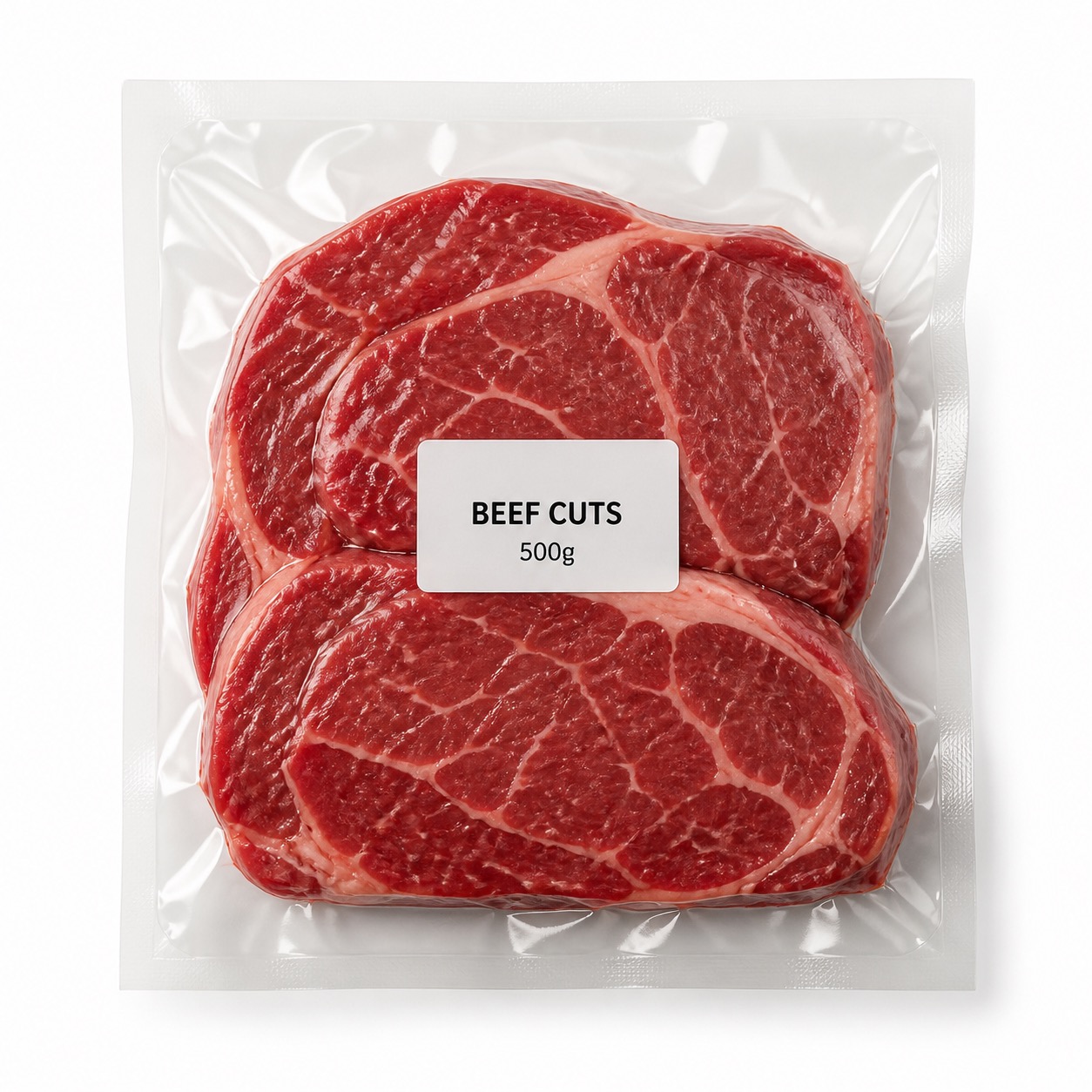
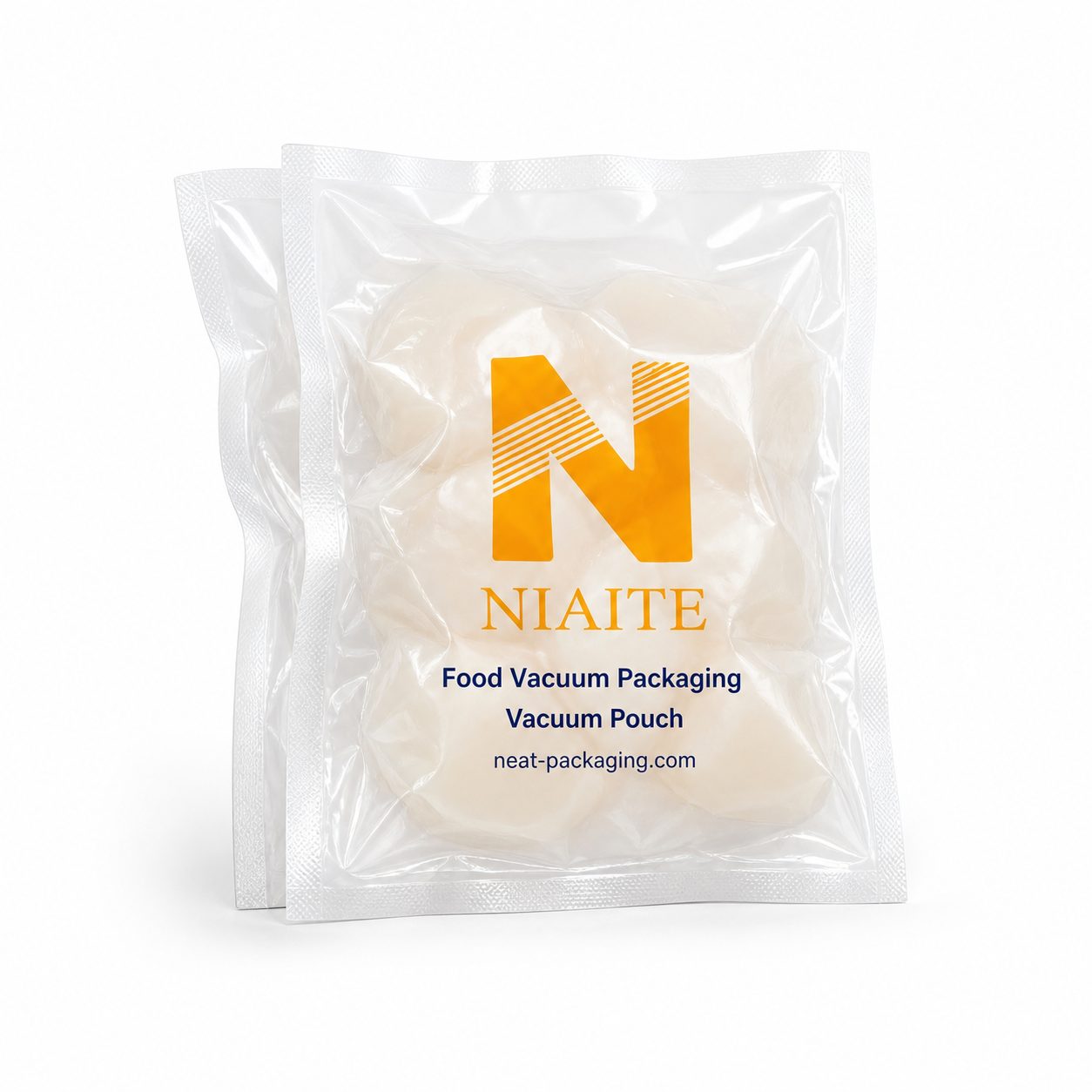
High-barrier vacuum pouches for fresh meat, poultry, and processed meats using PA/PE and nylon/PE structures reviewed for oxygen barrier, puncture resistance, seal strength, and bone guard protection.
Nylon-reinforced laminates can be specified for vacuum chamber machines, thermoforming lines, and cold-chain storage where sample testing confirms fit and sealing performance.
GMP-Style Production Controls
Partner facilities
ISO 9001-Style QC
Quality system
Shipping term coordination
DDP / FOB / CIF
Recyclable-ready review
Project-scoped materials
Match the laminate, vacuum pouch format, and seal profile to the meat cut, bone edge risk, storage condition, and packing line. Explore all market solutions .
Oxygen barrier and sealant selection are reviewed for vacuum pouch formats, chilled display, frozen handling, and shelf-life targets.
PA/PE and nylon/PE structures help resist bone edges, sharp corners, compression, and handling stress during cold-chain storage.
Pouch size, seal width, film thickness, and surface finish are checked against vacuum chamber, thermoforming, or lidding equipment.
Food-contact documentation, material declarations, and QC records are reviewed according to selected structure and target market.
Key factors to evaluate when selecting vacuum and barrier packaging for meat projects.
Fresh meat color and shelf life depend directly on oxygen exposure. Compare OTR values across nylon/PE, EVOH, and PVDC structures. Higher-barrier laminates cost more but can double refrigerated shelf life for vacuum-packed cuts.
Bone edges and frozen product corners can puncture standard films during vacuum draw-down. Evaluate nylon content, film thickness, and consider bone-guard patches or thicker sealant layers for products with sharp internal geometry.
Meat juices and marinades contaminate seal areas during filling. Request seal-through-contamination test results and evaluate whether the sealant layer can form reliable bonds even when the seal zone is not perfectly dry.
High-volume meat packers often thermoform pouches in-line for speed and cost efficiency, while smaller runs suit pre-made vacuum bags. Match the format to your packing line speed, product shape variation, and minimum order volume.
Consider whether the package needs clarity for retail case display, reverse-printed graphics for brand shelf presence, or simply a functional bulk pack for food-service distribution. Each path drives different laminate and print specifications.
Choose the material structure by meat cut, product weight, oxygen barrier target, puncture risk, seal condition, and food-contact documentation scope.
| Structure | Application | Barrier Level |
|---|---|---|
PA / PE
|
Vacuum pouches for fresh meat, poultry, and boneless cuts | Standard |
PET / PA / PE
|
Printed vacuum pouch structure with nylon puncture support | Medium |
PA / EVOH / PE
|
Higher oxygen barrier review for processed meats and chilled display | High |
PA / PE Coex
|
Thermoforming bottom web or heavy vacuum pouch review | High |
PET / PE Lidding
|
Tray lidding film for chilled meat, poultry, or processed portions | High |
PE-based Review
|
Recyclable-ready structure trial where local recovery streams accept the final pack | Standard |
A transparent look at how PA, EVOH, and PE layers support vacuum meat packaging, puncture resistance, and seal strength. Visit our material guide for more details.
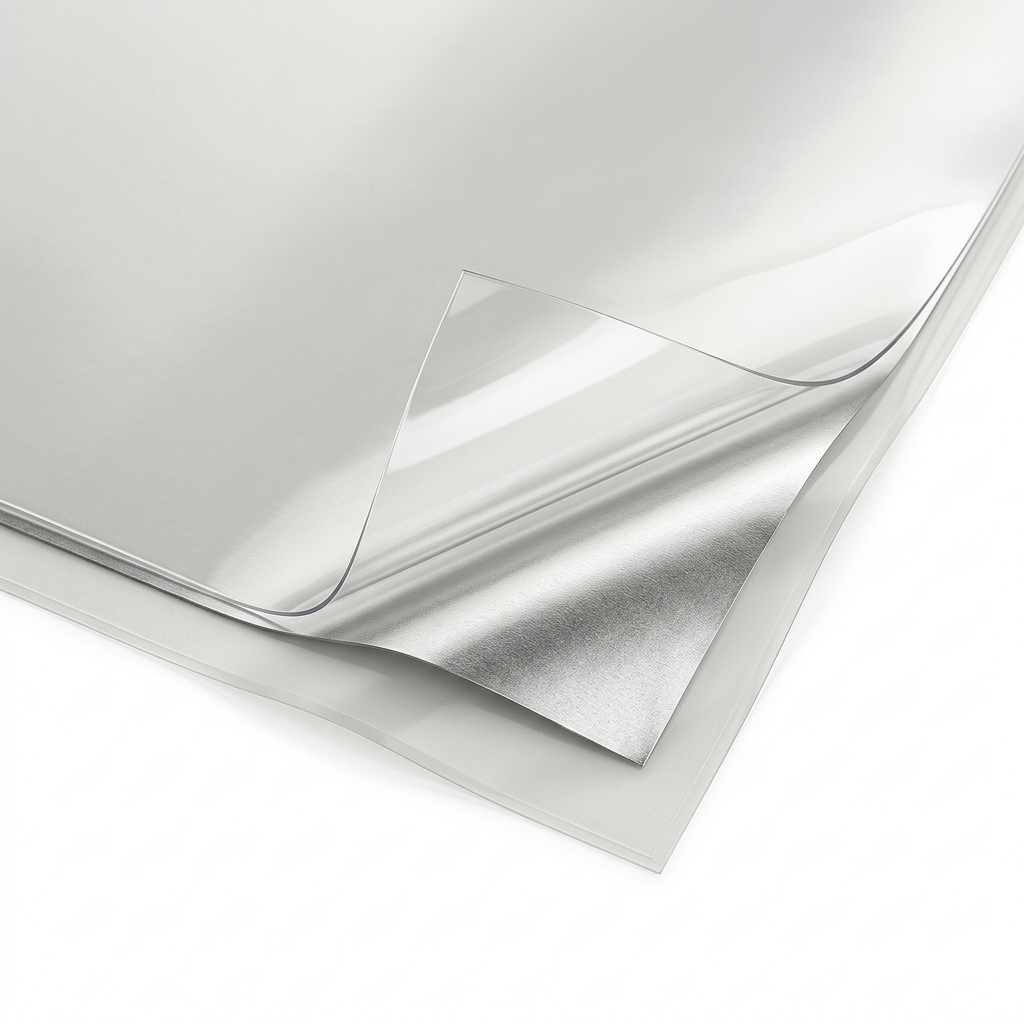
Printable PET supports front artwork, stiffness, surface finish, and handling performance.
Aluminum foil, metallized film, or EVOH-based options are selected by oxygen, aroma, moisture, and light-barrier targets.
Adhesive layers bond the print, barrier, and sealant webs into the finished laminate structure.
PE or CPP sealant is reviewed for seal strength, filling temperature, product contact, and processing conditions.
Flat vacuum pouch, side-seal pouch, bottom web, top lidding film, or retail-ready printed pouch selected by product and line.
Seal width, sealant grade, edge finish, and tear notch are reviewed against vacuum chamber settings and package weight.
Transparent films support product inspection; printed outer layers can support retail branding where oxygen barrier and seal performance remain suitable.
Sample review, seal strength checks, puncture testing, migration support, and food-contact documentation can be scoped before production.
Representative review points. Actual values depend on product, equipment, material structure, and validation scope.
Film Structure
PA/PE, nylon/PE, PA/EVOH/PE, or lidding films by project
Puncture Review
Reviewed against bone edges, pack weight, frozen handling, and transport stress
Barrier Review
Oxygen and aroma barrier targets confirmed by product shelf-life plan
Storage Condition
Chilled, frozen, or heat-exposure requirements reviewed before specification
Seal Strength
Validated by seal width, sealant choice, vacuum chamber setting, and sample testing
Presentation
Clear, printed, matte, gloss, or lidding finish confirmed by retail requirement
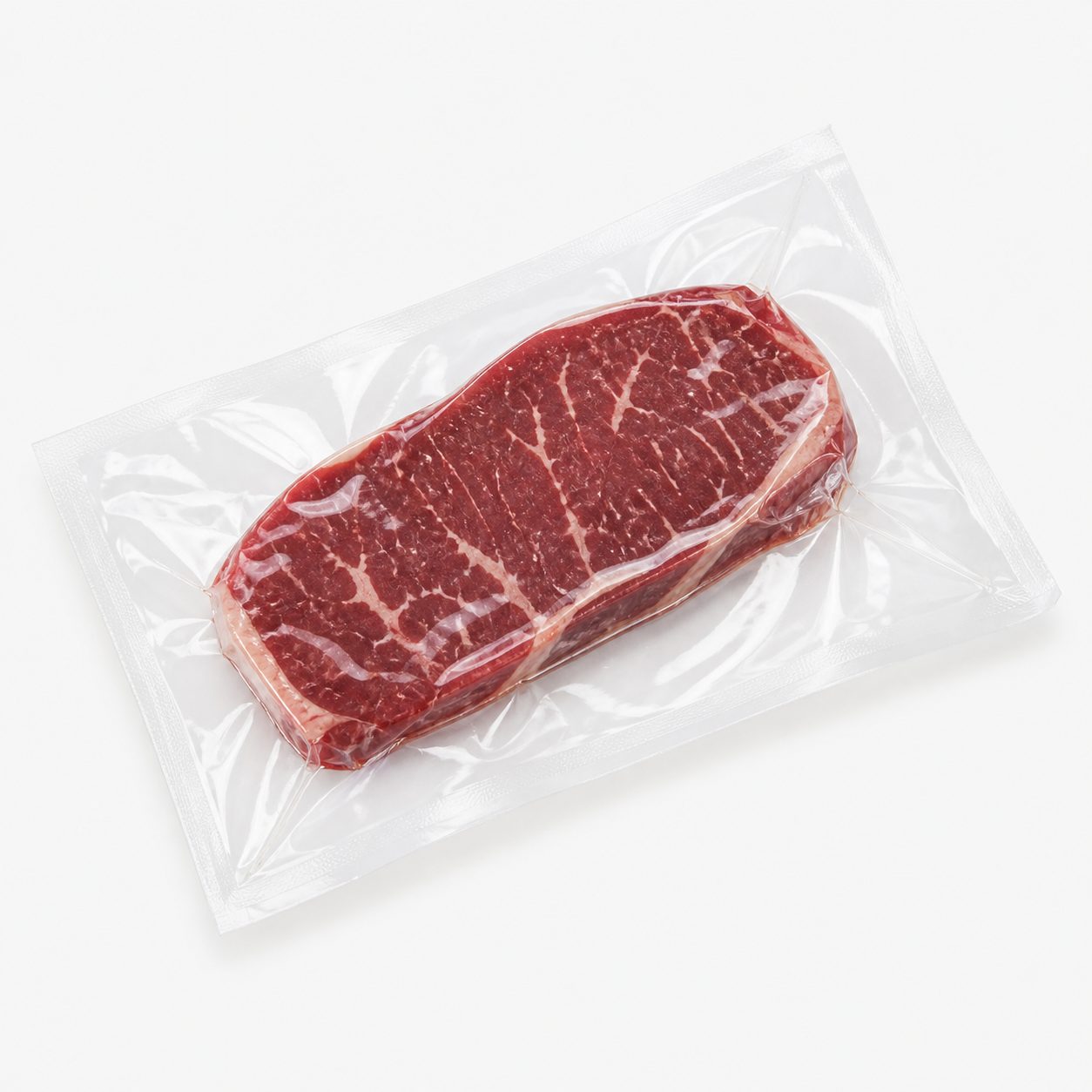
Clear or printed PA/PE vacuum pouch for chilled fresh meat display
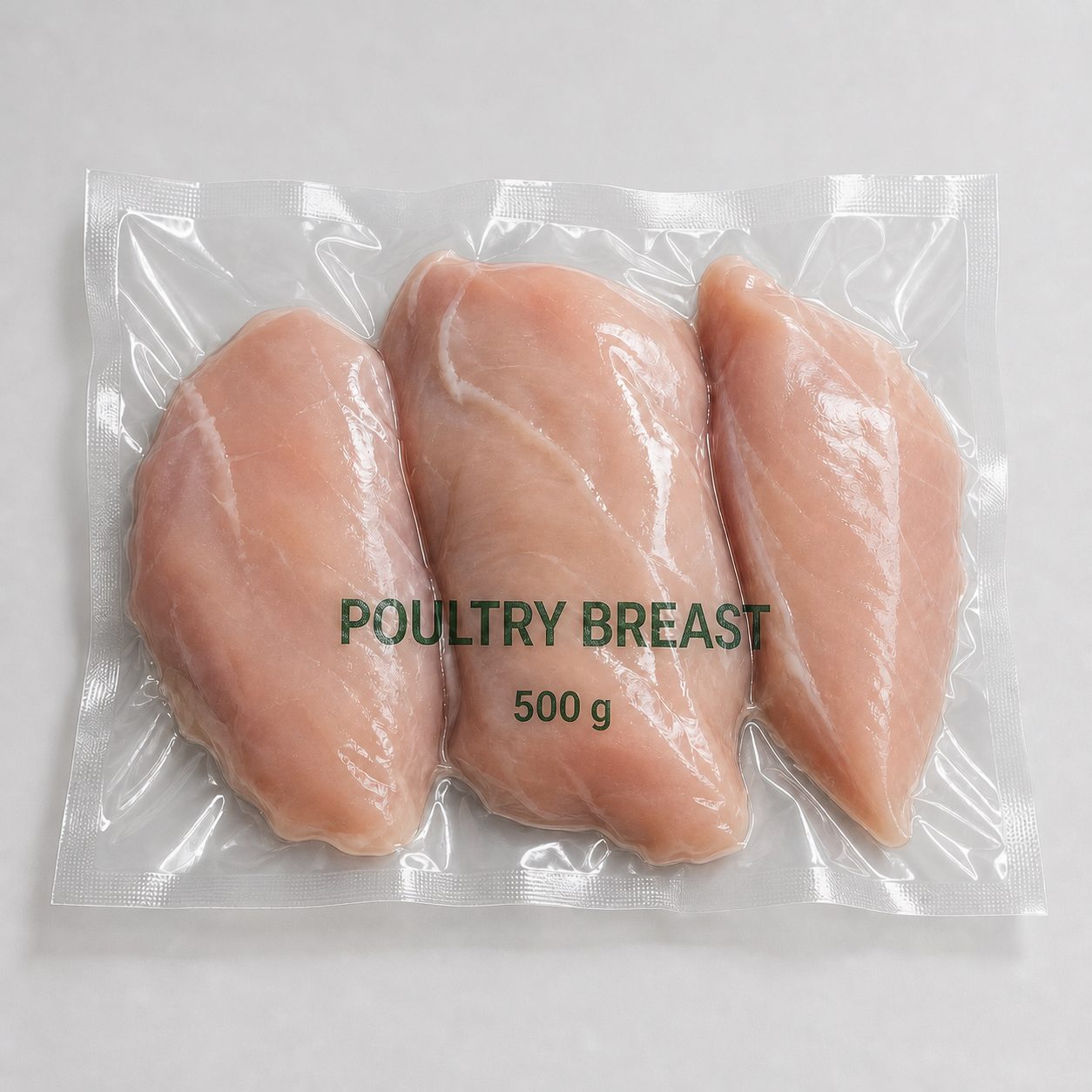
Vacuum pouch or lidding film review for poultry portions and chilled storage
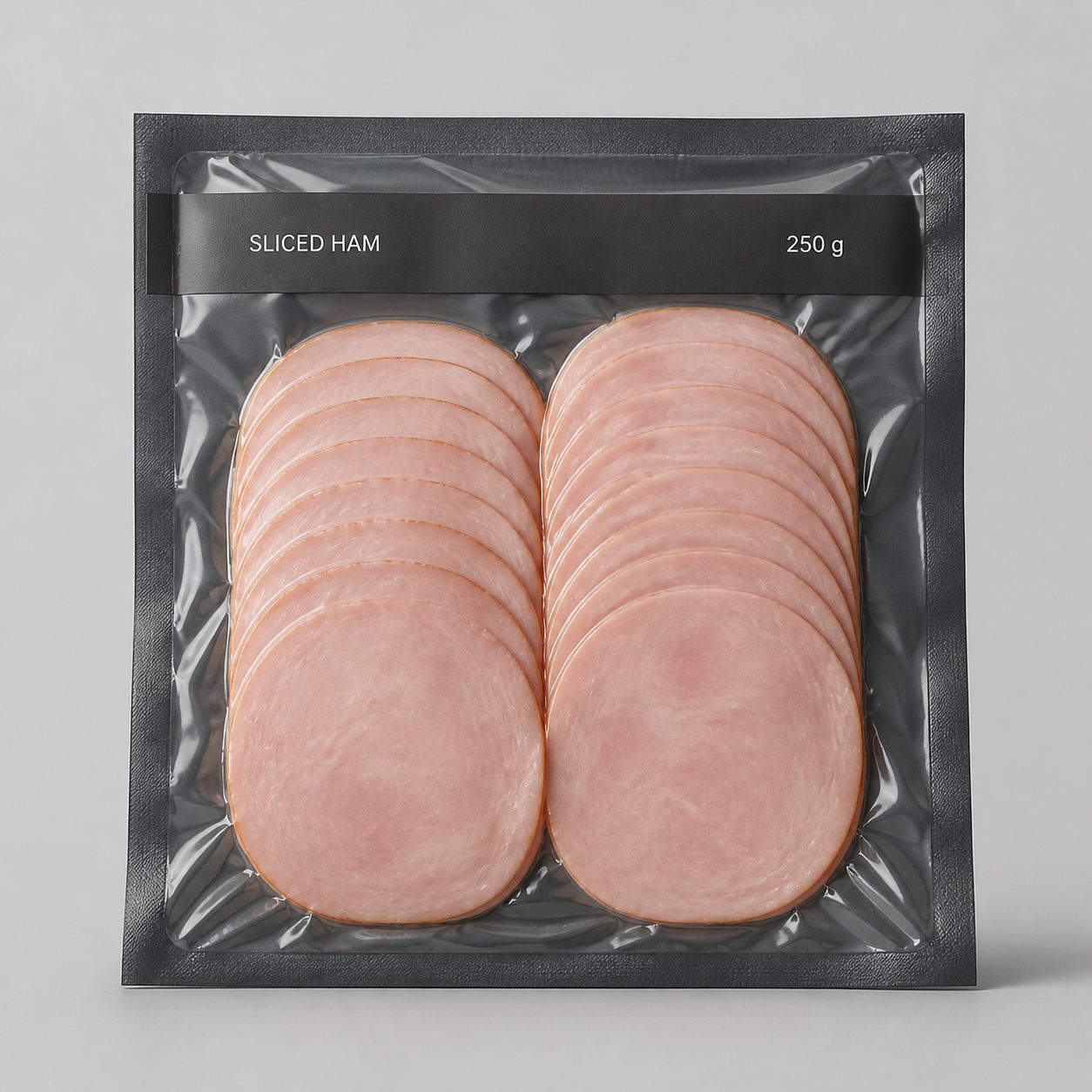
Barrier and sealant review for bacon, sausage, deli meat, and sliced portions
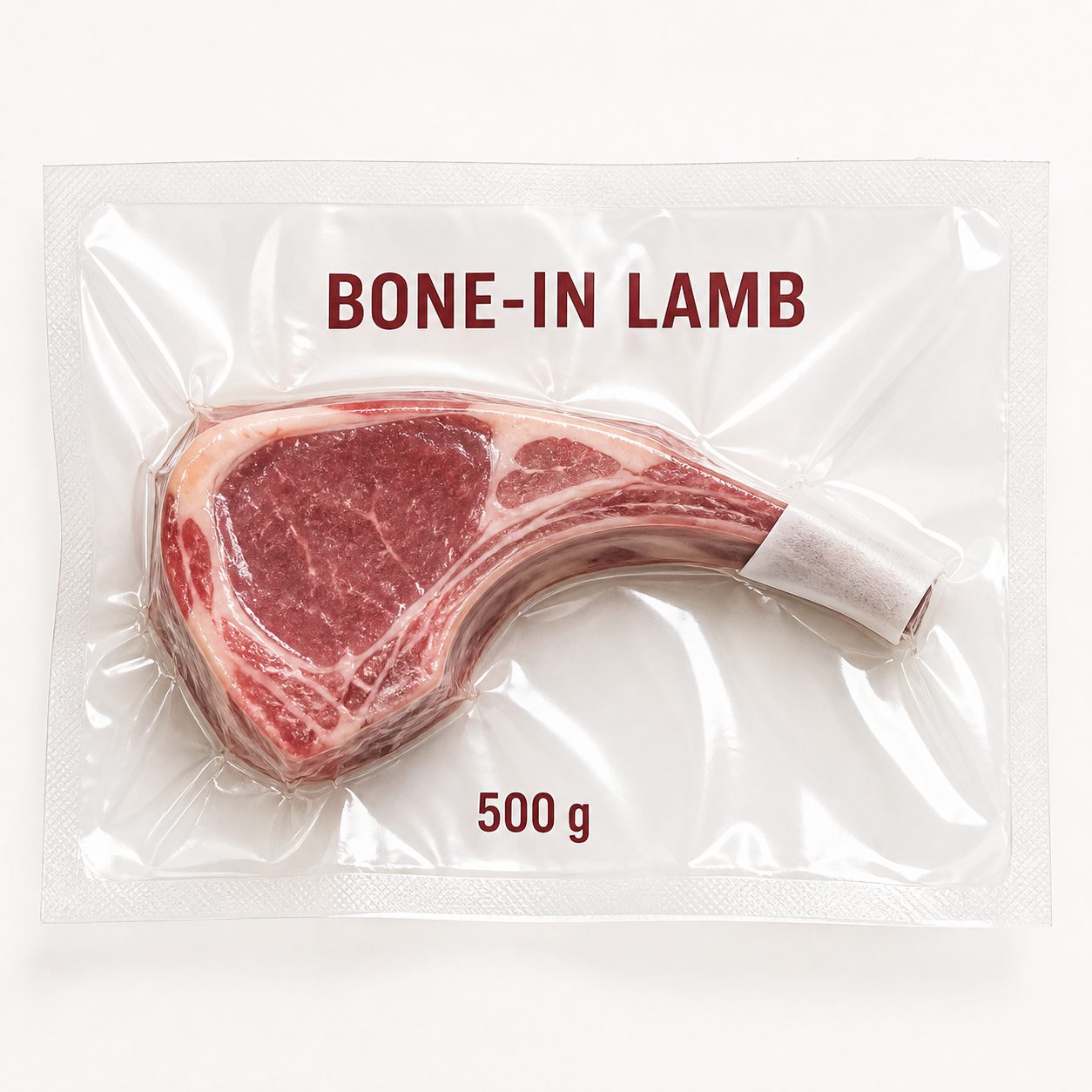
Nylon/PE structure review for bone guard protection and puncture resistance
Use these photos as format references. Final size, structure, print layout, and testing scope are reviewed against your product, filling method, and target market.
Lower-impact structure options can be reviewed when the product, filling process, target market, and recovery route support them.
Meat Vacuum Packaging can be reviewed for fresh meat, poultry, processed meats, bacon, sausage, frozen meat, bone-in cuts, vacuum skin packs, thermoforming film, and retail vacuum pouch formats.
Confirm product weight, cut shape, bone edge risk, oxygen barrier target, cold-chain storage, vacuum chamber or thermoforming line, seal width, print area, and documentation needs.
Food-contact documentation, material declarations, migration support, QC records, and third-party test coordination can be scoped after the final PA/PE, nylon/PE, or barrier laminate is selected.
Production workflow follows GMP-style hygiene and handling controls; no site-level GMP registration is claimed.
QC records, material declarations, and food-contact documentation can be reviewed by project scope when the selected structure requires them.
DDP / FOB / CIF coordination can be reviewed by destination and project scope.
Project-level recyclable-ready or lower-impact structures can be reviewed where the final specification supports them.
Project support for material review, artwork coordination, sampling, and production follow-up within the agreed scope.
Production routing, order volume, lead-time assumptions, and capacity fit are reviewed for each confirmed project.
Tell us your product, target weight, and requirements.
We recommend materials, structure, and provide pricing.
Confirm details, approve artwork, and production begins.
QC checkpoints and shipment scope are confirmed by project.
Common issues we help meat packaging buyers avoid during project coordination.
Bone-in meat cuts create microscopic punctures in vacuum pouches that may not leak immediately but allow oxygen ingress within days. Products arrive at retail with broken vacuum and discoloration. We help coordinate puncture-resistance testing with your actual product geometry, not just flat-sample burst tests.
Fresh red meat relies on low oxygen transmission to prevent premature browning from myoglobin oxidation. A barrier film that passes general spec may still allow enough O2 transfer to shift color within your target shelf window. We help match OTR specifications to your exact protein type and required shelf-life duration.
Seal integrity tested at room temperature may not hold through frozen storage and thaw cycling. Thermal contraction at freezer temperatures can stress seal edges, creating micro-channels that allow air and moisture in. We coordinate seal-strength testing across the full temperature range your product will experience from packing to retail display.
Nylon-based laminates used for meat packaging can absorb moisture from the product, causing interlayer delamination over time. This shows as bubbling or whitening on the pack surface, triggering retailer complaints. Specify moisture conditioning tests that simulate actual product contact conditions, not just ambient storage.
Deep-draw thermoformed trays for meat portions can drift in cavity depth across production runs, causing underfill or overfill appearance issues. A tray that fits perfectly in initial samples may run 2-3mm shallow after extended production. We help set dimension tolerances and sampling intervals tied to your filling line clearances.
Updated:
Work with NIAITE for material review, sampling guidance, QC checkpoints, and export project coordination.