NIAITE is a flexible packaging project support team working with selected production partners for rice brands, mills, and exporters. We help compare vacuum brick, carry-handle, clear-window, side-gusset, BOPP laminated, and woven PP rice bag options from 1kg to 25kg.
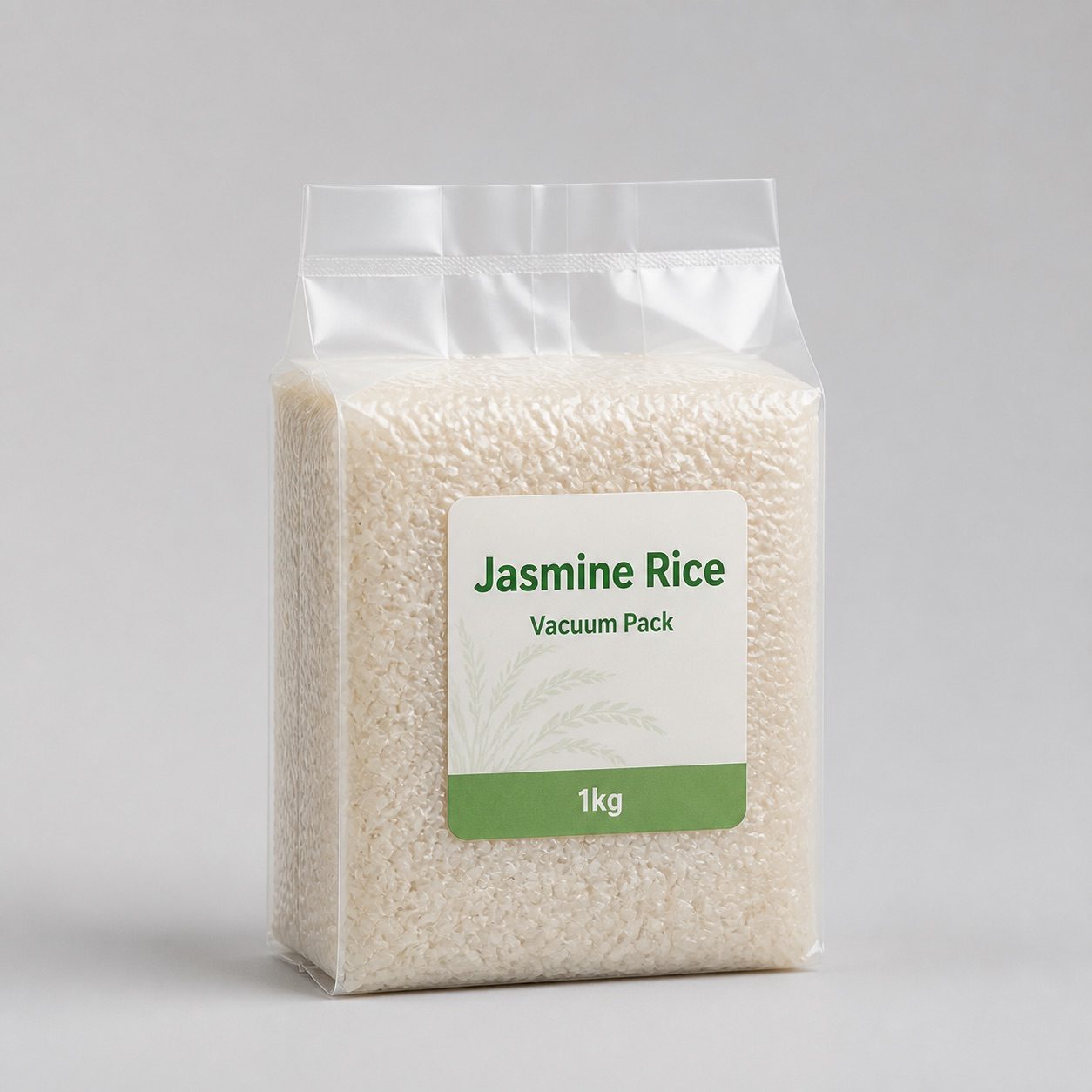
Specialized rice packaging with vacuum brick compression, carry handle, and clear window options that help with stacking strength, moisture and insect barrier, and on-shelf grain display.
Laminated, BOPP, woven PP, kraft, handle, window, and sealant choices are reviewed against rice type, fill weight, and shelf-life target.
Partner Production Controls
Partner facilities
Project QC Records
Scope-based review
Export Terms Review
DDP / FOB / CIF scope
Recyclable-Ready Review
Project-specific
Rice bag structures from premium retail bags to 25kg export sacks are reviewed for each segment of the rice trade.
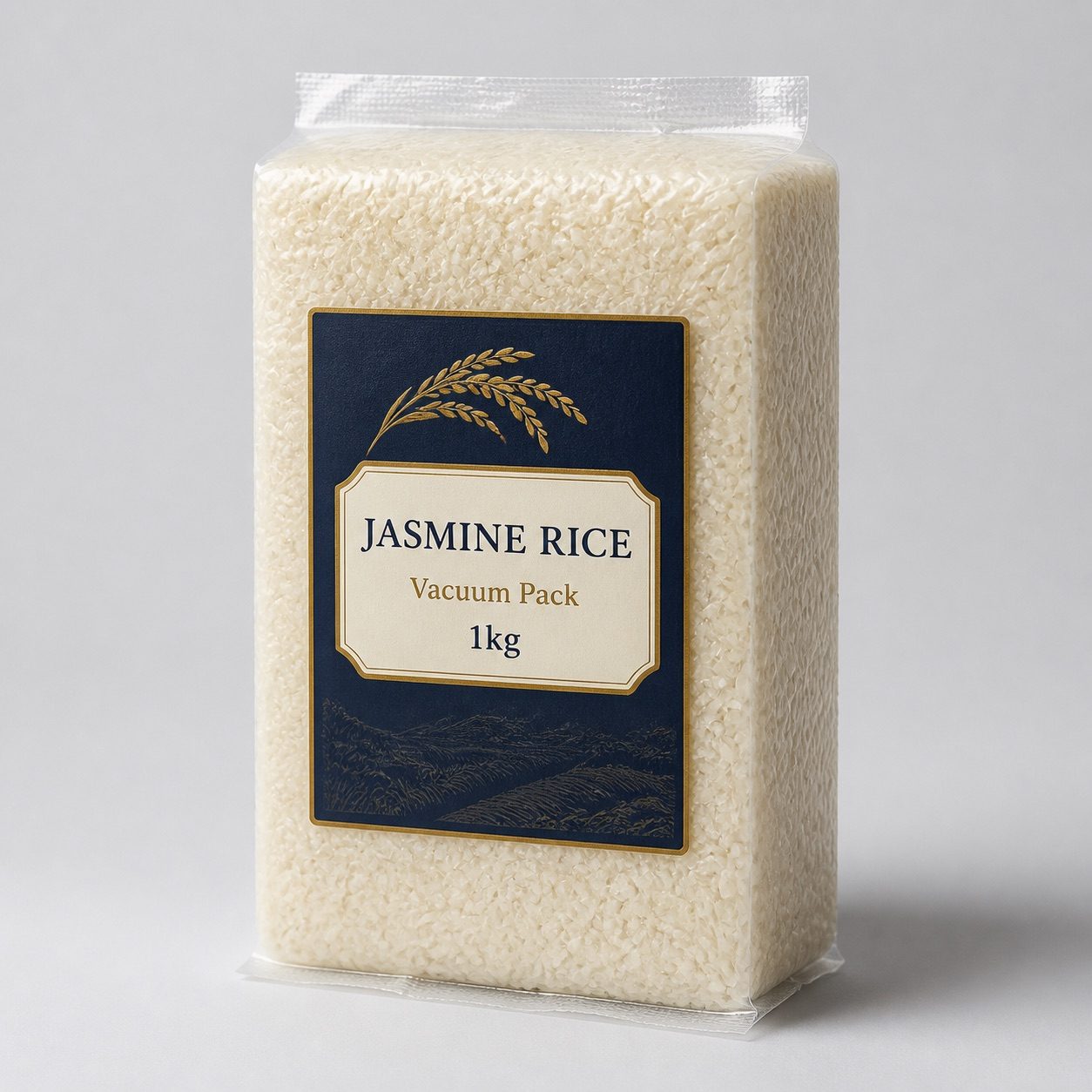
1kg–5kg retail bags with clear window, carry handle, and laminated finish for premium basmati, jasmine, and specialty rice branding.
5kg–10kg vacuum brick bags with compressed, rigid form, high-barrier laminate, and strong seals for compact stacking and export shipping.
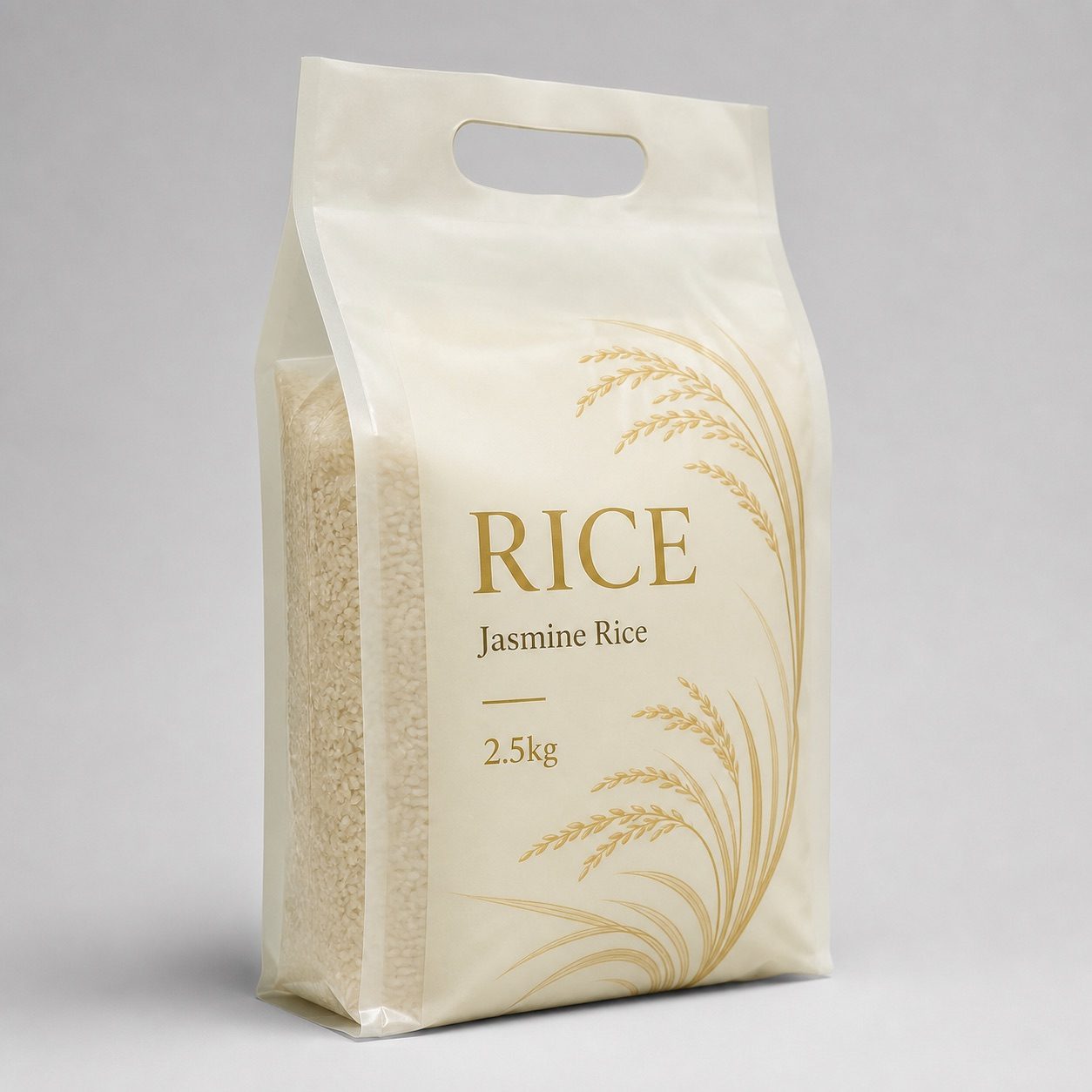
Carry-handle bags for 5kg and 10kg packs with side gusset. Laminated or BOPP structures can be reviewed against handle pull strength and shelf-life targets.
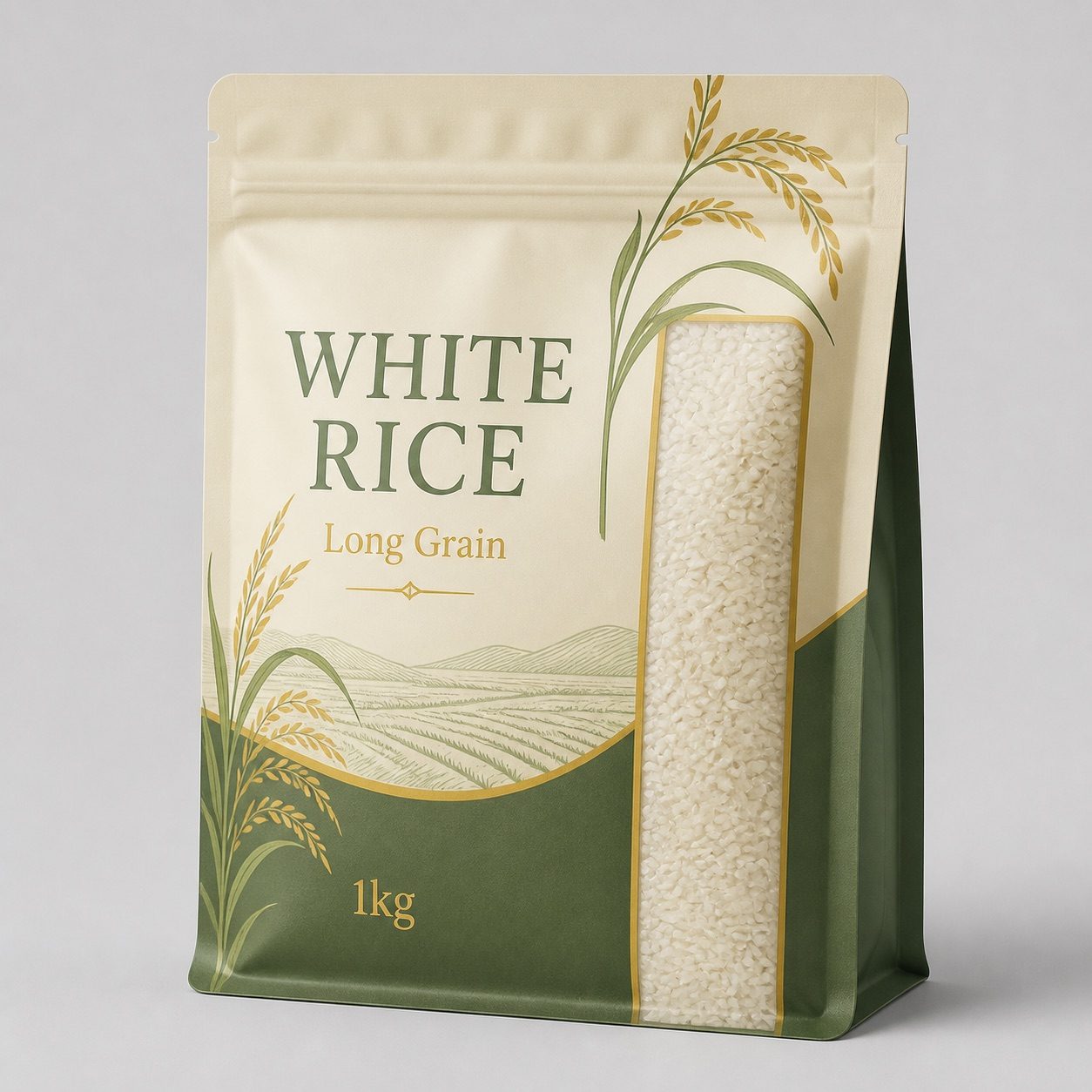
Clear-window bags that show grain quality at shelf, with project-specific moisture-barrier targets. Window size and placement can be reviewed with artwork.
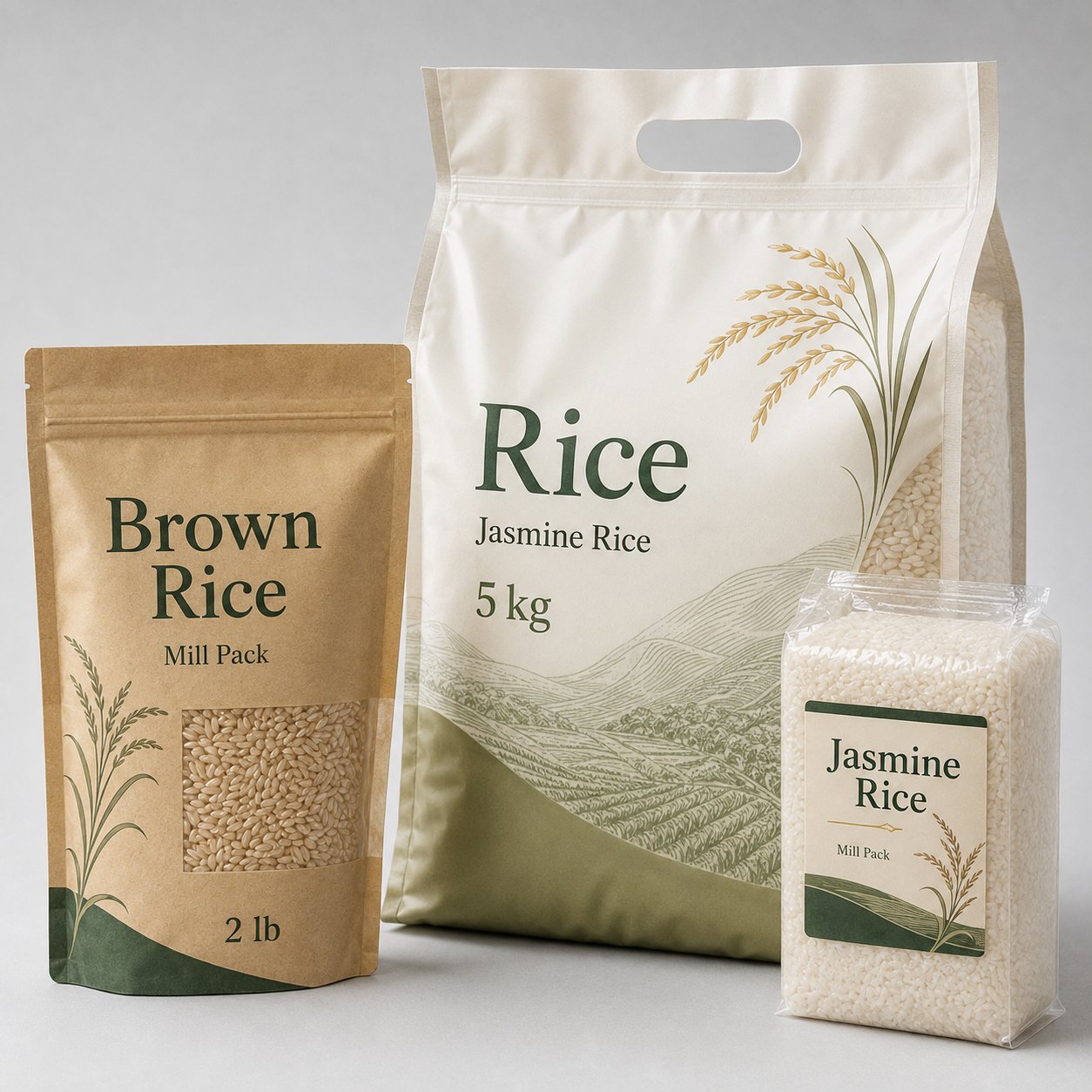
Kraft-look or recyclable-direction structures for organic and mill rice brands, with moisture and insect barrier reviewed against the packed grain and distribution plan.
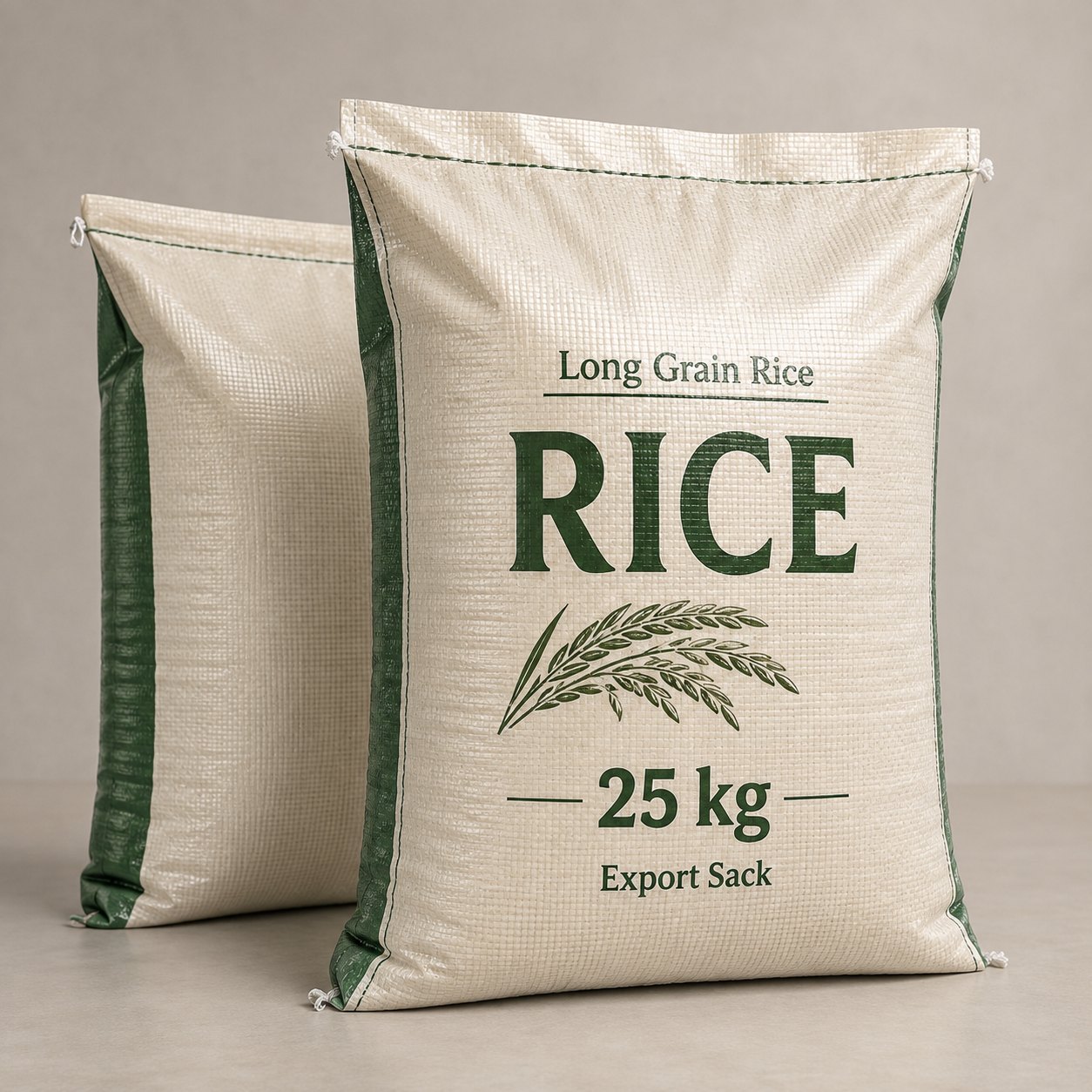
Woven PP laminated bags for 25kg bulk and export can use reinforced seals and pinch-bottom or sewn closures reviewed for heavy load handling and stacking requirements.
Window, carry handle, and flat-bottom formats can help retail rice packs stand upright, show grain quality, and carry easily after purchase.
Vacuum brick, flat-bottom, side-gusset, handle, and woven PP formats can be matched to fill weight from 1kg to 25kg, shelf display, and packing line.
Carry handle, clear window, kraft paper appearance, matte varnish, spot UV, and print layout can be reviewed by project scope.
Share rice type, fill weight, vacuum brick need, handle or window need, barrier target, artwork status, and target market so documentation support and sample approval are scoped correctly.
Use 1–5 kg retail pouches for shelf packs, review 5–10 kg vacuum brick or handle bags for larger consumer formats, and consider a 25 kg laminated PP woven sack for bulk or export handling. Final structure direction should follow fill weight and packing method.
Review rice variety, storage duration, humidity, insect risk, and distribution chain before choosing PET/PE or structures incorporating VMPET, aluminum foil, or nylon, as well as laminated woven structures. Barrier targets and layer combinations remain project-specific.
Match the handle, clear window, side gusset, vacuum brick form, and closure to shelf display, carrying and warehouse handling, and the filling process. Each option should be checked against bag dimensions and packed weight.
Film-surface printing, kraft-look presentation, matte treatment, and spot finishes should be reviewed together with the bag format, window, and brand layout. These finish choices are visual directions, not performance claims.
Choose the right material structure based on rice type, fill weight, vacuum brick or handle format, barrier target, and shelf-life plan.
★ Recommended for Rice Bags
PET / AL / PE
High-barrier choice for vacuum brick rice where moisture and insect protection are target requirements
PET / NY / PE
Puncture-resistant choice for vacuum brick and heavier rice loads needing extra handling strength
| Structure | Application | Barrier Level |
|---|---|---|
PET / PE
|
Light-weight retail rice pack or short shelf-life small bag | Standard |
PET / VMPET / PE
|
Metallized barrier for retail rice with added moisture and light protection | Medium |
PET / AL / PE
|
Foil laminate for vacuum brick rice with stronger moisture and insect barrier targets | High |
PET / NY / PE
|
Vacuum brick or heavier rice loads needing puncture resistance and extra handling strength | High |
BOPP / PE
|
Glossy printed retail rice bag with carry handle and window option | Medium |
Woven PP laminated
|
Heavy-duty 25kg export and bulk rice sacks with high load strength | High |
Mono PE
|
PE-based structure reviewed for local recycling stream compatibility | Standard |
A practical look at common laminate layers used when reviewing rice packaging structure, barrier targets, and sealant choices. Visit our material guide for more details.
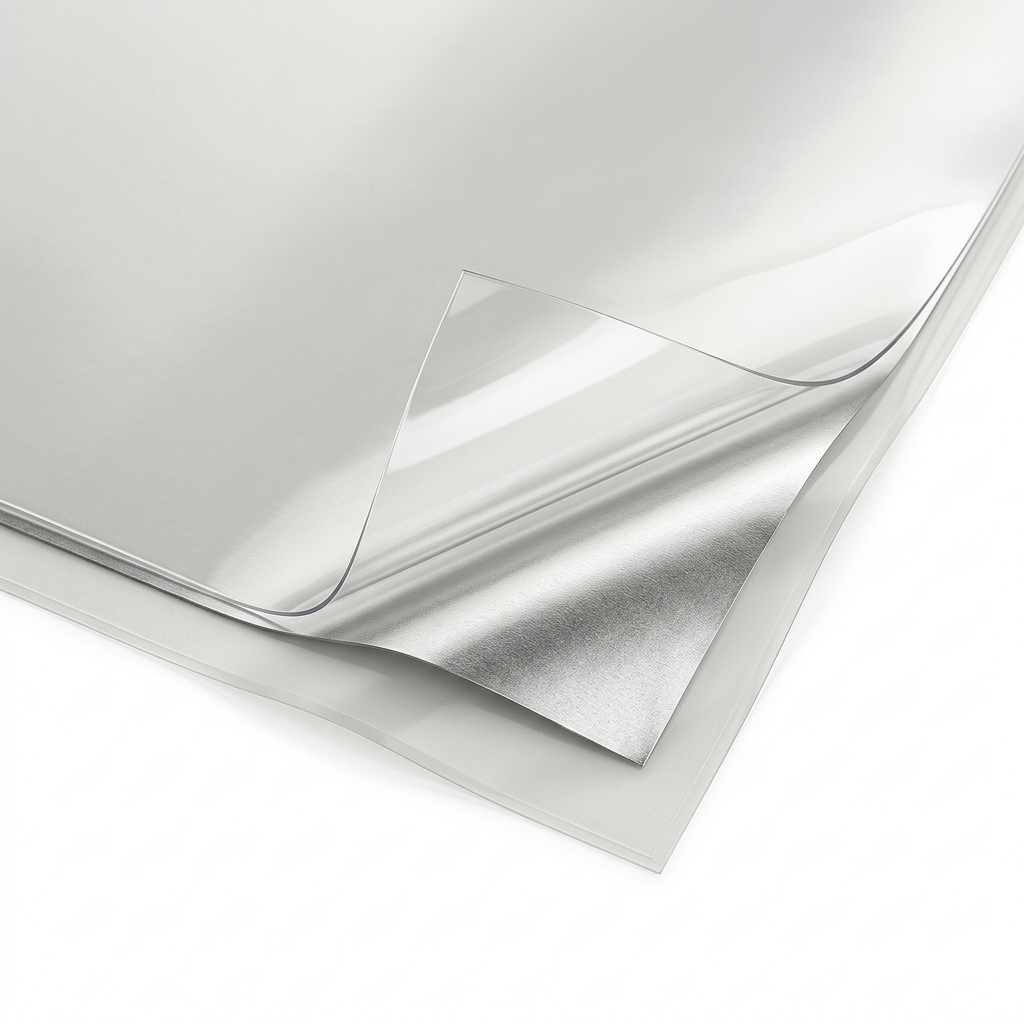
Printable PET supports front artwork, stiffness, surface finish, and handling performance.
Aluminum foil, metallized film, or EVOH-based options are selected by oxygen, aroma, moisture, and light-barrier targets.
Adhesive layers bond the print, barrier, and sealant webs into the finished laminate structure.
PE or CPP sealant is reviewed for seal strength, filling temperature, product contact, and processing conditions.
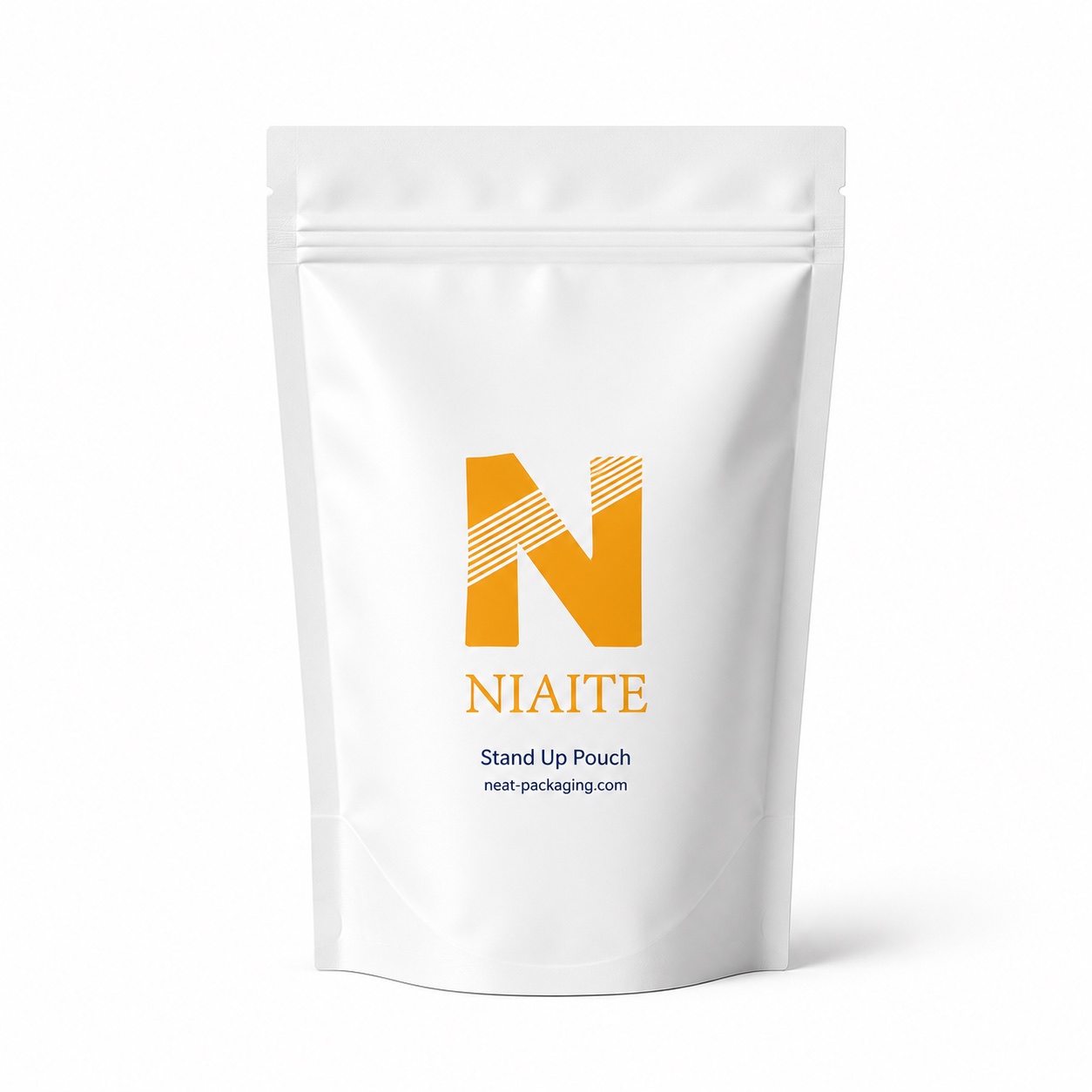
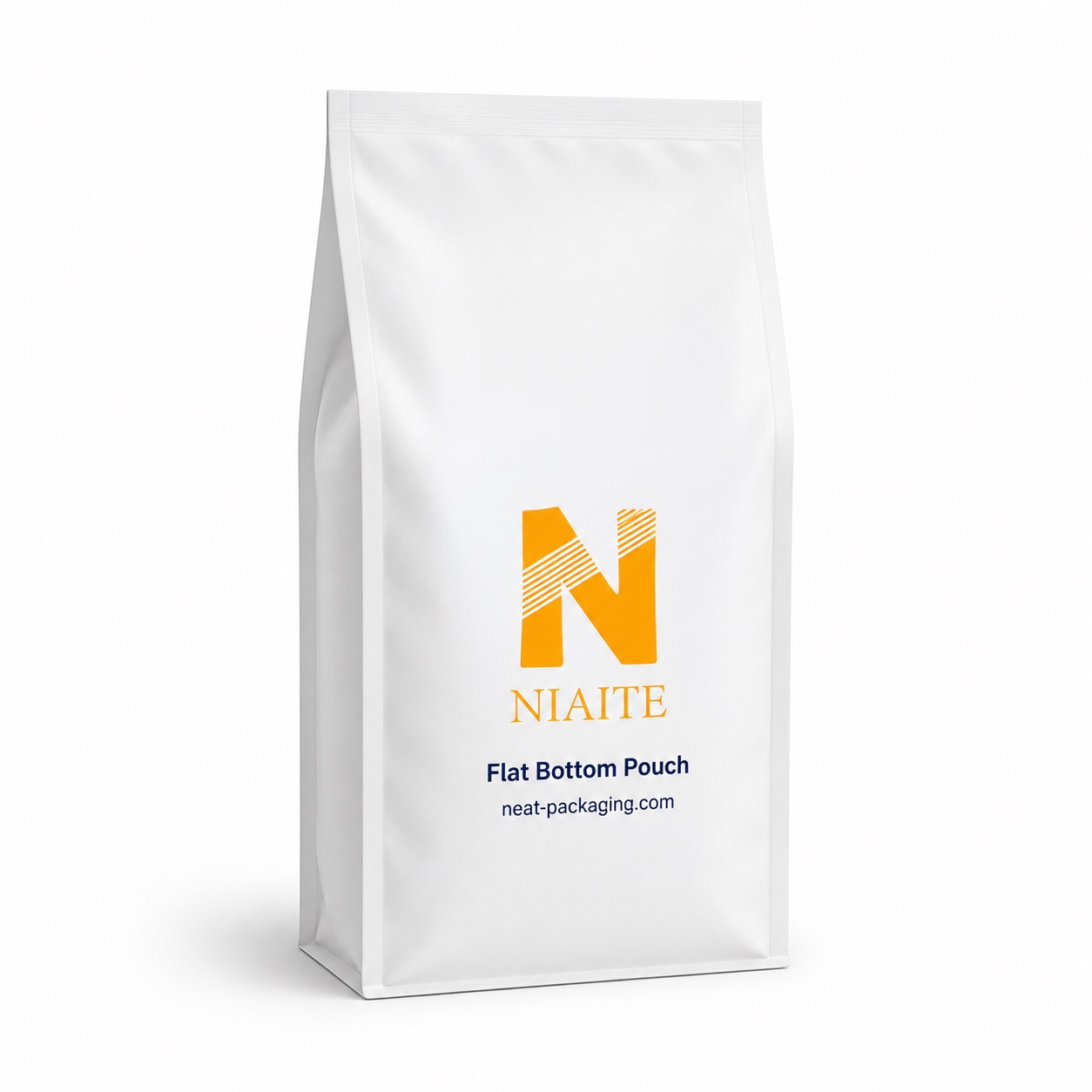
Rice packaging can be specified with a vacuum brick form, carry handle, clear window, heat-seal or zipper closure, flat-bottom format, side gusset, or woven PP build depending on fill weight and packing process.
Handle type, window placement, closure type, kraft paper appearance, foil laminate, matte finish, and print layout can be reviewed before sampling.
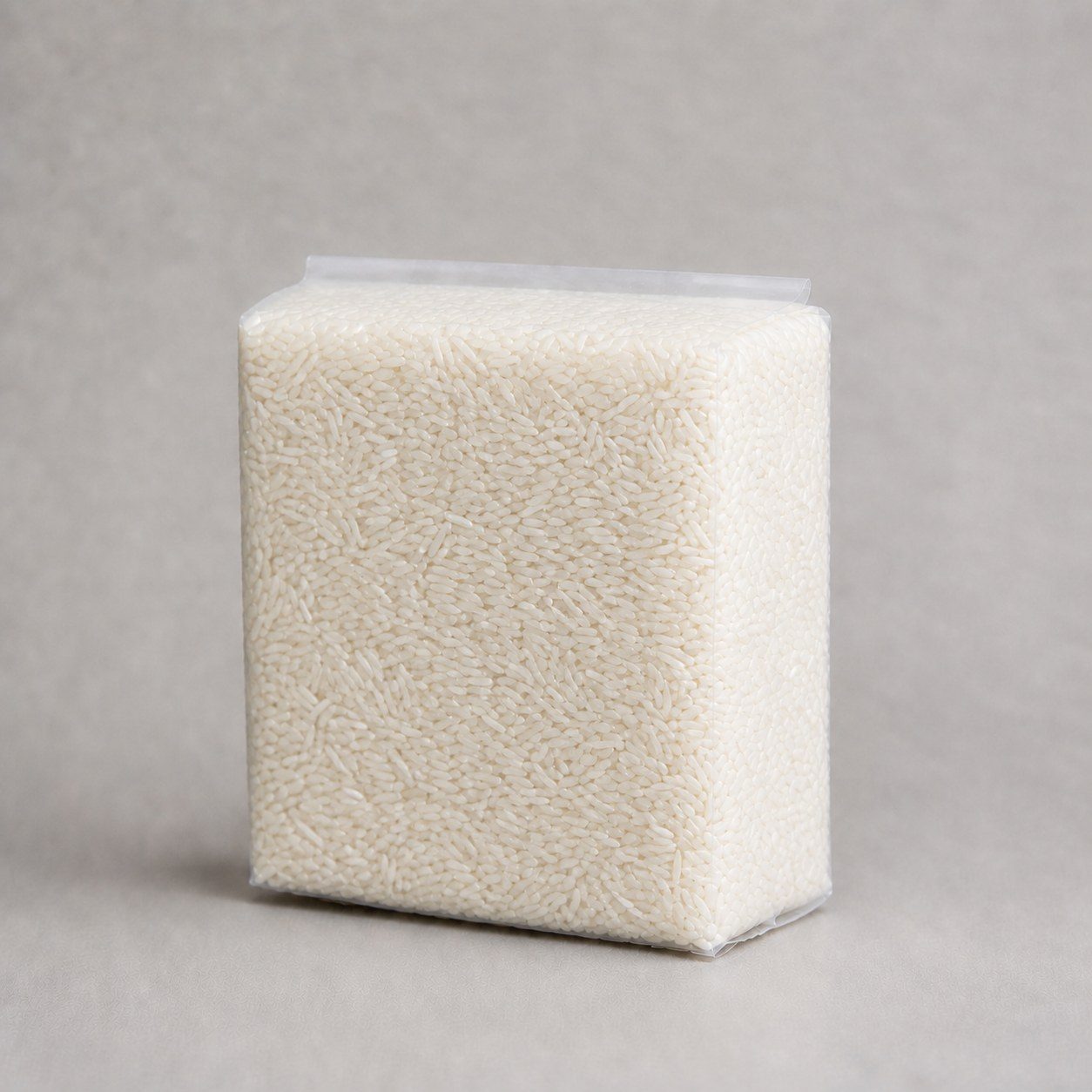
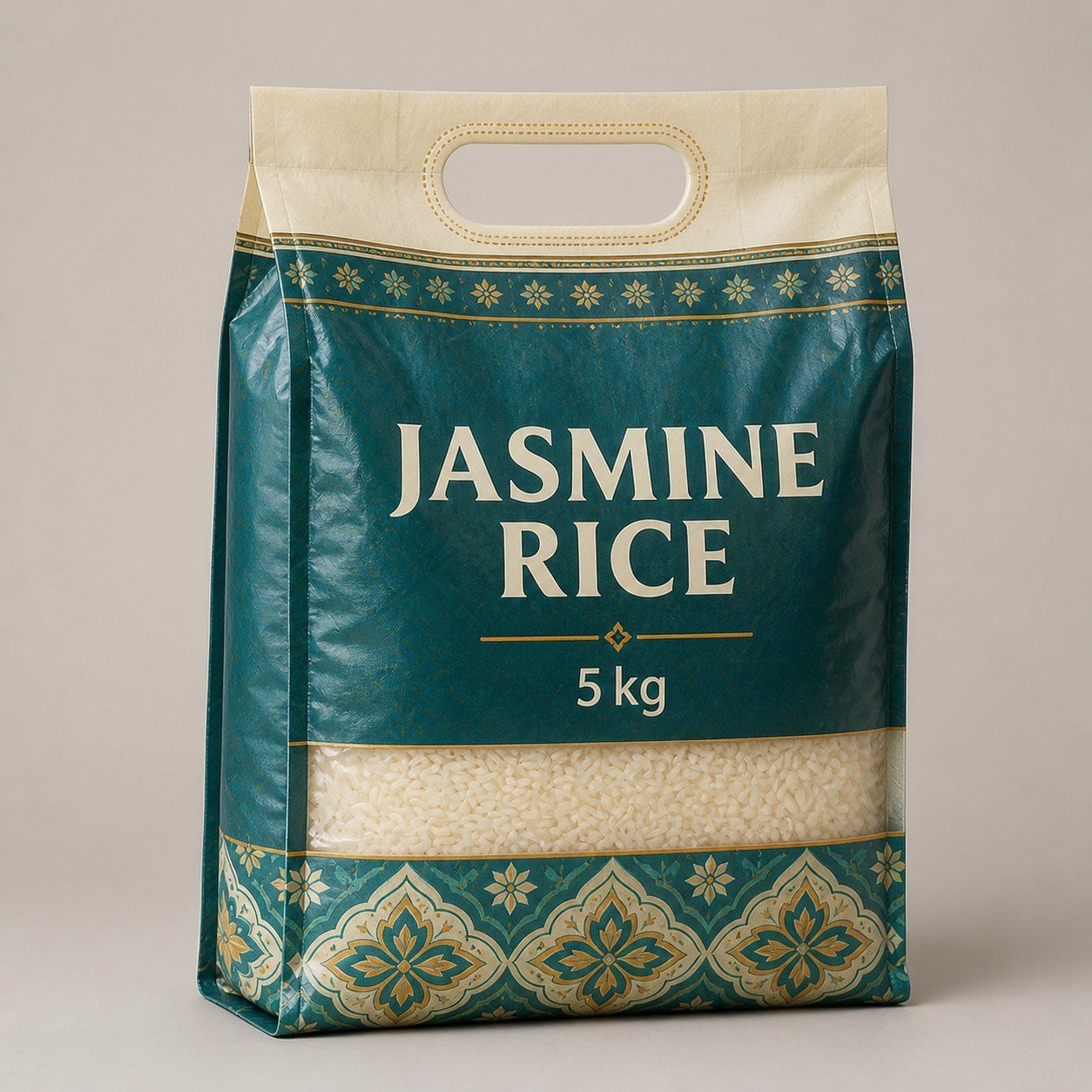
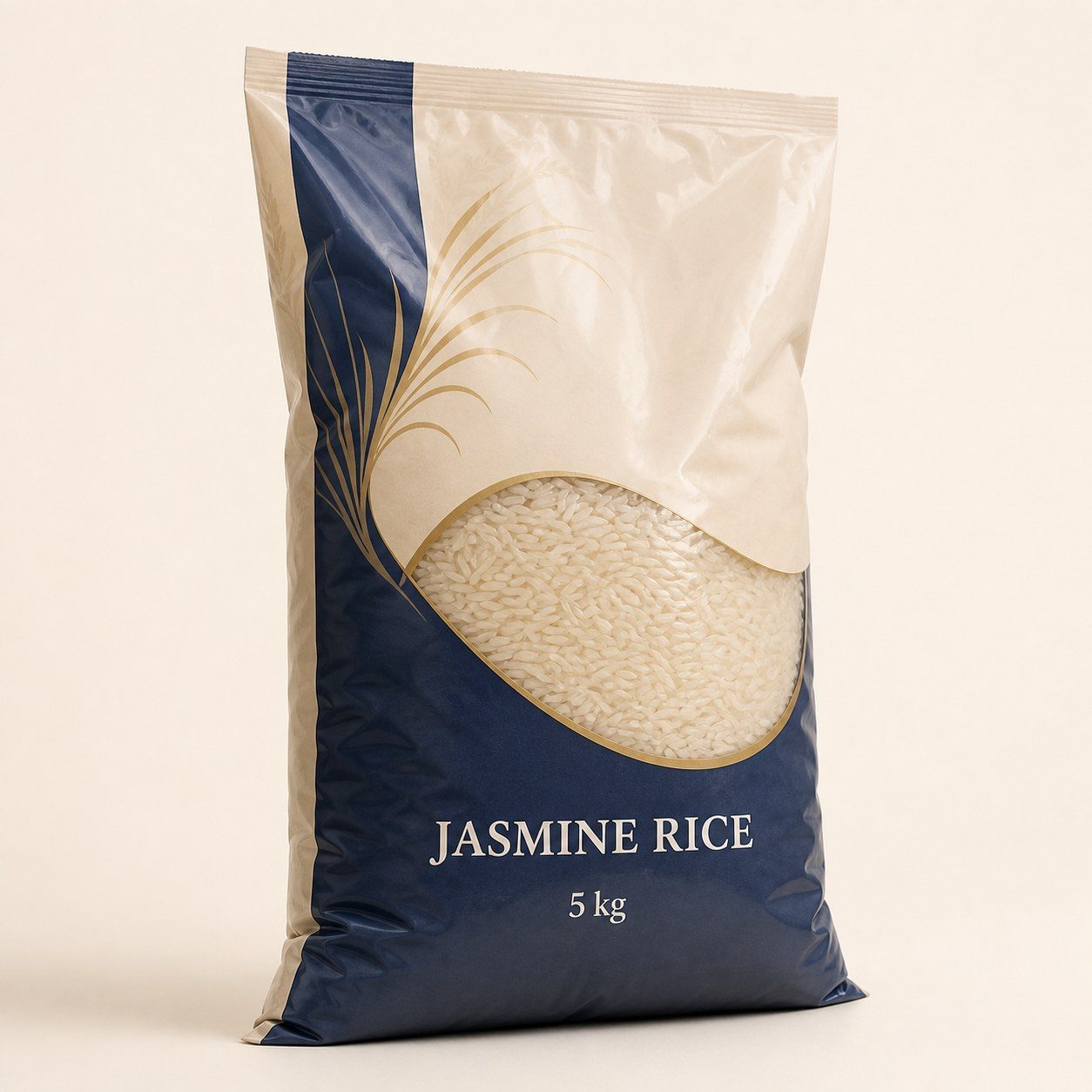
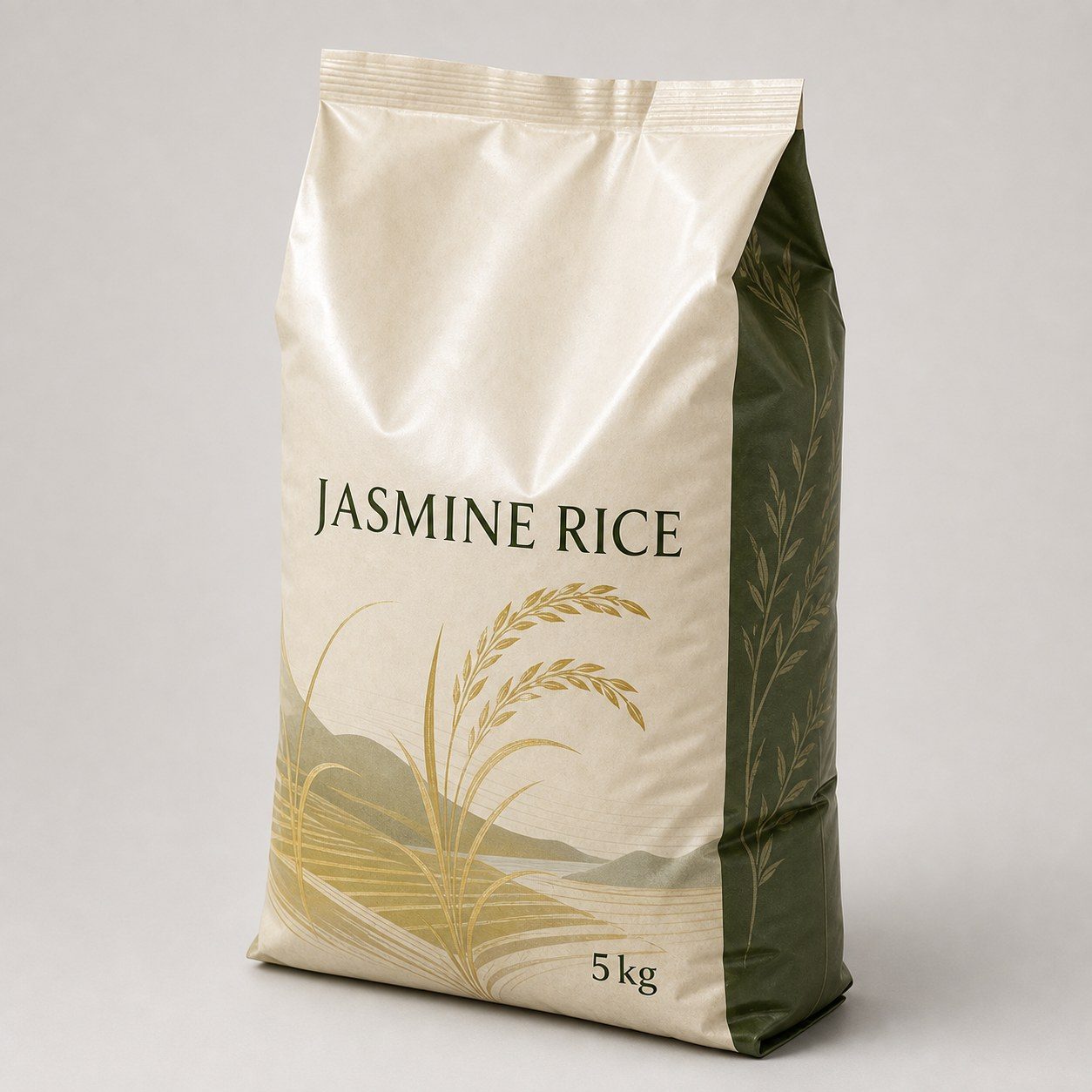
A carry handle helps shoppers lift and carry larger retail packs; a clear window lets them judge grain length, color, and cleanliness at the shelf. Both change how the top panel carries load and how much of the front is left for print, so they are decided together with fill weight and structure rather than added at the artwork stage.
| Format | Typical use | Handle fit | Window fit |
|---|---|---|---|
| Stand-up pouch | Smaller retail shelf packs | Die-cut / punch handle | Front window |
| Flat-bottom bag | Premium retail packs that need a square shelf face | Reinforced loop handle | Large front window |
| Side-gusset bag | Larger value packs | Top punch handle | Side or front window |
| Quad-seal bag | Heavier export and bulk packs | Loop handle, reviewed for load | Optional window |
To review a handle or window, share target fill weight, grain type, handle preference, window size and placement, packing method, and the stacking and shipping plan. Heavier fills usually need a reinforced handle and a tougher structure such as PET/NY/PE or laminated woven PP.
Vacuum brick, flat-bottom, side-gusset, handle, or woven PP formats can be matched to fill weight and shelf display.
Tear notch, laser score, zipper, carry handle, or window placement can be selected against consumer use and packing process.
Kraft paper appearance, matte varnish, soft-touch lamination, spot UV, and foil stamping can be reviewed with artwork.
Structure review, vacuum brick and handle checks, print proofing, seal checks, and supplier documentation can be arranged by project scope.
Representative parameters. Actual values depend on material structure and customization.
Film Thickness
80–150 μm (PET/AL/PE standard)
Fill Weight
1kg to 25kg by selected format and structure
Moisture Barrier (MVTR)
Reviewed by rice type, fill weight, and test method
Vacuum Brick Option
Compressed rigid brick form optional by fill weight
Handle / Window Options
Carry handle and clear window reviewed by bag size
Closure Options
Heat seal, zipper, carry handle
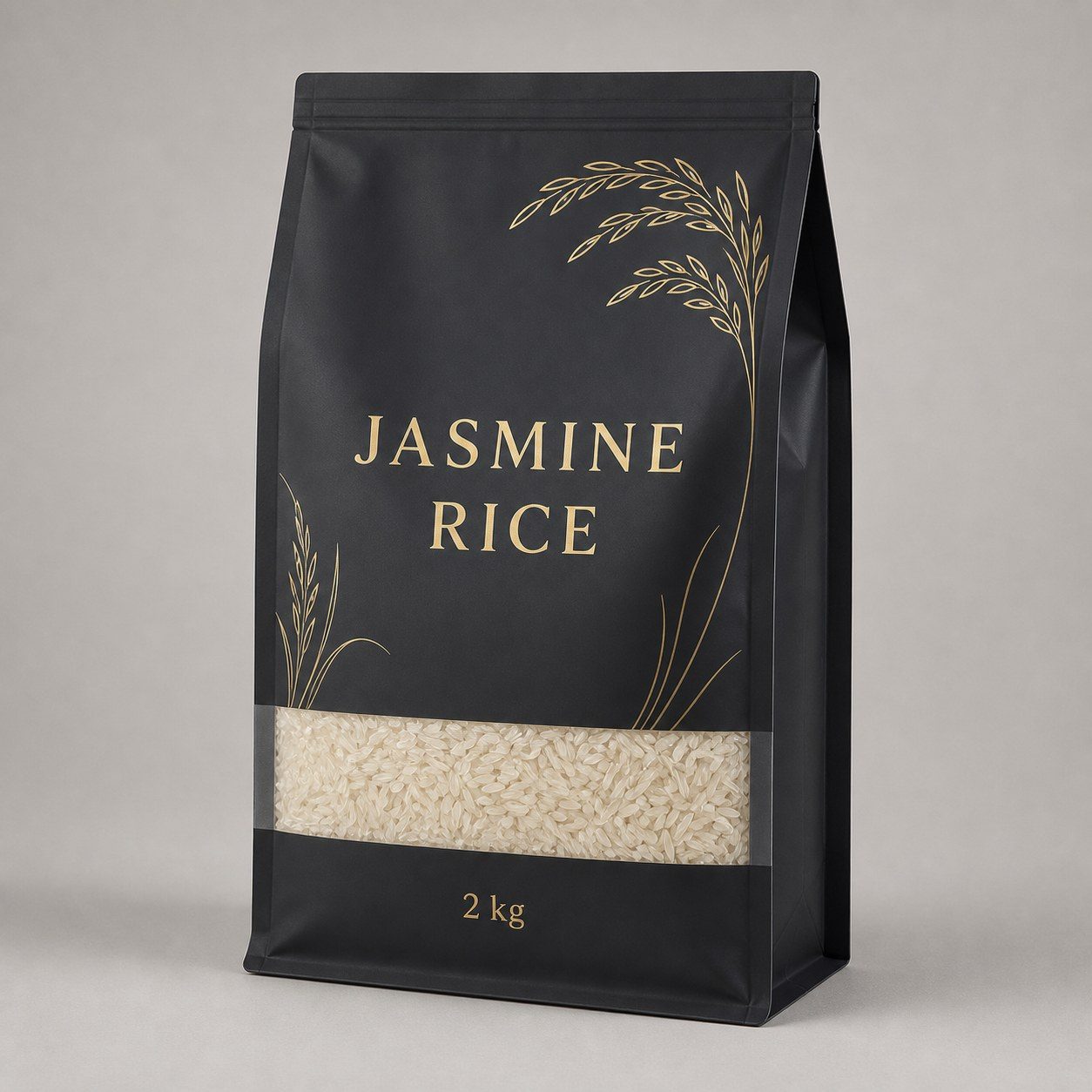
Premium rice matte black flat bottom bag with gold foil and clear window
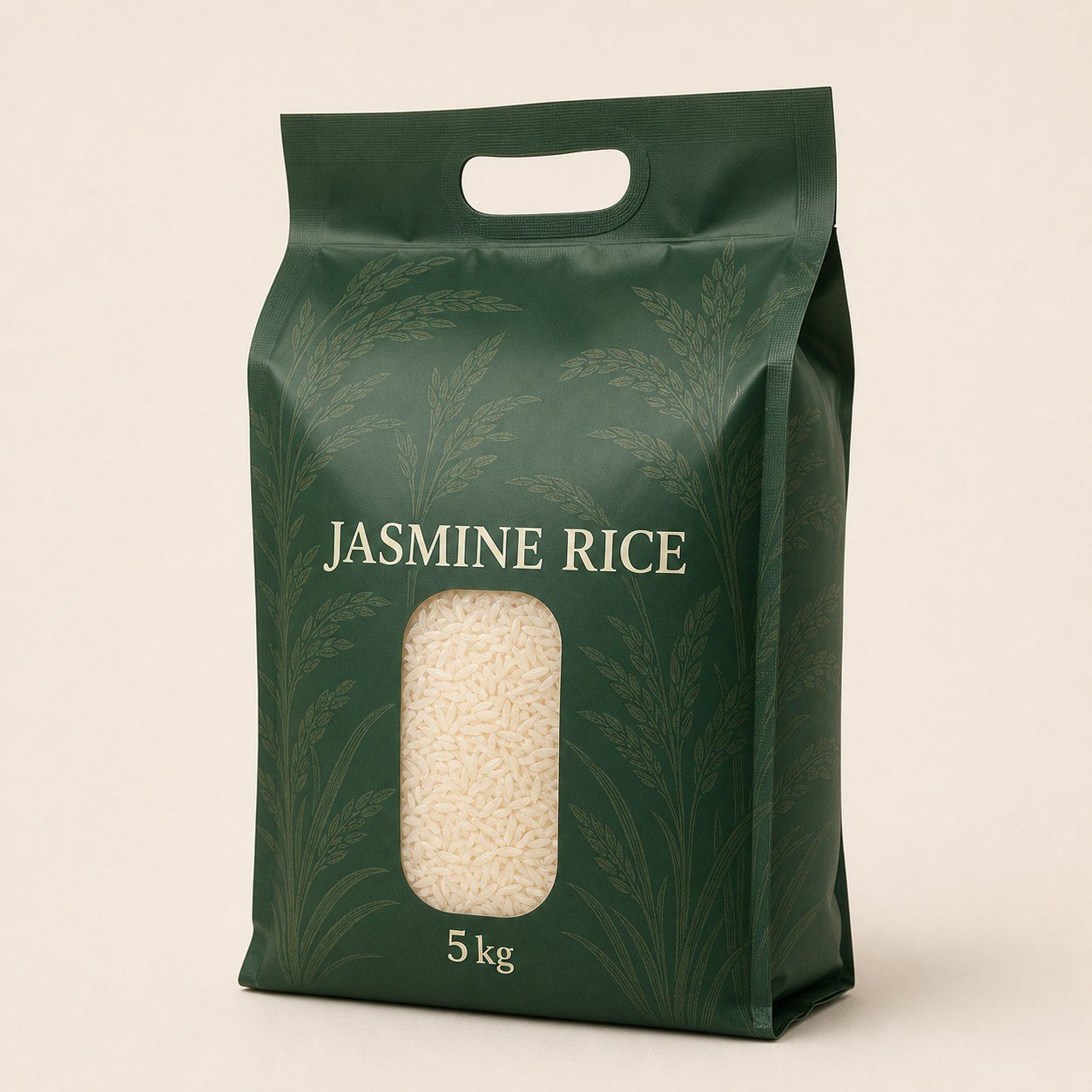
Jasmine rice minimalist forest green matte handle bag with window
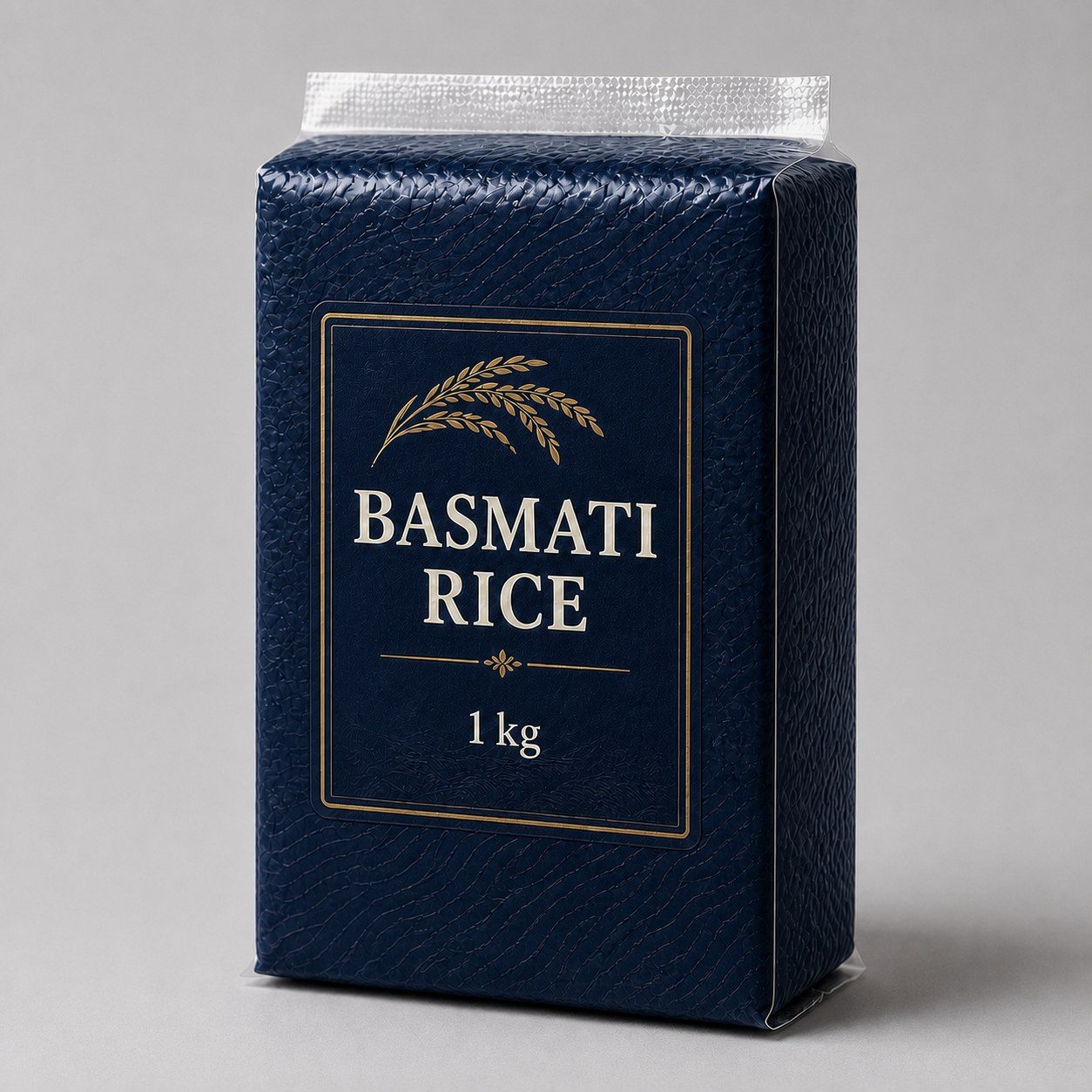
Basmati rice matte deep navy vacuum brick bag with high-barrier laminate
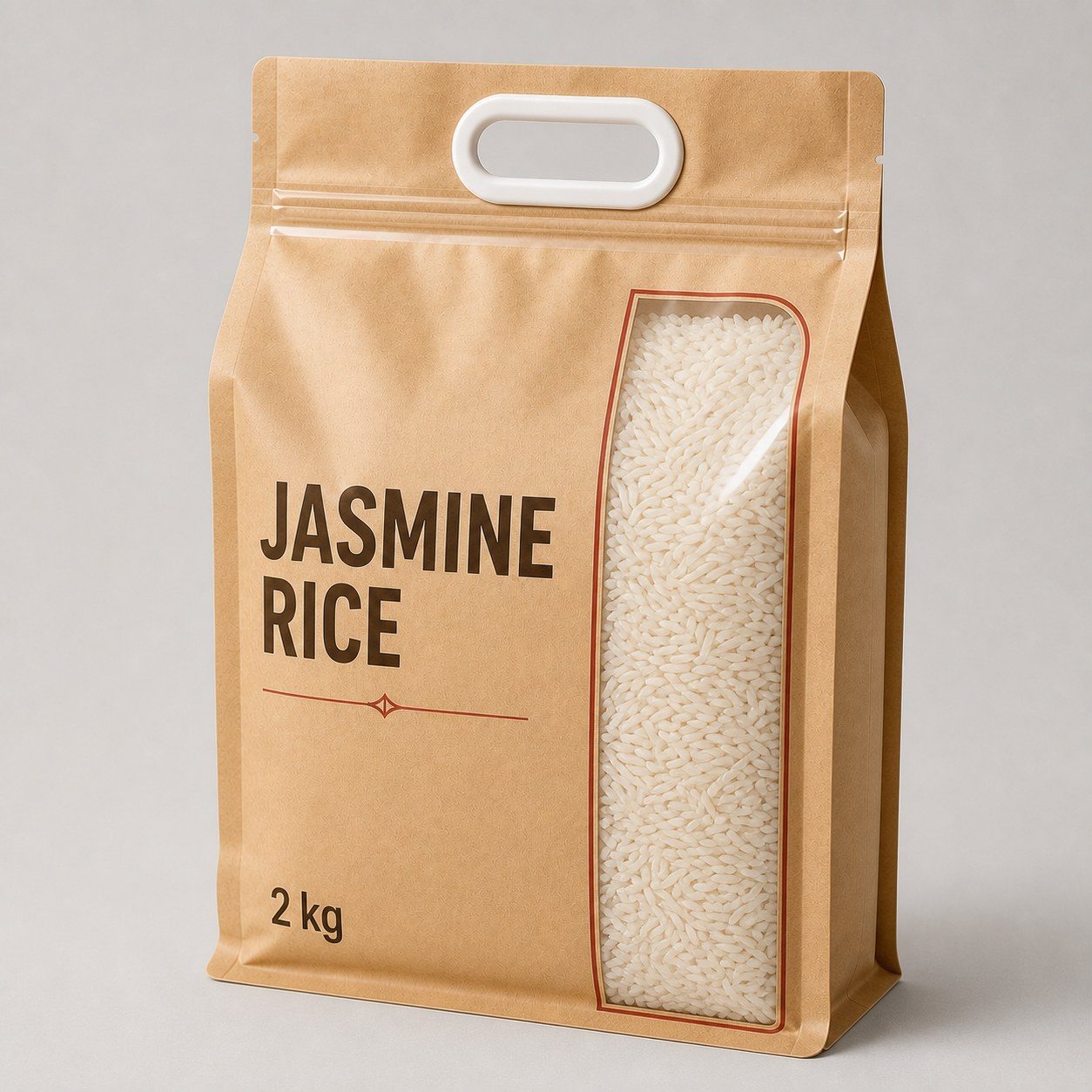
Organic rice warm sun-inspired kraft matte handle bag with window
Use these photos as format references. Final size, structure, print layout, and testing scope are reviewed against your product, filling method, and target market.
Lower-impact structure options can be reviewed when the product, filling process, target market, and recovery route support them.
Common issues we help rice packaging buyers avoid during project coordination.
Broken rice grains create sharp edges that puncture vacuum-sealed film under compression, causing slow air leaks that go unnoticed until the product reaches retail shelves. We help review puncture-resistance targets and film thickness options based on your rice variety and vacuum pressure settings.
Rice stored for months in warehouses or on container ships is exposed to humidity swings that standard single-layer film cannot handle, leading to clumping, off-flavors, or insect attraction. We coordinate MVTR assumptions with your target shelf life and distribution climate to shortlist suitable barrier structures.
Rice bags of 5 kg or more put significant stress on bottom and side seals, especially during palletized stacking and forklift handling. We help verify that seal-strength test data from the converter accounts for the actual fill weight, stacking height, and drop-test requirements of your distribution chain.
Freshly milled rice continues to respire and release moisture, and a fully sealed bag without micro-perforation or a breather valve can develop condensation, mold, or a swollen appearance. We coordinate ventilation options with the converter while maintaining pest-barrier integrity for your market requirements.
Kraft paper substrates popular for premium rice branding have higher surface roughness and stretch variability than film, causing color registration to shift across a print run. We help review registration tolerances with the printer and request proof checkpoints before bulk production assumptions are finalized.
For rice packaging bags, buyers usually compare PET/AL/PE, PET/VMPET/PE, woven PP laminated against shelf-life, fill weight, and compliance documentation needs.
This page covers retail rice, premium and specialty rice, basmati and jasmine rice, organic rice, and bulk or export rice in 1–25 kg formats such as retail pouches, vacuum bricks, handle or window bags, side-gusset bags, and laminated PP woven sacks.
Common starting points include PET/AL/PE or PET/NY/PE for vacuum brick rice, PET/VMPET/PE or BOPP/PE for retail handle and window bags, and laminated woven PP for 25 kg sacks. The selected structure should be reviewed against rice type, fill weight, barrier target, shelf-life plan, distribution chain, and destination market.
MOQ depends on bag dimensions, material structure, printing method, finish, and the number of artwork versions. Share the target format, fill weight, artwork status, and annual volume so a practical starting quantity can be reviewed for the project.
Yes. The bag format, handle, clear window, side gusset, vacuum brick form, and heat-seal, zipper, pinch-bottom, or sewn closure can be reviewed together according to fill weight, packing process, shelf display, and handling requirements.
FDA and EU food-contact requirements can be reviewed against the selected structure and destination market. Supplier declarations, migration testing, and third-party testing can be coordinated according to project scope.
Production workflow follows GMP-style hygiene and handling controls; no site-level GMP registration is claimed.
ISO 9001-style QC records and FDA/EU material documentation can be reviewed by project scope.
DDP / FOB / CIF coordination can be reviewed by destination and project scope.
Project-level recyclable-ready or lower-impact structures can be reviewed where the final specification supports them.
Project support for material review, artwork coordination, sampling, and production follow-up within the agreed scope.
Production routing, order volume, lead-time assumptions, and capacity fit are reviewed for each confirmed project.
NIAITE is a flexible packaging project support team working with selected partner factories, so rice brands can turn fill-weight, vacuum brick, handle, window, barrier, artwork, and order-volume decisions into comparable production options.
Match vacuum brick, flat bottom, side gusset, handle, window, and film structure choices to the line that fits each rice project.
Coordinate dielines, artwork checks, handle and window notes, material specs, and sample comments through one practical project thread.
Review filling method, vacuum brick form, shelf life, finish, and carton assumptions early to reduce avoidable sample rounds.
Organize seal, print, packing, and available batch-record checks around the buyer brief; scope independent inspection separately when required.
Compare options on the same size, film, handle, window, finish, carton, testing, and shipping assumptions.
Share rice type, fill weight, target bag format, vacuum brick / handle / window need, order quantity, artwork status, and destination market.
We compare structure, format, MOQ, sampling, documentation, and export assumptions before quoting.
After artwork, sample/proof, and partner-production scope are confirmed, the project moves into production follow-up.
Available QC records, packing checks, and shipping terms are coordinated by confirmed project scope.
Updated:
Work with NIAITE for material review, sampling guidance, QC checkpoints, and export project coordination.