Sausage Packaging for vacuum pouches, shrink bags, thermoforming film, and roll stock film. Review PA/PE or PA/EVOH/PE structures, puncture resistance, oxygen barrier, seal strength, cold-chain storage, and food-contact documentation before production.
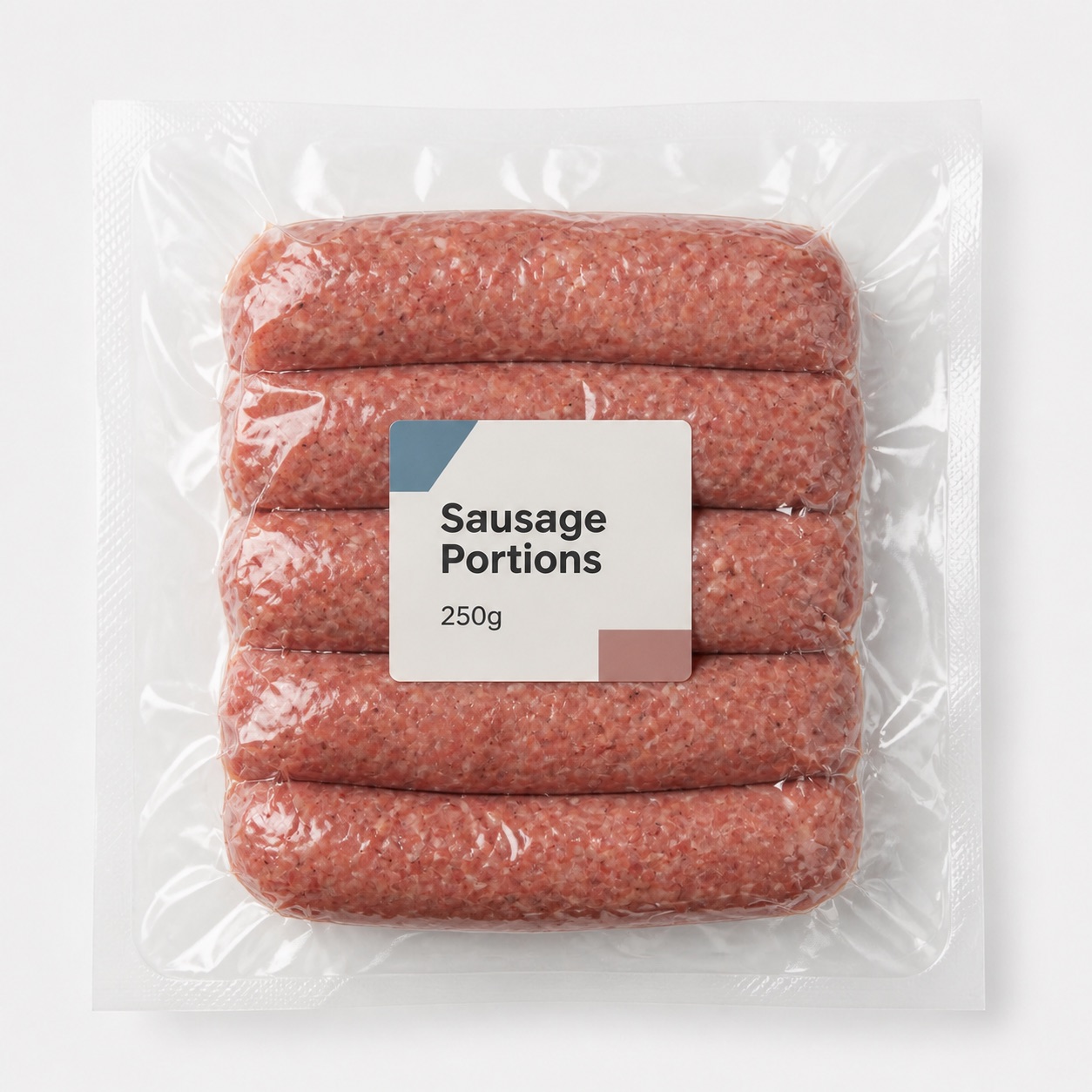
Flexible sausage packaging includes vacuum pouches, shrink bags, thermoforming film, and roll stock film for cooked sausage, smoked sausage, salami, hot dog / franks, and deli chubs.
Structure review focuses on PA/PE, PA/EVOH/PE, oxygen barrier, puncture resistance, seal strength, pack conformation, and cold-chain storage requirements.
GMP-Style Production Controls
Partner facilities
ISO 9001-Style QC
Quality system
Shipping term coordination
DDP / FOB / CIF
Recyclable-ready review
Project-scoped materials
Match the film structure, sealing method, and barrier properties to your sausage type, processing method, and shelf-life requirement. Review meat packaging options .
Pack format can be reviewed for vacuum pouches, shrink bags, thermoforming film, and roll stock film according to the filling line.
Film structure and sealant layer are selected around chilled handling, frozen distribution, pasteurization exposure, and retail display.
PA/PE and PA/EVOH/PE structures can be reviewed for clip ends, product edges, vacuum drawdown, and transport handling.
Oxygen barrier, seal strength, hot-tack behavior, and food-contact documentation are reviewed by product and process scope.
Key factors to evaluate when selecting sausage packaging for your project.
Fresh, cooked, smoked, and cured sausages each have different barrier and temperature requirements. Fresh products need high oxygen barrier for short shelf life, while smoked and cured items need UV and moisture protection for extended storage.
PA/PE (nylon/polyethylene) laminates provide puncture resistance for bone-in or irregularly shaped products. Evaluate oxygen transmission rate (OTR) and moisture vapor transmission rate (MVTR) against your shelf-life targets.
Vacuum packing removes air for tight product contact and maximum shelf life. MAP (modified atmosphere packaging) uses gas flush to maintain product color and shape — choose based on your retail presentation needs.
If your line uses thermoforming equipment, ensure the bottom web has the right draw depth and the lidding film matches your sealing parameters. Film thickness and forming temperature range affect output speed.
Choose the material structure around sausage format, oxygen barrier, puncture resistance, seal strength, cold-chain storage, and filling-line requirements.
| Structure | Application | Barrier Level |
|---|---|---|
PA / PE
|
Vacuum pouches and shrink bags for cooked sausage and deli chubs | Vacuum |
PA / EVOH / PE
|
Higher oxygen barrier for smoked sausage, salami, and cold-chain storage | High |
PET / PA / PE
|
Printed sausage pouch or roll stock film where stiffness and puncture resistance both matter | High |
PA / PE Coex
|
Thermoforming film and vacuum packs requiring drawdown resistance | High |
PE / EVOH / PE
|
Forming web or roll stock film where clarity, oxygen barrier, and sealant behavior are reviewed together | High |
PE-Based Review
|
Lower-impact structure review when sausage process, barrier target, and local recovery stream allow it | Standard |
A transparent look at how PA, EVOH, and PE layers support sausage packaging structure, barrier, and sealing. Visit our material guide for more details.
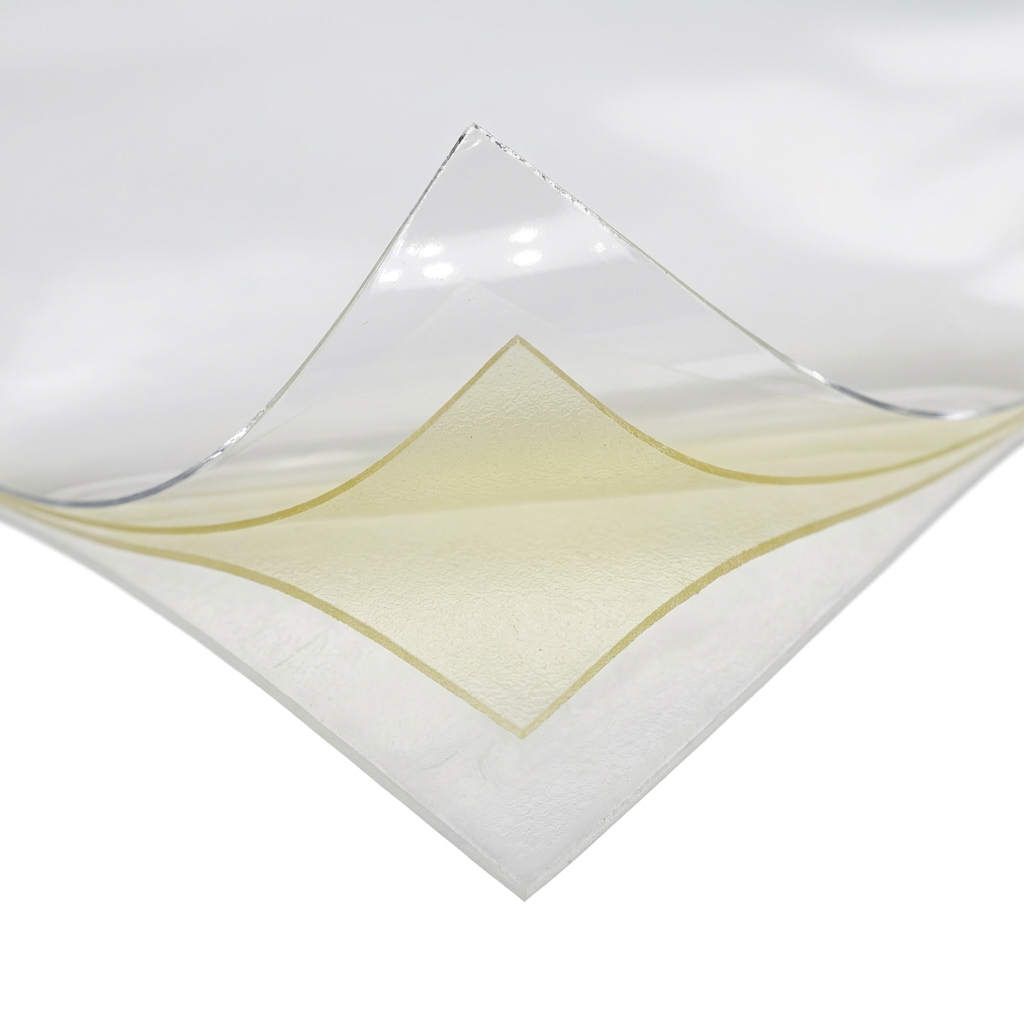
Printable PET supports artwork, registration marks, varnish or matte finish, and the outer handling surface.
Barrier film is selected around moisture, aroma, grease, light, and shelf-life targets for the packed product.
Adhesive bonds the print web, barrier option, and sealant into one stable laminate after curing and testing.
PE sealant is reviewed for heat-seal window, jaw temperature, dwell time, COF, filling conditions, and pack format.
Select vacuum pouches, shrink bags, thermoforming film, or roll stock film around the packing line and retail format.
Review PA/PE or PA/EVOH/PE, oxygen barrier, seal strength, puncture resistance, clarity, and product-contact layer.
Confirm vacuum level, shrink tunnel or thermoforming setup, pasteurization exposure, cold-chain storage, and case packing.
Sample rolls, pouch trials, seal checks, food-contact documentation, and machine-trial notes can be reviewed by project scope.
Representative review points only. Actual values depend on material structure, sausage type, packing line, cold-chain route, and customer acceptance range.
Film Structure
Defined by PA/PE, PA/EVOH/PE, or forming-web requirement
Puncture Resistance
Reviewed by sausage shape, clip end, vacuum drawdown, and transport handling
Oxygen Barrier (OTR)
Matched to product fat content, cure level, storage time, and selected barrier layer
Temperature / Process Range
Reviewed for chilled storage, frozen handling, pasteurization exposure, or shrink tunnel use
Seal Strength
Defined by vacuum process, seal jaw setup, contamination risk, and customer test method
Clarity
Selected around transparent display, printed roll stock film, or retail label requirements
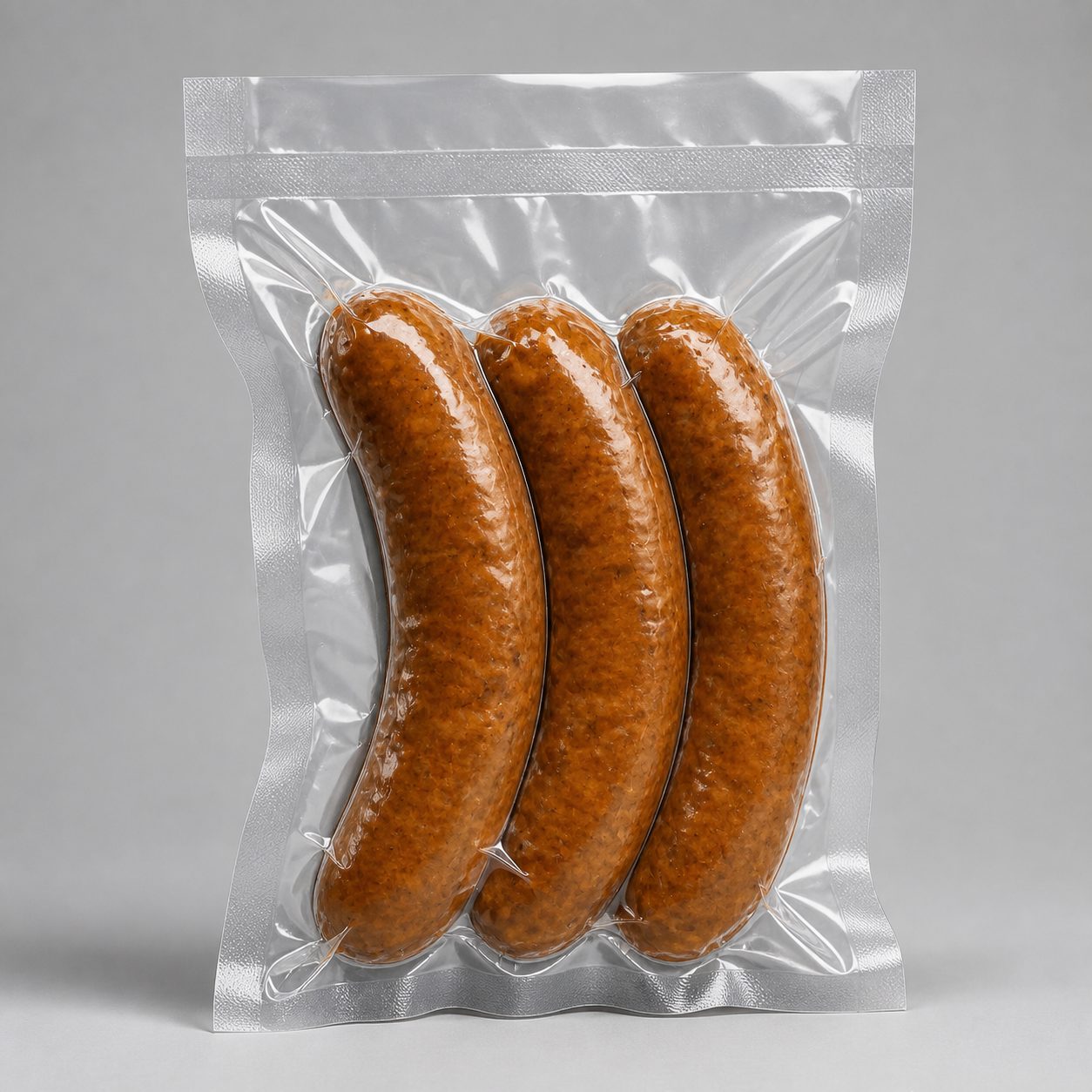
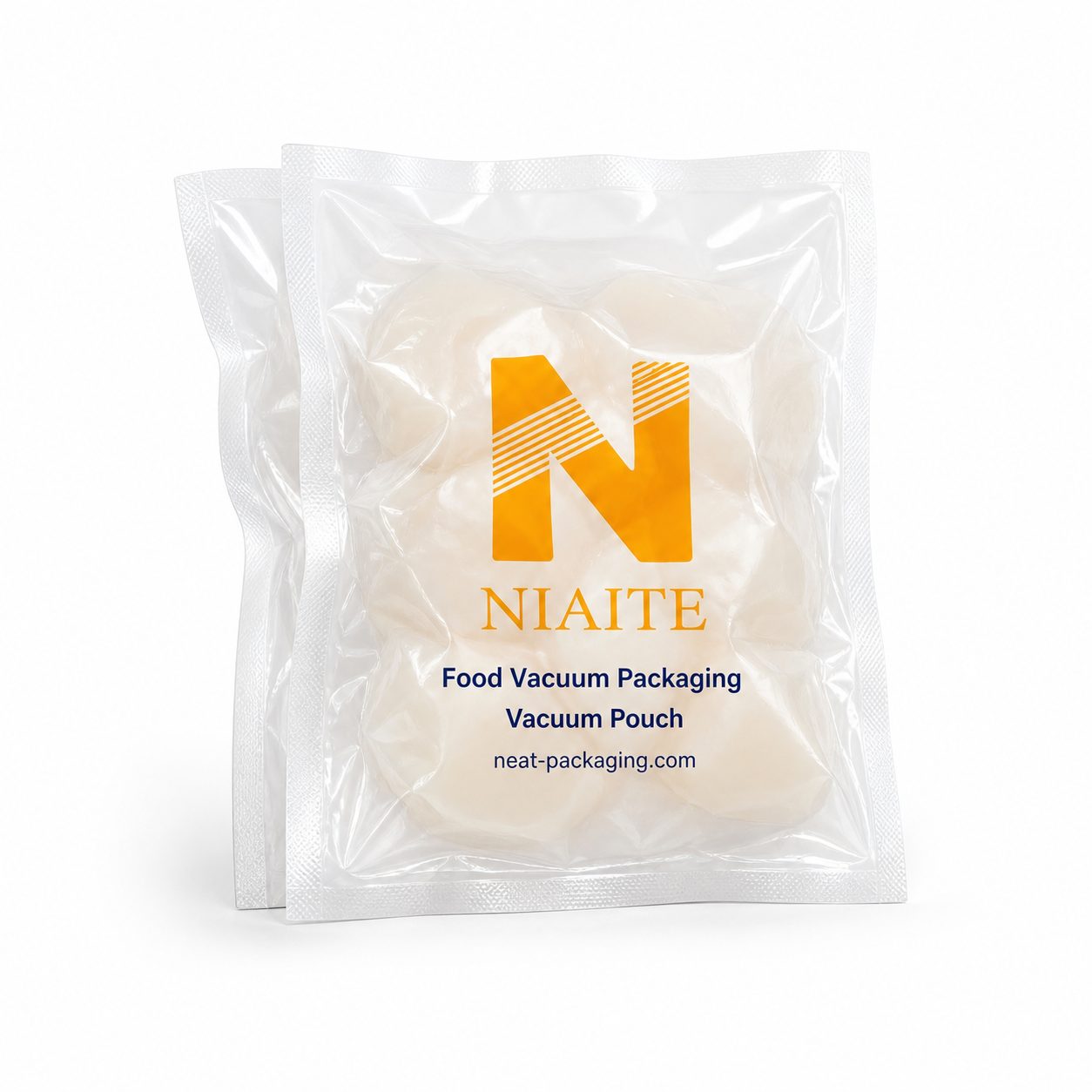
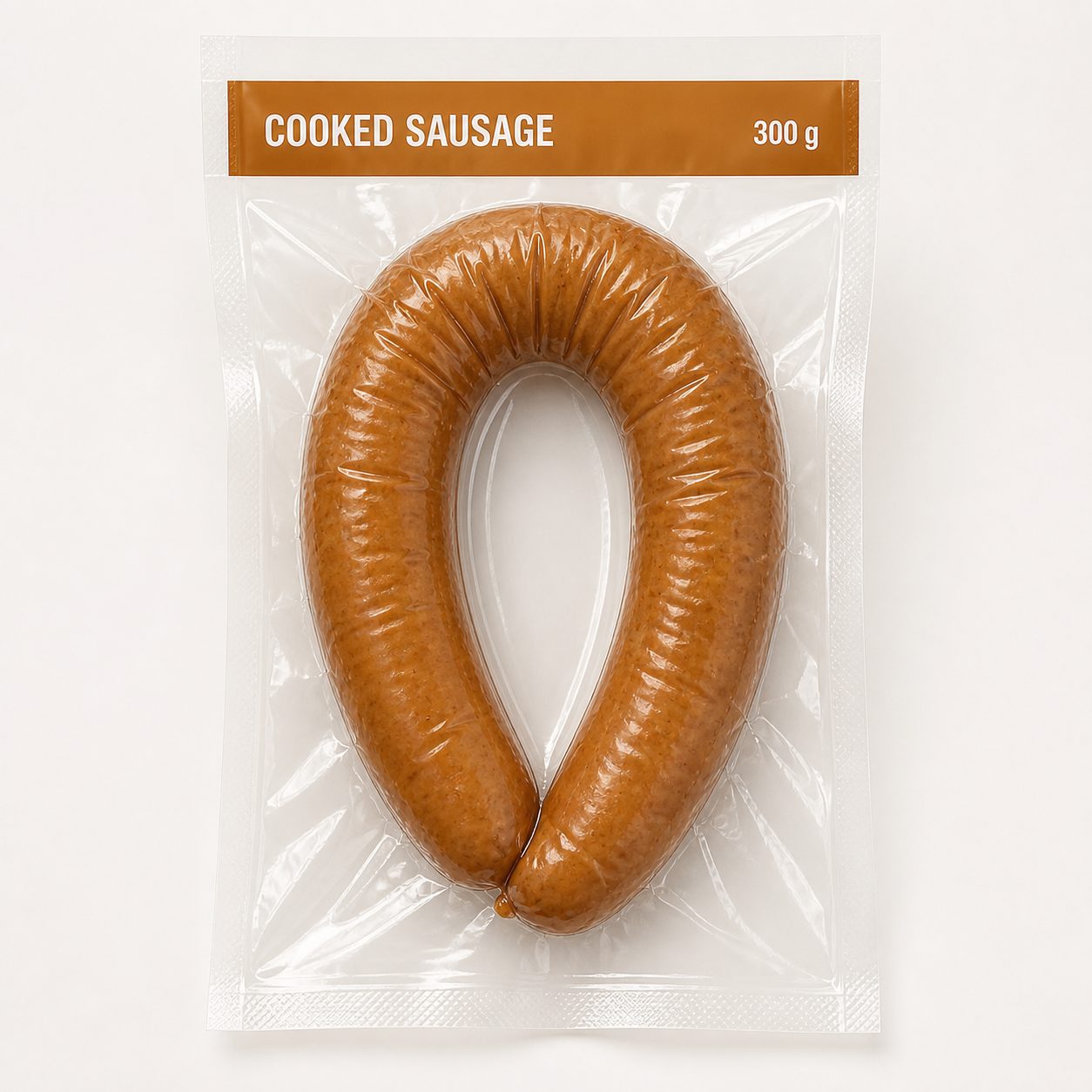
PA/PE vacuum pouch reviewed for cooked sausage, puncture resistance, and seal strength
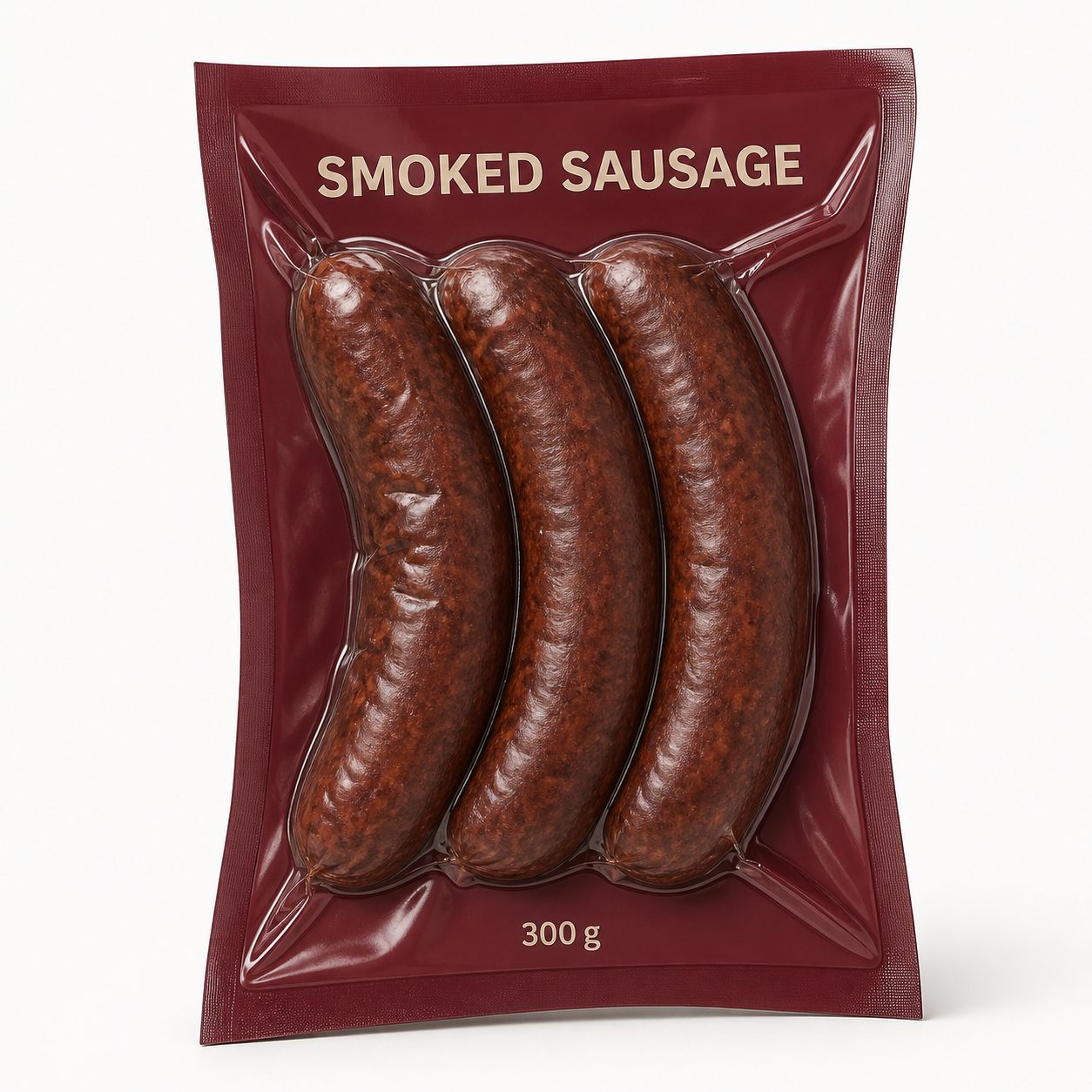
PA/EVOH/PE structure reviewed for oxygen barrier, aroma retention, and cold-chain storage
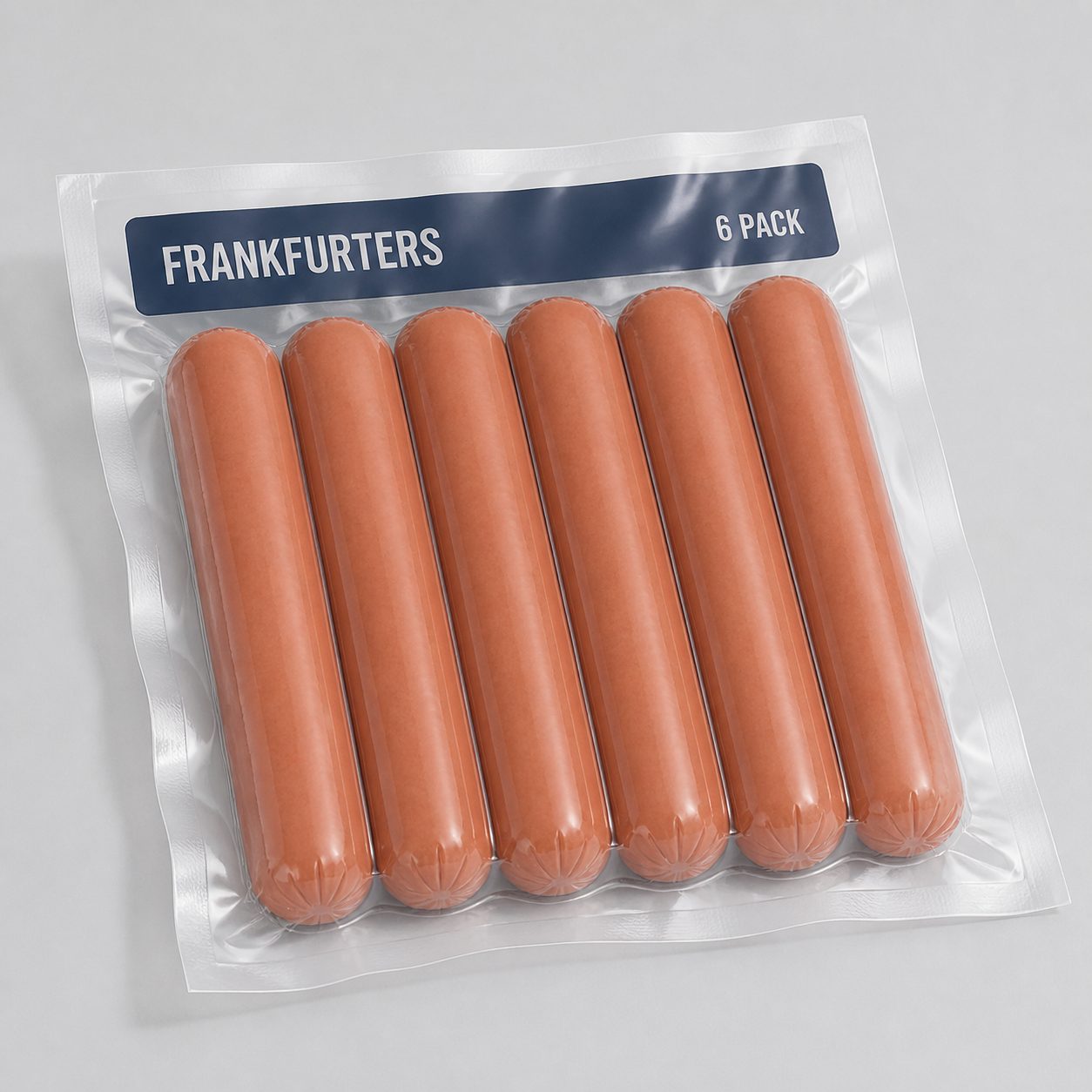
Shrink bag or vacuum pouch reviewed for pack conformation, clarity, and seal behavior
Thermoforming film or roll stock film reviewed for web handling, seal strength, and print layout
Use these photos as format references. Final size, structure, print layout, and testing scope are reviewed against your product, filling method, and target market.
Lower-impact structure options can be reviewed when the product, filling process, target market, and recovery route support them.
Sausage Packaging can be reviewed for cooked sausage, smoked sausage, salami, hot dog / franks, deli chubs, vacuum pouches, shrink bags, thermoforming film, and roll stock film.
Confirm sausage type, pack weight, vacuum or shrink process, PA/PE or PA/EVOH/PE structure, oxygen barrier, puncture resistance, seal strength, cold-chain storage, and machine setup.
Food-contact documentation, material declarations, COA, migration testing scope, seal strength notes, and cold-chain or machine-trial records can be reviewed by selected structure and project scope.
Production workflow follows GMP-style hygiene and handling controls; no site-level GMP registration is claimed.
ISO 9001-style QC records, material declarations, and project documentation can be reviewed by project scope.
DDP / FOB / CIF coordination can be reviewed by destination and project scope.
Project-level recyclable-ready or lower-impact structures can be reviewed where the final specification supports them.
Expert team providing support for sausage packaging projects.
Production routing, order volume, lead-time assumptions, and capacity fit are reviewed for each confirmed project.
Tell us your product, target weight, and requirements.
We recommend materials, structure, and provide pricing.
Confirm details, approve artwork, and production begins.
QC checkpoints and shipment scope are confirmed by project.
Common issues we help sausage and processed meat buyers avoid during project coordination.
When casing materials react differently to heat than the outer shrink film, delamination can occur after processing. Specifying compatible film-casing combinations and running adhesion tests before full production prevents costly rework.
Bone-in cuts, clips, and uneven surfaces create air pockets that compromise vacuum integrity. Confirming seal-bar pressure settings and material flexibility for your specific product geometry is essential during pre-production review.
Sharp internal elements can pierce through standard film during handling or stacking. Specifying puncture-resistant material grades and appropriate thickness for your product profile avoids field failures.
Mixed product dimensions in a single SKU run often result in loose or overly tight shrink fit. Coordinating shrink ratio specifications with your exact size range ensures consistent appearance across the batch.
Seals that pass room-temperature QC can fail when products move between freezer storage and refrigerated display. Verifying seal strength at your actual storage and transit temperature range catches this gap before shipment.
Updated:
Work with NIAITE for material review, sampling guidance, QC checkpoints, and export project coordination.