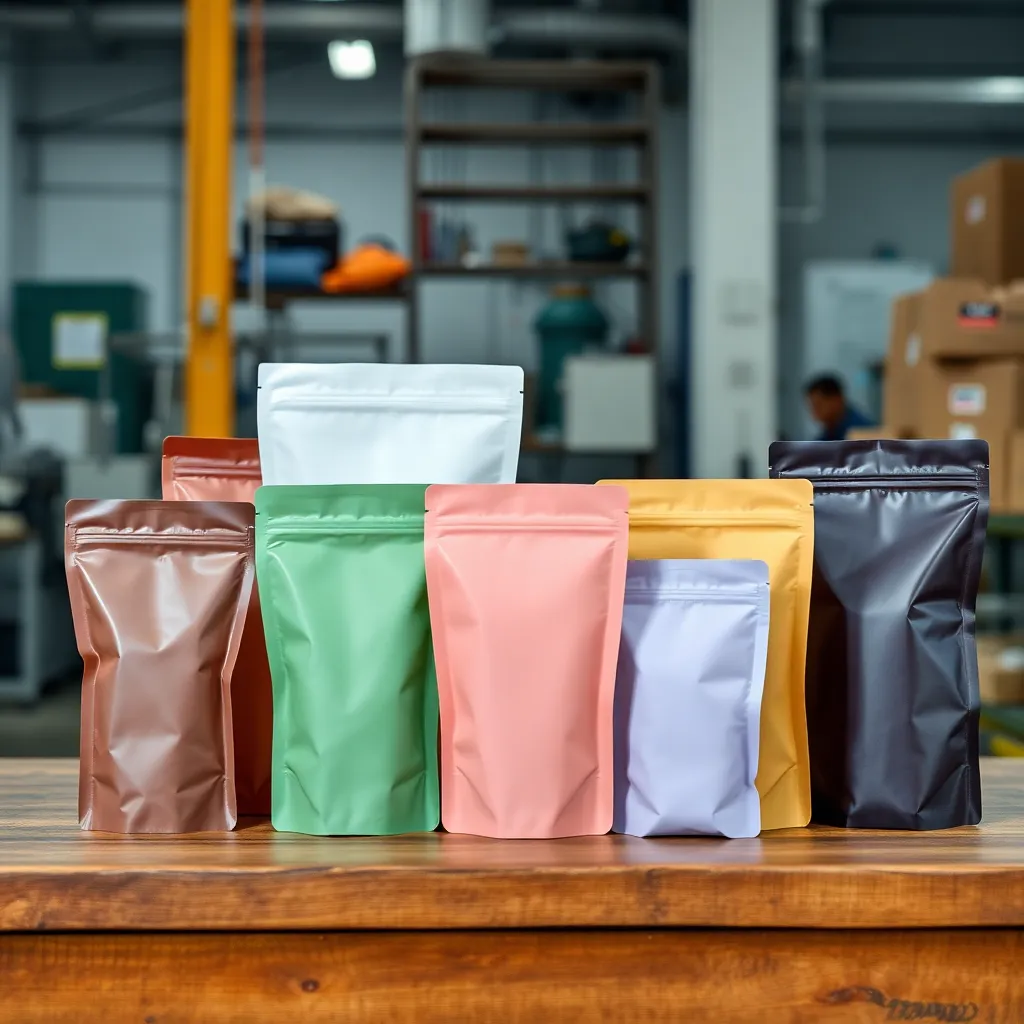
In the highly competitive flexible packaging landscape, stand-up pouches (SUPs) have transcended being merely a trend—they are now the foundational packaging format for brands seeking optimal shelf impact and superior barrier performance. As B2B buyers navigate supply chain complexities, selecting the precise material architecture and closure mechanism directly impacts not only shelf life, but also automated filling line efficiency and total cost of ownership (TCO).
1. Deciphering Material Architectures for Barrier Optimization
The core of any high-performance stand-up pouch lies in its multi-layer lamination structure. Choosing the wrong substrate combination can lead to oxygen ingress, flavor scalping, or compromised seal integrity during high-speed filling.
Standard Dry-Goods Protection: PET/PE
The standard 2-layer composite (Polyethylene Terephthalate laminated to Polyethylene) provides excellent structural rigidity and a sufficient moisture barrier for short-shelf-life dry snacks and confectioneries. The outer PET layer acts as an exceptional print web for high-fidelity rotogravure graphics, while the inner PE layer ensures robust heat sealability.
Extreme Barrier Shielding: PET/AL/PE & PET/VMPET/PE
For UV-sensitive and highly oxidizable products (like specialty coffee beans, premium pet foods, and sensitive powders), metalized structures are mandatory.
• Aluminum Foil (AL): Offers an absolute "zero-tolerance" barrier against oxygen, moisture, and UV light (OTR & WVTR nearly 0).
• Vacuum Metalized PET (VMPET): A cost-effective alternative to pure foil, providing excellent barrier properties while maintaining better flexibility and resistance to flex-cracking during transit.
2. Closure Mechanisms & Functionality Engineering
Selecting the right closure dictates consumer retention and user experience.
- Press-to-Close (PTC) Zippers: The industry standard for granular and powder products. Essential for extending freshness post-opening.
- Pocket Zippers (Tear-Away): Front-facing zippers that allow top-fill automation without zipper interference, dramatically increasing Filling-Machine (FFS) throughput rates.
- Corner & Center Spouts: Crucial for liquid and highly viscous products (beverages, sauces, purees). Engineered to withstand drop tests and prevent capillary micro-leaks during hot-fill processes.
3. TCO: Balancing Thickness (Microns) and Cost
A frequent pitfall for procurement teams is "over-packaging." While a 140µm (micron) thickness offers premium tactile stiffness, a meticulously engineered 100µm to 120µm structure using advanced co-extruded PE can deliver identical drop-test performance and puncture resistance, reducing overall material costs by 12% to 18%.
Pro Tip for FFS (Form-Fill-Seal) Compatibility
Ensure your pouch supplier calibrates the Coefficient of Friction (COF) on the outer printed layer. An incorrect COF will result in slipping or jamming within automated high-speed packaging tracks, leading to crippling downtime.
The NIAITE Engineering Advantage
At NIAITE, we don't just supply bags; we architect flexible packaging solutions. Our ISO 9001 and BRCGS certified facilities ensure that every production run undergoes rigorous tensile strength, burst strength, and seal integrity testing. We help brands transition smoothly from rigid packaging to lightweight, high-barrier SUP structures, optimizing both unit cost and logistical density.
Frequently Asked Questions
What is a stand-up pouch?
A stand-up pouch (SUP) is a flexible packaging bag with a gusseted bottom that allows it to stand upright on shelves. It combines the convenience of flexible packaging with the shelf presence of rigid containers, ideal for snacks, pet food, beverages, and more.
What materials are used in stand-up pouches?
Stand-up pouches use multi-layer laminates like PET/PE for basic protection, PET/AL/PE for high barrier (oxygen and moisture), PET/MPET/PE for good barrier without aluminum, and BOPP/PE for excellent print quality. NIAITE offers various material structures based on product requirements.
What's the difference between spouted and zipper stand-up pouches?
Spouted pouches have an integrated spout for easy dispensing of liquids, sauces, or beverages. Zipper pouches feature a resealable zipper closure for products that need to be opened and closed multiple times. NIAITE offers both options and can combine features.
What products can use stand-up pouches?
Stand-up pouches are suitable for food & snacks, pet food, beverages, coffee & tea, cosmetics, pharmaceuticals, and industrial products. NIAITE provides custom stand-up pouch solutions for various industries and applications.
Can stand-up pouches be customized?
Yes. NIAITE offers fully customizable stand-up pouches including custom sizes, shapes, premium printing capabilities, various closure options (zipper, spout, heat seal), and sustainable material options to meet your specific branding and product requirements.